The Unthinkable Statement from a Future NBA Star
In the high-stakes world of college basketball, where elite freshmen are often viewed as temporary tenants on their way to the professional ranks, a single comment can send shockwaves through the sport. That's precisely what happened in early March 2026 when AJ Dybantsa, the BYU Cougars' superstar freshman and a projected top-three pick in the upcoming NBA Draft, told the Deseret News that he "might not leave college." This offhand remark, made during an interview on the "Deseret Voices" podcast, immediately ignited a firestorm of speculation and analysis. For a player leading the nation in scoring at 24.9 points per game and widely considered to be in a three-way race with Duke's Cameron Boozer and Kansas' Darryn Peterson for the No. 1 overall selection, the suggestion of returning for a sophomore season is virtually unprecedented in the modern one-and-done era.
The context of the statement is crucial. Dybantsa was responding to a question about whether he believed he would be the top pick. His full response, as reported by both CBS Sports and the Deseret News, was notably non-committal: "Well, I might not leave … like, I might not leave college. ... my mom wants me to graduate. Yeah, so I might not leave. But I might leave. The fans might get into my head, talking about one more year, maybe three more years. I don't know. I'm going to have to talk to my mom." He added that he had "until the end of the season" to decide. While seasoned observers immediately dismissed the possibility as a near impossibility, the mere fact that the door was left ajar—even a crack—by a player of his caliber forces a re-examination of the financial, educational, and personal pressures facing today's top prospects.

Who Is AJ Dybantsa? The Phenom Redefining BYU Basketball
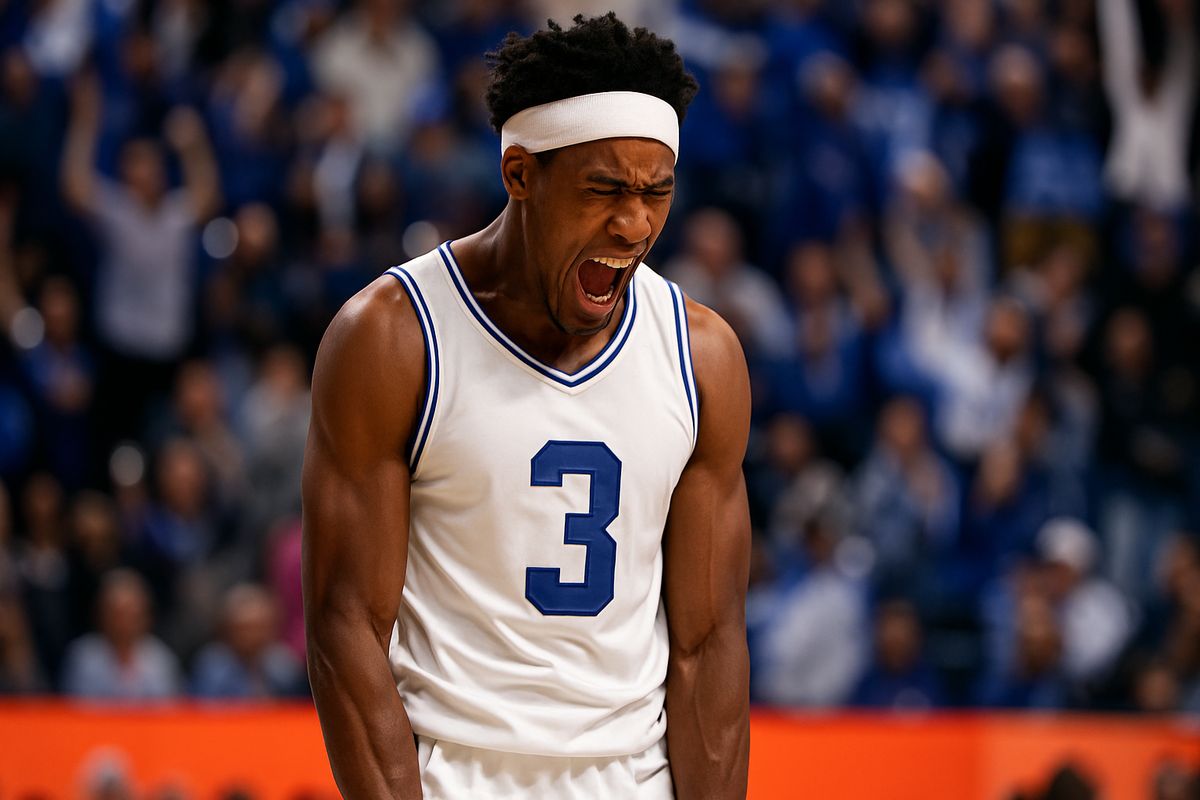
AJ Dybantsa arrived at Brigham Young University in Provo, Utah, as one of the most heralded recruits in program history. His commitment, announced live on ESPN's "First Take" in November 2024 alongside his father, Ace, was framed with the explicit goal of being a "one-and-done" player—spending a single season developing in college before making the leap to the NBA. That trajectory has largely held true on the court. As a 6-foot-8 forward, Dybantsa has not only lived up to the hype but exceeded it, carrying a BYU team (20-9 at the time of the reports) to the brink of an NCAA Tournament appearance as a likely No. 7 seed.
His statistical profile is that of a can't-miss prospect. Leading the nation in scoring is a feat in itself, but his consistency has been remarkable. Following a season-ending ACL injury to BYU star guard Richie Saunders, Dybantsa shouldered an even greater offensive burden, responding by scoring at least 20 points in eight consecutive games. He is described as a versatile wing with a polished scoring arsenal, a player without a clear peer in his draft class at his position. This on-court dominance is why mock drafts, including one cited by CBS Sports, have pegged him as the potential No. 1 overall pick, edging out other elite freshmen like Cameron Boozer and Darryn Peterson. His performance places him within what analysts are calling one of the best freshman classes of all time, a group that includes last year's No. 1 pick, Cooper Flagg.
The Financial Calculus: A Multi-Million Dollar Decision
Any discussion of a top prospect bypassing the NBA Draft must begin with the staggering financial implications. The rookie salary scale in the NBA creates an enormous economic incentive for early entry. The source material provides concrete figures from the previous year's draft: the 2025 No. 1 pick, Cooper Flagg, signed a four-year, $62.7 million contract, earning $13.8 million in his rookie season alone. The No. 3 pick that year, VJ Edgecomb, signed for $50.4 million over four years. For a player like Dybantsa, projected in the top three, we are discussing guaranteed earnings of over $50 million on his first professional contract.
This financial reality makes the idea of returning to school almost incomprehensible from a pure asset-maximization standpoint. While Name, Image, and Likeness (NIL) deals have changed the landscape for college athletes, allowing stars to earn significant sums while in school, the compensation does not approach NBA rookie scale money. The Deseret News article explicitly states, "Whatever compensation Dybantsa has earned at BYU, it wouldn't come close to an NBA rookie scale contract as a top three draft selection." Delaying entry by a year also postpones the clock on a potentially even more lucrative second contract, which for a superstar could be worth hundreds of millions. The financial risk of injury or a downturn in performance during an extra college season is monumental, making the safe and expected choice a near certainty from this angle.
Historical Precedent and the Ghost of "What If"
To understand why Dybantsa's comments are so shocking, one must look at the history of the one-and-done era. Since the NBA's age limit was established, it has become the standard path for elite talents. Instances of a surefire top-three pick returning to school are virtually non-existent. The CBS Sports article drives this point home, calling a potential return "the biggest shocker in college basketball/NBA Draft history" and "unprecedented for a slam-dunk projected top-three pick to bypass the draft."
Recent history provides clear parallels that suggest Dybantsa's comments are likely more playful or contemplative than a serious declaration of intent. The article notes that just a year earlier, Cooper Flagg "made somewhat similar comments about wanting to 'come back' to school the following year. Of course, that didn't happen." Furthermore, ahead of the 2024 draft, there was buzz that Kentucky's Reed Sheppard might return for his sophomore season after the hiring of coach Mark Pope. That hype, as cited, was "short-lived," and Sheppard declared and was drafted No. 3 overall. Even within Dybantsa's own BYU program, there is a recent example: Egor Dëmin, a "one-and-done" talent the previous year, publicly did not rule out a return before ultimately declaring and being drafted eighth. This pattern indicates that leaving the door slightly open is not uncommon, but walking back through it is.
The Family Factor and the Value of a Degree
Beneath the surface of this sports story lies a compelling narrative about family values and education. Dybantsa's repeated reference to his mother's desire for him to graduate is not mere lip service. The Deseret News reports that "education is of the utmost importance in the Dybantsa family," with AJ being "long encouraged to get his bachelor's degree no matter where his NBA career takes him." This introduces a personal dimension often glossed over in the transactional analysis of draft decisions.
For some families, the promise of a college degree represents stability, a lifelong achievement, and a contingency plan for a career that can end abruptly due to injury. While an NBA contract provides generational wealth, the cultural and personal value of completing an education can be immense. Dybantsa's comments suggest he is genuinely wrestling with this familial expectation, even if the overwhelming likelihood is that he will fulfill it through summer coursework or returning to school after his professional career begins. This tension between immediate professional opportunity and long-term personal/family goals is a real, if often overlooked, part of the draft process for many athletes.
Why It Matters: The Evolving Conversation Around Player Agency
AJ Dybantsa's comments matter not because he is likely to stay, but because they highlight a shifting paradigm in elite amateur basketball. For years, the decision for a top prospect was a foregone conclusion—enter the draft as soon as eligible. Today, the conversation is more nuanced. The advent of significant NIL earnings has, for the first time, created a legitimate financial alternative, albeit not an equal one, to the NBA for a select few. More importantly, it has given players a greater sense of agency and the platform to publicly muse about choices that were previously considered unthinkable.
This episode forces the media, fans, and the basketball ecosystem to listen beyond the boilerplate "I'm just focused on the team" statements. When a player like Dybantsa mentions his mother's wishes or fan pressure, it reveals the multifaceted human being beneath the prospect rating. The sports world is quick to reduce these young men to assets and draft slots. Dybantsa's remarks, however fleeting, serve as a reminder that they are also sons, students, and teenagers facing life-altering choices under a blinding spotlight. The fact that a potential No. 1 pick can even float the idea of returning without being universally ridiculed shows a maturation in how we discuss these journeys. It acknowledges that the path to professionalism, while well-trodden, is not devoid of personal considerations, and that the "right" decision can encompass more than just draft position and rookie contracts.
The Inevitable Path Forward and Its Impact on BYU
Despite the intriguing speculation, all rational analysis points to a single outcome: AJ Dybantsa will declare for the 2026 NBA Draft. The financial upside is too great, the historical precedent is too strong, and the risk of returning is too significant. As the CBS Sports analysis bluntly puts it, "there is a sub-zero chance Dybantsa actually returns to school next season" and "it would be an absolute stunner if Dybantsa didn't declare." His value as a 6-foot-8 wing who can score at will is precisely what NBA teams covet, and his stock may never be higher.
For BYU, Dybantsa's imminent departure is the bittersweet reality of landing a transformative one-and-done talent. His single season has elevated the program's profile, likely secured an NCAA Tournament bid, and demonstrated that BYU can be a destination for the very best high school players. The legacy he leaves, however brief, is one of excellence and a blueprint for future stars. For the NBA teams at the bottom of the standings, his comments provide a momentary scare but little else. The tanking franchises hoping to secure a franchise cornerstone can, as the article suggests, exhale. The 2026 draft class, headlined by Dybantsa, Boozer, and Peterson, remains loaded, and the drama of draft night will be all the richer for the fleeting, fascinating possibility that one of its kings almost chose not to attend the coronation.