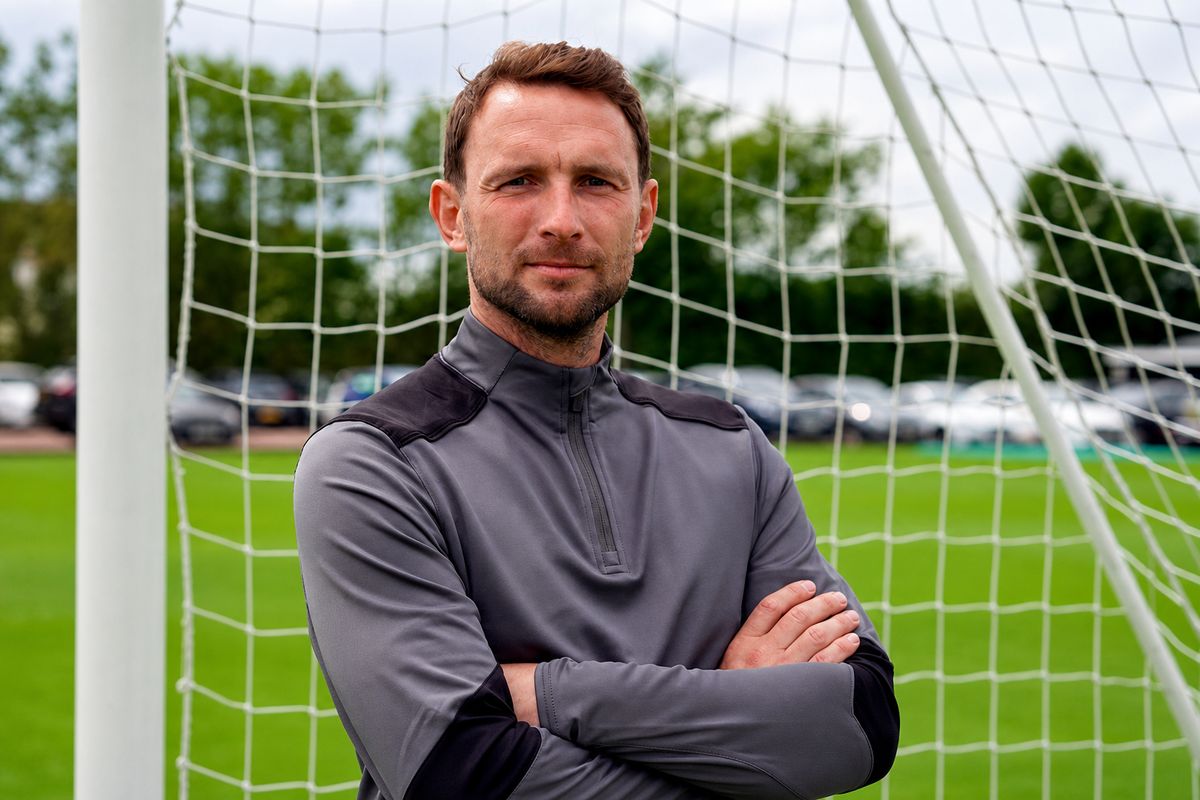
Alex Hughes death: inquest rules sudden death syndrome
An inquest has concluded that Alex Hughes died from sudden death syndrome at the age of 38. The finding, reported by The Telegraph on 5 August 2026, brings a degree of clarity to a tragedy that has shaken Grimsby Town FC and the wider football community since June, when the club announced his "sudden and unexpected" passing.
Alex Hughes was a familiar name inside football even if he was not a household one. He was the player recruitment lead at Grimsby Town, the League Two club where he had worked since 2025, and he was widely respected across the game for his analytical eye and his warmth as a colleague. His death at such a young age, leaving behind a wife and two young children, prompted an outpouring of grief that stretched far beyond Cleethorpes.
The inquest's conclusion places his passing within a deeply tragic category of sport-related fatalities. Sudden death syndrome is the term used when an otherwise healthy person dies unexpectedly and no structural cause of death can be identified at post-mortem. BBC News has covered the family's and the club's response since his death in June, and the inquest outcome now gives that coverage a definitive medical explanation.

Who was Alex Hughes, the football recruitment lead?
To understand why Alex Hughes's death has resonated so deeply, you have to understand the breadth of his career. He was not a headline-maker in the way his father was, but he carved out a genuine and respected niche in the modern game. Before joining Grimsby, he had worked in recruitment and analysis roles at Blackburn Rovers, Manchester City, Fulham, AFC Fylde and Morecambe. That is a CV that spans the Premier League down to the National League, and it made him an unusually well-rounded operator.
His early years in football were on the pitch, albeit not at the senior level. Alex played for the reserve teams at Stockport County and Wrexham before accepting that his future lay elsewhere in the sport. That transition from player to analyst is a common one, but Alex did it earlier than most, and it gave him a perspective that managers valued. He understood what it felt like to be a young player chasing a career, and that empathy informed every recommendation he made.
He then spent around a decade working as a player agent, and also had a spell at a private academy in Portugal. That combination of experiences, playing, analysing, agent work and international exposure, made him a rare breed in recruitment circles. When Grimsby manager David Artell went looking for a recruitment lead in 2025, he knew exactly what he wanted, and after interviewing more than 100 candidates, he found it in Alex Hughes.
Mark Hughes: "totally heartbroken" over beloved son
The personal dimension of this tragedy is devastating. Mark Hughes, one of the most celebrated Welsh footballers of his generation, paid tribute to his son in a statement released through the League Managers Association. The statement, issued in June, read: "Jill and I are totally heartbroken by the sudden and unexpected loss of our beloved son Alex."
The tribute went on to describe Alex as "a wonderful son, brother to Curtis and Xenna, devoted husband and father to Jessica and their two beautiful children Sebastian and Leonardo." It added that Alex "had many good friends and colleagues" and that he "will be so deeply missed by us all." The raw simplicity of those words speaks to the magnitude of the loss, and they have been widely shared across the football world since his death.
Mark Hughes managed Wales between 1999 and 2004, and enjoyed a storied playing career at Manchester United, Chelsea and Barcelona among others. For a public figure so used to fronting press conferences and leading teams, this was a different kind of pain, delivered in a quiet statement from the LMA rather than from a touchline. The football family has rallied around the Hughes family, but as the statement makes clear, no amount of public support can ease that private grief.
Grimsby Town "devastated" and a club united in grief
Grimsby Town were the club where Alex Hughes was making his mark most recently, and their reaction to his death has been deeply felt. The club released a statement describing him as a "highly valued member of the Grimsby Town family", adding: "His warmth, professionalism and positive personality made a lasting impression throughout the football club and the wider football community."
Chairman Andrew Pettit said: "Everyone at Grimsby Town Football Club is shocked and saddened by the news of Alex's passing. He will always be remembered as a valued member of the Mariners family who contributed so much during his time with us." The club's statement concluded with a fitting football epitaph: "Rest in peace, Alex. Once a Mariner, always a Mariner."
Alex had joined the Mariners in 2025 as the club's recruitment lead and had played "an important role" in the development of the men's first-team squad. For a club operating in League Two, recruitment is everything. Finding players who fit a modest budget while still competing is a high-wire act, and Alex Hughes was central to that operation. David Artell, the manager who appointed him, had told fans that more than 100 candidates were interviewed for the role and that Alex was the "standout applicant".
From Stockport and Wrexham reserves to Manchester City analysis
Alex Hughes's football journey was anything but linear, and that is precisely what made him effective. His first role in the analytical side of the game was as a performance analyst at Blackburn Rovers, followed by a move to Manchester City as a recruitment analyst. Those were formative years at two clubs with rich histories, and they gave him a grounding in the data-driven side of the sport long before it became the industry standard it is today.
He then spent time at a private academy in Portugal, an experience that broadened his understanding of the global player market. For around a decade, he worked as a player agent, representing players and negotiating within the often murky world of transfers. That decade gave him an insight into the motivations of players and the realities of club finances that a purely academic analyst would never have possessed.
His final move, to Grimsby in the summer of 2025, felt like a natural culmination. In his recruitment lead role, Alex was responsible for identifying and recommending players for the first-team squad, a position of considerable trust. The fact that he had previously worked at Fulham, AFC Fylde and Morecambe meant he understood football at every level, from the Championship to the National League. That breadth of experience is rare, and it is why his loss is being felt so keenly in recruitment circles across the country.
Sudden death syndrome: what the inquest finding means
The inquest's conclusion that Alex Hughes died from sudden death syndrome, often abbreviated as SADS, will resonate with anyone who follows sport closely. Sudden arrhythmic death syndrome is the term used when a person dies suddenly and unexpectedly, often during sleep or at rest, and a post-mortem examination finds no obvious cause of death. In many cases, the underlying cause is believed to be an undiagnosed heart condition, such as an inherited arrhythmia that can stop the heart without warning.
These cases are rare but they are not confined to Alex Hughes. Football has witnessed a number of young players collapse due to cardiac events, from Marc-Vivien Foé's death during an international match in 2003 to Christian Eriksen's collapse at Euro 2020, from which he thankfully recovered. What distinguishes SADS is its silence; there is often no warning, and standard screening does not always pick up the abnormality before it is too late.
The inquest's finding, reported today by The Telegraph, does not change the outcome, but it does provide an explanation. For the Hughes family, there may be some small comfort in knowing that nothing could have been done to prevent it. For the football community, it is a reminder of the fragility of life, even for those who seem to be in the prime of their health and at the peak of their professional powers.
A legacy of warmth and professionalism in football
Alex Hughes leaves behind a wife, Jessica, two young children, Sebastian and Leonardo, his parents and his siblings. He also leaves behind a professional legacy that is far larger than his 38 years would suggest. In an industry that can be cynical and transactional, those who knew him have consistently emphasised his warmth, professionalism and positive personality, a phrase from Grimsby's own statement that has been echoed across the tributes.
The BBC's coverage, published on 21 June 2026, captured the immediate reaction of the club and the family. The Grimsby statement described Alex as a "devoted husband, proud father, beloved son, brother and friend". Those are not the words of a football club ticking a corporate box; they are the words of people who genuinely cared about the man they worked alongside every day.
For David Artell and Grimsby Town, the task now is to carry on while honouring his memory. The recruitment department that Alex helped build will continue, but it will do so without the man who, out of more than 100 candidates, stood out above the rest. As the club put it, "Once a Mariner, always a Mariner." Alex Hughes may be gone, but the impact he had on the people around him will not fade quickly. In a sport that measures everything in numbers, some contributions are best measured in the lives touched. Alex Hughes touched many.