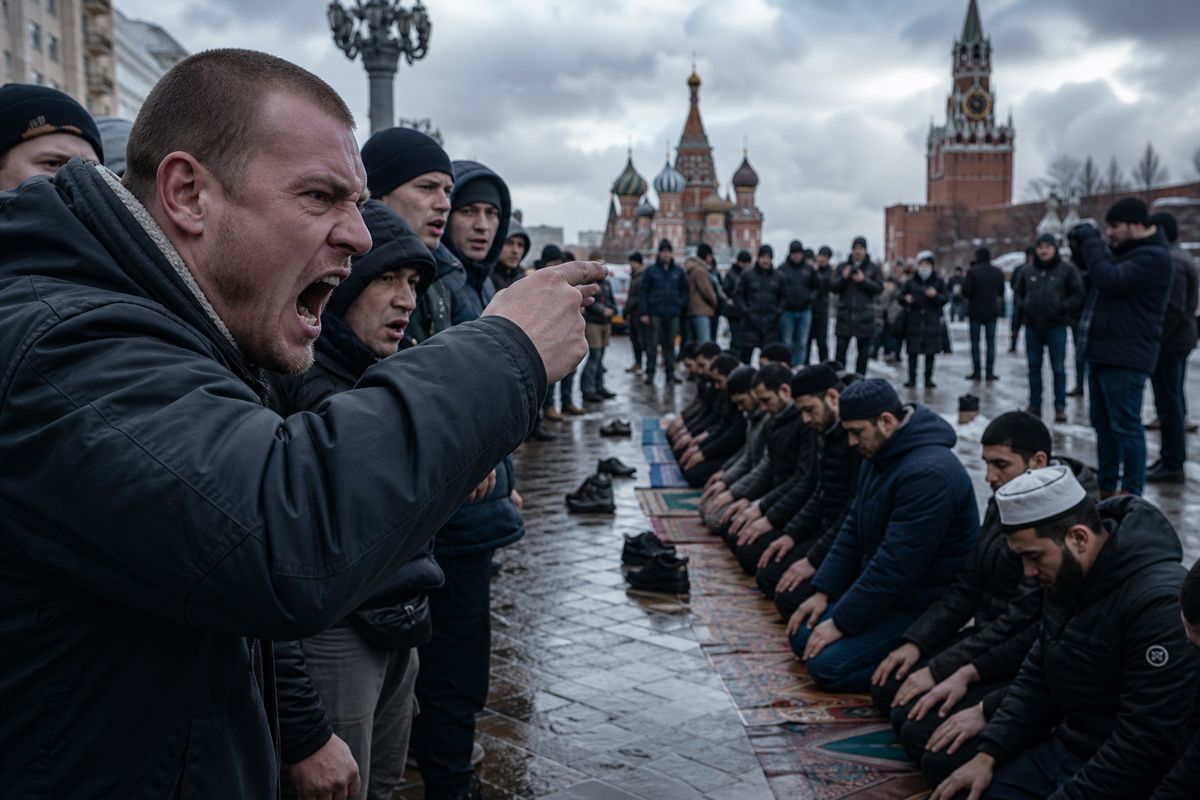
The Khabarovsk Bus Driver Incident That Ignited Outrage
Last October, a bus driver in the Russian Far Eastern city of Khabarovsk was caught on video kneeling in prayer at a bus terminal while passengers waited inside the vehicle. The man, believed to be a Central Asian migrant, was quickly investigated by authorities. But here's the twist: they cleared him of any wrongdoing after determining he was on a break. That didn't stop the footage from going viral, and the online anger was immediate. Russians flooded social media with complaints, accusing the driver of being disrespectful and provocative.
This wasn't an isolated incident. In March 2025, authorities in Vladivostok disciplined another bus driver after a similar video showed him praying in front of his vehicle. The municipal response was telling: "The driver was advised to seek alternative, more secluded locations for religious rites to avoid causing inconvenience to others." Not a punishment, but a warning. A clear sign that the authorities are caught between religious freedom and public sentiment.
These two cases are just the tip of an iceberg. As anger in Russia over Muslim migrants praying in public grows, what was once a quiet practice has become a political and social flashpoint. And the timing is no coincidence.

Why Street Prayers Are a Growing Flashpoint in Russia
To understand the fury, you have to look at the numbers. Russia is home to millions of Muslims, including a large and growing population of migrants from Central Asia — mainly Tajikistan, Uzbekistan, and Kyrgyzstan. Many of them work as taxi drivers, bus drivers, and construction workers. They pray five times a day, as Islam requires. But mosques are scarce, especially in cities like Moscow and St Petersburg. So they do what millions of Muslims do worldwide: they pray in parking lots, on sidewalks, in parks, or even on public transport.
Critics call this inconsiderate. Valeriy Fadeev, head of Russia's presidential human rights council, put it bluntly during a visit to Uzbekistan in October 2025: "While I'm not against Islamic prayers, I think it's pretty weird when someone on the subway rolls out a prayer mat or a minibus driver starts praying." That's senior official language — and it reflects a broader mood. The practice is increasingly seen as provocative, even as a symbol of unchecked immigration.
But it's not just about inconvenience. There's a deeper anxiety at play. The deadly terrorist attack on Crocus City Hall in March 2024, in which several Tajik nationals were arrested, has supercharged hostility toward Central Asians. Since then, migrants have faced intensified police raids, mass deportations, and widespread abuse. A video of a man praying becomes a lightning rod for all that anger.
Background: Central Asian Migrants and Post-Crocus Hostility
The Crocus City Hall attack on 22 March 2024 was a watershed moment. Four gunmen opened fire in a concert venue on the outskirts of Moscow, killing over 140 people. The Islamic State claimed responsibility, but Russian authorities quickly arrested Tajik suspects. That connection — real or perceived — turned Central Asian migrants into targets. Suddenly, being Tajik, Uzbek, or Kyrgyz meant being a potential terrorist in the eyes of many Russians.
Valentina Chupik, a Russian human rights activist, told RFE/RL that the growing scrutiny of Islamic religious practices could further stigmatise migrants. "Online anger over such incidents often turns into real hostility, reinforcing stereotypes and deepening social divides," she warned. And she's right. The bus driver videos are just the visible surface of a much larger wave of discrimination.
Daler, a 34-year-old Tajik taxi driver who spoke anonymously to RFE/RL, described seeing migrants praying "near buildings or rubbish bins." Most of them are taxi drivers who fear missing prayers if they wait to reach a mosque. But Daler himself is wary: "It draws attention and builds resentment toward migrants. I respect people's right to religious freedom, but I think we shouldn't add fuel to hostility toward migrants by praying where it inconveniences people." That's a nuanced view from inside the community — and it shows just how divisive the issue has become.
Official Reactions and the Islamic Perspective on Public Prayer
Senior Russian officials have waded into the debate, and their comments have not always helped. Fadeev's remark about "weird" subway prayers is one example. But the official line is more cautious. The Vladivostok statement advised "alternative, more secluded locations" — a kind of compromise. There is no nationwide ban on street prayers, unlike in France, which banned the practice in Paris in 2011 after far-right protests.
Interestingly, the debate is also alive within Islam itself. Adham Haidarzoda, a prominent religious scholar in Tajikistan, told RFE/RL that Islam advises worshippers to "avoid praying on roads and in places where people walk and gather." According to Islamic teaching, prayers can be offered in clean places like parks, airports, or workplaces, but they should not cause disruption. Graveyards and bathrooms are explicitly discouraged. So the faith itself offers guidance that could defuse tensions — if anyone were listening.
But in Russia's current climate, religious nuance is often lost. The anger in Russia over Muslim migrants praying in public has become a proxy for larger anxieties about immigration, security, and national identity. And as the 2026 calendar rolls on, those anxieties show no signs of fading.
What This Means For You: Understanding the Global Debate on Religious Expression
If you're a migrant worker in Russia, the takeaway is stark: public prayer can put you at risk. Find a quiet, secluded spot if you must pray outside a mosque. Many religious scholars advise exactly that. And consider joining a local mosque community that can offer a safe space. The hostility is real, and it's not going away soon.
If you're a Russian citizen watching these videos, ask yourself: are you reacting to the act of prayer, or to the broader fears it triggers? The bus driver was on a break. He wasn't neglecting passengers. The outrage often says more about the viewer than the worshipper. That's hard to hear, but it's worth sitting with.
Globally, the same debate plays out in Europe and beyond. France banned street prayers in 2011. Britain saw controversy in 2021 when a call to prayer was broadcast from Tower Bridge, despite official permission. These are not isolated incidents. They are part of a worldwide reckoning with religious diversity in public space. What happens in Khabarovsk and Vladivostok is a microcosm of a larger tension between freedom of worship and social harmony. Understanding that tension is the first step to navigating it.
The Broader Implications for Russia's Social Fabric
Russia is a multi-ethnic and multi-religious state, but its tolerance is being tested. The anger over street prayers is not just about inconvenience; it's about belonging. Who gets to use public space? Whose rituals are acceptable? These questions are more than academic. They determine whether millions of migrant workers feel safe going about their daily lives.
The Crocus City Hall attack was a tragedy, but using it to justify discrimination against all Central Asians is a dangerous path. As of July 2026, the atmosphere remains tense. Police raids continue. Deportations are routine. And every video of a man praying on a sidewalk adds fuel to a fire that is already burning out of control.
What would help? More mosques, for starters. Clear guidelines from authorities that balance religious freedom with public order. And a cooling of the rhetoric from officials and social media influencers alike. But none of that is easy in a country where nationalism is on the rise and migrants are an easy scapegoat. The anger in Russia over Muslim migrants praying in public is a symptom of something deeper — and it won't be resolved with a simple ban or a viral video.