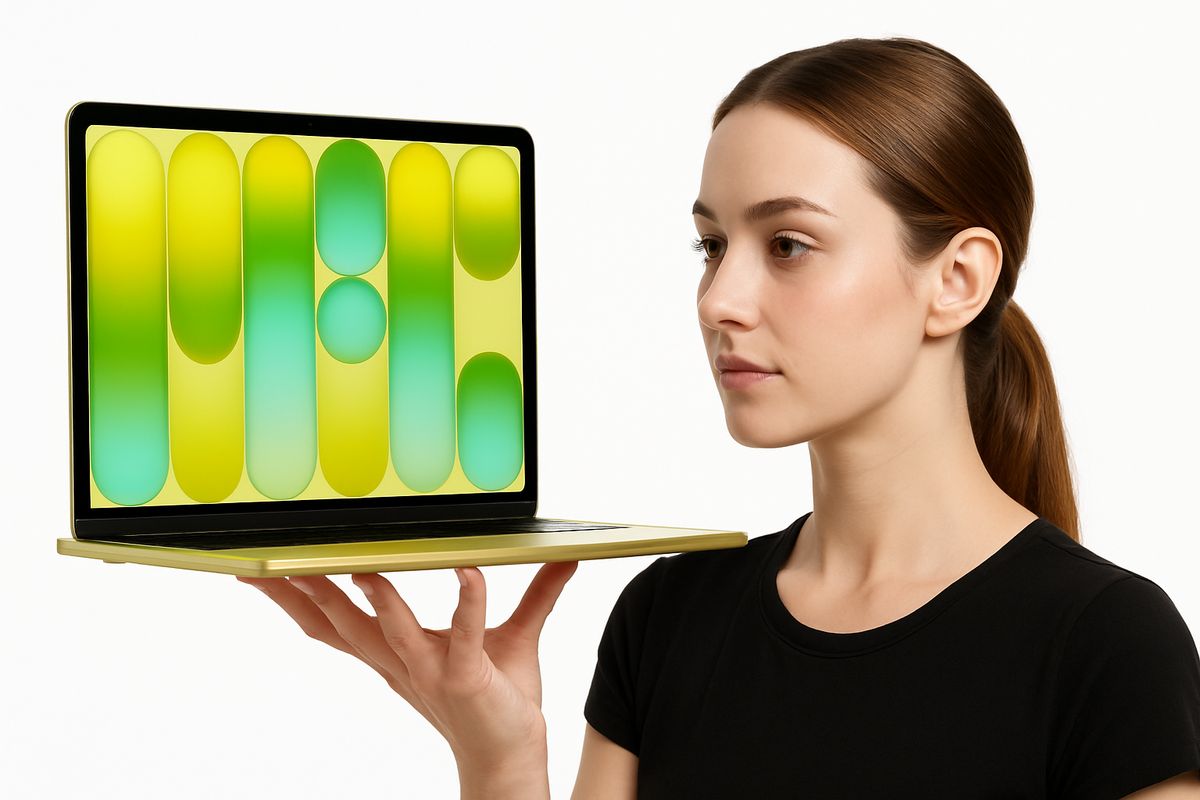
Apple Unveils the MacBook Neo: A Bold, Colorful Entry into the AI Era
On March 11, Apple will begin shipping its most significant redesign of the entry-level laptop in years: the MacBook Neo. Positioned as a vibrant, intelligent, and accessible companion, the Neo represents a clear departure from the utilitarian aesthetic of the MacBook Air, introducing a splash of personality with four new colors—Silver, Blush, Citrus, and Indigo—and a deep integration of Apple Intelligence. Pre-orders are now open for the device, which is built around the new A18 Pro chip and promises up to 16 hours of battery life. This launch is not merely a spec bump; it's a philosophical shift for Apple's most popular laptop category, signaling a future where personal expression and on-device artificial intelligence are foundational, not optional.
The source material from Apple's official page paints a picture of a device designed for "everyday tasks," learning, and light creative work. With a 13-inch Liquid Retina display boasting 500 nits of brightness and support for one billion colors, the MacBook Neo aims to be a compelling visual hub. However, its core selling proposition is unmistakably Apple Intelligence, the personal AI system deeply integrated into macOS. From rewriting text and generating custom "Genmoji" to cleaning up photos, the Neo is being marketed as the hardware gateway to Apple's AI-powered ecosystem. This launch directly answers the industry-wide pivot towards AI-capable PCs, but does so with Apple's characteristic focus on privacy, design cohesion, and user experience.

Decoding the MacBook Neo's Design and Core Specifications
Apple's design team, led by a head of design who recently stated, "We're certainly not making any compromises on the design," has delivered a machine that challenges the notion that affordable laptops must be bland. The four-color lineup is the most colorful in MacBook history, extending to color-coordinated keyboards. This is a deliberate move to attract students, creatives, and users who view their tech as an accessory. Beyond aesthetics, the enclosure is made from durable recycled aluminum, helping the MacBook Neo achieve a milestone: 60% recycled content by weight, which Apple claims is the most ever in any Apple product. This commitment to materials is a significant part of the Neo's identity, blending environmental responsibility with consumer appeal.
Under the hood, the MacBook Neo is powered by the A18 Pro chip, a notable shift from the M-series processors found in the MacBook Air and Pro lines. This suggests Apple is leveraging its iPhone-scale silicon for a new tier of computing, prioritizing efficiency and AI acceleration. It is paired with a 1080p FaceTime HD camera, a dual-mic array with beamforming, and dual side-firing speakers with Spatial Audio support. Connectivity remains streamlined with two USB-C ports and a headphone jack. The inclusion of Touch ID on certain models maintains a familiar security and convenience feature. With a claimed battery life of up to 16 hours, Apple is positioning the Neo as an "all-day" device for on-the-go productivity and entertainment, a critical metric for its target audience.
The Heart of the Machine: Apple Intelligence and the macOS Experience
The MacBook Neo's most transformative feature is its native integration of Apple Intelligence. This isn't a cloud-dependent service bolted on; it's "built right in" as a core platform feature. Apple's documentation highlights on-device processing as the default, meaning common AI tasks—like using Writing Tools to proofread and rewrite text, creating Genmoji, or using the Clean Up tool to remove objects from photos—happen directly on the MacBook Neo without sending personal data to servers. This addresses growing privacy concerns in the AI space head-on. For more complex requests, Apple introduces Private Cloud Compute, which uses server models running on Apple silicon but is designed with what the company calls "groundbreaking" privacy protections.
This AI capability is woven into the fabric of macOS, which on the MacBook Neo features an interface described as having "Liquid Glass." The operating system is touted as a "smooth operator" that will feel instantly familiar to iPhone users. A key synergy is highlighted between the MacBook Neo and the iPhone, with the ability to "magically pair" to unlock more features, though specific details are not provided in the source material. This tight integration within the Apple ecosystem is a classic competitive moat, making the Neo more valuable to those already invested in iPhones, iMessage, and iCloud. The promise is a seamless, intelligent, and private computing experience that leverages the best of Apple's hardware and software.
Neo vs. Air: Navigating Apple's New Laptop Landscape
The introduction of the MacBook Neo immediately raises the question posed by related headlines: "MacBook Neo vs MacBook Air M5 — how do they compare and which should you buy?" While the source material does not detail the M5 MacBook Air (a presumed future product), we can infer the strategic positioning. The MacBook Air line, with its M-series processors, is likely to remain the performance and premium ultraportable champion, aimed at professionals and power users who need maximum CPU and GPU throughput. The MacBook Neo, with its A-series chip, appears tailored for a different mission: maximizing battery efficiency, enabling always-on AI features, and offering a more accessible price point with a bold design.
This creates a clearer segmentation in Apple's portfolio. The Neo is the fun, colorful, AI-first everyday computer for communication, consumption, and light creation. The Air is the serious, powerful, do-almost-anything workhorse. The choice will come down to user priorities: cutting-edge AI integration and personal style (Neo) versus raw performance for demanding applications like video editing or software development (Air). For many students and general users, the Neo's combination of long battery life, a great display, and built-in AI tools may be the more compelling package, especially if it comes at a lower cost than the Air.
Historical Context and Industry Implications
The MacBook Neo's launch must be viewed through two historical lenses: Apple's own product evolution and the broader PC industry trend. For Apple, this marks a return to colorful, consumer-friendly laptops reminiscent of the iconic iMac G3 and the original clamshell iBook. It's a rejection of the "one shade fits all" philosophy that has dominated the MacBook line for over a decade. More importantly, it represents the first Mac designed from the ground up in the age of generative AI, following the industry-wide push exemplified by Microsoft's Copilot+ PC initiative. Apple is not just participating in this trend; it is attempting to define it by coupling AI with its longstanding privacy narrative.
The emphasis on recycled materials and the 60% recycled content claim also situates the Neo within the escalating environmental, social, and governance (ESG) expectations for tech giants. Apple is using design and sustainability as dual differentiators. For the industry, the MacBook Neo signals that the battle for the next generation of PC buyers will be fought on the fronts of AI utility, personal expression, and ecological credentials, not just gigahertz and core counts. If successful, the Neo could pressure competitors to offer similarly vibrant, AI-native, and eco-conscious devices in the mid-range market, raising the bar for what consumers expect from an "everyday" laptop.
What This Means For You
If you're in the market for a new Apple laptop in the coming months, your decision matrix has fundamentally changed. The MacBook Neo is not just another option; it redefines what the entry point into the Mac ecosystem can be. For students, parents, and casual users whose computing revolves around web browsing, communication, media consumption, and light document work, the Neo is likely to be the default recommendation. Its AI features, like automated note summarization and photo cleanup, are practical tools that solve everyday annoyances. The 16-hour battery life and colorful design are tangible benefits that align perfectly with a mobile, style-conscious lifestyle. You should prioritize the Neo if your workflow is cloud-based and app-centric, and you value a computer that feels personal and helpful over one that is purely a brute-force productivity tool.
Conversely, if your work involves professional-grade applications for photo editing, video production, music creation, coding, or data science, you should wait for direct comparisons with the expected MacBook Air M5. The A18 Pro chip in the Neo is an unknown quantity for sustained, heavy workloads. The AI features, while innovative, may not compensate for the raw performance gap a professional M-series chip would provide. Your choice hinges on whether you need a generalist AI companion (Neo) or a specialist performance machine (Air). Furthermore, if you are deeply embedded in the Apple ecosystem with an iPhone, the Neo's promised seamless pairing and continuity features add significant value, making it a more intelligent hub for your digital life.
A New Chapter for the Everyday Mac
The MacBook Neo is a statement product. It declares that Apple believes the future of mainstream computing is colorful, intelligent, private, and sustainable. By launching a device so distinctly different from the MacBook Air, Apple is skillfully expanding its laptop lineup to capture different user psychographics, not just different performance tiers. The success of the Neo will depend on the real-world usefulness of Apple Intelligence, the competitive pricing, and whether consumers embrace its bold aesthetic. Available starting March 11 in four colors, the MacBook Neo is more than a new laptop; it's Apple's vision for the next decade of personal computing—a vision where your computer doesn't just work for you, but understands you, all while looking distinctly like your own.
Its arrival creates a fascinating dynamic in the market. It challenges the Windows-dominated landscape of AI PCs by offering a tightly integrated alternative and forces a reconsideration within Apple's own camp about what a MacBook can be. Whether it becomes a beloved classic like the iBook or a niche experiment will be determined by how well its promised features—from the A18 Pro's efficiency to the depth of Apple Intelligence—translate into daily delight for millions of users. One thing is certain: the entry-level laptop category will never look the same again.