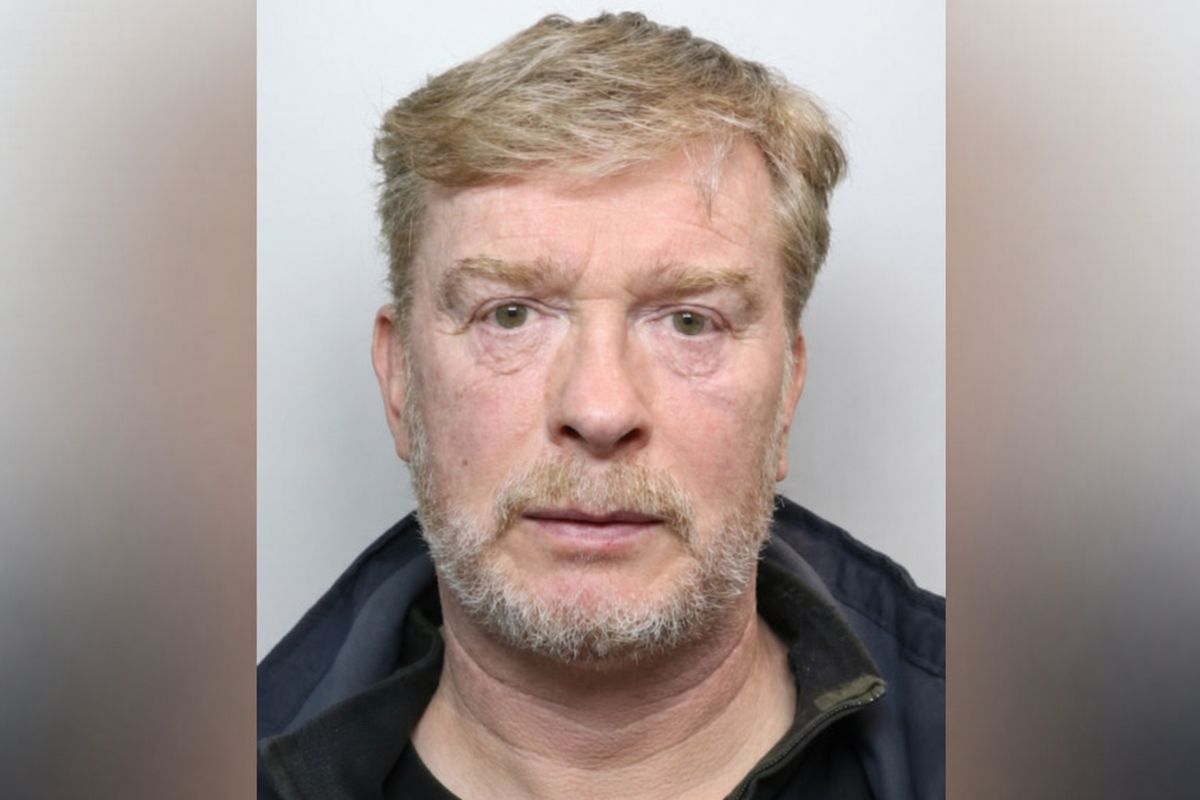
Cold case closed: Aron Traynor sentenced 34 years after attack
A man who tried to rape a 74-year-old woman in Stockport in 1992 has finally been brought to justice. Aron Traynor, now 56, was sentenced to 13 years in prison at Manchester's Minshull Street Crown Court in March 2026 after being convicted of attempted rape and violent indecent assault. The case is a striking example of how advances in forensic science can close even the oldest of files.
Traynor's conviction came after a chance DNA breakthrough. He was arrested for drink-driving in 2023, and during that process he provided a DNA sample. It matched evidence from the 1992 attack. Police had kept the victim's forensic samples for decades, and a near-complete DNA profile had been added to the national database in 2005. But no match came until Traynor's drink-driving arrest. For the victim's family, the sentence brings a measure of peace, even though she died before seeing her attacker held accountable.

The 1992 attack and a stalled investigation
The assault happened in Stockport, Greater Manchester, in 1992. The victim, then 74, was attacked by a man who was a stranger to her. He attempted to rape her and subjected her to violent indecent assault. At the time, police conducted a thorough investigation but could not identify a suspect. The case went cold.
According to a statement from Greater Manchester Police (GMP), the attack had "devastating and lasting" consequences for the woman. Her son, speaking after the sentencing, described how the ordeal marked her for the rest of her life. She died before Traynor was caught, and before the trial took place. Yet her family remained determined to see justice done, cooperating fully with detectives over the years.
In 2005, GMP commissioned extra forensic analysis on the evidence. That analysis yielded a near-complete DNA profile, which was loaded onto the national DNA database. But no match was found at the time. The profile sat in the system, waiting for a hit that would not come for another 18 years.
How a drink-driving arrest cracked the case
The breakthrough came in an almost cinematic twist. Aron Traynor was stopped by police for drink-driving in 2023. As part of the routine process, he gave a DNA sample. That sample was run against the national database, and it matched the profile from the 1992 attack. Traynor was arrested and later charged with attempted rape and violent indecent assault.
Police released footage of his arrest in 2023, showing a calm but stern operation. Traynor, a resident of Stockport, had no idea that a routine traffic stop would unravel a crime he had likely thought was buried in the past. GMP's Detective Chief Inspector Cheryl Hughes said: "Time is quite simply no barrier to justice. Offenders should be in no doubt that forensic science continues to advance, and every interaction they have with the criminal justice system increases the chance of their crimes being uncovered." That quote captures the essence of modern cold-case work: each arrest, each sample, each database entry is a potential key to an old lock.
The case also highlights how crucial it is for police to preserve forensic evidence from historic crimes. Many forces now have dedicated cold-case units that review unsolved cases as technology evolves. The 2005 enhancement of the DNA profile was possible because the original evidence had been stored properly for 13 years. Without that preservation, the 2023 match would never have happened.
The trial and sentence of Aron Traynor
Traynor went on trial in early 2026 at Minshull Street Crown Court in Manchester. The jury heard how the attack had left the victim traumatised and how it took 34 years to find the perpetrator. Traynor was convicted of attempted rape and violent indecent assault. The judge sentenced him to 13 years in prison.
The sentence reflects the severity of the crimes, even though they occurred more than three decades ago. Under UK law, serious sexual offences have no statute of limitations, meaning perpetrators can be prosecuted at any time. This principle was reaffirmed by the court. The judge also likely considered the victim's age (74 at the time) and the lasting impact of the violence.
Traynor's name can now be reported in full after reporting restrictions were lifted at sentencing. He had no prior convictions for sexual offences, but his drink-driving arrest proved to be his undoing. The case has been widely covered by regional and national media, including the BBC, which broke the story on 8 May 2026. Greater Manchester Police also issued a statement and video footage of the arrest, emphasising the message that cold cases can be solved.
For the victim's son, the sentence is a bittersweet conclusion. He told the court about his mother's suffering, but expressed gratitude that the offender was finally held accountable. DCI Hughes thanked the family for their patience and cooperation, saying: "Although the victim sadly has not lived to see justice served, I hope this sentence gives her family a sense of peace."
The Bigger Picture: Cold cases, DNA databases, and the pursuit of justice
This case is not an isolated incident. Across the UK, police forces are increasingly using advances in forensic science to revisit unsolved rapes, murders, and other serious offences from the 1980s and 1990s. The national DNA database, launched in 1995, now holds profiles from millions of individuals. But crucially, the database is a living tool: as new profiles are added from arrests, they can match older profiles that were previously unmatched. Traynor's case is a textbook example of that mechanism in action.
What's often overlooked is the role of government investment in forensic technology. Since the early 2000s, the UK has poured resources into improving DNA analysis techniques, including low-copy number DNA and enhanced profiling. These methods can extract usable profiles from tiny or degraded samples that would have been useless in the 1990s. The 2005 re-examination that produced Traynor's near-complete profile was made possible by these techniques. And the database match in 2023 was only possible because that profile was stored and searchable.
But there is a broader societal angle here: the persistence of victims' families. Cold-case units rely heavily on families keeping the memory of the crime alive. They push for reviews, provide fresh witness testimony, and ensure that evidence remains in the police spotlight. In Traynor's case, the victim's son played that role. Without his cooperation and the family's willingness to support the investigation, the case might never have been prioritised. The justice system can only work when victims and families refuse to let cases be forgotten.
Another dimension is the deterrent effect. DCI Hughes's statement that every interaction with the criminal justice system increases the chance of past crimes being uncovered is a powerful message. For someone like Traynor, who may have believed he had gotten away with it, a minor traffic offence became a life-changing trap. This sends a signal to anyone with a dark secret: the past is never fully behind you. Forensic science is closing the gap between crime and consequence, even decades later.
A legacy of justice for the victim's family
The sentencing of Aron Traynor brings a long and painful chapter to an end for the victim's family. They have waited 34 years for this moment. While the victim herself did not live to see it, her son made clear that the family feels a sense of closure. The case also serves as a reminder to the public that no crime is too old to be solved, especially with modern forensic tools.
Greater Manchester Police have used this case to highlight the importance of DNA evidence and the value of cold-case reinvestigations. They have also encouraged anyone with information about historic sexual offences to come forward, assuring them that advances in science mean new leads can emerge at any time. For other families living with unresolved violent crimes, this verdict offers a glimmer of hope. Justice, however delayed, is still possible.
The sentence of 13 years means Traynor will spend a significant portion of his remaining life behind bars. He will be in his late 60s by the time he is eligible for release. It is a fitting end for a crime that scarred a woman's final years. And it underscores a fundamental truth of modern policing: the net is wider and stronger than ever, and it catches those who thought they had slipped through.