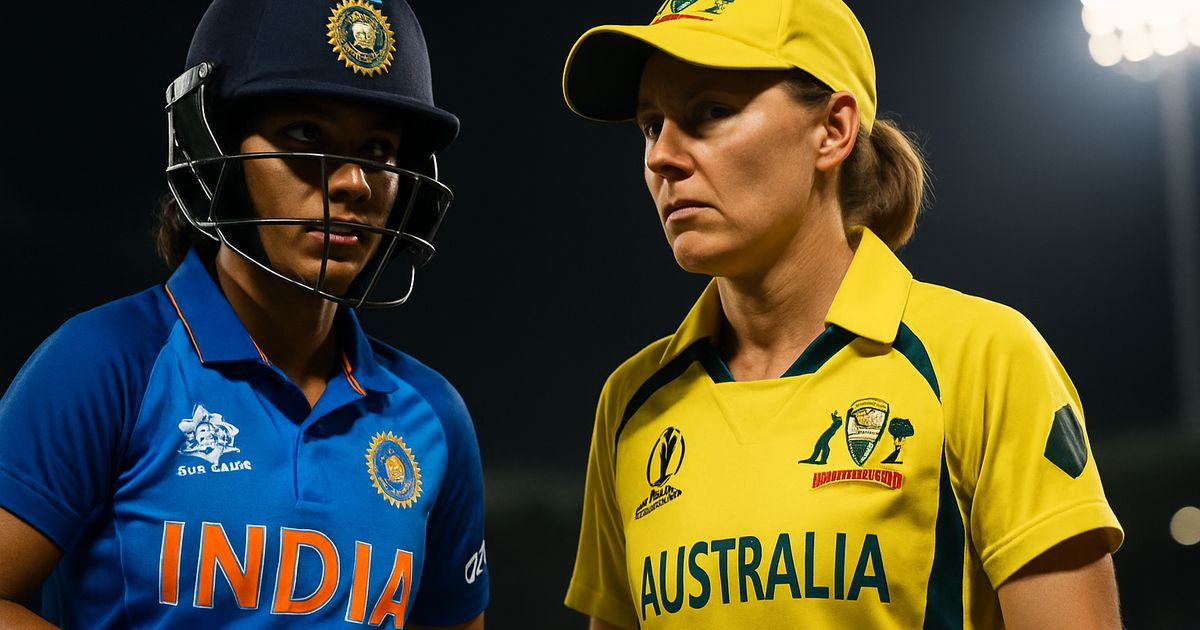
A Clinical Statement to Start the ODI Series
In a commanding display of skill and intent, the Australian women's cricket team secured a decisive six-wicket victory over India in the first One-Day International (ODI) at Brisbane's Allan Border Field. Chasing a modest target of 215, the hosts reached 217-4 in just 38.2 overs, winning with a substantial 11.4 overs (or 70 balls) to spare. This performance served as a powerful response from the world's top-ranked side, coming on the heels of a rare home series defeat in the preceding T20 format. The match was defined by composed half-centuries from veteran opener Alyssa Healy (50 off 70) and the ever-reliable Beth Mooney (76 off 79), backed by a disciplined bowling effort that restricted India to 214 all out in 48.3 overs.
The victory was more than just a 1-0 lead in the three-match ODI series; it was a statement of resilience. As captain Alyssa Healy noted post-match, "A little bit was put on us about how we were going to bounce back. To come out and play the way we did today was clinical. I'm proud of the group." This sentiment underscores the high standards within the Australian camp, where a T20 series loss—their first at home in nine years—is seen as a catalyst for improvement rather than a crisis. The win also levels the points in the broader multi-format series, setting the stage for a fiercely contested remainder of the tour in Hobart.

Match Breakdown: A Tale of Two Innings
The narrative of the day-night encounter was shaped early by the Australian bowlers. India, after winning the toss and choosing to bat, suffered an immediate setback when Megan Schutt trapped Shafali Verma's opening partner, Priya Rawal, LBW for a golden duck. Despite a shaky start, India's innings was anchored by two experienced campaigners. Vice-captain Smriti Mandhana played a characteristically elegant knock of 58 from 68 balls, while captain Harmanpreet Kaur grafted her way to 53 from 84 deliveries. Their partnership provided stability, but regular wickets at the other end prevented India from building the explosive platform they often seek.
The Australian attack showcased its depth and variety. Off-spinner Ashleigh Gardner was the chief destroyer, claiming 3-33 from her 10 overs, including the crucial wicket of Harmanpreet Kaur. Seamers Megan Schutt (2-42) and Kim Garth (1-30) provided control with the new ball, while all-rounder Tahlia McGrath chipped in with the wicket of Mandhana. A late flourish from young all-rounder Kashvee Gautam, who scored a valuable 43 from number eight, helped India push past 200, but a total of 214 always appeared sub-par on a good Brisbane wicket.
The Chase: Experience Guides Australia Home
Australia's reply began with positive intent. Phoebe Litchfield provided early momentum with a brisk 32 before falling to spinner Charani. A minor stumble saw Litchfield and new batter Georgia Voll dismissed in quick succession, leaving Australia at 55-2. However, any hopes of an Indian fightback were extinguished by the seasoned pair of Healy and Mooney. They combined for a 119-run partnership, blending sharp running with well-timed boundaries. Healy, in her final series before retirement, reached a poignant half-century before being caught off Gaud's bowling. Mooney continued her serene progress, accelerating beautifully to 76 before holing out with victory in sight. The finishing touches were applied emphatically by Annabel Sutherland, who blasted an unbeaten 48, sealing the win with a six off Deepti Sharma.
Key Figures: Healy's Farewell and India's Pillars
The match was rich with subplots centred on its star players. For Australia, all eyes were on wicketkeeper-batter Alyssa Healy. A legend of the game with 123 ODI caps to her name, this series marks her international swansong. Scoring a fifty in her first innings of her final series was a fitting tribute to her career and provided an emotional core to Australia's performance. Her partnership with Beth Mooney, one of the most consistent white-ball batters in the world, demonstrated the value of experience in navigating a chase.
For India, the reliance on their established stars was evident. Smriti Mandhana and Harmanpreet Kaur contributed 111 of India's 214 runs between them. When they fell, the innings lost its backbone. This highlights both the strength and the potential vulnerability of the Indian lineup. The positive emergence of Kashvee Gautam with the bat is a silver lining, suggesting depth is being built. However, the bowling attack, missing the experienced Jhulan Goswami (retired) and reliant on spinners Deepti Sharma and Charani, lacked the penetration to defend a low total against a powerhouse batting unit.
Analysis: What This Victory Reveals
This comprehensive win reaffirms several enduring truths about women's international cricket. Firstly, Australia's system and squad depth remain the benchmark. They can absorb the loss of key players like Ellyse Perry (injured) and still field a balanced, formidable XI. The seamless transition from the aggressive T20 mode to the more structured ODI format speaks to the team's adaptability—a trait hinted at in related headlines discussing its importance. Secondly, the result underscores the competitive gap that still exists between Australia and the chasing pack. While India, England, and others have closed the gap significantly, Australia's ability to deliver a "clinical" performance under pressure, as Healy described it, sets them apart.
Historically, this match fits into a pattern of Australian dominance on home soil, momentarily interrupted by the T20 series loss. It serves as a reminder that in the multi-format series, which includes Test, ODI, and T20 cricket, consistency across all disciplines is paramount. For India, the match is a reality check. Their historic Test win on Australian soil earlier in the tour and the T20 series victory proved they can compete and win. However, replicating that success in the 50-over format, particularly against Australia's full-strength bowling attack, requires greater top-order consistency and more incisive bowling throughout the innings.
The Road Ahead: What to Watch in Hobart
With the series moving to Hobart for the second and third ODIs on Friday and Sunday, several key narratives will define the coming contests. The most poignant will be the continued farewell tour of Alyssa Healy. Every innings she plays now carries added weight, and her leadership in guiding a relatively new opening partnership will be crucial. For India, the focus must be on batting resilience. Can players like Jemimah Rodrigues or Richa Ghosh step up with a major score to support Mandhana and Kaur? The Indian think tank will also need to reconsider their bowling combinations and field placements to apply sustained pressure.
From a tactical standpoint, Australia will look to continue exploiting any middle-order fragility in the Indian lineup, particularly against spin through Gardner and the pace of Sutherland. India, conversely, will need early wickets to expose Australia's middle order, which, while strong, hasn't been as heavily tested recently. The outcome of this ODI series will not only decide the ODI leg of the multi-format contest but will also provide significant psychological momentum heading into any future clashes, such as World Cups. The adaptability and strategic responses shown in the next two games will be telling indicators of both teams' evolution.
Conclusion: A Benchmark Performance
Australia's six-wicket triumph in Brisbane was a textbook example of a champion team responding to adversity. It blended disciplined bowling, sharp fielding, and a chase masterfully led by experienced heads. For India, it exposed areas requiring attention but should not overshadow the significant progress they have made as a cricketing nation. The women's game thrives on such high-stakes, competitive series, and this opening ODI has set a compelling precedent. As the action shifts to Hobart, fans can anticipate a fierce Indian counter-punch and an Australian team determined to prove their first-game performance was no fluke, but rather the reassertion of a dominant cricketing philosophy.
Sources & References
This analysis was compiled using reporting and live commentary from the following news sources:
- BBC Sport: Australia beat India in first ODI in Brisbane
- The Guardian: Australia beat India by six wickets in first women’s cricket one-day international – as it happened