2026 NFL Draft Forecast: A First-Round Blueprint Before the Combine Frenzy
As the NFL world converges on Indianapolis for the 2026 Scouting Combine, analyst Bucky Brooks has released his second comprehensive projection for the first round of the upcoming draft. This mock draft, published on February 24, 2026, offers a pivotal snapshot of team needs and prospect valuations just before the free agency period reshapes rosters and the combine workouts alter perceptions. The projection, which forecasts the draft set for April 23-25 in Pittsburgh, is more than a simple list; it's a strategic analysis of how franchises like the New York Jets, Los Angeles Rams, and Las Vegas Raiders might address critical deficiencies with specific collegiate talents. With live coverage of the combine on NFL Network and NFL+ beginning February 26, Brooks' mock draft serves as an essential baseline for understanding the evolving narrative of the 2026 NFL offseason.
The mock draft is particularly notable for its timing. Brooks explicitly frames it as a forecast delivered "just before the free agency frenzy" and ahead of the events at Lucas Oil Stadium that will inevitably impact "the prospect pecking order." This positioning makes it a crucial document for fans and analysts alike, capturing team priorities in their rawest form, before market moves and athletic testing introduce new variables. The selections tell a story of teams in transition—like the Raiders under new head coach Klint Kubiak—and established contenders like the Kansas City Chiefs seeking the final pieces to maintain dominance.

Top of the Board: Quarterback Reset and Defensive Foundations
Brooks' projection starts with a franchise-altering decision for the Las Vegas Raiders, who hold the first overall pick. He has them selecting Indiana redshirt junior quarterback Fernando Mendoza, describing him as a "pinpoint passer" with "clutch playmaking ability." This move is framed as the perfect start to the "Klint Kubiak era," suggesting the Raiders view Mendoza as the catalyst to energize an offense that already possesses blue-chip talent at running back and tight end. This pick underscores the perennial premium on the quarterback position and sets the tone for a draft where need often meets value at the top.
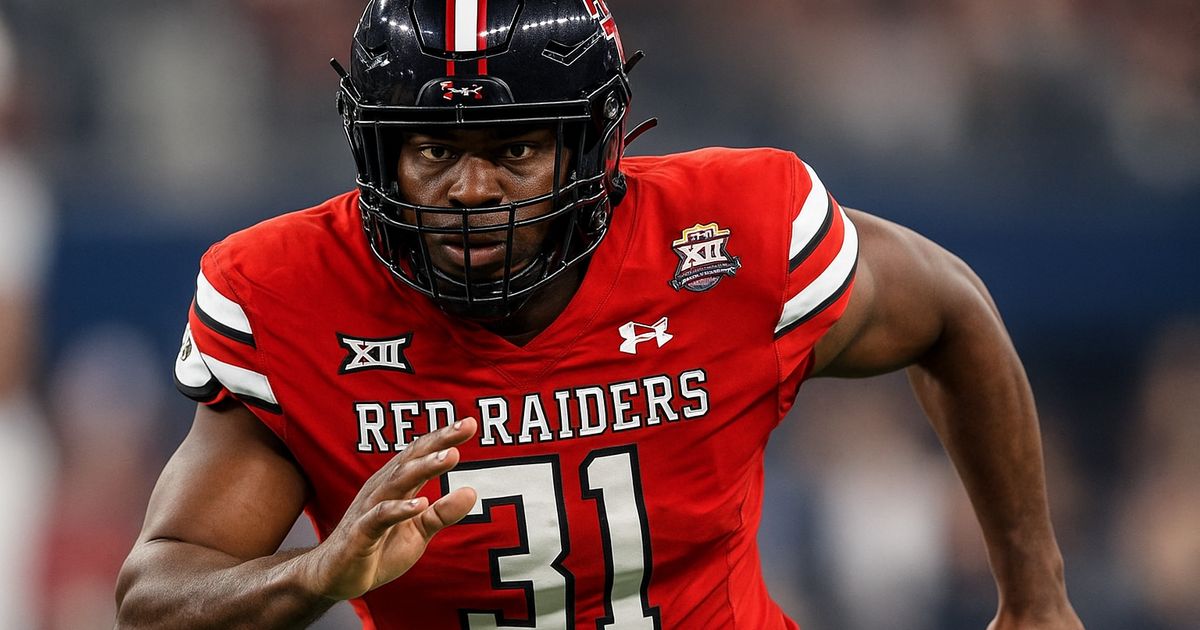
The subsequent picks quickly pivot to building defensive power. At No. 2, the New York Jets are projected to take Texas Tech edge rusher David Bailey, a "spectacular sack specialist." Brooks links this pick directly to the defensive philosophy of new play-caller Aaron Glenn, suggesting the Jets aim to generate more takeaways through relentless pressure. The Arizona Cardinals, picking third, address their offensive line with Miami offensive tackle Francis Mauigoa, a player noted for his "nastiness" who could solidify the right side opposite Paris Johnson Jr. The Tennessee Titans, under defensive-minded head coach Robert Saleh, then select Ohio State's versatile defender Arvell Reese at No. 4. Brooks notes Reese's potential as both an off-ball linebacker and edge rusher, though he cautions that his development "could take some time" given his limited starting experience.
Notable Team Fits and Philosophies
Several picks in Brooks' mock draft are explicitly tied to the philosophies of specific coaches or team histories. The New York Giants' selection of Ohio State safety Caleb Downs at No. 5 is connected to head coach John Harbaugh's past success with elite safeties like Ed Reed and Kyle Hamilton. Brooks posits that Harbaugh could "push for a multi-faceted defensive playmaker" to fix a unit that disappointed in 2025. Similarly, the Washington Commanders' choice of Miami edge rusher Rueben Bain Jr. at No. 7 is linked to head coach Dan Quinn potentially seeing a resemblance to a young Dante Fowler Jr. in Bain's power-based game.
For contenders, the picks aim to add a final explosive element. The Kansas City Chiefs, picking ninth, are projected to select Ohio State wide receiver Carnell Tate, whose "speed and explosion" would create new mismatches alongside Xavier Worthy. This aligns with the Chiefs' perpetual quest to surround their quarterback with dynamic weapons. The New Orleans Saints, at pick eight, add Notre Dame running back Jeremiyah Love to either apprentice under or complement Alvin Kamara, aiming to give second-year quarterback Tyler Shough more support.
Prospect Profiles: The Names to Know in the 2026 Class
While the full scope of the 2026 draft class will be defined by combine performances and pro days, Brooks' mock draft highlights several prospects who are already on the radar as potential first-round cornerstones. Edge rushers feature prominently, with David Bailey (Texas Tech), Arvell Reese (Ohio State), Rueben Bain Jr. (Miami), and Keldric Faulk (Auburn) all projected in the top ten. This suggests a draft potentially rich in defensive front-seven talent, a trend teams like the Jets, Titans, and Commanders are eager to capitalize on.
The offensive line class also receives early attention. Alongside Francis Mauigoa, Utah tackle Spencer Fano is projected to the Cleveland Browns at No. 6 to help "revamp their offensive line." Brooks describes Fano as an "athletic people mover" capable of fitting multiple schemes. In the secondary, LSU cornerback Mansoor Delane (to Miami at No. 11) is noted as a "talented technician" whose skills mesh with coach Jeff Hafley's scheme, while Caleb Downs is touted for his IQ and communication at safety.
It is important to contextualize these projections with other pre-combine analyses. Related coverage, such as the article "Renner's 2026 NFL Draft Big Board: Ranking the top 200 prospects as the NFL combine unfolds," provides a broader view of the talent pool. Meanwhile, pieces like "NFL mock draft 2026: Updated projection with 3 needs for every team before Combine" reinforce how team deficiencies are driving these early forecasts. Brooks' mock is one data point in a larger ecosystem of evaluation that is about to be stress-tested in Indianapolis.
Strategic Analysis: What Brooks' Mock Draft Reveals About Team Priorities
Bucky Brooks' 2026 NFL Mock Draft 2.0 is fundamentally an exercise in team needs analysis. The selections paint a clear picture of the perceived gaps on rosters after the 2025 season. The prevalence of edge rushers and offensive linemen in the top ten speaks to the eternal NFL mandates of pressuring the quarterback and protecting your own. Teams picking at the top are often there due to deficiencies in these very areas, creating a self-reinforcing cycle in mock drafts.
The projection also highlights teams in the midst of philosophical shifts. The Raiders' choice of a quarterback first overall is a declaration of a new offensive identity under Kubiak. The Jets' selection of an edge rusher aligns with a defensive-minded approach under Aaron Glenn. The Rams' strategy, hinted at in the headline with a "double dip on DBs," suggests a concerted effort to rebuild a secondary, though the full details of their later picks are cut off in the provided source material. These are not just picks; they are statements of intent for the 2026 season and beyond.
Furthermore, the mock draft underscores the value of versatility. A player like Arvell Reese is valued precisely because he offers schematic flexibility as a linebacker/edge hybrid. Caleb Downs is praised as a "multi-faceted defensive playmaker." In a league where offenses are increasingly unpredictable, defenders who can wear multiple hats and fulfill various roles are at a premium, and Brooks' projections reflect that reality.
The Impact of the Scouting Combine and Free Agency
Brooks himself notes the provisional nature of this exercise, stating it will be "interesting to see how this week's events at Lucas Oil Stadium impact the prospect pecking order." The combine is where measurables—40-yard dash times, vertical leaps, agility drills—can catapult a player up boards or raise red flags that cause a slide. A quarterback like Fernando Mendoza will be scrutinized on every throw; an edge rusher like David Bailey will need to showcase his explosiveness in drills. The related headline "2026 draft: Ten debate-worthy prospects to track at the NFL combine" points directly to this imminent volatility.
Perhaps an even greater variable is free agency. Brooks' mock is crafted "just before the free agency frenzy." If a team like the Jets signs a premier edge rusher in March, the need to draft David Bailey at No. 2 evaporates, potentially redirecting that pick toward a different position of need, like offensive tackle or wide receiver. The article "Top 101 NFL free agents of 2026: Who are the best players available?" details the pool of veterans who could dramatically alter these draft plans. Therefore, this mock draft is best viewed as a portrait of team needs as they stood in late February 2026, a picture destined to be edited in the coming weeks.
Historical Context and the Road to Pittsburgh
Mock drafts in February are a tradition in NFL analysis, serving as conversation starters that frame the offseason narrative. They follow a familiar pattern: early versions are heavily need-based, then are adjusted for combine results, pro-day performances, free agency moves, and finally, pre-draft visits and rumors. Brooks' 2026 Mock Draft 2.0 sits squarely in the first phase of this cycle. Its value lies not in its predictive accuracy come April—a near-impossible feat—but in its identification of team weaknesses and the collegiate players most logically positioned to fill them.
Comparing this to drafts from previous years, the emphasis on specific positions often reflects league-wide trends. The high valuation of versatile defenders and offensive tackles is consistent with recent drafts. The potential run on edge rushers early mirrors the 2025 and 2024 drafts, where players at that position were highly coveted. What remains to be seen is whether a "can't-miss" prospect at a skill position emerges from the combine to challenge the top of the order, or if the depth at edge and tackle holds firm.
The journey from this mock draft to the podium in Pittsburgh will be shaped by countless hours of evaluation, interviews, and medical checks. Analysts like Daniel Jeremiah, whose "top 50: 2026 NFL Draft prospect rankings 2.0" is referenced, will provide updated rankings. Events like the HBCU Legacy Bowl, which produced "seven 2026 NFL Draft prospects who impressed," will uncover hidden gems. Every piece of information will cause minor tremors or major shifts in the draft landscape.
What to Watch For: The Unfolding 2026 Draft Narrative
For fans and analysts, the period between now and the 2026 NFL Draft in Pittsburgh is rich with storylines to monitor. First and foremost is the Scouting Combine itself. How will the top prospects perform under the bright lights and intense scrutiny of Indianapolis? Does Fernando Mendoza solidify his status as QB1? Does David Bailey test as the elite athlete his sack production suggests? The results will directly influence the next wave of mock drafts, including Brooks' future iterations.
Second, the free agency period will be a massive determinant. The article "NFL free agency: Eight players who could be misvalued in 2026" hints at the market inefficiencies and surprises that await. The signings that occur in March will create new needs and erase others, forcing a complete re-evaluation of the first round. A team that fills its most glaring hole in free agency can adopt a "best player available" strategy, which fundamentally changes the draft's dynamics.
Finally, the ongoing evaluation of the prospect pool is key. As alluded to in related coverage like "Seven biggest NFL draft takeaways from Daniel Jeremiah's pre-combine conference call," the opinions of trusted scouts and analysts will evolve. Who rises? Who falls? Which players become the subjects of heated debate? The answers to these questions will write the story of the 2026 draft, a story that Bucky Brooks' Mock Draft 2.0 has compellingly begun.