
Checking your driver’s license status online becomes the new normal
Checking your driver’s license status online is no longer a niche convenience for the super organised, it is quickly becoming the default way many Americans confirm they are legally allowed to drive. On 4 September 2026, El Cronista lays out the practical reality: a quick online status check can show whether a licence is valid, expired, suspended, revoked, or otherwise restricted, without the time sink of visiting an office in person.
And the key point is this: there is no single national system. In the United States, driver licensing is administered at the state level, which means the process, the terminology, and the online tools vary depending on where the licence was issued. Even the agency name changes. Many people still say “DMV” as shorthand, but some states use different titles for their motor vehicle agency. That variation sounds minor, but it shapes everything from what the online service is called to what information is required to log in.

What is driving the interest now is not just convenience. It is risk management. People are increasingly aware that a licence can be invalid for reasons that are not obvious at a glance, and that “I thought it was fine” is not much comfort if a traffic stop, insurance claim, or employer check reveals a suspension or hold.
So the news development here is not a new law or a single product launch. It is a clear, consumer facing push towards using official state online services to verify licence standing, and away from guesswork, outdated paperwork, or third party status check sites that may be incomplete or misleading.

How to check your driver’s license status online, and what the states actually offer
The process starts with the state that issued the licence. El Cronista’s guidance is straightforward: the first step is to visit the official motor vehicle agency website for that state. From there, users typically look for menus or pages labelled “Online Services”, “Driver Services”, “License Status”, or “Driving Record”. The exact wording differs, but the intent is the same: find the tool that returns either a basic status result or a fuller record.
California is used as a concrete example. The California DMV includes a “Driver’s License/ID Card Status” option among its online services. Notably, it is not limited to a plastic card already in hand. The service can also be used to check the status of a driver’s licence or ID card application or renewal. That matters because many people assume “status” only means “am I suspended”, when in practice it can also mean “is my renewal processed” or “is my replacement card on the way”.
But the experience is not uniform across the country. Some states show a simple “valid” or “not valid” indicator. Others push users towards ordering a driving record, which can include more detail but may come with extra steps. Some states require users to create an online account before any information appears. California, for example, says users should have their licence or ID number available and be prepared to log in to a MyDMV account or create one.
That last point is where many people get tripped up. They expect a quick anonymous lookup, like checking a parcel delivery. Instead, states often treat licence status as sensitive personal information. So identity verification is part of the deal, and it can include a licence number plus other personal details. Fair enough, really. A driving record can reveal more than just whether someone can drive, it can also reflect violations and administrative actions.
What your driver’s license status online can reveal, and what it cannot
At its simplest, an online check can confirm whether the driving privilege is valid, suspended, revoked, or subject to another action. El Cronista notes that the result depends on the state and the type of online service available. That sounds like a caveat, but it is actually the heart of the issue: people should not assume every state’s “status check” is equally detailed.

A driving record can go further than a basic status check. California is again the example in the source material. The DMV says a driver’s record can show a “VALID” or “SUSPENDED or REVOKED” licence status, and it can also contain information about violations and other actions affecting driving privileges. In other words, the “status” is the headline, and the record is the story underneath it.
It is also worth separating expiration from suspension. A licence can expire without any disciplinary action. The expiration date is generally printed on the physical licence, but renewal rules vary by state. That variability matters because an expired licence is often treated differently from a suspended one, both legally and administratively. Yet for the driver standing at a counter or on the roadside, the outcome can feel the same: they cannot legally drive until it is fixed.
And there are limits. An online status tool may not explain the full context behind a restriction in plain English, and it may not tell the user exactly which office or court file is involved. It is a diagnostic, not a full case management system. That is why the next step, once a problem appears, is usually to follow the state’s instructions for reinstatement or to contact the relevant authority for clarification.
Why the US relies on state by state licence systems, and why that complicates online checks
The US approach to driver licensing is decentralised by design. States administer licensing, set many of the operational rules, and run the systems that store status and driving record data. That is why El Cronista emphasises that the process is handled by each state, and why the website, information required, and services available online can vary depending on where the licence was issued.
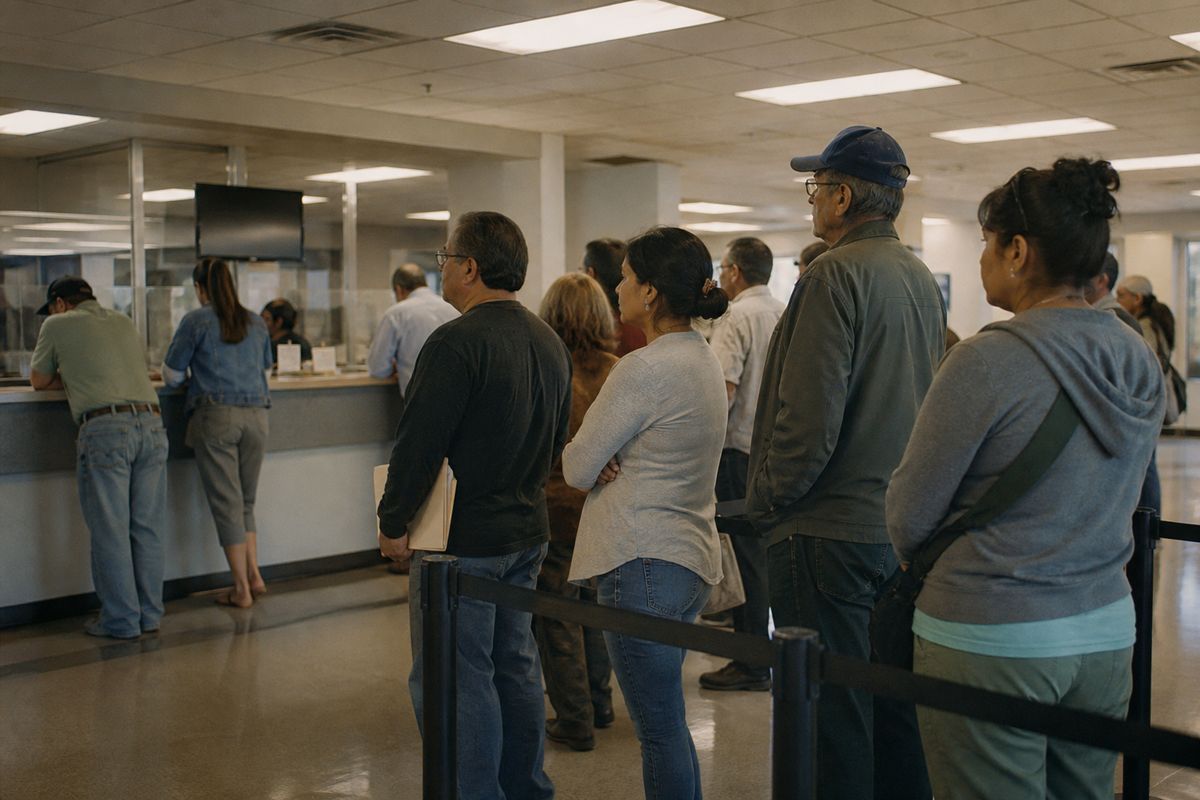
This decentralisation has a few practical consequences. First, there is no single “one stop” national portal where every driver can check status in the same way. Second, terminology diverges. One state might prioritise “driving privilege” language, another might focus on “licence status”, and another might bundle everything under “driver record services”. Third, the user experience can be wildly different. Some states have modern account based dashboards. Others still feel like early 2000s forms, functional but not exactly friendly.
There is also a consumer protection angle. Because the system is fragmented, it creates space for third party services to offer “status checks” that look official. El Cronista explicitly advises drivers to use the official website of the state that issued the licence rather than relying on a third party status check service. That warning is doing a lot of work. It is not accusing every third party of wrongdoing, but it is pointing out a simple truth: only the state system is authoritative.
Historically, the in person office visit was the default because it matched the way records were accessed and verified. Online tools change that, but they do not erase the underlying structure. The state still owns the record, the state still defines the categories, and the state still decides what can be shown online and under what authentication rules.
If your licence is suspended, online tools help, but they do not magically fix it
One of the most important lines in the source material is also the least glamorous: if an online check shows a suspension or revocation, drivers should not assume that paying a fee or renewing the licence will automatically restore driving privileges. This is where people make expensive mistakes. They see a problem, they throw money at the most obvious button, and they assume the system will unlock. Often it will not.
The reason is simple. The steps required depend on why the licence is suspended. Depending on the state and the underlying issue, a driver may need to resolve a court matter, provide documentation, pay a reinstatement fee, or complete another requirement before they can legally drive again. And yes, that can mean multiple parallel issues. A driver might clear one hold and still have another unresolved suspension sitting behind it.
California is again used as an example of how states try to blend self service with safeguards. The state provides online services for certain suspension related actions, including payment of eligible reissue fees. But it also notes that drivers with other unresolved suspensions or holds may need to address those issues before their driving privilege can be restored. That is the system telling the user, politely, that not everything can be solved with a single transaction.

From an industry perspective, this is the direction of travel: more digital self service for straightforward cases, and more explicit routing for complex cases. It is not exactly groundbreaking, but it is meaningful. It reduces queues for routine tasks while keeping legal and safety critical decisions tied to the proper processes.
What This Means For You
For everyday drivers, the practical takeaway is blunt: checking your driver’s license status online should be treated like checking a bank balance. Not because it is fun, but because it prevents nasty surprises. Anyone planning a long trip, starting a new job that involves driving, renewing insurance, or even just returning to the road after a period of not driving should consider doing a quick official status check first. It is a small step that can stop a minor admin issue turning into a major headache.
It also changes how people should think about “renewal”. A renewal application, a replacement card, and reinstatement after a suspension are not the same thing, even if they all involve forms and fees. If a status check flags a suspension or revocation, the smartest move is to slow down and follow the state’s reinstatement instructions carefully. Paying a fee may be necessary, but it may not be sufficient. And driving while suspended is the kind of problem that tends to snowball, legally and financially.
Finally, there is a safety and privacy point that is easy to overlook. Because requirements are not uniform nationwide, drivers should stick to official state systems rather than third party services. That is not just about accuracy. It is about protecting personal data. A licence number and identity details are sensitive. Handing them to an unofficial site because it looks convenient is a gamble, and it is rarely a necessary one.
Closing thoughts, digital convenience meets real world consequences
The shift towards online licence status checks reflects a broader reality: government services are being dragged, sometimes reluctantly, into the same on demand expectations people have for everything else. But driving is not streaming video. The consequences are real, and the rules are layered. So the online tools are best seen as a front door, not the whole building.
El Cronista’s 4 September 2026 update captures the moment neatly. The tools exist, they are state run, and they can quickly confirm whether a licence is valid, expired, suspended, or restricted. But the details vary, and the fix for a problem depends on the cause. That is the trade off of a state by state system: local control and tailored processes, at the cost of national uniformity.
In the end, the most useful mindset is simple. Treat the online check as a routine habit, use official channels, and if something looks wrong, assume it will take more than a single click to put it right. Annoying? Sometimes. But it beats finding out the hard way at the side of the road.