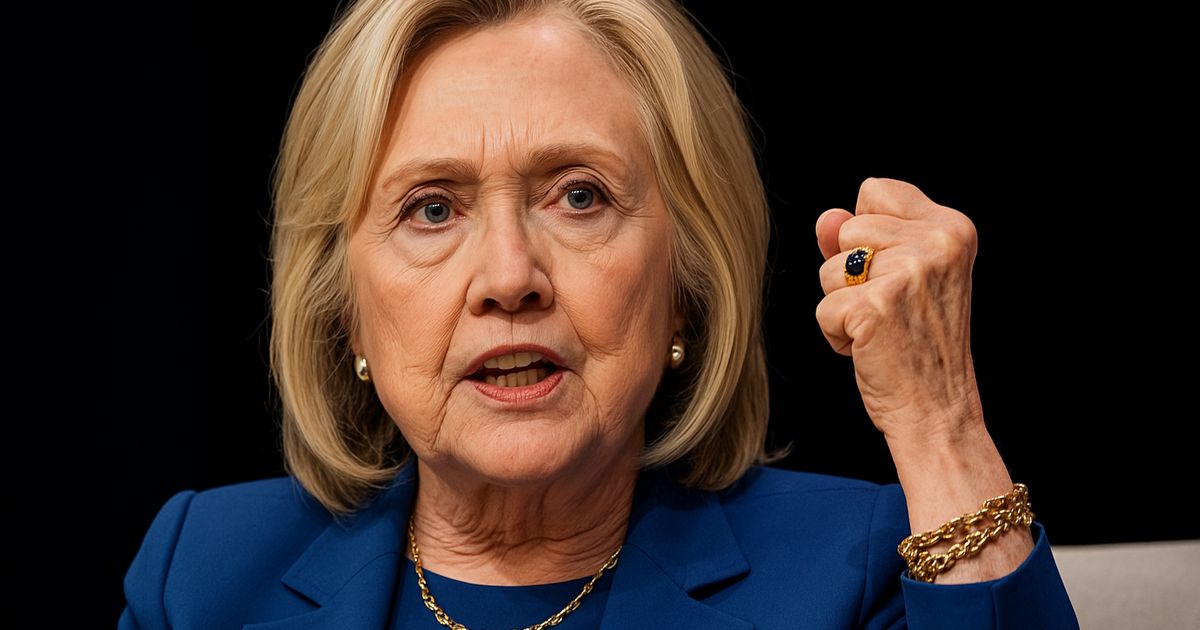
A Partisan Firestorm Erupts Over Clinton's Epstein Testimony
The long-simmering political and legal saga surrounding the late financier and convicted sex offender Jeffrey Epstein erupted into a new, intensely partisan spectacle on February 26, 2026. Hillary Clinton, the former Secretary of State and 2016 Democratic presidential nominee, appeared for a closed-door deposition before the Republican-led House Oversight Committee. The event, intended to gather information for the committee's investigation into the Epstein case, quickly devolved into what Democratic members branded an "unserious clown show." The core of the controversy stemmed from a breach of committee protocol when Republican Congresswoman Lauren Boebert took and shared a photograph of Clinton during the private session, forcing a temporary pause in the proceedings.
In her opening statement, Clinton set a combative tone, accusing the committee of engaging in "partisan political theatre." She stated unequivocally that she had "no idea about Epstein's crimes" and did not recall ever meeting or speaking to him. Furthermore, she turned the tables on her Republican questioners by calling for President Donald Trump to testify before the same committee, as she had been compelled to do. The deposition, held at the Chappaqua Performing Arts Center in New York, became a microcosm of the deep political divisions surrounding the Epstein investigation, with Democrats arguing the process was being weaponized for political gain rather than a genuine pursuit of justice.

The Deposition Breakdown: Photo Leak and Political Recriminations
The specific incident that triggered the Democratic outcry was a clear violation of the rules governing the closed-door deposition. Representative Lauren Boebert (R-CO) took a photograph inside the secure hearing room, an action strictly prohibited to maintain the integrity and confidentiality of the testimony. The photo was subsequently leaked, leading committee chairmen to halt the proceedings temporarily. This breach became the focal point for Democratic members, who seized on it as evidence of the inquiry's flawed nature.
Democrats emerged from the session to deliver a scathing rebuke to the media. They characterized the entire event as a "clown show" and accused Republican members of being "more concerned about getting their photo-op of Secretary Clinton than actually getting to the truth and holding anyone accountable." They demanded the full transcript of Clinton's testimony be released publicly to ensure transparency, implicitly suggesting that the Republicans might selectively leak portions for political damage. The incident underscored the profound lack of trust between the two parties on the committee, turning a fact-finding mission into a theatrical political confrontation.
Boebert's Exit and a Theatrical Return
Following the photo scandal, Lauren Boebert left the deposition proceedings. Her exit, however, was followed by a return that added another layer of surreal spectacle. She was photographed re-entering the Chappaqua Performing Arts Center accompanied by a small child on a tricycle. The scene prompted a reporter to ask, "Are you going to see a Broadway show while you're here?"—a pointed reference to Boebert's own 2023 controversy where she was escorted out of a Denver performance of *Beetlejuice: The Musical* after "multiple complaints" from patrons. This moment highlighted how the deposition had become intertwined with the personalities and past controversies of the politicians involved, further distracting from the substantive issues of the Epstein case.
Broader Fallout: A Global Web of Connections
While the Clinton deposition captured headlines, the source material reveals the ongoing, wide-ranging fallout from the release of Epstein-related documents continues to impact powerful figures on a global scale. In a significant development concurrent with the hearing, World Economic Forum (WEF) President Borge Brende announced his resignation. This decision came after the WEF opened an internal review into files showing Brende, a former Norwegian foreign minister, had dined with Epstein and exchanged friendly messages with him in 2018 and 2019.
In these messages, Brende had referred to Epstein as a "brilliant host" and "my friend," telling him at one point, "missing you, Sir." In a statement, Brende claimed he was "completely unaware of Epstein's past and criminal activities" and expressed regret for not conducting a more thorough investigation. His resignation statement, which did not directly mention the controversy, cited a desire for the forum to continue its work "without distractions." This episode demonstrates how the Epstein scandal continues to ensnare elite figures in business and geopolitics, forcing accountability through public pressure and institutional reviews.
Furthermore, the European Commission has referred former UK Cabinet Minister Peter Mandelson to OLAF, its anti-fraud watchdog, for scrutiny over his alleged links to Epstein. These parallel developments illustrate that the political drama in Chappaqua is just one node in a vast, international network of associations being re-examined in the wake of the Epstein files.
Historical Context and the Cycle of Political Investigations
The contentious nature of the Clinton deposition fits into a long history of highly politicized congressional investigations in the United States. From the McCarthy hearings to Benghazi, these proceedings often walk a fine line between legitimate oversight and partisan warfare. The Epstein investigation, given the gravity of the underlying crimes and the stratospheric social circles involved, was always destined to be explosive. However, the "clown show" allegations suggest it risks following a familiar path where the process itself becomes the story, potentially obscuring the search for facts.
The call for President Trump to testify, issued by Clinton herself, directly mirrors the Republican demand for the Clintons' testimony. This tit-for-tat dynamic is a hallmark of modern political investigations, where each side seeks to establish moral and procedural equivalence. The Justice Department's announcement that it will look into whether documents pertaining to a woman who accused Trump of sexual abuse when she was a minor were improperly withheld from the Epstein files adds legal weight to Democratic demands. Clinton framed this as a potential "cover-up," accusing officials of protecting the sitting president.
The Shadow of Prince Andrew and the 'Car Snap'
The related headlines mentioning Prince Andrew provide a crucial international parallel that underscores the global nature of the scandal and the relentless media scrutiny that follows. The story behind the "Andrew car snap"—likely referring to the infamous photograph of the Duke of York in a car leaving a royal property—demonstrates how paparazzi and tip-offs have played a role in tracking the movements of figures linked to Epstein. The headline "Andrew ‘banned from riding’" suggests ongoing restrictions or repercussions within his own circles, a reminder that the social and institutional consequences for those associated with Epstein are severe and lasting. While the Clinton deposition is a formal political process, the Andrew stories represent the public and media judgment that operates alongside it.
Analysis: Truth, Theatre, and the 2026 Political Landscape
The events of February 26, 2026, reveal less about Jeffrey Epstein and more about the state of American politics. The immediate analysis points to a complete breakdown of bipartisan process in one of Congress's most powerful oversight bodies. The taking of a prohibited photograph is not a minor procedural slip; it is a fundamental breach of trust that validates Democratic claims of a politically motivated spectacle. It allows Democrats to frame the entire investigation as illegitimate, thereby insulating their own principals from the potential political damage of its findings.
Furthermore, the deposition highlights the enduring potency of the Clinton and Trump dynasties in American political life. Even years after their respective presidential campaigns, they remain central figures in the nation's most bitter political fights. The Epstein probe, rather than being a neutral pursuit of justice, has become another arena for this ongoing conflict. The resignation of Borge Brende, however, shows that outside the hyper-partisan U.S. context, institutional accountability can still be a direct consequence of Epstein associations, suggesting a divergence in how different political systems process the scandal.
What to Watch Next in the Epstein Files Saga
The immediate next step is the scheduled testimony of former President Bill Clinton on the following day. His appearance will be scrutinized for any discrepancy with his wife's account and will undoubtedly attract the same level of intense media coverage and partisan maneuvering. Whether the committee can maintain a semblance of order and purpose during his deposition will be a key test.
Beyond the hearing room, several developing threads demand attention. First, the outcome of the Justice Department's review into potentially withheld documents about the allegations against Trump could be seismic, potentially forcing the committee's hand on subpoenaing a sitting president. Second, the public release of the full transcript of Hillary Clinton's testimony, as demanded by Democrats, will provide the first substantive look at the questions asked and answers given, moving beyond the theatrical framing. Finally, the repercussions for figures like Peter Mandelson in Europe and the ongoing scrutiny of Prince Andrew in the UK will demonstrate whether the Epstein scandal continues to trigger accountability in elite institutions worldwide, or if the U.S. political circus becomes the dominant narrative.