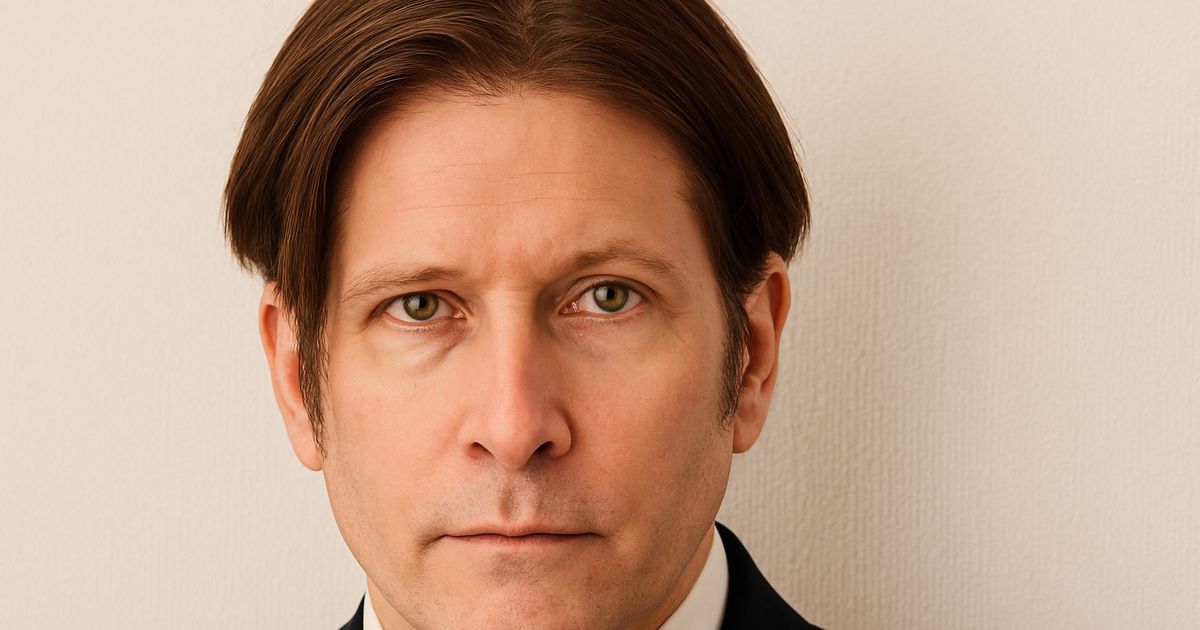
A Hollywood Star Faces Disturbing Allegations in a Civil Court
On February 26, 2026, a civil lawsuit filed in the Superior Court of California thrust actor Crispin Glover, best known for his iconic role as George McFly in "Back to the Future," into a legal and public relations maelstrom. The complaint, filed by a 30-year-old former model identified only as Jane Doe, alleges a years-long pattern of manipulation, culminating in claims of battery, false imprisonment, fraud, and wrongful eviction. The plaintiff's narrative, detailed in documents obtained by TMZ and NBC News, paints a picture of a vulnerable individual lured from Europe to Los Angeles under false pretenses, only to be allegedly controlled, used for "sex and free labor," and physically assaulted. Glover, through a representative, has issued a forceful denial, framing himself as the victim of an "unprovoked felony assault" on the date in question and vowing to defend himself vigorously. This lawsuit represents not just a personal legal battle for the reclusive actor but a stark examination of power dynamics, celebrity influence, and the challenges of adjudicating he-said-she-said allegations in the public eye.

Anatomy of the Allegations: From Online Contact to Physical Altercation
The lawsuit outlines a timeline that began over a decade before the filing. According to the complaint, Jane Doe first connected with Crispin Glover through social media in 2015. For years, Glover allegedly "persistently" messaged her, encouraging her to come to Los Angeles and often making "strange advances." The woman, viewing him as a friend, maintained contact. A significant in-person meeting allegedly occurred in 2023 in Dresden, Germany, where Glover is accused of showing the woman "several items of Nazi memorabilia from his collection," a detail that adds a deeply unsettling layer to the plaintiff's portrayal of his character.
The pivotal moment, according to the suit, came in early 2024. Glover allegedly promised Jane Doe she could live in his Silver Lake, Los Angeles, home and work as his assistant. He is accused of manipulating her into severing her ties in Europe—stopping rent payments and selling her belongings—before moving to California. Upon arrival, the promised professional arrangement allegedly morphed into a scenario where she was expected to be a "live-in girlfriend" and work for free. With no family or support network in Los Angeles, the plaintiff claims she became entirely reliant on Glover, who allegedly tracked her movements and controlled her interactions.
The March 2, 2024, Incident: Conflicting Stories
The situation allegedly escalated to violence on March 2, 2024. The lawsuit states that Jane Doe informed Glover she was leaving the house to go to a mosque. She claims he warned she would be locked out if she left. When she returned, she found herself locked out, with all her belongings and her cats still inside the home. The complaint alleges that when she attempted to enter to retrieve her pets, Glover "attacked her, grabbing her neck and choking her in a headlock," leaving a visible wound and scar. A photograph of a neck wound is included in the filing.
Glover's account, provided by his representative to TMZ, is diametrically opposed. His team states that on that same date, "Mr. Glover was the victim of an unprovoked felony assault by Jane Doe at his Los Angeles residence." They claim Glover called the Los Angeles Police Department, who responded, investigated, and arrested Jane Doe. Law enforcement sources told TMZ that police responded to an assault report at Glover's home that day but did not make any arrests; they noted Glover reported being assaulted by a man and a woman. Glover's team also points to a restraining order he filed against Jane Doe as documentation of his victim status.
Profiles in Conflict: The Reclusive Actor and the Anonymous Plaintiff
Understanding this case requires examining the two central figures, one a public persona and the other shielded by anonymity. Crispin Glover, 61, has cultivated a reputation as one of Hollywood's most eccentric and fiercely private actors. His career-defining role as the nerdy, bullied father George McFly in 1985's "Back to the Future" made him a recognizable face, but a subsequent dispute over salary for the sequels led to his character being recast. Glover has since embraced unconventional and often dark roles in films like "River's Edge," "Willard," and Tim Burton's "Alice in Wonderland." He is also an accomplished author and filmmaker, known for his avant-garde directorial projects. His public persona is that of an intense, intellectual artist who deliberately avoids the mainstream Hollywood circuit, which makes the allegations of controlling behavior and violence particularly jarring against this backdrop of curated peculiarity.
Jane Doe, the plaintiff, is a 30-year-old former model from the United Kingdom. Her decision to file under a pseudonym is common in cases involving allegations of sexual misconduct and assault, intended to protect her privacy and shield her from public scrutiny and potential harassment. Her legal representation adds significant weight to her claims; she is represented by attorney Dev Das of the high-profile Geragos & Geragos law firm, known for taking on celebrity cases. The lawsuit states she is currently homeless and "emotionally scarred," alleging the ordeal caused permanent damage to her career and reputation. Her anonymity, while legally protective, creates an inherent asymmetry in the public narrative, placing Glover's well-known identity directly against a faceless accuser.
Legal and Industry Implications: Beyond the Headlines
This lawsuit against Crispin Glover arrives in a post-#MeToo entertainment industry where allegations of abuse and power imbalance are scrutinized with unprecedented intensity. However, it also presents complexities that distinguish it from other high-profile cases. Unlike many instances that involved professional workplace dynamics, this case alleges a personal, domestic relationship that originated online and evolved into a cohabitation arrangement. The legal claims—battery, fraud, wrongful eviction—are civil matters, seeking monetary damages rather than criminal penalties. This means the standard of proof is a "preponderance of the evidence" (more likely than not), not the "beyond a reasonable doubt" required in criminal court.
The stark contradiction in narratives presents a significant challenge. Both parties claim victimhood from the same March 2024 incident, and both reference law enforcement interaction. The outcome may hinge on tangible evidence: the LAPD's full report, any medical records of injuries, photographs, text message histories, and the details of Glover's dismissed restraining order. The allegation regarding Nazi memorabilia, while not a direct legal claim, could be introduced to establish character or motive, potentially influencing a jury's perception. For the entertainment industry, the case is a reminder that problematic behavior allegations are not confined to powerful producers or network heads but can involve actors with cult followings, and that such conflicts can erupt years after the initial contact.
Historical Context: Celebrities and Civil Allegations
The Glover lawsuit fits into a long history of civil suits against celebrities where financial damages are sought for alleged personal wrongs. These cases often become media spectacles, tried as much in the court of public opinion as in a court of law. The success or failure frequently depends on the credibility of the parties and the ability of attorneys to present a coherent, evidence-backed story. Unlike criminal cases, which require state resources and a high burden of proof, civil suits empower individuals to seek accountability directly, even when law enforcement does not pursue criminal charges. Jane Doe's lawsuit follows this pattern, seeking redress and validation through the civil system after what her filing describes as a traumatizing experience.
What to Watch For: The Road Ahead in the Glover Case
The legal process in this Crispin Glover lawsuit will unfold over months, if not years. Key developments to monitor will include the defendant's formal response to the complaint, which will detail his legal defenses. Discovery—the phase where both sides exchange evidence and take depositions—will be critical. This is where Jane Doe's allegations of years of manipulative messages will be tested against Glover's phone and social media records. The LAPD's complete incident report and any body camera footage from the March 2, 2024, response will likely be subpoenaed and could provide crucial, neutral facts.
Another pivotal moment will be any attempt by either side to settle the case out of court. A settlement would avoid a public trial and the airing of potentially damaging evidence but would also leave the truth of the allegations publicly unresolved. If the case proceeds to trial, the testimony of both parties will be subjected to cross-examination, and the jury's verdict will hinge on whom they find more credible. Beyond the courtroom, the industry impact on Glover's career remains to be seen. While he operates outside the mainstream studio system, further projects and festival appearances could be affected by the ongoing scandal, regardless of the legal outcome.
A Case Defined by Contradiction and High Stakes
The lawsuit against Crispin Glover presents a classic, if deeply troubling, clash of narratives. One side tells a story of calculated grooming, exploitation, and violence against a vulnerable individual with nowhere to turn. The other tells a story of a homeowner assaulted by an unwanted guest, leading to police involvement and a restraining order. There is no middle ground in these accounts; one party is fundamentally lying. The judicial process is designed to untangle such contradictions, but in the arena of public perception, damage is often done long before a verdict is reached.
For Jane Doe, the lawsuit is a quest for justice, compensation, and a public reckoning for what she alleges was a life-upending betrayal. For Crispin Glover, it is a fight to clear his name of what he calls "baseless allegations" and a "meritless fabrication" that threatens to redefine his legacy. The case underscores the enduring perils of imbalanced power dynamics, the life-altering consequences of personal relationship breakdowns, and the immense difficulty of ascertaining truth when it is buried beneath layers of "he said, she said." As the case moves forward, it will serve as a stark reminder that behind the curated facades of celebrity and the protective veil of anonymity, there are human conflicts with real, and often devastating, consequences.