The Catalyst of a Remarkable Turnaround
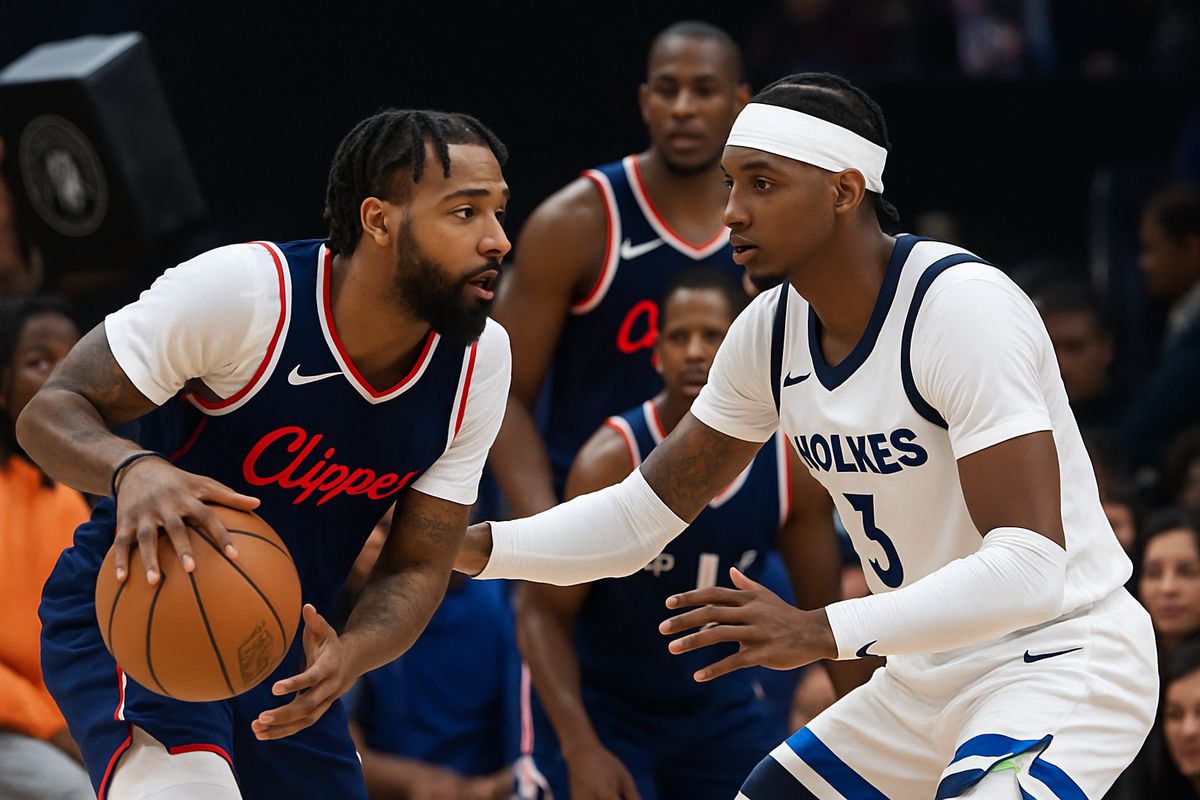
In the ever-evolving landscape of the NBA, a single trade can alter the trajectory of a franchise and redefine the roles of its players. For the Los Angeles Clippers, the acquisition of point guard Darius Garland from the Cleveland Cavaliers in February—a move that sent James Harden to the Eastern Conference—has proven to be such a catalyst. While the headline-grabbing numbers belong to stars like Kawhi Leonard, the most telling transformation might be seen in the play of veteran wing Derrick Jones Jr. Following a dominant 153-128 victory over the Minnesota Timberwolves, Jones Jr. offered a candid, if grammatically adventurous, explanation of his recent surge, attributing it directly to Garland's unique playmaking. "It helps us a lot... Darius does he get downhill and he can put the ball anywhere I need it," Jones Jr. stated, succinctly capturing the dynamic that is fueling the Clippers' historic climb.
The statistical evidence is stark. Since the All-Star break, Derrick Jones Jr. has been on one of the most productive stretches of his career, averaging 13.6 points, 3.5 rebounds, and 1.0 blocks per game. In the win over Minnesota, he added 12 points and a disruptive four steals. This isn't an isolated hot streak; it's a sustained elevation coinciding precisely with Garland's integration into the starting lineup. In the three games Garland has started, the Clippers are a perfect 3-0, with the new point guard averaging 21.7 points and 6.3 assists. The team's record, once a dismal 6-21, now sits at 33-32, making them the first team in NBA history to climb above .500 after falling 15 games below that mark. This resurgence is not accidental, and at its heart is a stylistic synergy between Garland's penetrating ability and Jones Jr.'s elite athleticism as a cutter.

Profiles in Synergy: Garland's Vision Meets Jones's Verticality
To understand the impact, one must first examine the principals. Darius Garland, a two-time All-Star, arrived in Los Angeles with a reputation as a shifty, score-first guard with deep range and elite playmaking vision. His game is built on pace, unpredictability, and an uncanny ability to navigate tight spaces. At 6'1", Garland uses his low center of gravity and slick handle to consistently get into the paint, a skill that forces defensive rotations and collapses schemes. This stands in direct contrast to his predecessor, James Harden. While Harden is a future Hall-of-Famer and one of the greatest isolation scorers ever, his method is deliberate, ball-dominant, and often predicated on decelerating to survey the floor. Garland's game is about acceleration and instantaneous decision-making.
On the other end of this partnership is Derrick Jones Jr., an eight-year veteran known primarily as a high-flying defensive specialist and energy player. Throughout his career with Phoenix, Miami, Portland, Chicago, and Dallas, Jones Jr. has been valued for his athleticism, defensive versatility, and ability to finish above the rim. However, his offensive role was often limited to spot-up shooting and opportunistic put-backs. He was a complementary piece whose scoring was largely dependent on others creating advantages for him. In Los Angeles, and specifically alongside Garland, he has found a playmaker whose primary skill—collapsing defenses—directly feeds Jones Jr.'s primary offensive strength: cutting and finishing at the basket.
Decoding the On-Court Chemistry
The mechanics of this partnership are a textbook example of modern, spaced-out NBA offense. Jones Jr.'s post-game quote, though fragmented, paints a perfect picture. He describes two primary scenarios Garland creates for him. First, when Jones Jr. is on the wing and Garland is in the opposite corner, Garland's drive forces the low defender (often a big man) to help. This leaves Jones Jr.'s defender with an impossible choice: stay attached to a shooter in the corner or rotate to stop Garland's drive. If he helps, Garland hits the corner shooter. If he stays, Garland has a lane. But the third, more devastating option emerges when Jones Jr.'s defender decides to "watch the corner" shooter, leaving a wide-open "slot cut" for Jones Jr. directly to the rim.
The second scenario is even more direct. When Jones Jr. is himself stationed in the corner and Garland attacks, the low-help defender (again, often a center) is forced to step up. This leaves the corner—Jones Jr.'s spot—vacant. Instead of standing still, Jones Jr. makes a sharp cut along the baseline, and Garland, with his exceptional court vision and passing ability, delivers the ball on time and on target for an uncontested dunk or layup. This is not freelance basketball; it's a calculated exploitation of defensive rules. Garland’s gravity as a driver pulls defenders into the paint, and his willingness to pass out of drives, rather than always looking for his own shot, turns that gravity into points for his teammates. Jones Jr., with his elite leaping ability and understanding of timing, is the perfect beneficiary.
The Ripple Effect on the Clippers' Ecosystem
The impact of the Garland-Jones Jr. connection extends far beyond their two-man game. It fundamentally changes how defenses must prepare for the Clippers. Previously, with Harden running the show, defenses could often load up on the strong side, knowing the action would be slower and more predictable. Garland’s speed forces defenses to stay home on weak-side shooters, fearing the drive-and-kick, which in turn creates more space for Kawhi Leonard and Paul George to operate in isolation or in pick-and-roll actions. Leonard’s 45-point explosion against Minnesota was facilitated by this very dynamic; the defense was so preoccupied with containing Garland's penetration and the resulting cutter (Jones Jr.) that clean looks and driving lanes opened elsewhere.
Furthermore, Jones Jr.'s offensive emergence makes him a more complete and dangerous player, which amplifies his defensive value. He is no longer an offensive liability that opponents can ignore. Scoring 12-16 points per game consistently, as he has over the last several contests, means defenders must account for him on every possession, stretching the floor even when he isn't the direct target. This engaged offensive role seems to have energized his defensive play, evidenced by his multi-steal and multi-block performances, including a five "stock" (steals + blocks) game against the New York Knicks. A two-way wing who can defend multiple positions, hit the occasional three, and finish with authority as a cutter is an incredibly valuable asset in today's NBA, and Garland's playmaking has unlocked that full package in Jones Jr.
Why It Matters: A Blueprint for Modern Roster Construction
Beyond the Box Score
The significance of the Garland-for-Harden trade and its effect on role players like Derrick Jones Jr. transcends the Clippers' win column. It serves as a potent case study in the importance of stylistic fit over aggregate talent. On paper, swapping a former MVP and scoring champion in Harden for a younger, less-decorated All-Star in Garland could be viewed as a downgrade. In practice, it has been a revelation because Garland's skills are multiplicative, while Harden's, at this stage of his career, were more additive. Garland makes others better by the very nature of how he plays; his game is inherently connective. This has allowed the Clippers to optimize the skills of their supporting cast, turning a player like Jones Jr. from a specialist into a significant two-way contributor.
This dynamic matters for fantasy basketball, for NBA analysts, and for front offices league-wide. It underscores that a player's value is not static but is profoundly contextual. Derrick Jones Jr. is demonstrating that with the right playmaker, a player's perceived ceiling can be shattered. For teams building around a star, the lesson is clear: the choice of primary ball-handler must be made with the specific strengths of the role players in mind. A drive-and-kick maestro like Garland can elevate athletes and cutters, while a methodical isolationist might be better suited to a roster of stationary shooters.
The Historical Context and the Path Forward
The Clippers' journey from 15 games under .500 to a winning record is historic, but sustaining it requires more than a hot streak. The Garland-Jones Jr. synergy provides a sustainable offensive engine. It relies on speed, spacing, and unselfishness—principles that translate to playoff basketball where half-court execution is paramount. Historically, teams that succeed in the postseason have multiple, reliable ways to score when sets break down. The Garland drive-and-lob or drive-and-kick to cutters is becoming a reliable, set-play-quality option for Los Angeles.
Comparisons can be drawn to other dynamic duos where a penetrator empowers an athletic finisher: think of Steve Nash and Amar'e Stoudemire in Phoenix, or more recently, the chemistry between Chris Paul and DeAndre Jordan on the Lob City Clippers. While Garland and Jones Jr. may not operate at that legendary level, the principle is identical. It creates easy baskets, builds morale, and forces defensive adjustments that open the game for everyone else. As the Clippers battle for positioning in a crowded Western Conference—currently sitting in 8th place—this newfound, high-efficiency source of offense could be the key to not just making the playoffs, but making noise once they get there.
A Resurgence Built on Fit and Function
The story of the Los Angeles Clippers' season is no longer about early failure; it is about a remarkable recalibration. The trade for Darius Garland was a bold gamble that shifted the team's offensive identity. The payoff is visible in the standings and in the transformed game of Derrick Jones Jr. Where once there was stagnation, there is now velocity. Jones Jr.'s explanation, though delivered in the casual vernacular of the locker room, was analytically precise: Garland gets downhill, forces the defense to commit, and possesses the pinpoint passing ability to reward the cut. This simple, devastating formula has given the Clippers a new life and given Derrick Jones Jr. a new, elevated role in which he is thriving.
In the end, basketball success often hinges on unlocking hidden potential and creating partnerships where the whole is greater than the sum of its parts. The Clippers, through strategic roster movement, have engineered such a partnership. Darius Garland's arrival hasn't just changed Derrick Jones Jr.'s game; it has changed the trajectory of the entire franchise, proving that in the modern NBA, the right point guard can be the key that unlocks every other lock on the roster. Their continued synergy will be one of the most compelling subplots to watch as the regular season reaches its climax.