Denmark Moves to Ban the Islamic Call to Prayer
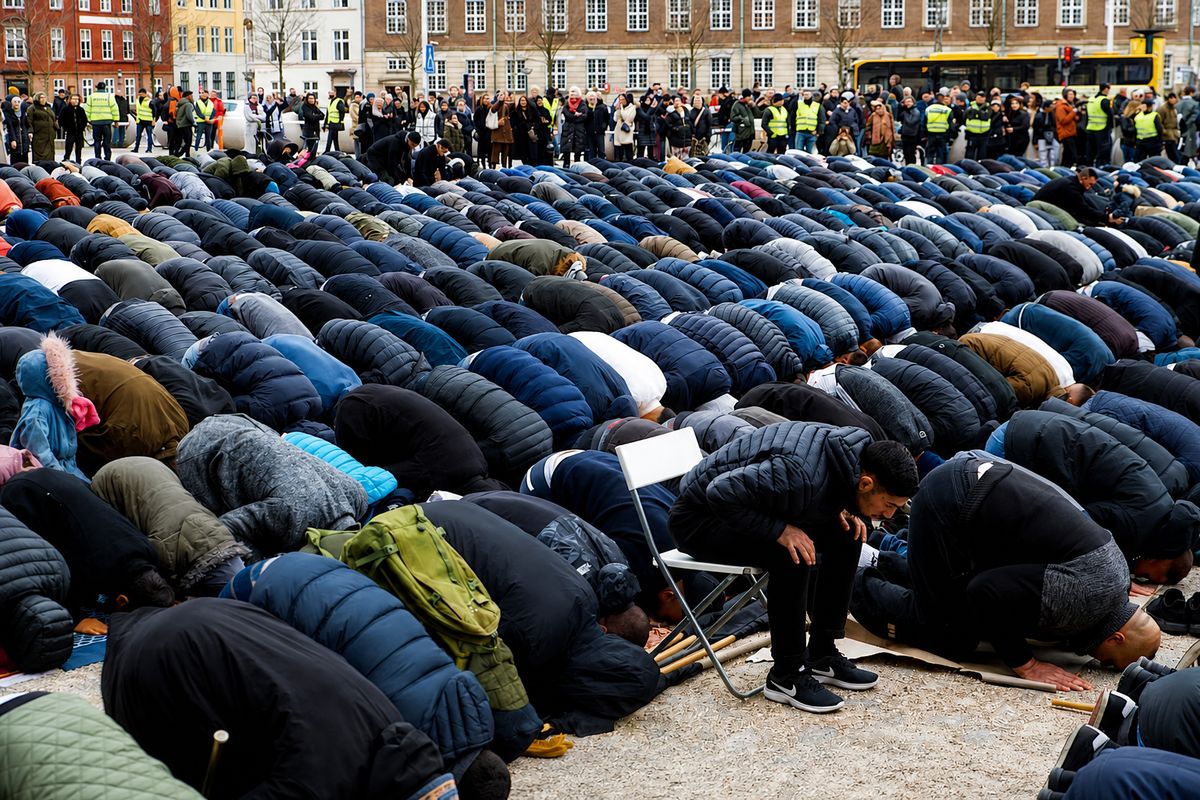
Denmark’s centre-Left government has announced plans to ban the Islamic call to prayer (the adhan) from being broadcast over loudspeakers nationwide. The proposal, put forward by immigration minister Morten Bødskov, has sparked a fierce debate about religious freedom, integration, and the limits of secular public space. “The call to prayer should not be heard over Danish rooftops,” Bødskov told news outlet Ritzau on 24 June 2026. “It has no place in Denmark, and you shouldn’t be in any doubt whether you’ve ended up in a suburb of Islamabad when you walk around Denmark.”
The remarks are particularly striking because they come from a senior Social Democrat, not from the nationalist right. Denmark’s prime minister, Mette Frederiksen, began her third term earlier this month after forming a four-party “four-leaf clover” coalition with the Moderates, Social Liberals, and Green Left. The move underscores how immigration and religious integration remain politically sensitive across the spectrum, even in a country known for some of Europe’s toughest migration rules.
Denmark has around 270,000 to 295,000 Muslims (about 4.5% of the population) and an estimated 100 mosques. Only a small number currently broadcast the adhan externally; in Copenhagen, local noise bylaws already forbid it. But the government argues a national ban would provide consistency. Critics say it unfairly targets one faith and may violate Denmark’s constitutional protection of public worship.

The Constitutional and Legal Hurdles
The Danish constitution enshrines the right to public worship, but there are exceptions such as bans on anti-democratic preaching and donations to banned groups. Any nationwide ban would need to navigate these protections. Legal experts are likely to focus on whether the measure is proportionate or a disguised restriction on Islam.
This is not the first attempt. Denmark’s immigration minister tried similar bans in 2020 and 2025, but both stalled. Now the government has resumed an investigation into the legality of imposing a ban. The outcome could set a precedent for other European countries grappling with similar tensions between secularism and religious expression.
In Germany and Britain, strict limits already exist on when and how loud a mosque may broadcast the call to prayer. Denmark’s proposal goes further by seeking an outright ban, which would be a significant departure from the compromise approach taken elsewhere.
The Broader European Context: Should the Muslim Call to Prayer Be Broadcast in the UK?
The Danish debate echoes a familiar question in the United Kingdom: should the Muslim call to prayer be broadcast in UK cities and towns? The answer varies by local authority. In London’s Newham, a 2020 decision to allow the adhan from several mosques was withdrawn after a legal challenge by Christian Concern. In Tower Hamlets, the East London Mosque has broadcast the adhan since the 1980s. Birmingham, Bradford, and Leicester have permitted limited broadcasts, especially during Ramadan and Covid lockdowns.
As Richard McCallum wrote for Premier Christianity in 2022, the issue divides Christians themselves. Some see hospitality and integration as paramount, pointing out that church bells ring without controversy. Others raise concerns about reciprocity: Christians cannot build churches or ring bells in Saudi Arabia. The adhan, they argue, is an act of proselytism that asserts a creed incompatible with a secular or historically Christian public space.
McCallum notes that most UK mosques broadcast the call only inside the building, which fulfils the religious requirement. The external broadcast is often a symbol of presence and identity. The UK’s patchwork of local rules means the debate is never settled, only localised.
Social Media and Public Opinion: A Deep Divide
Unsurprisingly, social media reactions to Denmark’s proposal were polarised. On X (formerly Twitter), many users backed the ban, arguing that loudspeaker calls are obsolete in the digital age. One user wrote, “in this digital age, no one needs to be called on a tannoy.” Others framed the issue as noise pollution and cultural integration. But critics described the proposal as discriminatory and a violation of human rights. One user wrote, “This is curtailing freedom of religion. This is human rights violations. This is genocide.”
The contrast is stark. Denmark’s government is pushing a ban that even some right-wing populists in other countries have hesitated to pursue. It suggests that the political centre, at least in Scandinavia, has shifted significantly on questions of religious expression in public space. The coincidence of the ban with tensions over US President Donald Trump’s threats to take over Greenland adds another layer of political complexity, though the two issues are not directly linked.
Analysis: What the Danish Ban Means for Europe’s Religious Landscape
Denmark’s proposal is part of a wider European trend. France has long restricted religious symbols in public spaces. Switzerland banned minarets in 2009. Several German states have regulated mosque broadcasts. But a nationwide ban on the call to prayer, especially from a left-wing government, is a notable escalation. It signals that the political mainstream no longer sees the adhan as a protected form of religious expression but as a disruption to secular public order.
The Danish case also highlights a tension within liberalism: how to balance the right to religious practice with the right not to be subjected to unwanted noise or religious messaging. Denmark’s constitution may offer some protection, but the government can argue that the ban is a neutral regulation of noise, not a religious restriction. That argument will be tested in court if the ban is enacted.
For Muslims across Europe, the message is unsettling. If a centre-left government in a country with a small Muslim minority can target a core religious practice, what might happen in countries with larger populations? The debate is unlikely to remain confined to Denmark.
Why It Matters: Beyond Noise and Integration
The call to prayer debate is about more than noise pollution or integration. It touches on fundamental questions about what kind of public space a society wants. Denmark’s immigration minister explicitly invoked “Islamisation” and compared parts of Denmark to “a suburb of Islamabad.” That language is potent. It frames the adhan not as a religious practice but as a symbol of demographic and cultural change that must be resisted.
Yet the evidence suggests that the adhan is rarely broadcast in Denmark. The ban is largely symbolic. But symbols matter. By targeting a religious practice that is already heavily restricted, the Danish government is sending a signal about who belongs and who does not. It is a reassertion of a particular national identity in the face of perceived threats, even when those threats are more imagined than real.
For Christians, the issue is particularly nuanced. As McCallum pointed out, some Christians welcome the adhan as a sign of diversity; others see it as a challenge to a Christian heritage. But the Danish case forces a choice: do you defend religious freedom for all, even when that freedom is expressed in ways you disagree with? Or do you prioritise the preservation of a secular or Christian public space? The answer has implications far beyond Denmark’s borders, including in the UK, where the question of when and where the adhan can be broadcast remains unresolved.