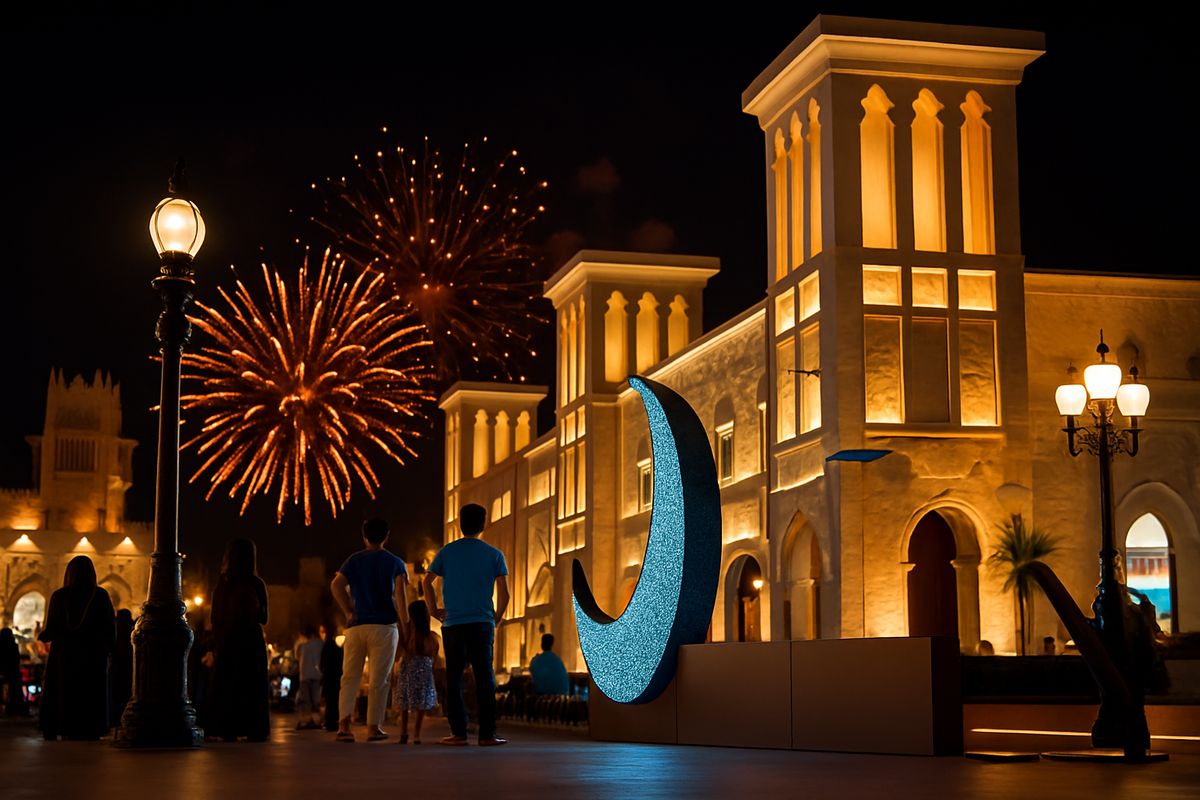
Astronomers Forecast March 20 for Eid Al Fitr 2026 in UAE
In a significant announcement for millions of Muslims in the United Arab Emirates and across the region, the Sharjah Academy for Astronomy, Space Sciences and Technology has projected that Eid Al Fitr 2026 will likely fall on Friday, March 20. This forecast, based on detailed astronomical calculations, indicates that the holy month of Ramadan 1447 AH will complete its full 30 days, culminating in the joyous festival marking the end of fasting. The announcement provides an early glimpse into the Islamic calendar for 2026, allowing governments, businesses, and families to begin preliminary planning for one of the most important religious and cultural events of the year.
The prediction hinges on the visibility—or critical lack thereof—of the Shawwal crescent moon. According to the academy's observatory, on Wednesday, March 18, 2026, which corresponds to the 29th day of Ramadan, the moon will set before sunset, making it impossible to sight. This technicality means the month will continue into the next day. The subsequent astronomical new moon (conjunction) is calculated to occur over Sharjah at 4:24 AM UAE time on Thursday, March 19. While the crescent will be approximately 14 hours old by sunset that evening, viewing conditions within the UAE are described as "critical," with local sighting deemed extremely difficult even with optical aid. This scientific analysis forms the basis for the projected start of Eid Al Fitr on the following day, March 20.

The Science Behind the Crescent: Calculating the Unseeable Moon
The process of determining the Islamic lunar months is a sophisticated blend of ancient tradition and modern astrophysics. The Sharjah Academy's forecast is not a guess but a precise calculation based on celestial mechanics. For the key evening of Thursday, March 19, 2026, astronomers have provided specific parameters: the crescent moon will have an angular separation from the sun of 6.5 degrees and an altitude of six degrees above the western horizon. It will be visible for a window of only about 29 minutes after sunset. While these figures might suggest a possibility, experts at the academy conclude that the conditions are unfavourable, making naked-eye sighting within the UAE impossible and even telescopic observation challenging, potentially requiring advanced techniques like image stacking.
This highlights a central tension in the Islamic calendar: the difference between astronomical possibility and practical visibility. The moon's birth (conjunction) is a definitive astronomical event, but the tradition for Ramadan and Eid hinges on the moon being seen. The academy notes that while the crescent may not be visible in the UAE, countries further west in the Arab and Islamic world, where the moon will be slightly older and higher in the sky at their sunset, might have more favourable conditions. This geographical discrepancy is a perennial source of variation in official announcements across different nations, as some rely strictly on local physical sighting reports.
The Role of the Sharjah Academy for Astronomy
The authority behind this forecast, the Sharjah Academy for Astronomy, Space Sciences and Technology (SAASST), has established itself as a leading scientific institution in the Gulf region. It operates under the patronage of His Highness Dr. Sheikh Sultan bin Muhammad Al Qasimi, Supreme Council Member and Ruler of Sharjah. The academy combines rigorous academic research with public outreach, housing advanced observatories and contributing significantly to the UAE's growing space sciences sector. Its annual lunar forecasts are highly anticipated, providing a scientifically grounded reference point that informs both public expectation and the official moon-sighting committees convened by authorities.
Historical Context: Moon Sighting vs. Astronomical Calculation
The method of determining Islamic months has evolved over centuries. The traditional practice, rooted in the Prophetic tradition, relies on the physical sighting of the crescent moon with the naked eye. This method led to natural variations between communities and regions based on weather, geography, and the acuity of observers. In the modern era, this practice continues, with official moon-sighting committees in countries like Saudi Arabia, Oman, and Pakistan gathering after sunset on the 29th day of a lunar month to receive testimony from observers.
However, the advent of precise astronomy has introduced the method of calculation (hisab). Many Muslim-majority countries and communities now use astronomical data to pre-calculate the lunar calendar years in advance for civil planning, while still requiring an official sighting announcement for religious purposes. Nations like Turkey, Egypt, and much of Southeast Asia have long adopted calculated calendars. The Gulf states, including the UAE, typically use a hybrid approach: astronomical data informs the work of the official moon-sighting committee, which makes the final, binding declaration. The Sharjah Academy's announcement is therefore a scientific forecast, not an official decree. The UAE's official Eid date will be confirmed by the country's Moon-Sighting Committee, chaired by the Minister of Justice, following the sunset observation on March 19, 2026.
Regional Implications and the 2026 Holiday Landscape
The forecast for a March 20 Eid Al Fitr has immediate implications for holiday planning across the Middle East. In the UAE, this date would trigger the annual Eid holiday for public and private sector workers. While the exact number of days for the 2026 holiday has not been announced, typical celebrations span from three to four days, potentially creating a long weekend from Thursday, March 19, through Sunday, March 22. The related headline regarding "Sharjah announces Eid Al Fitr 2026 holidays" suggests that emirate-level planning is already underway based on these astronomical predictions.
Looking at the broader region, the forecast aligns with similar predictions. For instance, astronomers in Oman have also forecast an Eid date, and news regarding "Eid al-Fitr 2026: Expected holiday dates in Egypt revealed ahead of moon sighting" indicates a coordinated regional understanding of the astronomical data. Saudi Arabia's official holiday calendar for 2026, as hinted in related headlines, will also be influenced by this crescent visibility data. A Friday Eid has significant social and logistical ramifications, as it combines the weekly congregational prayer (Jumu'ah) with the Eid prayer, often leading to unique scheduling and larger, combined gatherings. Furthermore, a March Eid places the festival firmly in the pleasant spring season in the Gulf, ideal for the traditional family visits, park gatherings, and festive activities that define the celebration.
What's Next: The Path from Prediction to Proclamation
The period between now and March 2026 will see this astronomical forecast serve as the foundational blueprint for all subsequent planning. Government agencies across the UAE and other GCC states will use this date to draft preliminary holiday schedules, which are crucial for sectors like aviation, tourism, retail, and education. Airlines will begin to model flight demand and pricing, hotels in staycation destinations will open tentative bookings, and retailers will plan their major Eid sales campaigns around this window. The forecast provides a critical 22-month lead time for the economy to prepare for the surge in consumer spending and travel.
As the date approaches, the focus will shift from calculation to observation. In the days leading up to March 18, 2026, the Sharjah Academy and other observatories will refine their predictions and prepare to support the official Moon-Sighting Committee. On the evening of the 29th of Ramadan, the committee will convene to receive and verify sighting reports from across the UAE and the wider Islamic world. The committee's decision will consider both local testimony and the broader Islamic consensus. If the crescent is sighted anywhere in the UAE or in a country whose sighting they accept (often following Saudi Arabia's lead), Eid will be declared for the next day, March 20, confirming the astronomical forecast. If no reliable sighting is reported, Ramadan will complete 30 days, and Eid will begin on March 21. The academy's detailed analysis, which already deems local sighting "not possible," strongly suggests the latter, 30-day scenario is the overwhelming likelihood.
This process underscores a modern reality: while the sanctity of the physical moon sighting is preserved in doctrine and official protocol, advanced astronomy has become indispensable for creating a stable framework for modern life. The Sharjah Academy's role exemplifies how the UAE and other nations are navigating this intersection, leveraging cutting-edge science to serve both tradition and contemporary societal needs. The final announcement will ultimately unite faith, science, and community in the declaration of a celebration shared by nearly two billion people worldwide.
Sources & References
The analysis and forecasts in this article are based on reporting and announcements from leading regional astronomical authorities and news sources.
- Gulf News: Eid Al Fitr likely on March 20 in UAE, astronomers say
- Related coverage on regional holiday planning from Gulf News packages, including "How the UAE determines first day of Ramadan each year" and "Sharjah announces Eid Al Fitr 2026 holidays".
- Contextual information from related headlines regarding Eid 2026 forecasts in Oman and Egypt, and Saudi public holiday planning.