A Career Year Rewarded: Wilson Secures His Future in Minnesota
In a move that solidifies the core of their defensive unit, the Minnesota Vikings have secured veteran linebacker Eric Wilson on a three-year, $22.5 million contract. The deal, which includes $12.5 million fully guaranteed, was agreed upon on Sunday, March 9, 2026, just ahead of the official opening of NFL free agency. This agreement ensures that a key contributor from the 2025 season, who experienced a remarkable career resurgence, will remain a central figure in defensive coordinator Brian Flores's aggressive scheme. The contract represents a significant raise for Wilson, who played the 2025 season on a modest one-year, $2.6 million deal, and underscores the Vikings' commitment to retaining proven, scheme-specific talent.
The decision to re-sign Wilson is a direct validation of his performance last season. Initially brought in with expectations of a significant special teams role, Wilson's trajectory changed dramatically in Week 2 when starter Blake Cashman suffered a hamstring injury. Wilson entered the starting lineup and never relinquished his spot, ultimately displacing fellow inside linebacker Ivan Pace Jr. even after Cashman returned four games later. This opportunity allowed the 31-year-old to showcase a skill set perfectly tailored to Flores's defensive philosophy, resulting in the most productive season of his nine-year career.

From Undrafted to Indispensable: The Eric Wilson Profile
Eric Wilson's journey to this multi-year contract is a testament to perseverance and adaptability. His NFL career began in Minnesota, where he signed as an undrafted free agent out of Cincinnati in 2017. He spent his first four professional seasons with the Vikings, developing from a special teams ace into a reliable rotational linebacker. After departing Minnesota in free agency, Wilson embarked on a journeyman phase, playing for the Philadelphia Eagles, Houston Texans, and, notably, the division-rival Green Bay Packers. This circuitous path through the league, including a stint with a key NFC North adversary, adds a layer of narrative to his return and subsequent success in Minnesota.
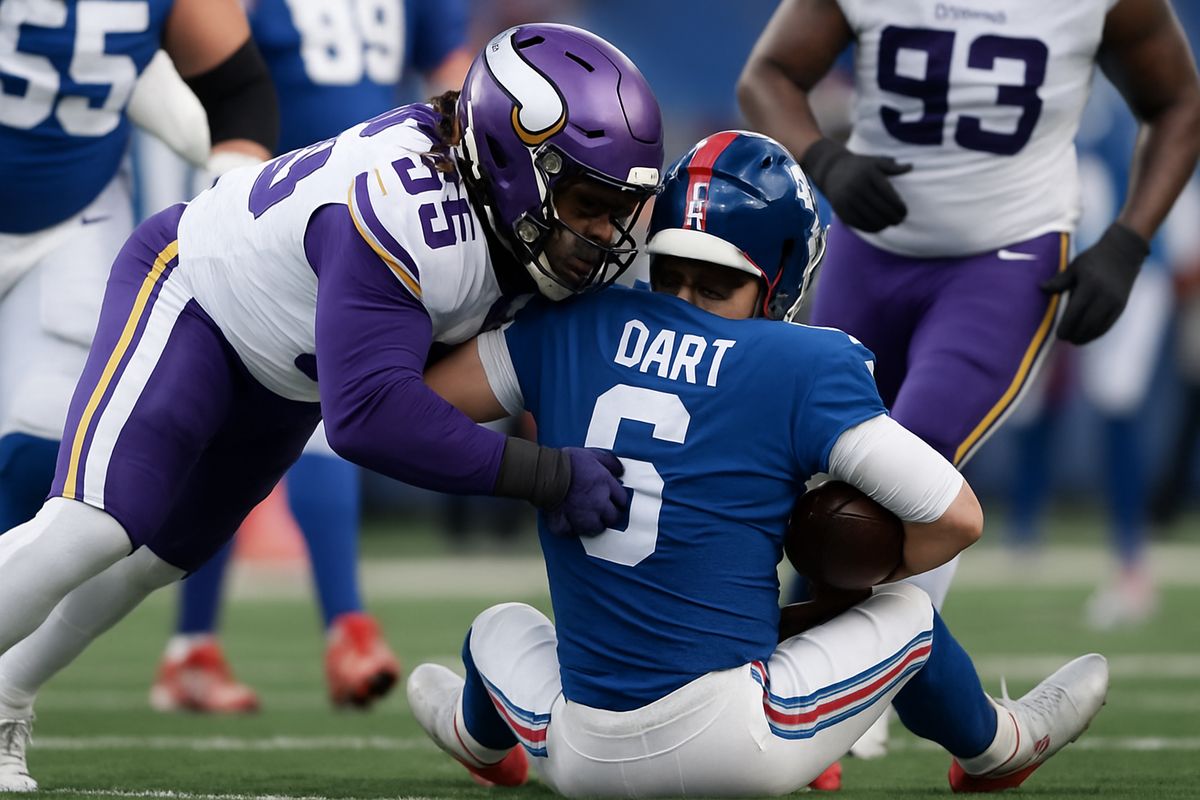
Prior to the 2025 season, Wilson's career statistics were solid but unspectacular, reflective of a player who had started 39 games across eight seasons. His 2025 campaign, however, was a revelation. He set career highs across the board: starting all 16 games, recording 6.5 sacks, and forcing four fumbles. Perhaps the most telling statistic of his fit in Flores's system was his pressure rate. According to the source material, Wilson boasted the NFL's third-best pressure rate (15.3%) among linebackers after Week 1. This ability to disrupt the quarterback from the second level is a premium asset in today's NFL. Furthermore, he maintained his special teams value, taking 144 snaps in the kicking game and contributing five tackles and a forced fumble there.
Scheme Fit and Team Strategy: Why This Deal Makes Sense
The Vikings' investment in Eric Wilson is a textbook example of a team identifying and rewarding a perfect scheme fit. Defensive coordinator Brian Flores is renowned for his complex, blitz-heavy defensive schemes that demand versatility, intelligence, and relentless pressure from multiple positions. Wilson, at this stage of his career, proved to be an ideal conduit for that philosophy. His career-high sack total and elite pressure rate demonstrate an innate understanding of timing and angles in the pass rush, a skill that not every inside linebacker possesses. By locking him down for three years, the Vikings are ensuring stability and continuity within the most critical layer of Flores's defense.
From a roster construction perspective, the deal also reflects a pragmatic approach to team building. With Wilson secured, the Vikings have clarity at the inside linebacker position alongside Blake Cashman. The situation with Ivan Pace Jr., whom Wilson displaced in the lineup, now becomes a point of competition and depth. The contract value—averaging $7.5 million per year with a substantial guarantee—is a mid-tier investment for a starting linebacker, indicating the team views him as a core starter but not necessarily a market-setting superstar. This allows financial flexibility to address other needs while keeping a known, high-performing entity in the fold. The move also prevents Wilson from testing the open market, where his unique 2025 production could have attracted competitive offers from other teams seeking a versatile defensive piece.
Addressing the Related Headlines
The related headlines, such as "Former Packers linebacker signs multi-year contract with Vikings," highlight an intriguing subplot to this transaction. Wilson's time in Green Bay adds a layer of rivalry nuance to his success in Minnesota. For Vikings fans and the organization, seeing a player who once suited up for their arch-rival become a defensive centerpiece is a satisfying narrative. It underscores the fluid nature of NFL rosters and the fact that player evaluation is often about fit and timing more than pedigree. The headline "Vikings agree to three-year deal with linebacker Wilson" from other sources confirms the widespread reporting of this as a significant, multi-year commitment, not a short-term patch.
The Bigger Picture: The Resurgent Veteran in the Modern NFL
Eric Wilson's story is part of a broader, often underreported trend in the NFL: the rising value of the savvy veteran in specific, complex systems. In an era obsessed with draft capital, athletic testing scores, and youthful potential, Wilson's arc is a powerful counter-narrative. At 31, an age where many linebackers see their roles and compensation diminish, he secured his largest contract by mastering a specific defensive scheme. This speaks to a league where coaching and system specificity are becoming as valuable as raw talent. Teams like the Vikings, under coaches like Flores, are increasingly willing to invest in players who function as on-field extensions of the coordinator's mind, even if their physical traits are no longer at their peak.
Furthermore, this deal reflects the evolving economics of the non-premium defensive positions. With elite edge rushers and cornerbacks commanding top-of-market deals, smart teams find value by creating pressure and disruption from their second-level linebackers and defensive backs. Wilson's $7.5 million average annual value is a fraction of what a top edge rusher makes, yet his pressure rate suggests he provides a similar disruptive impact from a different alignment. This strategy allows a team to allocate massive resources to a quarterback and offensive weapons while still constructing an aggressive, multifaceted defense. Wilson’s journey from a one-year, minimum-salary prove-it deal to a $22.5 million commitment is a blueprint for how veterans can reinvent their careers by specializing, making them indispensable assets in the right environment.
Historical Context and Future Implications
Historically, the Vikings have had success with veteran linebackers who found a second wind in their system. While direct comparisons to legends are premature, Wilson's path shares echoes with players like Ben Leber or even a more recent example like Anthony Barr in his prime—players whose value was amplified by the specific demands of the defensive scheme. The key difference is Wilson's path to this point, having left and returned, which is more akin to a player like defensive tackle Tom Johnson in the mid-2010s, who left Minnesota, played elsewhere, and returned to be highly productive.
Looking ahead, this signing has clear implications for the Vikings' 2026 draft and free agency strategy. With one inside linebacker spot solidified, the team can focus its resources on other defensive needs, such as the defensive line or secondary, or continue to bolster the offensive side of the ball. It also sets a clear performance benchmark within the building: production is rewarded, and opportunities seized will be capitalized upon. For Eric Wilson, the deal offers stability and the chance to build upon his career year, proving that his 2025 performance was not an anomaly but the beginning of a late-career peak defined by intelligence and scheme mastery. For the Vikings, it is a calculated bet on continuity, culture, and the tangible results produced by a perfect marriage of player and system.