The Return of Boxing's Biggest Name
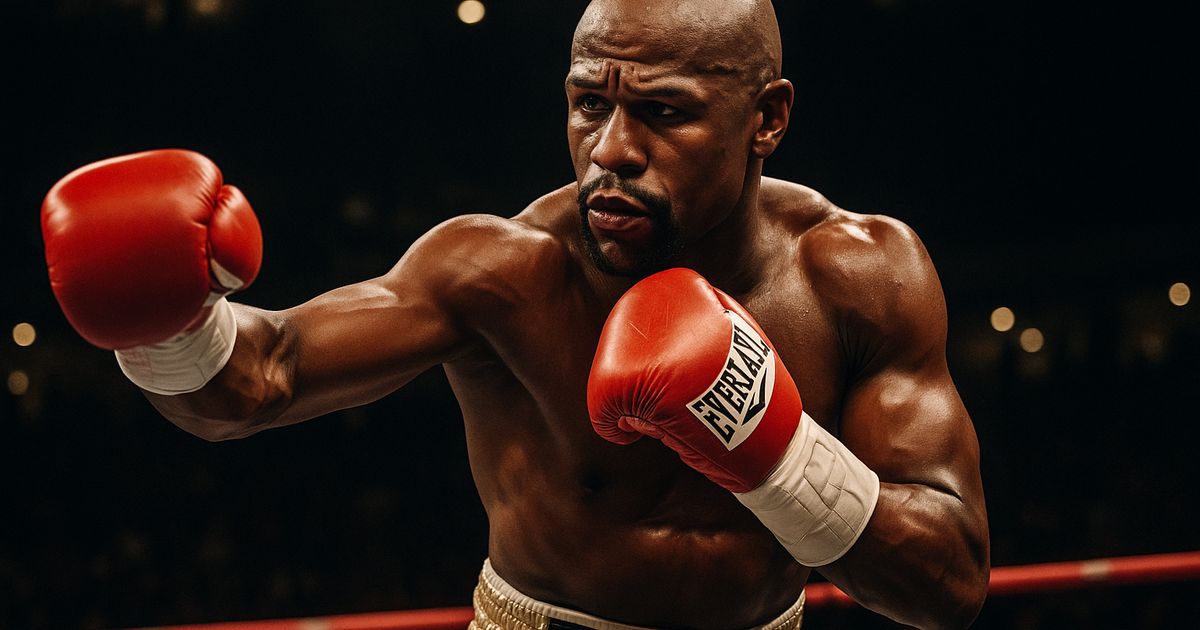
In a move that has sent shockwaves through the combat sports world, boxing legend Floyd "Money" Mayweather has announced his intention to end his nine-year professional retirement and return to sanctioned boxing. The bombshell announcement, made just days before his 49th birthday, reveals a two-part plan: first, a high-profile exhibition bout against heavyweight icon Mike Tyson in spring 2026, followed by a return to professional competition where he will risk his pristine, undefeated 50-0 record. This decision, driven by Mayweather's trademark confidence and a new promotional partnership, marks one of the most audacious comebacks in modern sports history, challenging the very concept of athletic prime and retirement in an era dominated by spectacle and legacy.

The Announcement: A Two-Stage Comeback Plan
On February 20, 2026, Floyd Mayweather Jr. issued a statement confirming his return to the sport he once ruled. The plan is structured in two distinct phases. The first is a long-teased exhibition match against fellow legend Mike Tyson, reportedly scheduled for the spring of 2026. While specific details like the exact date, venue, and broadcast partner remain unconfirmed, reports from outlets like The Ring have suggested a potential date of April 25 in the Democratic Republic of the Congo. This spectacle, pitting two of boxing's most recognizable names—with a combined age of 107 years—is positioned as the launchpad for the second, more consequential phase.
The second phase is Mayweather's return to professional, sanctioned boxing. He has signed an exclusive promotional agreement with CSI Sports/FIGHT SPORTS for this next chapter. In his statement, Mayweather declared, "I still have what it takes to set more records in the sport of boxing... no one will generate a bigger gate, have a larger global broadcast audience and generate more money with each event—then my events." CSI Sports co-founders Richard and Craig Miele echoed this sentiment, stating their partnership highlights a commitment to providing "the most high-profile fighters in the sport." The promotional company has promised details on the date, opponent, and broadcast information for Mayweather's 51st professional fight in the coming weeks, with a target of summer 2026.
Profiles in Legacy: Mayweather, Tyson, and the New Promoter
Floyd "Money" Mayweather: The Undefeated King
Floyd Mayweather Jr. (50-0, 27 KOs) retired from professional boxing in August 2017 following a 10th-round TKO victory over UFC superstar Conor McGregor. That win cemented his perfect 50-0 record, surpassing the legendary Rocky Marciano's 49-0 mark. A five-division world champion renowned for his defensive genius and business acumen, Mayweather cultivated the "Money" persona, boasting of nine-figure paydays and a lavish lifestyle. Since his professional retirement, he has remained active in the ring through a series of eight exhibition bouts against a diverse array of opponents, including YouTube star Logan Paul, MMA fighter Mikuru Asakura, and kickboxing phenom Tenshin Nasukawa. These exhibitions have kept him in the public eye and generated significant revenue, but they carried no official weight for his professional record.
Mike Tyson: The Baddest Man on the Planet
Mike Tyson (50-7, 2 NC), the former undisputed heavyweight champion of the world, is a cultural icon whose ferocious power made him a global superstar in the late 1980s and 1990s. He retired from professional boxing in 2005 but has engaged in several exhibitions since, most notably a 2020 draw with Roy Jones Jr. In 2025, at age 58, he returned to a professional bout for the first time in two decades, losing a decision to the much younger social media star Jake Paul. That fight, while critically panned, was a massive commercial success on Netflix, demonstrating the enduring marketability of Tyson's name. His planned exhibition with Mayweather is a cross-generational spectacle of unprecedented scale.
CSI Sports/FIGHT SPORTS: The New Power Player
A critical component of this comeback is Mayweather's new exclusive partnership with CSI Sports/FIGHT SPORTS. This promotional entity, led by co-founders Richard and Craig Miele, is positioning itself as a major force in boxing by securing the sport's biggest cash cow. Their statement frames the signing as a cornerstone of their strategy to deliver "the biggest audience and highest gross events of all time." This move signals a potential shift in the boxing promotional landscape, as Mayweather's longtime association with powerful entities like Showtime (now the subject of a major lawsuit) appears to be over.
Context and Motivations: Why Return Now?
Mayweather's decision to return cannot be viewed in a vacuum; it is the product of several converging factors in the modern boxing and entertainment ecosystem. First and foremost is the financial landscape. The announcement comes amid public rumors of financial strain for Mayweather, whose wealth has been a central pillar of his public identity. Adding significant credence to this angle is the recent news that Mayweather filed a multimillion-dollar lawsuit against Showtime earlier in February 2026. He claims he is owed "at least" $340 million from his reported $1.2 billion in career purses, alleging "aiding and abetting breach of fiduciary duty, civil conspiracy to commit fraud, conversion and unjust enrichment." A return to massive, promoter-backed events could be a strategic move to replenish his coffers outside of that legal battle.
Secondly, the commercial success of the "exhibition era" has proven there is an insatiable market for legacy-driven spectacles. Fights involving legends like Tyson, or hybrid events pitting boxers against influencers (like Mayweather vs. Logan Paul), consistently draw massive pay-per-view buys and global attention. Mayweather has been a pioneer in this space, and his planned exhibition with Tyson is arguably the crown jewel of the genre. Using it as a springboard for a professional return is a masterclass in momentum-building and cross-promotion.
Finally, there is the competitive landscape. The recent return of his great rival, Manny Pacquiao, to the professional ranks has inevitably fueled speculation about a long-awaited professional rematch of their 2015 "Fight of the Century." While not explicitly stated in the announcement, the possibility of a Pacquiao rematch—a fight that would shatter all existing revenue records—looms large as a potential motivation and a likely target for CSI Sports.
Analysis: Implications for Boxing and the Spectacle Sports Era
Mayweather's return represents a pivotal moment for boxing, further blurring the lines between legitimate sport and entertainment spectacle. His decision to risk the sacred 50-0 record—a number he has meticulously protected and marketed for years—is itself a seismic shift. It suggests that in today's economy, the financial upside of a major event outweighs the pristine value of an untarnished legacy. This calculus reflects a broader trend where narratives, personalities, and social media reach often trump traditional sporting merit in determining an event's value.
The move also raises profound questions about age and competition. Mayweather will be 49 at the time of the Tyson exhibition and pushing 50 for his professional return. He would be facing elite competitors nearly half his age. While his defensive style may age better than a brawler's, the physical decline is inevitable. This follows the pattern set by Tyson's fight with Jake Paul and the return of Pacquiao, suggesting a new normal where legends compete far beyond their athletic primes, protected by careful matchmaking but still risking their historical standing.
For the industry, the rise of CSI Sports as Mayweather's home is significant. It indicates a potential power struggle and fragmentation in boxing promotion. If CSI can successfully deliver Mayweather's events, it could attract other top names, challenging the dominance of established players like Top Rank, PBC, and Matchroom. Furthermore, the global focus—with the Tyson exhibition potentially in the Democratic Republic of the Congo—highlights the ongoing internationalization of the boxing market, seeking new audiences and revenue streams outside the traditional Las Vegas or U.S. arena strongholds.
Historical Comparisons and the Road Ahead
Historically, comebacks by aging legends have a checkered record. Sugar Ray Robinson, Sugar Ray Leonard, and even Muhammad Ali returned with diminished results. However, the modern context is different. The financial rewards are exponentially higher, and the definition of "competition" has expanded to include exhibitions and novelty matches that carry less athletic risk. Mayweather's comeback most closely parallels that of George Foreman, who won a heavyweight title at age 45. But Foreman's comeback was a grueling, decade-long climb through the rankings. Mayweather's path is a targeted, event-driven approach, skipping the climb for the pinnacle payday.
What should readers and fans watch for in the coming months? Several key milestones will define the viability and direction of this comeback:
- The Tyson Exhibition Details: Confirmation of the date, location, ruleset, and broadcast partner for the spring 2026 exhibition. The commercial success of this event will set the financial and promotional tone for the professional return.
- The Professional Opponent: The identity of Mayweather's first professional foe since 2017 is the most critical question. Will it be a legacy fight against a fellow legend like Pacquiao? A "safe" bout against a mid-level contender? Or a blockbuster crossover event against another celebrity or influencer? The choice will signal whether this is a serious sporting return or a purely financial venture.
- The State of the Lawsuit: Developments in Mayweather's $340 million lawsuit against Showtime could impact his finances and his relationships within the industry.
- Regulatory Hurdles: Athletic commissions will have to license a 49-year-old fighter for a professional bout, which may involve stringent medical testing and could become a story in itself.
Closing Thoughts: A Calculated Gamble on Legacy and Finance
Floyd Mayweather's announced return to professional boxing is the ultimate calculated gamble. It is a bet that his skills, while diminished, remain sufficient against carefully selected opposition. It is a bet that his brand and the spectacle of his events are more powerful than the erosion of time. And it is a bet that the modern sports entertainment market will reward the convergence of legacy, narrative, and financial ambition more than it punishes the fading of physical prowess.
Whether this comeback enhances or tarnishes the Mayweather legacy remains to be seen. One outcome is certain: it will generate the "bigger gate, larger global broadcast audience, and more money" that Mayweather promises. In doing so, it will further cement the era of boxing where the business of the fight often overshadows the sport of it. The journey begins with a nostalgic spectacle alongside Mike Tyson and culminates in a high-stakes professional return where the 50-0 record, once a monument to perfection, becomes the prize on the table in pursuit of one final, historic payday.