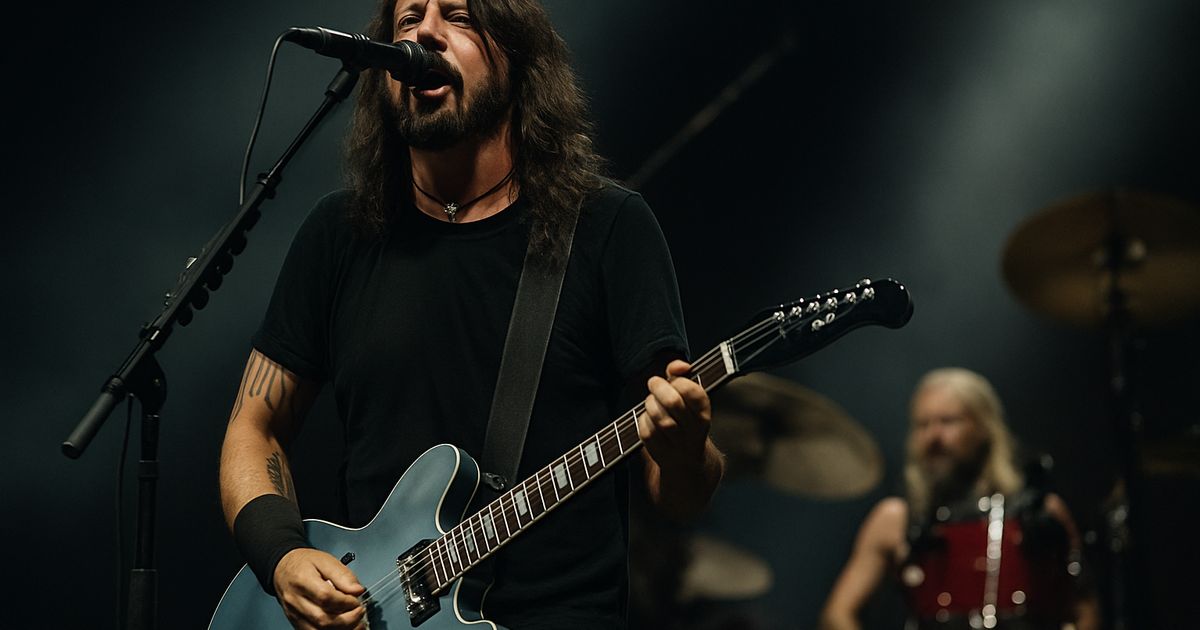
Rock Giants Head Down Under
In a major announcement that has sent shockwaves through the Southern Hemisphere's music scene, American rock titans Foo Fighters have confirmed their long-awaited return to Australia and New Zealand. Dubbed the "Take Cover Tour," the stadium run represents one of the most significant international concert announcements of 2026, promising to deliver the band's legendary high-octane performances to massive crowds from Brisbane to Perth, and across the Tasman to Christchurch and Auckland. This tour is more than just a series of concerts; it's a cultural event that underscores the enduring power of stadium rock, the Foo Fighters' deep connection with their Antipodean fanbase, and a vital platform for a diverse wave of local supporting talent. The announcement, detailed by CelebrityAccess, marks the band's first major tour of the region in several years, setting the stage for a summer of rock anthems.

The "Take Cover Tour": Dates, Venues, and a Massive Support Lineup
The Foo Fighters' 2026-2027 itinerary is a comprehensive sweep of major cities and key regional hubs. The tour officially kicks off on November 5, 2026, at Brisbane's Suncorp Stadium and concludes nearly three months later on January 25, 2027, at HBF Park in Perth. In between, the band will play at some of the largest venues in both nations, including Accor Stadium in Sydney, Marvel Stadium in Melbourne, Coopers Stadium in Adelaide, and McDonald Jones Stadium in Newcastle. The New Zealand leg features shows at One New Zealand Stadium in Christchurch on January 19, 2027, and Western Springs Stadium in Auckland on January 22, 2027. A notable inclusion is a stop at QLD Country Bank Stadium in Townsville on November 7, 2026, a detail that connects to related headlines highlighting the city's enthusiastic response, contrasting with other regional areas.
Perhaps the most striking feature of the tour announcement is the extensive and meticulously curated list of support acts. The Foo Fighters are partnering with over fifteen homegrown Australian and New Zealand artists, who will appear on various dates. This list includes bands like Full Flower Moon Band, Mini Skirt, The Belair Lip Bombs, Teens, C.O.F.F.I.N., Southern River Band, and Last Quokka, among many others. This strategy does more than warm up the crowd; it provides an unprecedented national platform for emerging and established local rock, punk, and alternative acts, effectively making the tour a celebration of the region's vibrant guitar music scene alongside the global headliners.
Stadium Rock's Resilient Return and the Foo Fighters' ANZ Legacy
The announcement of a multi-stadium tour in 2026 is a powerful statement about the resilience and demand for large-scale live rock music. As hinted in the related headline "Stadium Rock Returns," this tour signifies a post-pandemic normalization and a renewed appetite for the communal, high-energy experience that only a band like the Foo Fighters can provide in a venue of that scale. The logistics and confidence required to book and sell out these enormous venues speak to the band's undiminished commercial power and the loyal, multi-generational fanbase they have cultivated over nearly three decades.
The Foo Fighters' history with Australia and New Zealand is long and storied. They are perennial favourites, having toured the region consistently since the late 1990s, building a reputation for explosive, marathon live shows. Frontman Dave Grohl's charismatic and heartfelt connection with audiences has cemented a special bond. This tour follows a period of profound significance for the band, marking their continued journey as a unit following the tragic passing of drummer Taylor Hawkins in 2022. Their return to these shores with new material and a renewed sense of purpose is likely to be an emotionally charged and celebratory event for both the band and their fans, representing not just a concert, but a testament to perseverance and the healing power of rock music.
Analysis: The Strategic Genius of the "Take Cover Tour" Model
The structure of this tour offers several layers of strategic intelligence worth analyzing. First, the geographic spread is notable. By including a show in Townsville, the band is tapping into a major regional market in North Queensland, a move that acknowledges the widespread demand beyond the capital cities. The related headline "Mellow cellos for Cairns as Townsville freaks out for Foo Fighters" humorously underscores the localized excitement and inevitable jealousy between neighbouring regions when a major tour announcement is made, highlighting the significant economic and cultural impact a single stadium date can have on a city.
Second, the commitment to local supports is a masterstroke in community engagement and legacy building. Instead of importing a single international opener, the Foo Fighters are using their platform to amplify a wide array of local voices. This generates immense goodwill within the national music industries of Australia and New Zealand, fosters a sense of event uniqueness for each city (as the undercard changes), and exposes tens of thousands of fans to their next favourite band. It's a model that strengthens the entire musical ecosystem, ensuring the future of rock in the region by giving its emerging champions a stadium-stage launchpad. This approach transforms the tour from a simple transactional event into a culturally enriching partnership.
Economic and Cultural Ripple Effects
A tour of this magnitude acts as a significant economic engine. It drives revenue not only for ticketing agencies and venues but also for local businesses—hotels, restaurants, bars, and transportation services—in each host city. The "Townsville freaks out" headline is a microcosm of this effect, capturing the anticipatory buzz that translates into real economic activity. Furthermore, by championing local supports, the tour directs attention and potential future revenue to those domestic artists, creating a multiplier effect that benefits the broader creative economy.
Historical Context: Foo Fighters in the Pantheon of ANZ Tours
To understand the significance of this announcement, one must look at the history of major international rock acts touring Australia and New Zealand. The region has always been a stronghold for rock music, with legendary tours by bands like AC/DC, The Rolling Stones, and U2 becoming landmark cultural moments. The Foo Fighters have steadily ascended into this elite echelon of must-see touring acts. Their previous tours, such as the "Concrete and Gold" run in 2018, were met with critical acclaim and sold-out shows, proving their stadium-ready status.
This "Take Cover Tour" continues that tradition but also adapts to the modern landscape. The focus on local supports echoes a growing trend among top-tier artists to curate lineups that reflect the local culture, a move away from the homogenized touring packages of the past. It positions the Foo Fighters not just as visitors, but as curators and celebrants of the local scene they are visiting, a respectful and savvy evolution of the classic stadium tour model. This builds a deeper, more meaningful connection with the audience than a standard headline performance alone could achieve.
What to Watch For: Ticketing, Setlists, and Lasting Impact
For fans, the immediate focus is on the ticket sale date: Wednesday, February 25, as per the source material. Given the scale and anticipation, demand is expected to be immense. The related headline "How to Score Tickets for Foo Fighters’ 2026 ANZ Run" indicates the expected frenzy and the need for fans to be prepared with pre-sale registrations, multiple device setups, and patience. These stadium shows will likely sell out rapidly, with secondary markets becoming active shortly after.
Beyond ticket day, speculation will turn to the tour's content. Will the setlist heavily feature material from their most recent album, or will it be a career-spanning retrospective? Given the emotional context of the band's recent history, the shows are likely to include poignant tributes alongside the classic anthems like "Everlong," "Best of You," and "My Hero." Furthermore, the inclusion of so many support acts raises the possibility of unique collaborations—perhaps a local artist joining the Foos for a song on their home turf, creating unforgettable one-off moments.
The long-term impact to watch will be on the supporting bands. For artists like The Buoys, C.O.F.F.I.N., or Dick Move, playing to a stadium crowd is a career-defining opportunity. The exposure, credibility, and experience gained could catalyze their own headlining tours and record sales, much like when Nirvana took unknown bands on the road decades ago. The true success of the "Take Cover Tour" may be measured not just in tickets sold in 2026, but in the headliners spawned from its support slots in the years to follow.
Conclusion: A Defining Tour for a Defining Band
The Foo Fighters' "Take Cover Tour" of Australia and New Zealand in 2026-2027 is shaping up to be one of the landmark musical events of the mid-2020s. It is a powerful reaffirmation of stadium rock's vitality, a heartfelt return to a beloved fanbase, and a strategically brilliant investment in the future of the local music scenes. By combining their own global superstar power with a deep bench of regional talent, the Foo Fighters are creating more than a concert series; they are fostering a cultural moment. For fans, it's a chance to witness rock history. For the supporting artists, it's a launchpad of incalculable value. And for the cities on the itinerary, from Townsville to Christchurch, it's an economic and communal celebration. As the ticket countdown begins, one thing is clear: the summer of 2026-2027 down under will be roaring with the sound of the Foo Fighters and the next generation of rock they are proudly bringing along for the ride.
Sources & References
- CelebrityAccess: The Foo Fighters Announce Australia & New Zealand Tour
- Related Headline Analysis: "Stadium Rock Returns: How to Score Tickets for Foo Fighters’ 2026 ANZ Run"
- Related Headline Analysis: "Mellow cellos for Cairns as Townsville freaks out for Foo Fighters"