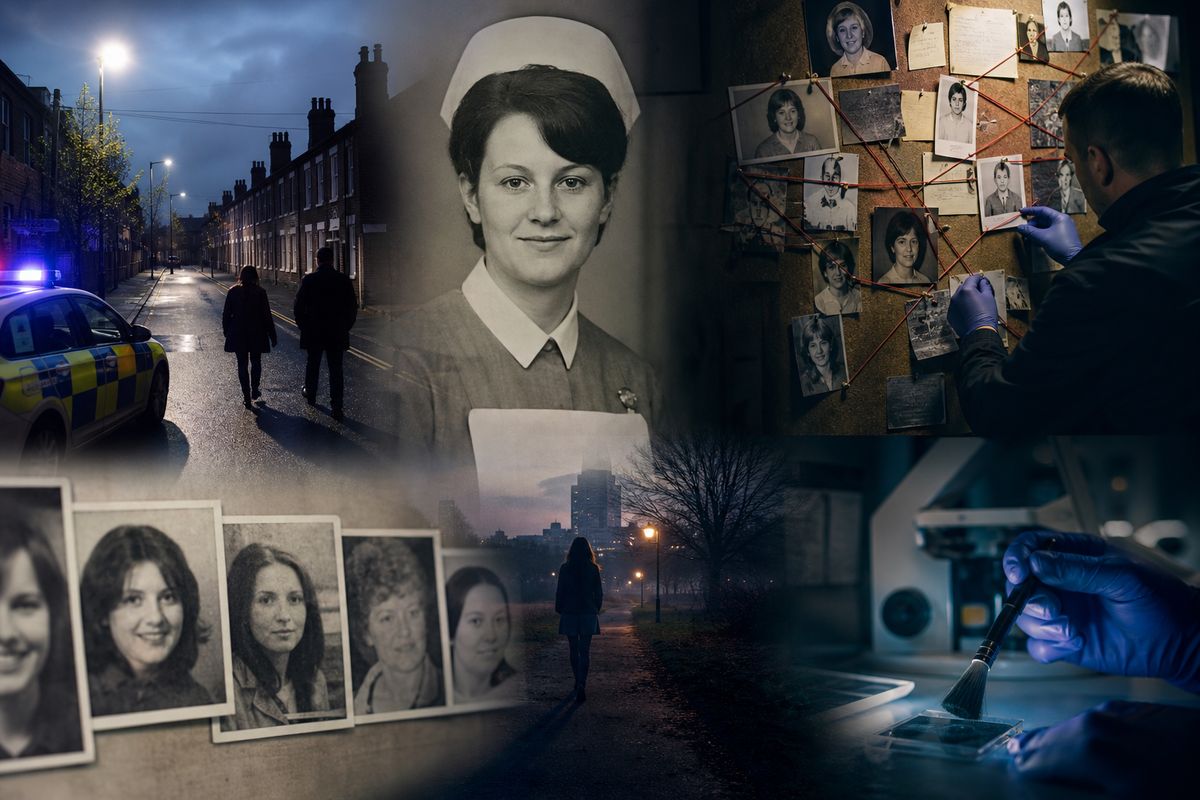
Police renew efforts to close one of Birmingham's oldest missing person files
West Midlands Police have issued a fresh appeal for information on one of the force's longest-running missing person cases – that of a trainee nurse who vanished from Birmingham 57 years ago. The woman, who has not been named publicly, was last seen in 1969, and despite repeated appeals over the decades, her fate remains unknown. The new push comes as part of a wider campaign by the force to highlight unresolved disappearances that have haunted families and investigators for generations.
The case is among several historic missing person enquiries being revisited by West Midlands Police, including that of a man who disappeared from Birmingham 43 years ago. The force has released no new photographs or specific details this time, but is urging anyone with even the smallest memory or piece of information from the period to come forward. “Time does not diminish our commitment to finding answers,” a police spokesperson said in a statement accompanying the appeal.

57 years without answers: the trainee nurse's disappearance
The woman at the centre of the appeal was a trainee nurse living and working in Birmingham in the late 1960s. She was in her early twenties when she vanished without trace. No body has ever been found, and no suspect has ever been charged. The case has been reviewed multiple times by cold case teams, but each fresh inquiry has hit the same wall: a lack of reliable witness accounts or forensic evidence from the era.
According to BBC reports covering the appeal, the disappearance is one of the oldest unresolved missing person cases in the West Midlands region. The force has not disclosed whether any persons of interest were identified at the time, but the passage of five decades means that key witnesses and potential suspects may now be elderly or deceased. Police are particularly keen to hear from former colleagues or neighbours who remember the young nurse in the weeks before she went missing.
43 years on: the second case revisited
Alongside the 1969 case, detectives are also re-examining the disappearance of a Birmingham man who has been missing for 43 years. That case dates back to 1983, when the man, then in his thirties, left his home in the city and was never seen again. Like the trainee nurse, his family has spent decades searching for closure. The appeal, covered by multiple outlets including the BBC, does not name the man but emphasises that every missing person has a family waiting for answers.
The two cases are being highlighted together as part of what West Midlands Police describe as a “longest-running missing person cases” campaign. The force has created a dedicated webpage and is using social media to reach younger generations who might have inherited memories from older relatives. “A grandchild might have heard a story passed down,” the appeal notes. “That piece of information could be the key.”
Related disappearances: a wider picture of loss
While these historic cases grab headlines, Birmingham and the wider West Midlands continue to see new missing person reports each year. In 2026 alone, dozens of people have gone missing across the region, according to local news round-ups. Some are found quickly; others become long-term mysteries. One recent high-profile case that ended positively was that of Birmingham teenager Iqra Nisar, who was reported missing earlier this year and later found safe. Police confirmed her safe return in a brief statement, a rare happy ending in a field that often offers none.
At the other end of the spectrum, an urgent national appeal was issued earlier this week for a 15-year-old boy from Windsor who has been missing for several days. That case, covered by three news sources, underscores how missing person cases can escalate quickly, requiring widespread media attention and public assistance. The juxtaposition of a fresh teenage disappearance with decades-old cases highlights the enduring human toll of every unsolved case, regardless of its vintage.
The challenge of cold cases: forensics, memory and media
Reopening a case from 1969 or 1983 presents unique difficulties. Witnesses may have died, moved away, or their memories faded. Physical evidence, if any was collected, may have degraded or been lost. DNA profiling, which did not exist at the time, can sometimes be applied to old samples, but that relies on the original evidence still being in storage and uncontaminated. Police have not stated whether any DNA work is being done on either of the two current appeals.
Media appeals remain one of the few active tools for old cases. The BBC's coverage of the 1969 case specifically mentions the 57-year gap, making it one of the longest-running missing person investigations in not just Birmingham but the entire country. Historically, similar appeals have occasionally succeeded; the 2011 discovery of the remains of teenager Suzy Lamplugh, nearly 25 years after her disappearance, came after a renewed media push. More recently, advances in genealogical DNA helped identify the killer of a woman missing since 1975 in the United States, offering a template for UK forces.
The Bigger Picture
These appeals are not just about two individuals. They reflect a broader societal shift in how we treat cold cases. For decades, missing person investigations were often low priority once the initial search failed. Now, forces have dedicated cold case units, and the public has a higher awareness of the lasting trauma that unresolved disappearances inflict on families. The rise of social media has also changed the game: appeals can go viral, reaching people who were not alive when the person vanished. In the case of the 1969 trainee nurse, that means her story is now being told to great-grandchildren of her contemporaries.
Yet the numbers are sobering. According to the UK missing persons charity Missing People, there are tens of thousands of missing person reports each year, and while most are resolved quickly, several hundred remain open for more than a year. The oldest unsolved cases, like those from the 1960s and 1970s, are often the hardest to crack because the paper trails are thin and the cultural context has changed completely. What a neighbour in 1969 thought was a “domestic disagreement” might now be recognised as a sign of foul play. The police appeal implicitly acknowledges this: they are asking the public to view old memories through a new lens.
Finally, these cases remind us that behind every statistic is a family that never stopped waiting. The trainee nurse's relatives, if they are still alive, have endured 57 years of not knowing. The man missing since 1983 has left siblings, possibly children, who grew up with an empty space at the table. Even if the appeals yield no new leads, the act of remembering is itself a form of justice. As West Midlands Police put it, “No case is ever closed until we have answers.”
What you can do
Anyone with information about the trainee nurse who disappeared in 1969, or the man missing since 1983, is urged to contact West Midlands Police via their website or by calling 101. Even the smallest detail, a fleeting memory of a conversation overheard decades ago, could be the clue that finally breaks the case. The force also encourages people to share the appeals on social media to maximise reach. For those with information they prefer to give anonymously, Crimestoppers can be contacted on 0800 555 111.