The Sanctuary Offer and a Torpedo in International Waters
On March 4, 2026, the Iranian warship Iris Dena sank in international waters off the southern coast of Sri Lanka, struck by a torpedo fired from a US submarine. The attack, which killed at least 87 of the 130 sailors on board, marked a dramatic and deadly expansion of the ongoing war between the US-Israel alliance and Iran beyond the Middle East. The incident, however, is framed by a critical diplomatic detail revealed days later: India had granted the Iris Dena and two sister ships permission to dock at its ports for sanctuary just three days before the sinking.
Indian Foreign Minister S. Jaishankar confirmed to parliament that Iran had requested permission for three of its naval vessels to dock at Indian ports on February 28, 2026—the very day the US and Israel began their war on Iran. India granted that permission on March 1. This sequence of events places India in a complex geopolitical position, caught between its historical ties with Iran, its growing strategic partnership with the United States, and its desire to assert authority in the Indian Ocean region. The sinking of the Iris Dena not only represents a significant naval loss for Iran but also raises profound questions about maritime law, neutrality in conflict, and the escalating risks of great power confrontation in Asia's waterways.

Unpacking the Event: From Exercise to Attack
The journey of the Iris Dena to its fatal encounter began with a gesture of international military cooperation. The vessel, along with the Iris Bushehr and Iris Lavan, had participated in a multinational military exercise hosted by India in the coastal city of Visakhapatnam between February 15 and 25. The ships departed Indian waters on February 25. Their precise locations in the days that followed are unclear, but they were likely in international waters in the northern Indian Ocean when the wider war erupted on February 28.
Facing open hostilities, Iran sought safe harbor for its assets. According to Jaishankar, after permission was granted on March 1, the movements of the three ships diverged. Only the Iris Lavan successfully docked, arriving at the port of Kochi on March 4. The Iris Dena was not so fortunate. On that same day, while operating approximately 20 nautical miles (37 km) west of Galle, Sri Lanka—in waters under Sri Lanka's designated search-and-rescue jurisdiction—it was hit. The US submarine's torpedo strike was described by US Defense Secretary Pete Hegseth as "the first sinking of an enemy ship by a torpedo since World War Two" for the US Navy, a claim that, while technically accurate for America, overlooks torpedo use by other nations like the UK and Pakistan in subsequent conflicts.
The aftermath saw the remaining Iranian vessels find refuge. Sri Lanka confirmed it provided sanctuary to the Iris Bushehr on March 5 after the ship reported an engine malfunction. India confirmed the Iris Lavan was docked in Kochi, with its crew in Indian naval facilities. Jaishankar defended India's decision, stating, "We believe that this was the right thing to do." Iran's Foreign Minister Abbas Araghchi condemned the US attack as an "atrocity at sea" perpetrated "2,000 miles away from Iran's shores."
Key Actors and Assets in the Drama
The Iranian Navy and the Sahand-Class Frigate
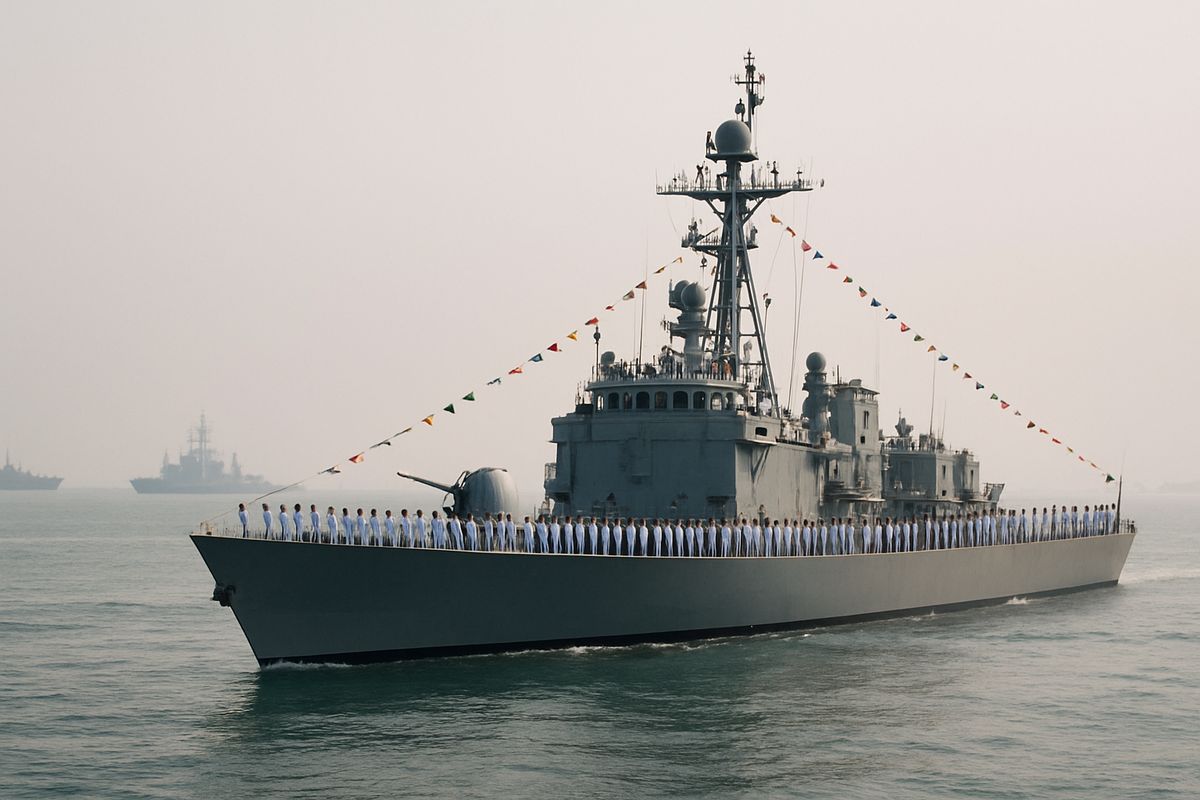
The Iris Dena was a Sahand-class frigate, a domestically produced Iranian warship representing a key component of the nation's efforts to build a blue-water naval capability. The sinking of the Iris Dena was part of a broader campaign; it was one of an estimated 20 Iranian navy vessels destroyed in the initial coordinated strikes by the US and Israel. The loss of such a modern, symbolic asset in distant waters is a significant blow to Iranian naval prestige and operational capacity.
India's Delicate Diplomatic Balancing Act
India, under Foreign Minister S. Jaishankar, found itself in a quintessential tightrope walk. The country maintains crucial energy and strategic ties with Iran, including the development of the Chabahar port, while simultaneously deepening its defense and strategic partnership with the United States as a counterweight to China. Granting sanctuary to wartime belligerents is a weighty decision with implications for neutrality. Jaishankar's parliamentary statement was a public assertion of India's sovereign right to make such calls based on humanitarian and diplomatic considerations, even under intense international pressure.
The US Navy's Silent Service
The unnamed US submarine that executed the attack is a testament to the pervasive, silent reach of American naval power. Analysts note that a quarter of the US submarine fleet of 65-70 vessels is at sea at any time, providing global intelligence, surveillance, and strike capability. The attack demonstrated President Donald Trump's stated aim of destroying Iran's navy. In a symbolic nod to naval tradition, related headlines indicated the submarine would soon be flying the Jolly Roger—a practice in some Western navies where submarines display a skull-and-crossbones flag after a successful combat action.
Sri Lanka's Reactive Sanctuary
Sri Lanka's role, providing port access to the Iris Bushehr a day after the attack, highlights the predicament of smaller Indian Ocean states. Caught between regional powers like India and global powers like the US, Sri Lanka acted on a request citing mechanical distress, a decision rooted in maritime convention but fraught with political implications.
Analysis: Implications for Regional Security and Diplomacy
The sinking of the Iris Dena and the accompanying sanctuary saga carries immediate and lasting consequences. Firstly, it signals a dangerous escalation in the Iran conflict, projecting US-Iranian hostilities directly into the heart of the Indian Ocean, a critical global shipping lane far from the Persian Gulf. This transforms the conflict from a regional to a trans-regional one, directly involving the security calculus of South Asian nations.
Secondly, it tests the limits of India's "strategic autonomy." By offering sanctuary, India upheld a principle of sovereign decision-making and demonstrated it would not blindly align with US actions. However, this move inevitably creates friction with Washington, which is conducting active military operations. India's authority in what it considers its maritime backyard was directly challenged by a US attack on a vessel it had just offered safe passage. The incident exposes the inherent tensions in managing competing strategic relationships.
Thirdly, it sets a concerning precedent for maritime security. Attacking a naval vessel in international waters outside a declared blockade or immediate war zone raises legal and ethical questions, as highlighted by Iran's protests. It demonstrates a willingness by the US to project lethal force globally to degrade Iranian military assets, a strategy that significantly raises the risk of miscalculation and broader naval conflict.
The Bigger Picture: The Indian Ocean as a New Arena of Great Power Confrontation
While the immediate story focuses on a single torpedo strike, the Iris Dena incident is a microcosm of a far larger and more consequential shift: the transformation of the Indian Ocean from a relatively stable maritime commons into a contested arena of great power rivalry. For decades, the US Navy enjoyed unquestioned primacy here. Today, its dominance is being challenged not just by Iran's asymmetric naval ambitions, but more significantly by China's sustained naval build-up and "string of pearls" strategy, and by India's own burgeoning blue-water aspirations under its "Act East" policy.
The sanctuary offered by India and Sri Lanka is not merely a humanitarian act; it is a diplomatic signal in this larger contest. It reflects the efforts of regional states to maintain agency and avoid being forced into binary alliances. They are navigating a multipolar reality where they must engage with all major powers—the US for security, China for economics, and Iran for regional connectivity—without fully committing to any one. The war between the US and Iran has now injected a volatile, hot conflict into this already complex stew of competing interests, forcing every littoral state to recalculate its risks.
Historically, control of the Indian Ocean has dictated the fate of empires and global trade. The Iris Dena incident suggests the rules of engagement and the balance of power in these waters are being rewritten in real-time. The US action asserts a right to global military enforcement, while the reactions of India and Sri Lanka assert a right to independent diplomatic judgment. This clash of principles, played out over the fate of a single frigate, foreshadows the difficult, and potentially dangerous, navigation ahead for all nations dependent on the security of the world's third-largest ocean.
Conclusion: A Watershed Moment in Maritime Conflict
The torpedoing of the Iranian warship Iris Dena after it was offered sanctuary by India is more than a dramatic war headline. It is a watershed moment that crystallizes the intersecting crises of our time: escalating Middle Eastern conflict, the fraying of traditional diplomatic norms, and the fierce competition for influence in the Indo-Pacific. The incident underscores the vulnerability of global sea lanes to geopolitical spillover and the immense pressure on regional powers like India to chart an independent course.
The crew of the Iris Lavan remains in Indian facilities, a living testament to the sanctuary that was granted but not universally received. As the US submarine reportedly prepares its Jolly Roger, and as Iran mourns its sailors, the strategic ripples from this event will continue to spread across the Indian Ocean, challenging alliances, redefining neutrality, and reminding the world that in an age of interconnected conflict, no ocean is a distant theater anymore.