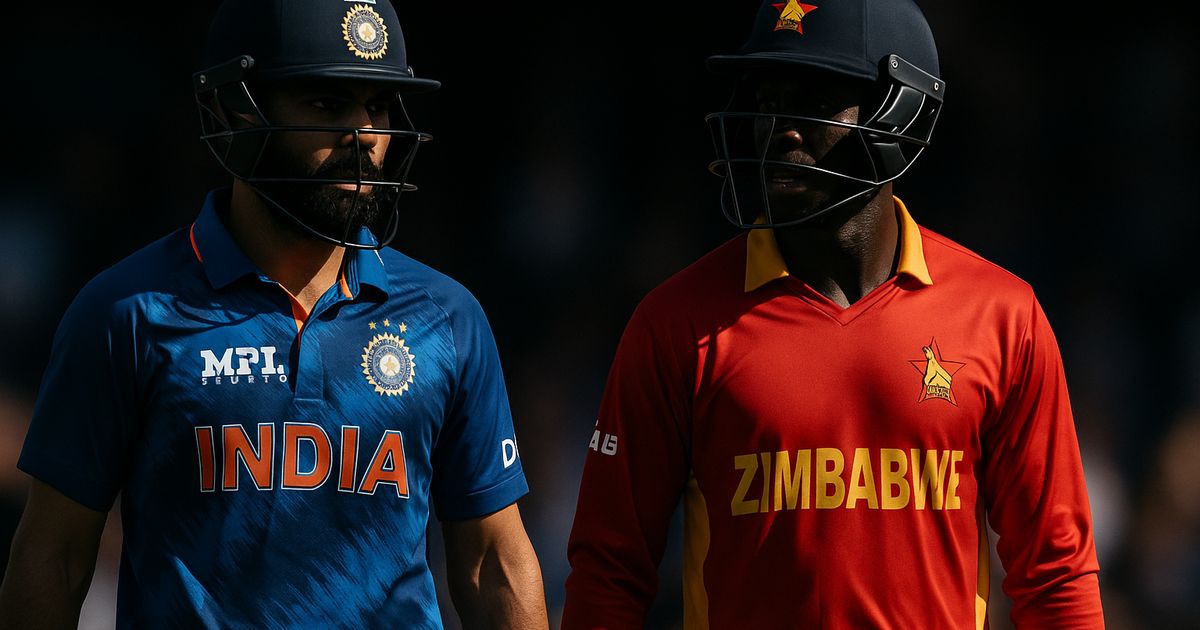
A Do-or-Die Encounter at the Iconic Chepauk
The 48th match of the ICC Men's T20 World Cup 2026, a Super 8 Group 1 clash between India and Zimbabwe, is set to unfold under immense pressure at the MA Chidambaram Stadium in Chennai. With both teams reeling from heavy defeats in their opening Super Eight fixtures, this contest has transformed into a virtual knockout. The narrative is stark: a loss here effectively ends the World Cup campaign for either side. Zimbabwe, led by the resilient Sikandar Raza, won the toss and elected to bowl first, a decision influenced by a pitch that looks "moist" and offers an early advantage to seamers. For India, a team that arrived with towering expectations built on explosive bilateral series performances, this match is a critical test of their ability to adapt and overcome a surprising vulnerability that has emerged at the worst possible time.
The venue itself adds a fascinating layer. Chepauk, known for its historically spin-friendly tracks, has been the highest-scoring ground in this World Cup so far, described by commentators as "excellent for batting." This sets the stage for a potential run-fest, yet the pre-match analysis suggests bowlers, particularly those adept at slower balls, will have a role. The dimensions—67 meters square and 77 meters straight—are even, but as noted, batters "just look for the stands." The backdrop is a Chennai crowd that has embraced all teams but will now unequivocally rally behind the Men in Blue, their blue jerseys finally in context on Walajah Road. The stakes couldn't be higher, with the earlier result in the group, South Africa's comprehensive win over West Indies, simplifying the equation: win both remaining matches, and net run rate (NRR) ceases to be a concern for India.

Dissecting the Teams: Form, Tactics, and Key Personnel
India's journey to this precarious point is the tournament's central paradox. Heralded for a batting lineup of unprecedented firepower, they have stumbled on pitches that offer more assistance than the flat tracks of recent bilaterals. The source material reveals a startling statistic that cuts to the heart of their struggles: among all Super Eight teams, India has the worst record against spin bowling, with a combined average of 17.52 and a strike rate of 120.65. This weakness has been strategically exploited by opponents using off-spin to target India's left-hand heavy top order. The talk of a potential shake-up, including bringing in Sanju Samson to break the pattern, underscores the level of concern within the camp. The return of Rinku Singh, who was away attending to his ailing father, adds a potential middle-order dynamism, but the core issue of tackling quality spin remains.
For Zimbabwe, the challenge is one of resilience. Captain Sikandar Raza, the heart of the side, suffered an injury scare after being struck on the left palm in their previous match. However, teammate Ryan Burl confidently declared, "Sikandar Raza is 100% playing. Good luck telling him that he's not going to play against India." His leadership and off-spin will be crucial in marshaling a team coming off a "hammering" from the West Indies. Zimbabwe has made one tactical change, with Cremer missing out. Their strategy is clear: exploit the moist conditions early with seam, restrict India to a sub-par total on what is expected to be a good batting surface, and then chase under pressure. They are banking on the belief that the "heat" of the must-win scenario affects the illustrious opposition just as much as it does them.
The Chennai Pitch: A Batter's Paradise with a Bowler's Secret
The pitch report from Katey Martin and Dinesh Karthik provides critical insights. It's a black soil pitch, different from the green-tinged track used in the earlier Afghanistan-New Zealand game. While it has "enough in it for the bowlers to work with in terms of slowness," the consensus is that it favours batters. The key weapon for bowlers has been the slower ball; when fast bowlers give it "good revs into the pitch, it tends to grip and stop on the batter." The large square boundaries offer room for tactical field placements. The explicit forecast is that a total below 170 will leave a team "struggling," setting a clear benchmark for both sides. This information makes Zimbabwe's decision to bowl first a bold one, betting on early moisture and the pressure of a must-win chase later in the evening.
Historical Context and India's Spin Conundrum
India's struggle against spin in a World Cup on home soil is a historical anomaly that demands analysis. For decades, Indian batters have been synonymous with mastery against spin bowling. The current lineup, filled with players who excel in the IPL on similar pitches, has unexpectedly found itself bogged down. This isn't just about poor form; it's a targeted tactical failure. Opposition teams have identified a specific weakness against off-spin—a rarity for Indian teams of the past—and have deployed it relentlessly. This points to a potential gap in preparation or a specific technical flaw that has been collectively exposed under the high-pressure microscope of a World Cup.
The historical context of India-Zimbabwe encounters in World Cups adds another dimension. While India has traditionally been dominant, Zimbabwe has historically punched above its weight in these tournaments, famously defeating Australia in 2007 and pulling off other upsets. An Indian team in a vulnerable state presents the perfect opportunity for another iconic Zimbabwean moment. For India, the shadow of past World Cup disappointments, where they entered as favourites only to falter in critical moments, now looms large. The pressure to perform in front of a home crowd, combined with the weight of expectation from their pre-tournament billing, has created a perfect storm that they must now navigate.
Strategic Analysis: What This Match Means for the Tournament
This match is a microcosm of the modern T20 World Cup, where pre-tournament narratives can unravel in a single session. India's perceived invincibility, built on a mountain of runs in bilateral series, has been challenged by the more nuanced, bowler-friendly conditions of a global event. The result here will have profound implications. An Indian victory keeps their destiny in their own hands and provides a vital confidence boost, but it does not erase the fundamental technical questions about their batting against spin. A loss would be catastrophic, likely triggering a major inquest into team selection, preparation, and the potential gap between IPL success and international tournament performance.
For Zimbabwe, a win would be transformative. It would keep their semi-final hopes alive against all odds and cement this team's legacy as giant-killers. It would also validate their tactical approach and the fierce competitiveness instilled by Sikandar Raza. Beyond the points table, this match is a battle of mental fortitude. Which team can better handle the "do-or-die" pressure? Can India's star-studded lineup rediscover its mojo when it matters most? Can Zimbabwe's less-heralded players execute a perfect game plan on one of the world's most iconic cricket grounds? The answers will significantly shape the trajectory of Group 1.
The Net Run Rate Subplot and the Path Forward
The earlier result from the group, where South Africa beat West Indies comprehensively, has a subtle but important effect. As stated in the source, "NRR will no longer be an issue for India if they win both their remaining matches." This simplifies India's task: win, and win well, but the primary focus is solely on the victory. It removes the potentially paralysing need to calculate margins during the game, allowing them to play with slightly more freedom. For Zimbabwe, their heavy loss to West Indies likely means their Net Run Rate is already a concern, making a convincing victory even more critical should they wish to advance in a tight group. This elevates the importance of a strong all-round performance, not just a narrow win.
Future Outlook: What to Watch in the Aftermath
The immediate future hinges on the outcome of this match. However, several key threads will extend beyond the result at Chepauk. First, watch India's team composition and batting order. Will they make the speculated change to address the spin weakness? The performance of their spinners on the same track will also be under scrutiny. Second, observe Zimbabwe's bowling strategy. How effectively can their seamers use the early moisture, and how will Raza manage his off-spin resources against the left-handers? The first six overs of each innings could dictate the entire game.
Looking further ahead, this match could be a watershed moment for Indian cricket. A loss may force a reckoning with their T20 philosophy, questioning whether their hyper-aggressive template is robust enough for all conditions. A win, while relieving, must be followed by a deep technical review to solve the spin puzzle before the next challenge. For Zimbabwe, a strong showing, win or lose, can provide a blueprint for future competitions, proving they can compete with the very best under extreme pressure. The development of their young players on this stage is invaluable.
Conclusion: A Crucible of Pressure and Potential
The India vs Zimbabwe Super Eight clash at the MA Chidambaram Stadium is more than just a cricket match; it is a narrative-rich showdown filled with paradox, pressure, and potential redemption. India, the powerhouse struggling with its identity, faces Zimbabwe, the spirited underdog with nothing to lose. The Chennai pitch promises runs, but the conditions and tactics favour the clever bowler. In Sikandar Raza, Zimbabwe has a warrior-leader; in their lineup, India has talent desperate for expression. The result will send shockwaves through the tournament, defining one team's exit and propelling the other towards the semi-finals. In the cool Chennai evening, with a breeze coming across the stadium, the heat of competition has never been more intense. The world will be watching to see which team can master the conditions, conquer their demons, and seize their last chance for T20 World Cup 2026 survival.