Murray's Heroics and a Controversial Call Seal Nuggets' Gritty Road Win
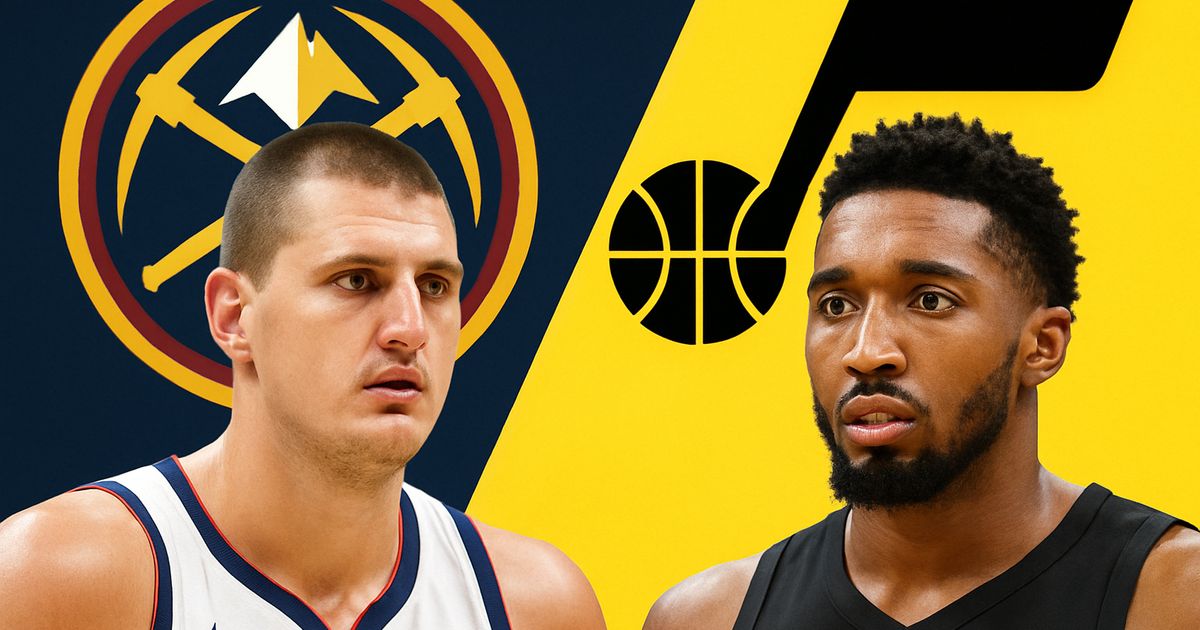
In a game that encapsulated the grind of the NBA's regular season, the Denver Nuggets, led by a scintillating 45-point performance from Jamal Murray, narrowly escaped Salt Lake City with a 128-125 victory over a severely depleted Utah Jazz team on Monday, March 2, 2026. The contest, a classic trap game for Denver on the second night of a back-to-back, was ultimately decided in the final minute by Murray's clutch free throws and a pivotal, controversial replay review that overturned a potential sixth foul on Nikola Jokic. The Nuggets, improving to 38-24, needed every ounce of Murray's brilliance to fend off a Jazz squad missing most of its core rotation, showcasing both Denver's championship pedigree and the unpredictable nature of the modern NBA.
The final sequence was fraught with tension. With 31.8 seconds remaining and the score tied, Murray drew a foul and calmly sank two free throws to give Denver a 126-124 lead. On the ensuing possession, Utah's rising star Keyonte George drove hard to the basket, drawing contact from the reigning MVP, Nikola Jokic. Officials initially called a shooting foul, which would have been Jokic's sixth and sent him to the bench while giving George two shots to tie or take the lead. However, after a lengthy review, the call was reversed to a blocked shot, a decision that proved decisive. Jokic, who stayed in the game, then made two free throws with 6.1 seconds left to ice the win after George missed a potential game-tying three-pointer at the buzzer.

Breaking Down the Box Score: A Tale of Two Stars
The statistical narrative of the game is dominated by the duel between Jamal Murray and Keyonte George. Murray was ruthlessly efficient, shooting 13-of-19 from the field and an astounding 8-of-12 from three-point range. His 45 points were a season-high, and he single-handedly carried the Nuggets' offense during a critical third-quarter stretch, scoring 18 of his points to push Denver to a 100-93 lead. Despite committing seven turnovers, a byproduct of his high-usage role with a tired team, Murray's shot-making was transcendent when his team needed it most.
For the Jazz, Keyonte George's performance was equally impressive, especially considering it was just his second game back after missing three weeks with ankle sprains. In only 30 minutes of action, George poured in 36 points on 14-of-22 shooting, including four three-pointers. His athletic dunk with 2:13 left gave Utah a late four-point lead, showcasing his ability to take over in crunch time. The supporting casts told the story of each team's season. Denver received solid contributions from Julian Strawther (15 points) and Jonas Valanciunas (13 points), while Utah's patchwork lineup saw rookies Kyle Filipowski (19 points) and Ace Bailey (18 points) step up in the absence of established stars.
The Context: A Nuggets Team in a Slump Meets a Jazz Team in the Infirmary
Denver's Precarity and Utah's Misfortune
This game did not occur in a vacuum. Entering the contest, the Denver Nuggets had lost three of their last four games, including a 117-108 defeat to the Minnesota Timberwolves just the night before. The fatigue of consecutive games was evident, particularly in the play of Nikola Jokic, who, while posting a solid 22-point, 12-rebound double-double, lacked his usual dominant energy. The Nuggets were also without forward Cam Johnson, a late scratch due to an ankle injury. This created a scenario ripe for an upset, testing the team's resilience and depth.
On the other side, the Utah Jazz's injury report read like a roster sheet. All-Star forward Lauri Markkanen, along with most of the team's regular starters and rotation players, were sidelined. With a record of 18-43 and riding a six-game losing streak, the Jazz were firmly in a rebuilding phase, prioritizing player development and lottery odds over immediate wins. This context makes their performance against a championship contender all the more remarkable. It was a classic "schedule loss" scenario for Denver, facing a hungry, young team with nothing to lose, and they nearly fell victim to it.
Historical Echoes and the Evolution of the NBA Review
The controversial replay review that saved Nikola Jokic from fouling out is a modern NBA storyline that has historical parallels. The league's adoption of the Replay Center and expanded reviewable plays has fundamentally altered end-game management. Comparisons can be drawn to infamous moments like the non-call on Shaquille O'Neal's sixth foul in the 2000 Western Conference Finals, which happened in an era without such recourse. Today's technology aims for accuracy, but as this game demonstrated, it can also inject a prolonged, tense pause that shifts momentum and sparks debate over the interpretation of "clear and conclusive" evidence.
Furthermore, Jamal Murray's 45-point explosion is a reminder of his proven pedigree as a big-game performer. His legacy is already cemented by legendary performances in the NBA Bubble and throughout the Nuggets' 2023 championship run. This game, while a regular-season affair, showcased the same cold-blooded shot-making that makes him one of the league's most feared playoff guards. For Keyonte George, this performance against elite competition is a potential career-defining moment, a signpost on his path from promising rookie to franchise cornerstone for the rebuilding Jazz.
Why It Matters
On the surface, this is a routine March win for a playoff-bound team over a lottery-bound opponent. However, its significance runs deeper. For the Denver Nuggets, this game is a stark warning about the perils of championship complacency and the absolute physical toll of the NBA schedule. They won, but they were pushed to the limit by a G-League caliber lineup. This exposes potential vulnerabilities in their bench depth and raises questions about their ability to consistently summon championship intensity during the regular season grind. A win like this can sometimes be more revealing than a loss, highlighting dependency on star power over systemic execution.
For the Utah Jazz and the broader NBA ecosystem, this game is a powerful case study in the value of "tank-proof" culture. Despite clear incentives to lose for better draft positioning, the Jazz's young players competed ferociously. This has immense developmental value for prospects like Filipowski and Bailey, who gain experience in high-leverage moments against the best. It also signals to future free agents and the league that the organization fosters a competitive environment, even in lean years. This contrasts with teams that openly shut down players, a strategy that can erode culture and stunt player growth.
Finally, the controversial review underscores an ongoing philosophical tension in professional sports: the quest for perfect officiating versus the preservation of game flow and human element. The reversal, while perhaps technically correct, rewarded the defending champions and penalized the underdog aggressor. In a league increasingly criticized for its perceived protection of star players, such decisions fuel narratives about inconsistency and bias. For fans and analysts, this game becomes a data point in the larger debate about how much technology should intervene in the organic, imperfect, and emotionally charged conclusion of a close contest.
What to Watch For Next
The immediate aftermath of this game sets up compelling storylines for both franchises. For the Denver Nuggets, the focus shifts to sustainability. Can they regain their dominant form, or will they continue to play down to competition? Their next game, hosting the Los Angeles Lakers on Thursday, will be another major test and a potential playoff preview. The health of Cam Johnson and the consistency of secondary scorers like Strawther will be critical to monitor as they jockey for Western Conference seeding.
For the Utah Jazz, the trajectory of Keyonte George is now the central narrative. Can he build on this superstar-caliber performance and establish himself as the undisputed leader of the rebuild? The development of rookies Filipowski and Bailey in expanded roles will also be fascinating to track as the season winds down. Their performance against Philadelphia next offers another chance to measure growth against elite talent. Furthermore, the Jazz's approach to the offseason—whether they build around this young core or package assets for a star—will be heavily influenced by these late-season glimpses of potential.
On a league-wide level, this game may reignite discussions about the replay review protocol, particularly for foul calls in the final two minutes. The subjective nature of overturning a call that was made in real-time by officials on the floor remains a contentious issue. As the 2026 playoffs approach, the pressure on these decisions will only intensify, making this Nuggets-Jazz finish a potential reference point for future controversies.