A Night of Fire and Fury in Kabul
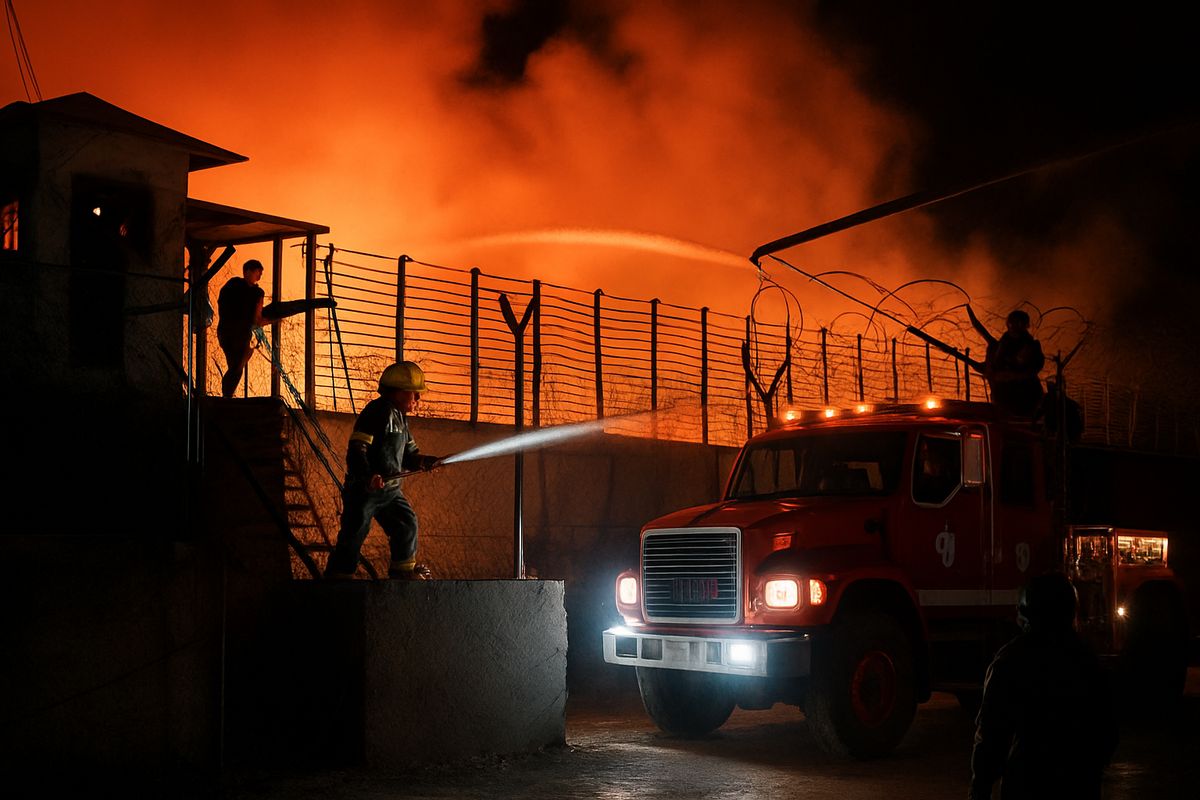
On the evening of Monday, 16 March 2026, the skies over Kabul erupted with the sound of explosions and aircraft. By the following morning, the Taliban government in Afghanistan was accusing its neighbour, Pakistan, of committing a massacre. The target, according to Afghan officials, was not a military barracks or a militant hideout, but the Omar Addiction Treatment Hospital—a sprawling 2,000-bed facility dedicated to treating people for drug addiction. The initial death toll claimed by the Afghan side was staggering: at least 400 killed, with a further 250 injured, though these figures have not been independently verified. Rescue teams worked through the night, battling flames amidst the ruins to recover bodies, while family members of patients gathered outside in desperate search of information.
Pakistan’s response was swift and categorical. Through its Ministry of Information and the spokesman for Prime Minister Shehbaz Sharif, Mosharraf Zaidi, Islamabad denied striking any health facility. It stated its military had conducted "precise and carefully undertaken" strikes in Kabul and the eastern province of Nangarhar, targeting exclusively "military installations and terrorist support infrastructure." Pakistan dismissed Afghanistan’s claims as "false and aimed at misleading public opinion," asserting the narrative was designed to stir anti-Pakistan sentiment and cover up the Taliban’s "illegitimate support for cross-border terrorism." This stark, irreconcilable narrative—a humanitarian catastrophe versus a precision counter-terror operation—marks a dangerous new low in the rapidly deteriorating relations between the two nations.

The Anatomy of an Attack and Conflicting Claims
The attack occurred around 20:50 local time (16:20 GMT), with residents reporting loud explosions followed by the sound of aircraft and activated air defence systems. The BBC, which visited the site, reported parts of the hospital were still on fire and witnessed more than 30 bodies being carried out on stretchers. Hospital officials told the BBC that some 2,000 people were being treated at the facility at the time, leading to fears of hundreds of casualties. Afghan television footage showed firefighters struggling to control blazes among the wreckage.
Afghan spokesmen were unequivocal in their condemnation. Zabihullah Mujahid, a key Taliban government spokesman, stated Pakistan had "violated Afghanistan’s airspace" and labelled the strike a "crime against humanity." Sharafat Zaman Amarkhail, spokesman for the Afghan health ministry, told the BBC there were no military facilities near the hospital, directly contradicting Pakistan’s justification. The deputy spokesman, Hamdullah Fitrat, provided the specific casualty figures on X, detailing the destruction of large sections of the building. A security guard at the hospital, Omid Stanikzai, 31, told AFP he heard jets before the attack and stated all casualties were civilians.
In contrast, Pakistan’s official statement painted a picture of a surgical military action. The information ministry said the strikes hit "technical equipment storage and ammunition storage of Afghan Taliban" and facilities used by Afghanistan-based Pakistani fighters, specifically naming the Tehrik-i-Taliban Pakistan (TTP). It insisted the targeting was calibrated to avoid collateral damage. This fundamental disagreement over the nature of the target—a civilian drug rehab centre versus militant logistics hubs—lies at the heart of the incident and will be nearly impossible for external observers to verify conclusively given the Taliban’s control of Afghanistan and restricted media access.
From Frail Ceasefire to 'Open War': The Road to Escalation
The hospital strike did not occur in a vacuum; it is the most horrific single event in a violent escalation that has been building for weeks. The immediate trigger was a series of Pakistani airstrikes inside Afghanistan on 21 February 2026. Pakistan stated these were in retaliation for a major attack by the TTP on a military post in its northwestern region. By 27 February, Pakistan declared it was in "open war" with Afghanistan. Since 26 February, the United Nations Assistance Mission in Afghanistan (UNAMA) has reported at least 75 people killed and 193 injured in cross-border fighting.
This recent violence ruptured a fragile ceasefire that the two sides had only agreed to in October 2025. The core grievance driving Pakistan’s actions is a long-standing one: Islamabad accuses the Taliban government in Kabul of providing safe haven and active support to militant groups that target Pakistan, primarily the TTP but also Baloch separatist groups. The Taliban, who share ideological roots with the TTP but claim to seek peaceful relations with neighbours, consistently deny these allegations. They assert their policy is to not allow Afghan soil to be used against any country, a promise they made in the 2020 Doha Agreement with the United States.
The historical context is one of profound mistrust and a disputed border. The Durand Line, the 2,640-kilometer frontier drawn by British colonial authorities in 1893, has never been formally accepted by any Afghan government. This porous, mountainous border divides ethnic Pashtun and Baloch tribes, facilitating the movement of people and, as Pakistan alleges, militants. The relationship has been cyclical: periods of tense cooperation followed by violent confrontation, often tied to the internal political and security dynamics of both countries.
The Taliban's Dilemma and Pakistan's Strategic Calculus
For the Taliban, the situation presents a severe dilemma. Their victory in 2021 was partly facilitated by a safe haven in Pakistan, but the group they now govern Afghanistan has a complex relationship with their Pakistani counterparts. Cracking down on the TTP risks alienating a segment of their ideological base and could provoke internal conflict. For Pakistan, the Taliban’s return to power was initially seen as a strategic victory, but it has instead emboldened the TTP, which shares the Afghan Taliban’s hardline ideology. Pakistan’s military, facing a severe domestic terrorism threat it attributes to Afghan sanctuaries, appears to have lost patience with diplomatic channels, opting for direct cross-border action—a tactic it has historically employed but which now risks a full-scale conflict with the Afghan state itself.
Regional Repercussions and the International Response
The escalation has sent shockwaves through a volatile region and drawn concerned responses from international bodies. Just hours before the hospital strike, the United Nations Security Council unanimously adopted a resolution condemning "in the strongest terms all terrorist activity including terrorist attacks" from within Afghanistan and calling on the Taliban government to step up counter-terrorism efforts. While not naming Pakistan, the resolution clearly echoed one of Islamabad’s key grievances, even as it extended the UN’s political mission in the country.
The most active external mediator has been China, a country with significant economic and strategic interests in both nations through its Belt and Road Initiative, including the China-Pakistan Economic Corridor (CPEC). Chinese Foreign Minister Wang Yi held separate phone calls with his Afghan and Pakistani counterparts in the week leading up to the attack. In the immediate aftermath, Beijing issued a statement urging both sides to "remain calm and exercise restraint" and to engage in face-to-face dialogue "ASAP," calling for a ceasefire "at the earliest opportunity." China’s primary concern is regional stability to protect its massive investments and prevent spillover that could affect its western Xinjiang region.
The United States, the former power broker in Afghanistan, has been conspicuously less central in this crisis, reflecting its strategic withdrawal and prioritisation of other global theatres. The European Union and other regional powers like Iran and India are watching warily. For India, which has historically tense relations with Pakistan and cultivated ties with the former Afghan republic, the Taliban-Pakistan conflict presents both risks and potential strategic opportunities, though New Delhi’s direct leverage in Kabul is currently minimal.
A Humanitarian and Strategic Quagmire
Beyond the immediate horror of the hospital attack, the conflict is creating a deepening humanitarian crisis. The UN has reported that the fighting has already displaced more than 100,000 people on both sides of the border. Civilians are bearing the brunt of artillery duels and airstrikes. The attack on a drug treatment facility adds a particularly grim layer; Afghanistan is one of the world’s largest producers of opium and heroin, and addiction is a massive public health crisis. Destroying one of the capital’s major treatment centres represents a devastating blow to efforts to combat this epidemic.
Strategically, both nations appear to be in a dangerous escalatory spiral with "no off-ramps in sight," as noted by analysts. Pakistan’s declaration of "open war" and its willingness to conduct strikes deep inside Afghan territory, including the capital, suggests a shift from a policy of pressuring the Taliban to one of direct confrontation. The Taliban, for their part, are not the weak, insurgency-focused group of the early 2000s; they are the government of Afghanistan, possessing a conventional army, air defence systems, and a mandate to respond to what they see as foreign aggression. A full-scale border war, while not inevitable, is now a tangible risk.
The Veracity Battle and the Shadow of the Future
The international community is left to parse two utterly contradictory accounts of the Kabul hospital event. Independent verification is extremely difficult. The Taliban government restricts media freedom, and Pakistan’s military operations are opaque. This fog of war allows both sides to shape narratives for domestic and international consumption. For the Taliban, highlighting civilian casualties bolsters their position as defenders of national sovereignty against foreign aggression. For Pakistan, framing the action as a necessary, precise strike against terrorism justifies its hardline approach to a government it sees as duplicitous.
The path forward is fraught. China’s mediation efforts are the most promising, but they require both parties to step back from the brink. Pakistan would need assurances of a Taliban crackdown on the TTP—something the Kabul government may be unwilling or unable to deliver comprehensively. The Taliban would demand an end to violations of its airspace and sovereignty. The 400 lives lost in Kabul, whether in a hospital or a militant facility, have become a bloody symbol of a broken relationship. The attack has not only shattered a building and hundreds of families but also the last vestiges of a fragile regional understanding, setting the stage for a more unstable and violent chapter in the long, troubled history between Afghanistan and Pakistan.