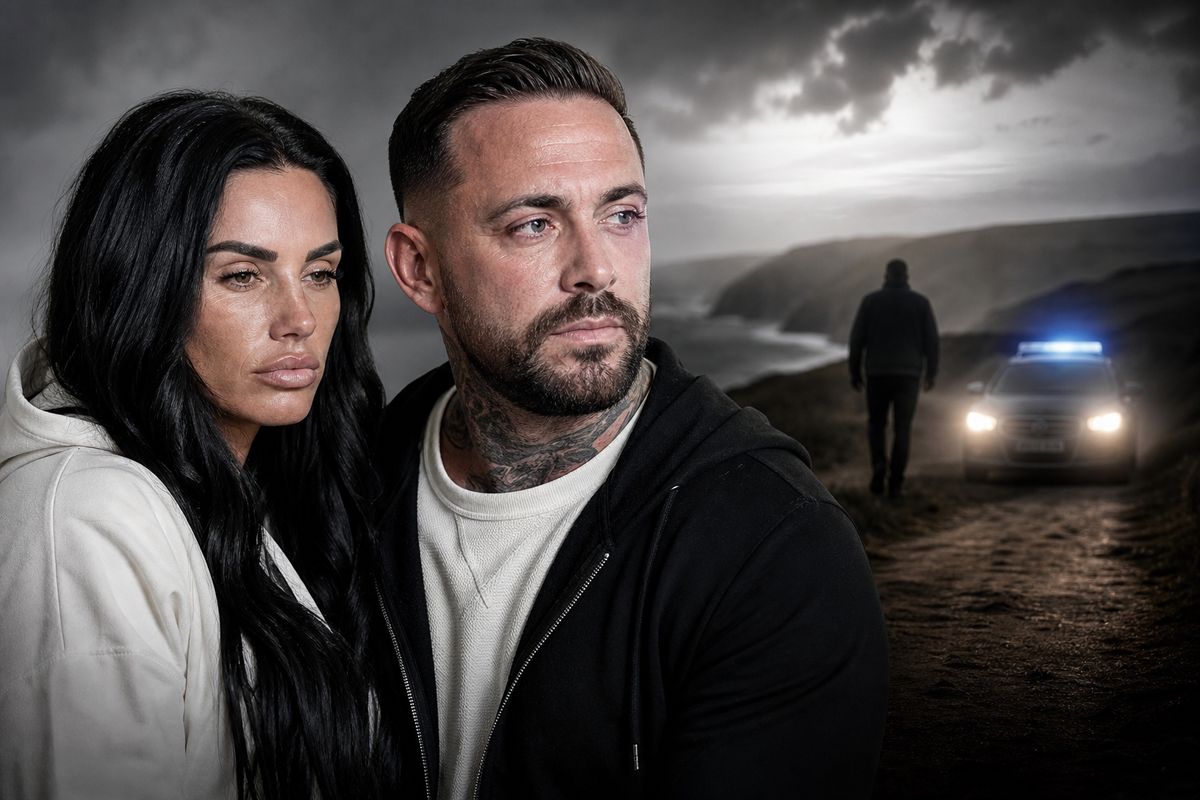
Husband of reality star Katie Price declared missing after Dubai detention raises alarm
Lee Andrews, the husband of former Big Brother star Katie Price, has been officially classified as a missing person after his family filed a report with UK authorities. The development, confirmed on 8 July 2026, comes weeks after Andrews was reportedly detained in Dubai under circumstances that remain unclear. While Katie Price herself has not issued a formal statement, family sources say the situation has escalated beyond initial expectations.
The news broke through multiple outlets on Tuesday, with both Entertainment Weekly and Metro.co.uk reporting that the family had taken the step of filing a missing person report — a move that suggests contact with Andrews has been lost for a worrying period. According to the reports, Andrews was initially detained in Dubai, though the specific charges or reasons for his detention have not been publicly confirmed.
This is not the first time the Price-Andrews household has faced legal turbulence abroad. But a missing person declaration elevates the case from a routine legal wrangle to a full-blown humanitarian concern. For a public figure like Katie Price — who has lived much of her life in the tabloid glare — the lack of official information has only fuelled speculation and anxiety among fans and media alike.

What we know about the disappearance of Lee Andrews
Lee Andrews, who married Katie Price in 2023, is a former personal trainer and businessman. He has largely stayed out of the limelight compared to his high-profile wife, but his sudden disappearance has thrust him into an unwanted global spotlight. The family missing person report was filed with UK police after all attempts to locate him through official channels in Dubai reportedly failed.
Dubai has a well-documented record of detaining foreign nationals for a range of offences, from unpaid debts to more serious criminal allegations. In Andrews's case, the initial detention was reported by several media outlets in late June 2026, but the reasons were not specified. Since then, family members say they have been unable to reach him through the UAE legal system or consular services. The filing of a missing person report indicates that even the British Embassy — which typically provides support to detained citizens — may have lost track of his whereabouts.
At the time of writing, neither the Dubai Police nor the UK Foreign Office have released a statement. Katie Price's representatives have not commented, though close friends say she is "devastated" and "desperate for answers." The lack of transparency is particularly concerning given the high-profile nature of the case and the resources typically available to celebrities in distress.
Background on Katie Price and Lee Andrews
Katie Price, 48, first rose to fame as a glamour model in the 1990s before becoming a household name on the reality show I'm a Celebrity...Get Me Out of Here! and later a contestant on Big Brother (celebrity edition). She has since built a media empire encompassing books, television appearances, and a strong social media following. Her personal life has been equally public, with multiple marriages, divorces, and legal battles over the years.
Lee Andrews entered Price's life in 2021, and the couple married in a discreet ceremony in 2023. Described by friends as a steadying influence, Andrews kept a relatively low profile. He worked as a personal trainer and dabbled in property investments. The couple split their time between the UK and Dubai, a city that has become something of a second home for many British expats and celebrities drawn to its tax-free lifestyle and year-round sun.
But Dubai's glittering exterior masks a strict legal system. Drug possession, bounced cheques, and even social media posts critical of the government can lead to arrest and lengthy detention. Foreigners have often found themselves caught in a system that operates very differently from Western legal norms. It is within this context that Andrews's situation has unfolded.
Previous legal issues for the Price family
Katie Price herself has faced legal troubles in the past, including bankruptcy proceedings and driving offences in the UK. In 2024, she was arrested at Heathrow Airport over an outstanding warrant, though that matter was quickly resolved. Her ex-husband, Kieran Hayler, has also had public run-ins with the law. So the idea of a family member ending up in a foreign jail is not entirely unprecedented, but the missing person element makes this case uniquely grave.
Analysis: Why Dubai detentions are often shrouded in secrecy
The UAE legal system is a blend of civil law from the Egyptian tradition and elements of Sharia law. Detainees are not always granted immediate access to legal representation, and diplomatic efforts by countries like the UK can be slow. In high-profile cases, families often turn to private investigators and media campaigns to pressure authorities. That appears to be what is happening here: the missing person report is as much a strategic move as it is an expression of genuine fear.
One of the most troubling aspects is the lack of due process seen in many such cases. In 2022, British businessman Marcus Smith was detained for several weeks on fraud charges before being allowed to see a lawyer. In 2023, a Scottish tourist was held for possessing CBD oil, which is illegal in the UAE. The government rarely issues detailed accounts of individual cases, leaving families in the dark. The Andrews case seems to be following a similar pattern: detention without clear charge, followed by a communications blackout.
The missing person designation is significant because it implies that the authorities do not know where Lee Andrews is — or at least, the family believes they don't. That could mean he has been moved between facilities, or that his detention has been prolonged without notifying the British consulate. Either scenario is alarming. It also opens the door for the UK government to apply more pressure on the UAE through diplomatic channels, which might not have been prioritised in a simple detention case.
The Bigger Picture: When celebrity status collides with foreign legal systems
The story of Katie Price and Lee Andrews is not an isolated incident. Over the past decade, a growing number of celebrities and wealthy individuals have found themselves in legal limbo while travelling or living abroad. From the arrest of NBA star Brittney Griner in Russia in 2022 to the detention of rapper A$AP Rocky in Sweden in 2019, the intersection of fame and foreign criminal justice systems creates a unique dynamic. High-profile cases attract media attention that can help — or hinder — negotiations.
Yet there is a darker pattern here that most coverage misses. The globalisation of tourism and remote work has made countries like Dubai, Thailand, and Turkey popular second homes for British celebrities and influencers. These jurisdictions often have opaque legal processes, low public scrutiny, and a willingness to use detention as a bargaining chip. The same factors that make them attractive for lifestyle reasons — low taxes, minimal regulation, and a deferential government — also make them dangerous places to fall foul of the law. Lee Andrews may be just the latest in a long line of people who assumed their wealth or fame would protect them, only to find themselves trapped in a system where connections count for little.
Another overlooked dimension is the role of social media in these cases. Katie Price has millions of followers across platforms like Instagram and X. A single post from her can mobilise public opinion, put pressure on governments, and raise funds for legal fees. But that same visibility can also backfire, as UAE authorities have been known to punish those who publicly criticise their legal system. Price faces a delicate balancing act: speak out too loudly and risk upsetting the very officials who could help; stay silent and watch the case drift into obscurity. The missing person report may be an attempt to trigger official action without triggering a diplomatic incident.
Finally, this case underscores the importance of proper legal preparation for anyone living or doing business abroad. Many expats in Dubai operate without a clear understanding of local laws, especially around financial matters (like bounced cheques) or residency obligations. Lee Andrews's detention could stem from something as mundane as a business dispute that spiralled into criminal charges. For the average reader, the takeaway is simple: the UK's legal protections do not follow you on holiday, and no amount of fame guarantees you fair treatment in a foreign courtroom.
What happens next for Katie Price and Lee Andrews
With the missing person report filed, the next steps will likely involve direct engagement with the UK Foreign Office and possibly legal representatives in Dubai. The family may also hire a private investigator with experience in UAE cases. Public pressure from Price's fanbase could amplify calls for transparency, but it is unlikely to force any quick resolution. In similar cases, detainees have been held for months without charge, only to be released suddenly with a deportation order and a fine.
Katie Price has not posted about the situation on social media as of 8 July 2026, which suggests she is following legal advice to keep the matter low-profile for now. But given her history of sharing personal struggles with her audience, it is only a matter of time before she breaks her silence. When she does, the narrative will shift from a quiet legal case to a full-blown media campaign — one that could either help secure her husband's release or complicate diplomatic efforts.
For now, the priority is simple: locate Lee Andrews and ensure his safety. Everything else — the reasons for his detention, the legal battles, the media circus — can wait. The reality is that a missing person report is a desperate measure, taken when all other avenues have failed. It signals that those closest to Andrews have run out of ideas and are now relying on the machinery of justice to do its job. Whether that machinery will work remains an open question.