Lakers Snap Skid with Commanding Victory Over Shorthanded Warriors
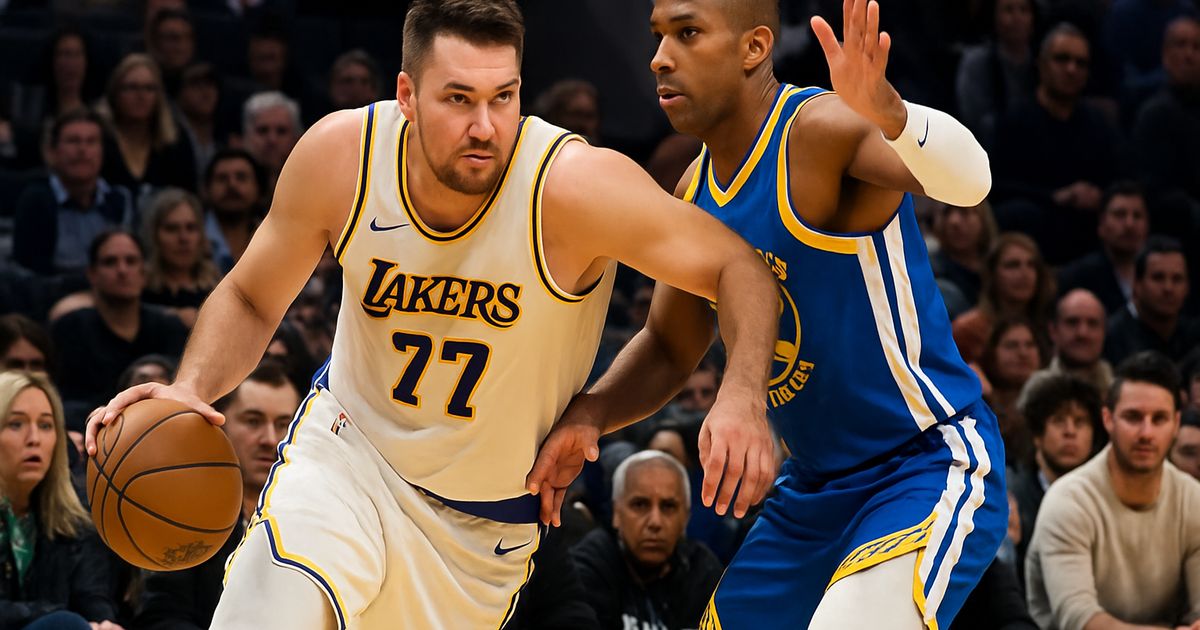
On Saturday, February 28, 2026, the Los Angeles Lakers delivered a statement performance, emphatically ending a three-game losing streak with a 129-101 blowout victory over the Golden State Warriors at Chase Center. The nationally televised ABC game saw the Lakers seize control early, building a 17-point first-quarter lead that ballooned to as many as 32, as they maintained a double-digit advantage for the final three quarters. The win, described by Coach JJ Redick as the team's "most complete game post-All-Star break," was fueled by efficient offense and a renewed sense of purpose. The Lakers shot a blistering 53% from the field and 46% from three-point range, a stark contrast to their recent inconsistent play.
The victory was particularly significant as it halted a slide that had seen the Lakers (35-24) lose momentum after the All-Star break, dropping games to the Boston Celtics, Orlando Magic, and a last-second heartbreaker to the Phoenix Suns. Facing a Warriors team missing its cornerstone in Stephen Curry (right knee), as well as Jimmy Butler and Kristaps Porzingis, the Lakers avoided a potential trap game. As LeBron James noted, the team came in with "the right mindset and understanding the assignment," resulting in a dominant 48-minute effort that had been elusive in recent weeks.

Star Performances and a Historic Milestone
The Lakers' stars aligned on both ends of the court. Luka Dončić, celebrating his birthday, led the charge with a masterful 26 points, eight assists, and six rebounds in just 29 minutes of action. His ability to orchestrate the offense and hit timely shots, including a hot streak to start the third quarter, set the tone. Alongside him, LeBron James was equally impactful, contributing 22 points, nine assists, and seven rebounds. Within that stat line, James achieved a personal and franchise milestone, sinking the 1,000th three-pointer of his illustrious career.
This accomplishment places James in rare company within Lakers lore. According to related headlines, he joins the late Kobe Bryant as only the second player to make 1,000 three-pointers while wearing the purple and gold. This milestone underscores James's longevity and his evolution as a shooter, adapting his game across eras to remain a dominant force. The supporting cast also shone brightly: Austin Reaves added 18 points, while recent acquisition Luke Kennard had his best game as a Laker with 16 points, and Jake LaRavia provided 15 points off the bench.
The Broader NBA Landscape: Hornets Stay Hot, Heat and Pelicans Win
While the Lakers-Warriors clash headlined the night, Saturday's slate underscored the volatility and emerging narratives of the 2025-26 NBA season. In the Eastern Conference, the Charlotte Hornets continued their remarkable surge, securing another blowout win, this time over the Portland Trail Blazers. This victory extended their record to an impressive 13-3 over their last 16 games, cementing their status as one of the league's hottest teams over the past month. Brandon Miller led the way with 26 points and eight rebounds, highlighting the young core's development.
Elsewhere, the Miami Heat showcased their trademark depth and defensive toughness in a 115-105 win over the Houston Rockets. The Heat held Houston to 43% shooting from the field and 25% from deep, while seven different Miami players scored in double figures, led by Bam Adebayo's 24 points and 11 rebounds. Kevin Durant's 32-point effort for the Rockets was not enough to overcome Miami's balanced attack. In the Western Conference, the New Orleans Pelicans handled business against the Utah Jazz, winning 115-105 behind a dominant first half where they led 65-40. Saddiq Bey paced the Pelicans with 24 points, while rookie Jeremiah Fears impressed off the bench with an 18-point, 11-rebound double-double.
Context: The Lakers' Quest for Continuity
The Lakers' decisive win must be viewed within the context of a season searching for stability. Coach JJ Redick has repeatedly cited a lack of "continuity" due to lineup disruptions, preventing the team from finding a consistent rhythm. Before the All-Star break, the Lakers showed promise with a 7-4 stretch, but the immediate post-break losses reignited concerns. The victory over Golden State, therefore, was less about the quality of the opponent and more about the Lakers rediscovering their identity—"playing the right way on both ends," as Redick put it.
Historically, the Lakers franchise is judged by championship contention. With LeBron James in the twilight of his career and Luka Dončić in his prime, the window for success is explicitly now. Every stretch of inconsistent play raises alarms, and every dominant win offers reassurance. This pattern of volatility is not new for star-heavy teams integrating new coaches and systems, but the pressure in Los Angeles is uniquely magnified. The blowout win serves as a reminder of the team's ceiling when its stars are engaged and the role players hit shots.
Why It Matters
While most coverage will focus on the final score and LeBron's milestone, the deeper implication of this game lies in its demonstration of the modern NBA's regular-season calculus. For elite teams like the Lakers, certain games are less about the opponent and more about internal process and rhythm. Beating a shorthanded Warriors team is an expected outcome, but doing so with the precise, sustained execution that had been missing is a tangible step toward playoff readiness. This game was a practice in professionalism and a reset of habits, which is often more valuable in March than the win itself.
Furthermore, this highlights the evolving challenge for veteran super teams. The Lakers' struggle for "togetherness" post-All-Star break is a common theme for older rosters managing workload and intensity over an 82-game grind. Their ability to flip a switch for a nationally televised game is a double-edged sword: it shows their capability, but also underscores the focus issues that lead to losses against lesser opponents. For readers, this should shift perspective from mere win-loss records to assessing how a team wins. The Lakers' shooting percentages (53/46) and ball movement are leading indicators of health and cohesion far more predictive than the 28-point margin.
Finally, this game subtly signals a potential power shift. The Warriors, once the league's perennial standard-bearer, are now a play-in tournament team fighting injuries. The Lakers, despite their inconsistencies, are positioned in the top six of the West. The ease of this victory, even considering Golden State's absences, symbolizes the gradual passing of the torch in one of the league's most storied rivalries. It matters not just for the standings, but for the psychological landscape of the Western Conference playoff race.
What to Watch Going Forward
The immediate test for the Lakers is sustainability. They face the Sacramento Kings in a back-to-back on Sunday night, a scenario that will challenge their energy and depth. Can they carry the defensive focus and offensive flow from Saturday into a second game in 24 hours? Their ability to avoid a "let-down" performance will be crucial to solidifying their hold on a top-six spot and avoiding the play-in tournament scramble. The continued integration of Luke Kennard and Jake LaRavia as reliable bench contributors will be a key subplot.
For the Warriors, the concern shifts to survival. Without Stephen Curry, their offense lacks its gravitational pull. How they navigate this stretch until his return could define their season. In the broader league, all eyes should be on the Charlotte Hornets. Their 13-3 run is no fluke; it's the sign of a young team maturing into a serious threat. Whether they can maintain this pace and become a feared playoff opponent is one of the most compelling stories of the season's second half. Similarly, the Heat's consistent toughness and the Pelicans' depth make them dangerous dark horses as the playoff picture crystallizes.