The Controversy Erupts: Mamdani's 'Monsters' Remark and the Backlash
New York City Mayor Zohran Mamdani is standing firm after a firestorm of criticism over his description of the pro-Israel lobby AIPAC as “monsters” that move “millions in dark money”. The backlash came swiftly from prominent Jewish organisations and members of Congress, who accused the mayor of trafficking in antisemitic tropes. But Mamdani, the city’s first Muslim mayor, isn’t backing down. During a press conference at City Hall on Monday, he doubled down, arguing that his criticism was directed squarely at AIPAC’s political activities — not at Jewish people.
“When I am speaking about AIPAC, I’m speaking about an organisation that has been supportive of the status quo, that has fought any attempt to actually deliver safety to people, not just in Palestine, but frankly, through much of the region,” Mamdani told reporters. The remarks follow a rally in Vermont last week where the mayor lambasted the American Israel Public Affairs Committee for pouring money into New York’s congressional primaries. The row has laid bare the deepening fault lines within the Democratic Party over Israel, campaign finance, and the limits of political speech.

What Mamdani Actually Said — and Why It Hit a Nerve
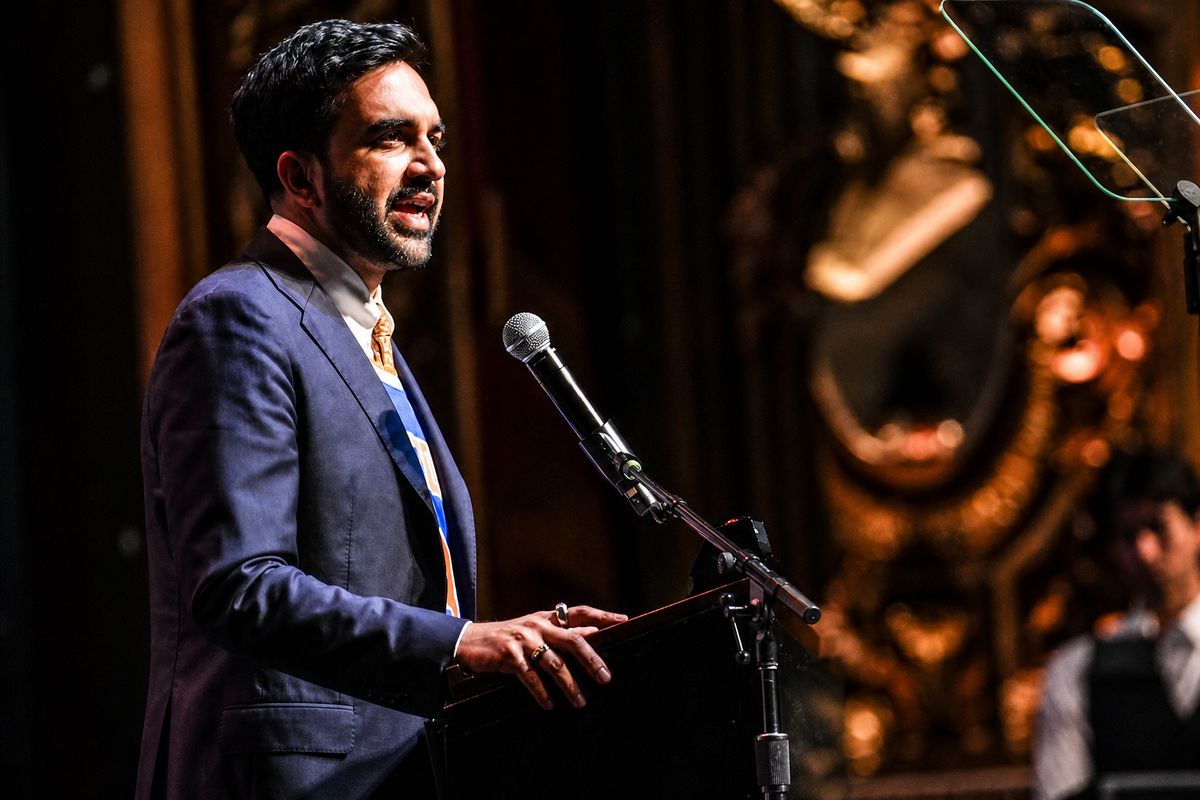
The specific comments that sparked the controversy came on 18 June, when Mamdani appeared at a Get Out the Vote rally in Brooklyn alongside a slate of progressive challengers he has endorsed. In a fiery speech, he spoke of “monsters” that include “those who fund television ads that blanket the airwaves with misleading and bad faith attacks” against his candidates. He then directly called out AIPAC, saying it “moves millions in dark money to accomplish a single goal, to preserve their power so that they can turn us against one another”.
Mamdani was not speaking in a vacuum. According to Federal Election Commission filings cited by CNN and Al Jazeera, AIPAC’s super PAC — the United Democracy Project — made two contributions last month totalling more than $600,000 to BOLD America, a group that has been funding ads in support of Representative Adriano Espaillat. Espaillat is facing a primary challenge from Darializa Avila Chevalier, a progressive backed by Mamdani. The mayor framed the spending as part of a broader pattern in which AIPAC defends what he called a “status quo for immorality” — a reference to Israel’s military operations in Gaza that have killed over 1,000 Palestinians since a US-brokered ceasefire took effect in October 2025.
‘Monsters’ — A Gramscian Reference, Not an Ethnic Slur
When pressed on the use of the word “monsters”, Mamdani clarified that he was quoting Italian Marxist philosopher Antonio Gramsci, employing it to describe anyone “preventing the birth of a new world”. He insisted the term applied broadly to super PACs that spend millions on deceptive ads, not just AIPAC. “I used the term to describe all those who are preventing the birth of a new world, not solely AIPAC,” he explained. That nuance, however, has been largely lost in the ensuing firestorm.
The Accusations: Antisemitism or Legitimate Political Criticism?
Within days of the Vermont rally, two of the most prominent Jewish advocacy organisations in the United States — the Anti-Defamation League and the American Jewish Committee — condemned Mamdani’s remarks. Ted Deutch, CEO of the AJC, posted on X: “Mayor Mamdani, referring to fellow New Yorkers as ‘monsters’ is outrageous and dangerous, and the impact of your words extends far beyond politics.” The criticism was echoed by New Jersey Representative Josh Gottheimer, a Jewish Democrat, who wrote: “Swap ‘AIPAC’ for ‘Jews’ and it’s the oldest antisemitic conspiracy theory in the books. That’s not criticizing a lobby. That’s laundering antisemitism from your podium as Mayor of a city with more than a million Jews. This bullshit is dangerous.”
Mamdani pushed back firmly. “I think that it is important that when we ask ourselves how such death and destruction is happening overseas, we also name those who allow it to take place,” he told reporters. He pointed to the mounting death toll in Gaza and argued that AIPAC’s role in funding pro-Israel candidates effectively gives cover to policies he considers immoral. The exchange underscores a perennial question: where is the line between legitimate criticism of a powerful political lobby and rhetoric that plays into age-old antisemitic tropes about money and control? For Mamdani, the answer is clear — he’s criticising AIPAC’s political machinery, not Jews as a people. For his detractors, the language of “dark money” and “monsters” is impossible to disentangle from the conspiratorial portrait of Jews as shadowy puppet masters.
The Political Context: New York Primaries as a Proxy War
The row over Mamdani’s comments is taking place against the backdrop of a fiercely contested primary season in New York. The 13th Congressional District race between incumbent Adriano Espaillat and challenger Darializa Avila Chevalier is one of several where candidates’ positions on Israel have become a major flashpoint. Chevalier has faced scrutiny for attending a pro-Palestinian protest a day after the 7 October 2023 Hamas attack on southern Israel. She has said she was anticipating “Israel’s response against Palestinian civilians” — a justification that has not mollified her critics.
AIPAC is heavily invested in beating her campaign. The Federal Election Commission filings showing the $600,000-plus contributions to BOLD America are just one example of the group’s strategy: spend big to defend incumbents who support Israel, even if the attack ads focus on domestic issues like crime or taxes rather than foreign policy. Mamdani has endorsed Chevalier, along with other progressives like Brad Lander and Claire Valdez, who are challenging incumbents in other districts. The mayor’s event in Brooklyn was explicitly designed to rally support for what he calls a “moral change” in the Democratic Party.
Notably, many of Mamdani’s fellow Democrats have been slow to wade into the controversy. According to a related story headlined “Mamdani called AIPAC ‘dark money monsters.’ Fellow Democrats mostly stayed silent,” the party appears reluctant to pick a side in a fight that could alienate either the pro-Israel donor base or the progressive wing. That silence speaks volumes about the internal tension within the Democratic coalition as the 2026 midterms approach.
The Bigger Picture: Money, Lobbies, and the Shifting Overton Window on Israel
This is not just a story about one mayor’s colourful language. It is a story about the rapidly evolving relationship between money, political power, and the debate over Israel in American politics. AIPAC and its allied super PACs represent one of the most formidable fundraising machines in Washington. By funnelling dark money into primaries — often through shell groups that mask the true source of the funds — the organisation can effectively punish critics of Israel and reward loyalists. The strategy works. It has helped unseat members of Congress like Jamaal Bowman and Cori Bush in 2024, and it is now being deployed in New York to protect incumbents like Espaillat.
But the Overton window on Israel is shifting, especially among younger and more diverse Democratic voters. The war in Gaza, the staggering civilian death toll, and the seeming intractability of the conflict have made even moderate criticism of Israeli policy more common. Mamdani’s willingness to take on AIPAC directly — and to frame the debate in terms of morality and dark money — taps into a growing impatience among progressives with the lobby’s grip on the party. By characterising the organisation as a force for “the status quo for immorality”, he is giving voice to a sentiment that many Democratic activists share but few elected officials express so bluntly.
Yet the accusation of antisemitism is a powerful counter-weapon. It forces the mayor into a defensive posture, even as he tries to clarify his meaning. The question is whether the backlash will chill other politicians from speaking similarly, or whether the party is reaching a tipping point where the cost of silence on Israel outweighs the risk of being called antisemitic. For now, Mamdani is betting that his constituents in New York — a city where pro-Palestinian sentiment has grown significantly — will back him. But the midterms will be the ultimate test. If his endorsed candidates win despite — or because of — his remarks, it could signal a new chapter in how Democrats talk about Israel and the money that shapes their politics.
What This Means Going Forward
Mamdani has not apologised, and he shows no sign of doing so. The mayor is using this moment to sharpen his critique of super PACs in general and AIPAC in particular. He maintains that his reference to “monsters” was not directed at people but at a corrupt system. Whether that distinction holds will depend on how voters in New York’s 13th District respond when they go to the polls. If Chevalier pulls off an upset, it will be a major victory for the mayor’s brand of politics. If she loses, expect the recriminations to be loud and long — and the debate over Mamdani’s words to continue well past primary day.
One thing is certain: the clash between a sitting mayor and one of the most powerful lobbying groups in America is far from over. And the silence from many of Mamdani’s fellow Democrats suggests they are watching closely, waiting to see which way the wind blows before choosing a side.