The Godfather's Curious Second Act: Brando's 1990 Comedy Cameo
In the summer of 1990, as Francis Ford Coppola prepared to conclude his epic gangster saga with The Godfather Part III, a very different kind of Corleone story quietly hit theaters. Marlon Brando, the actor who had defined the role of Vito Corleone nearly two decades earlier, did not return for the trilogy's finale. Instead, he offered a bizarre, comedic echo of his most iconic character in a little-remembered film called The Freshman. Directed by Andrew Bergman, this oddball buddy comedy featured Brando as Carmine Sabatini, a New York importer with an uncanny resemblance to a certain cinematic don. This wasn't a direct sequel or a cameo, but a full-blown, winking reprise that leveraged Brando's entire persona and the audience's collective memory of The Godfather for comedic effect. The film stands as one of Hollywood's strangest and most specific meta-commentaries, a piece of film trivia that has, against the odds, aged into a cult classic with a critical reputation that now rivals the very franchise it parodies.
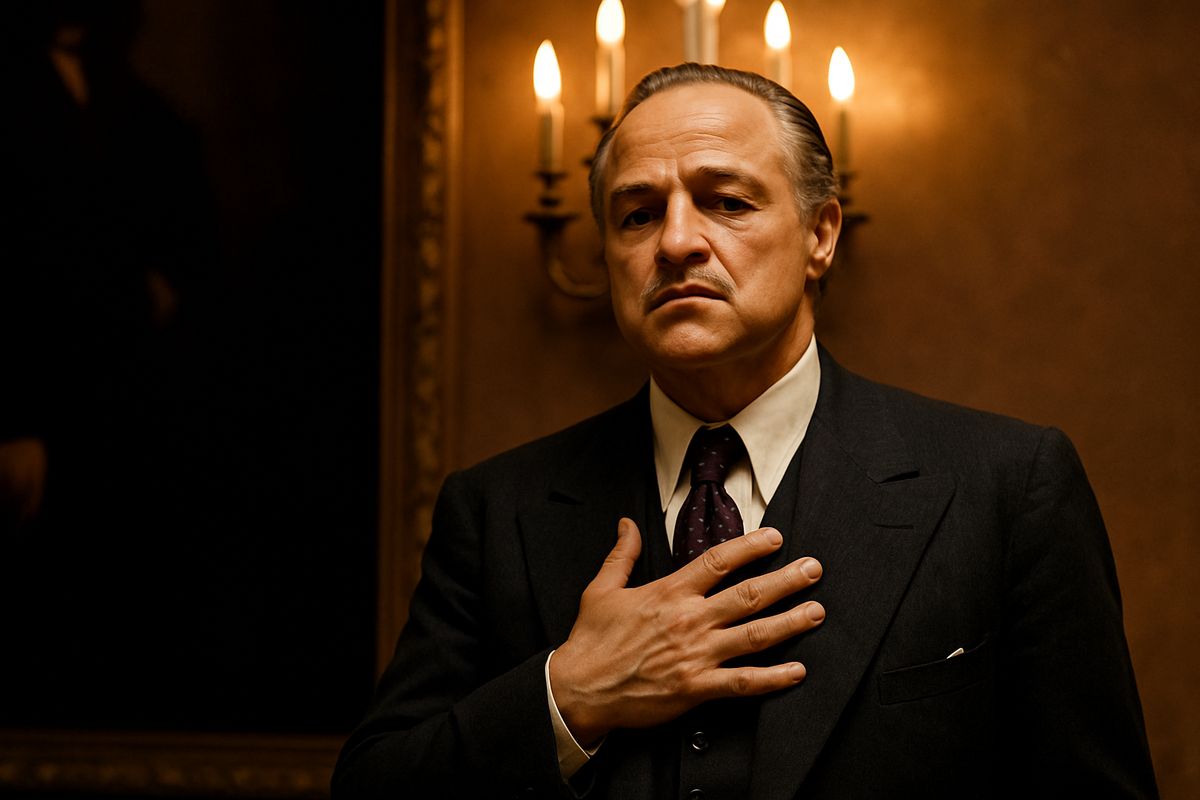
The central novelty and driving joke of The Freshman is that everyone, including the film's young protagonist Clark Kellogg (Matthew Broderick), recognizes Sabatini as the spitting image of Vito Corleone, yet the film itself never explicitly acknowledges The Godfather. Brando, then 66 years old, flawlessly recreates the Don's jowly look, his deliberate mannerisms, and that iconic, raspy whisper. He wears similar suits, holds court in a dark-paneled office, and speaks in the same circuitous, ominous proverbs. Yet, he is presented as a distinct character—a man involved in the exotic animal trade who enlists a film student to help with a dubious delivery. The film's humor stems from this sustained cognitive dissonance: the audience sees Brando playing Corleone, while the characters in the film see only the intimidating, eccentric Sabatini. It was a high-concept gamble that, surprisingly, paid off with critics, earning a 94% rating on Rotten Tomatoes upon release.

Brando's Unconventional Encore: From No-Show to Doppelgänger
Marlon Brando's relationship with the Corleone role was famously complex. After winning an Oscar for The Godfather in 1972 (which he refused to accept), he was originally slated to film a cameo for The Godfather Part II's concluding flashback sequence. In a move that typified his later-career unpredictability, Brando simply no-showed the production that day, forcing Coppola to abandon the planned scene. By 1990, the idea of Brando returning for Part III was a non-starter; the story had moved a generation beyond Vito Corleone. The Freshman, therefore, presented a unique and perhaps perfect alternative: a chance for Brando to revisit the archetype he created, but on his own terms, unburdened by continuity and framed within a genre—light comedy—far removed from the operatic tragedy of Coppola's films.
Brando's performance in The Freshman is a masterclass in self-aware allusion. He was 48 when he first played Vito Corleone, portraying a man in his 50s and 60s. By 1990, he had aged naturally into the visage of an older don, making Sabatini feel like a logical, real-world extension of the character. Critics at the time were reportedly awed by his commitment to the bit; he played the role with a straight face, allowing the comedy to arise from the situation and the audience's knowledge, not from a winking performance. This late-career turn exists in a fascinating space: it is neither a true reprisal nor a parody. It is a reflection, a shadow cast by a monumental performance, demonstrating how thoroughly Brando's Vito Corleone had seeped into the cultural lexicon to become a shorthand for power, tradition, and menace.
The Freshman vs. Godfather III: An Unexpected Critical Showdown
The release timelines of these two films created a remarkable, unplanned juxtaposition. The Freshman premiered in the summer of 1990. Just six months later, in December, The Godfather Part III arrived to conclude the storied trilogy. The critical and commercial reception of the two films would become inextricably linked. While Coppola's film was a major box office draw, it was met with divisive reviews and enduring criticism over casting and plot, ultimately earning a 66% score on Rotten Tomatoes. The Freshman, in stark contrast, achieved near-universal critical acclaim, boasting a 94% rating—a nearly 30-point advantage.
Notably, the late critic Roger Ebert awarded both films three and a half stars, highlighting that each, in its own way, was a product of The Godfather's sprawling legacy. One was the official, fraught continuation; the other was a playful, outsider's homage. Over 35 years later, this critical divide has solidified. The Freshman is often described as the more rewatchable and consistently enjoyable film—a charming "odd couple" comedy and coming-of-age story built around one memorable, high-concept joke. Its obscurity is not a result of poor quality, but of its niche premise and its position as a curious footnote in the careers of its stars.
Matthew Broderick and the Mechanics of Meta-Comedy
For the joke of The Freshman to work, it required a perfectly straight man. Matthew Broderick, fresh from his iconic role in Ferris Bueller's Day Off and the wartime drama Glory, provided the ideal foil. His character, Clark Kellogg, is an earnest, naive film student newly arrived in New York City. His wide-eyed reactions to the increasingly absurd and criminal situation he finds himself in—orchestrated by a man who looks exactly like a movie mobster—ground the film. Broderick's everyman persona allows the audience to project their own awareness onto him. We see what he sees: Marlon Brando acting exactly like Vito Corleone. The comedy derives from Clark's slow, terrified realization that life is imitating art in the most dangerous way possible.
The film's director, Andrew Bergman, was no stranger to comedy with a sharp edge, having written Blazing Saddles and directed The In-Laws. His approach in The Freshman was to play the central conceit with absolute sincerity. The world of the film treats Carmine Sabatini as a real, fearsome figure; the humor is situational, not slapstick. This commitment to the reality of the premise elevates it beyond mere spoof. It becomes a film about the power of cinematic iconography and the strange moments when pop culture references collide with real life. In this sense, The Freshman was ahead of its time, prefiguring the meta-humor and self-referentiality that would become commonplace in later decades.
Brando's Enduring Legacy and the Biopic Spotlight
The renewed discussion around The Freshman coincides with a broader resurgence of interest in Marlon Brando's life and career. This is partly fueled by projects like the recent biographical portrayal by actor Billy Zane, which, according to related headlines, has garnered attention on streaming platforms. Zane's undertaking is a testament to the enduring fascination with Brando, an actor whose influence on the craft is matched only by the complexity of his personal mythology. These projects grapple with the same duality The Freshman cleverly exploited: the chasm between the monumental, iconic performer and the elusive, often contradictory man.
This duality is echoed in Brando's own words. A related "Quote of the day" highlights his philosophical side: "We'd all like to be certain of what we know, but I think the most important thing is to know that you don't know." This sentiment—a rejection of easy certainty—reflects the intellectual curiosity that informed his acting process, even as it perhaps explains his mercurial choices in roles later in life. The Freshman can be seen as an embodiment of this idea. It refuses to be certain about what Brando's Godfather performance meant. Instead of a solemn tribute, it explores the character's cultural shadow through irony and comedy, acknowledging that the icon had taken on a life of its own, separate from the actor and the original film.
What's Next: Preservation, Rediscovery, and Lasting Influence
The primary future for a film like The Freshman lies in digital preservation and curated rediscovery. As the source article argues, the film is "begging for a new release"—likely a high-definition remaster or a special edition Blu-ray that can contextualize its unique place in film history. Its journey will be one from obscurity to cult status, fueled by streaming algorithms that recommend it to fans of offbeat comedies, crime capers, or Brando completists. Platforms like The Criterion Channel or dedicated sections on major streamers for "lost" or "critically adored" comedies could provide the perfect home for its reintroduction to a modern audience.
Furthermore, The Freshman's legacy is its demonstration of a specific, high-wire comedic concept: the meta-reprisal. In an era dominated by franchises, cinematic universes, and legacy sequels, the film's model of having an actor revisit the *aura* of a legendary role, rather than the role itself, feels increasingly relevant. We see echoes of this approach in modern projects where actors play fictionalized or alternate versions of their famous characters (e.g., Nicolas Cage in The Unbearable Weight of Massive Talent). The Freshman stands as a pioneering, successful example of this niche genre. Its critical rehabilitation serves as a reminder that artistic value isn't solely determined by a film's place in a franchise or its initial box office, but by the boldness of its idea and the skill of its execution.
Finally, the film's story is a permanent, charming footnote in the history of The Godfather's cultural impact. It captures a moment when the trilogy's legacy was so potent that it could support not just a grand finale, but also a quirky, affectionate side-quest. As discussions about Brando's life and work continue through biopics and retrospectives, The Freshman will endure as the curious case of the time the world's greatest actor decided to ghost his most famous role—only to have that ghost show up, smiling enigmatically, in a comedy about a kidnapped Komodo dragon.
Sources & References
- Screen Rant: Marlon Brando Reprised His Iconic Godfather Role in This Forgotten 1990s Classic
- Related Headline: Marlon Brando biopic won’t leave streaming—Billy Zane stuns in role (as contextual background)
- Related Headline: Quote of the day by Marlon Brando (as contextual background)