The Arrest and the Art: A Dissident's Life in the Islamic Republic
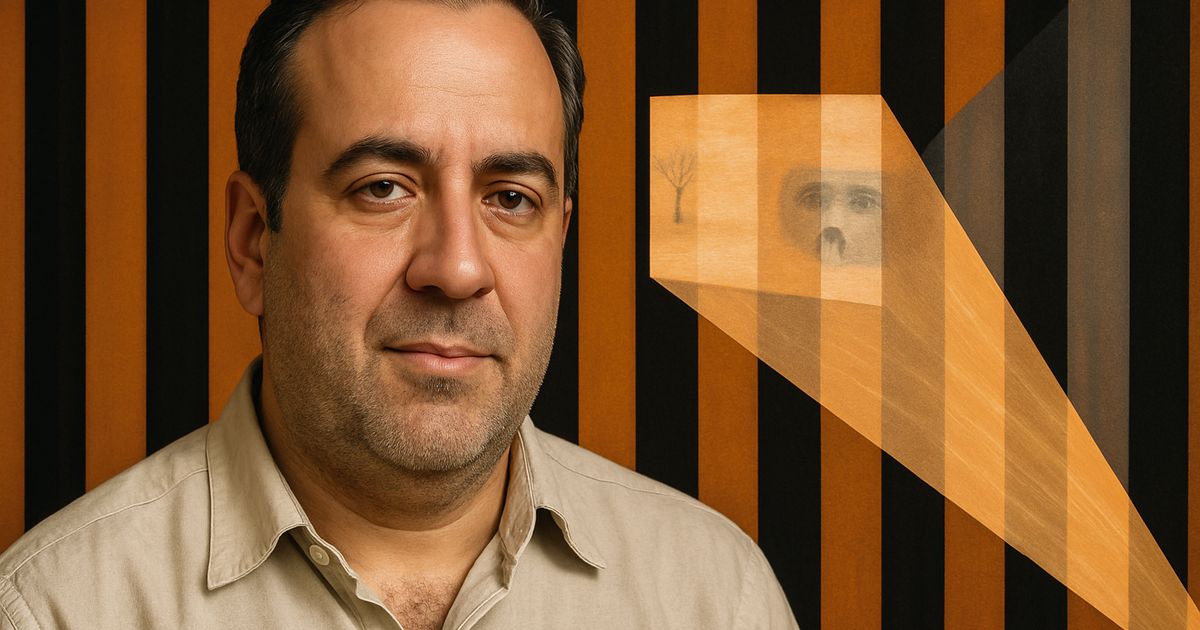
In the early hours of January 31st, 2024, Iranian political activist and writer Mehdi Mahmoudian was violently arrested at his home in Tehran. An "antiterrorism team" stormed the residence, placing guns to the heads of Mahmoudian and his two housemates, fellow activists Abdollah Momeni and Vida Rabbani. This arrest came just as Mahmoudian's co-written screenplay for the film It Was Just an Accident was receiving an Oscar nomination, a stark juxtaposition of international artistic recognition and domestic state repression. The arrest was a direct response to Mahmoudian signing a joint statement that explicitly blamed Iran's Supreme Leader, Ayatollah Ali Khamenei, for the killings and arrests of thousands of protesters. Released on bail on February 17th, Mahmoudian's story is not an isolated incident but a window into the systematic machinery of political suppression in Iran and the resilient, creative resistance it spawns.
This narrative, covered in depth by The New Yorker, connects two powerful threads: the brutal reality of Iran's prison system and the transformative power of art born from trauma. Mahmoudian's life exemplifies a cycle familiar to many Iranian dissidents—arrest, imprisonment, release, and re-arrest. He estimates that in the past sixteen years, he has spent about nine years behind bars, arrested thirteen times. His recent detention, alongside the global spotlight on his film, underscores the ongoing and unequal struggle between creative expression and authoritarian control in Iran, a theme echoed in related headlines about "the unequal struggle between movies and the mullahs."
From Towhid Prison to an Oscar Nomination
Mehdi Mahmoudian's journey as a dissident and artist is rooted in personal suffering. His first major encounter with state violence occurred in 1999 when he was imprisoned in Towhid Prison. There, he was tortured by a guard whose distinctive method—using his left hand—left a permanent psychological mark. A surreal, life-altering moment came two years later in 2001, when Mahmoudian, then working in a print shop, recognized this same former torturer struggling to fix his car on a rainy day. In an act of profound, unsettling humanity, Mahmoudian helped the man, offering him tea and arranging for the car's repair, before revealing his own identity as the guard's former victim. This real-life encounter became the foundational seed for his later artistic work.
The artistic fruition of this trauma emerged from another prison cell. In 2022, while serving a sentence in the notorious Evin Prison, Mahmoudian befriended the acclaimed Iranian director Jafar Panahi. Over seven months, they bonded, with Mahmoudian even caring for Panahi when he contracted COVID-19. Before Panahi's release, Mahmoudian whispered to him, "Don't forget the guys in prison." This plea was heeded. Once both were free, Panahi invited Mahmoudian to collaborate on a screenplay. The resulting film, It Was Just an Accident, directed by Panahi and co-written by the duo, was shot covertly over twenty-eight days, largely within a van—a logistical necessity under a regime hostile to such narratives.
The Film as a Mirror and a Challenge
It Was Just an Accident directly mirrors Mahmoudian's own experience. Its opening scene features a mechanic named Vahid who recognizes his former torturer by the squeak of his prosthetic leg. Vahid kidnaps the man, nicknamed "Peg-Leg," and assembles a group of former detainees to confirm his identity. The film does more than document atrocity; it poses a difficult, essential question. It asks Iranians who have endured incarceration and torture to consider the humanity of their oppressors, exploring the complex dynamics of guilt, coercion, and forgiveness within a totalitarian system. The film’s Oscar nomination thrust this intimate Iranian story onto the world's most prominent cinematic stage, creating an undeniable tension with the Iranian state's ongoing persecution of its creators.
The Anatomy of Repression: Interrogation and Isolation
Mahmoudian's description of his recent detention provides a chilling blueprint of Iran's interrogation tactics. Upon his arrest in January, he was subjected to intense psychological pressure. Interrogators immediately focused on the joint statement blaming Khamenei, demanding to know the identities of all seventeen signatories and their methods of communication. The goal was clear: to dismantle networks of dissent and instill fear. Mahmoudian was held in solitary confinement, a common tool designed to break resolve through sensory deprivation and isolation. His access to a lawyer was obstructed, a routine violation of due process meant to leave detainees vulnerable and disoriented.
This treatment is not exceptional but systematic. Mahmoudian is one of thousands caught in the state's crackdown following the nationwide Woman, Life, Freedom protests. His account of being arrested by an "antiterrorism" squad for the crime of writing and speaking highlights the regime's strategy of framing political activism as a national security threat. The conditions he describes—the sudden nighttime raids, the show of overwhelming force against unarmed activists, the focus on extracting information about networks—are consistent with reports from human rights organizations about Iran's approach to quelling dissent. It is a process meant to criminalize peaceful opposition and deter collective action.
Historical Context: A Cycle of Protest and Crackdown
Mahmoudian's activism spans decades, placing his current ordeal within a long history of resistance and retaliation in Iran. He belongs to a generation that has witnessed cyclical upheavals: the student protests of 1999, the Green Movement of 2009, the nationwide economic protests of 2017-2018, and the ongoing Woman, Life, Freedom movement ignited in 2022. Each wave has been met with severe state violence, mass arrests, and show trials. Mahmoudian's personal tally of thirteen arrests and nine years in prison since 2008 is a microcosm of this national pattern. The state's playbook has remained consistent, leveraging the judiciary, the Islamic Revolutionary Guard Corps (IRGC), and the intelligence ministry to identify, isolate, and punish critics.
The significance of the joint statement Mahmoudian signed cannot be overstated. By directly naming Supreme Leader Khamenei as responsible for killings, the signatories broke a major taboo in Iranian politics. For decades, criticism within the system has often been directed at the president or the parliament, treating the Supreme Leader's office as a red line. This statement, endorsed by veteran activists from across the reformist and secular opposition spectrum, represents a bold, public challenge to the core of the Islamic Republic's power structure. It is this directness that likely triggered the severe state response against Mahmoudian and his co-signers, signaling the regime's extreme sensitivity to any challenge to its ultimate authority.
Why It Matters
Most coverage of Iran focuses on geopolitics, nuclear negotiations, or protest headlines. The story of Mehdi Mahmoudian matters because it shifts the lens to the human infrastructure of resistance—the individuals who, at immense personal cost, maintain the continuity of dissent across generations. His life demonstrates that opposition in Iran is not a series of disconnected outbursts but a persistent, if often silenced, narrative. The Oscar nomination for his film is not merely a cultural accolade; it is a strategic breach in the regime's information blockade. It internationalizes a deeply Iranian story of trauma and moral reckoning, forcing a global audience to engage with the regime's brutality on a human level that statistics of arrests cannot convey.
Furthermore, this story reveals the potent, subversive power of art as a tool of memory and accountability in authoritarian states. While the regime uses prisons to disappear and silence, figures like Mahmoudian and Panahi use cinema to remember and testify. The film It Was Just an Accident does what news reports cannot: it explores the psychological complexity of victimhood and the unsettling possibility of forgiveness within a system designed to dehumanize all involved. This creative response represents a profound form of resilience. Readers should understand that the struggle in Iran is not only fought on the streets but also in the realm of narrative and memory. Supporting such art—by watching, discussing, and recognizing it—is a form of solidarity that amplifies these silenced voices and challenges the regime's monopoly on truth.
What to Watch For Next
The immediate future for Mehdi Mahmoudian remains precarious. Released on bail, he faces the constant threat of re-arrest and the prospect of a formal sentencing that could return him to prison for years. The judicial process in Iran for political cases is notoriously opaque and punitive. The international attention from the Oscar nomination may provide a degree of protective visibility, but as the history of imprisoned artists in Iran shows, it is no guarantee of safety. The state may choose to delay further action until global spotlight fades.
Beyond Mahmoudian's personal fate, observers should monitor the treatment of the other sixteen signatories of the statement blaming Khamenei. A coordinated crackdown on all of them would signal the regime's determination to extinguish this line of direct criticism. Additionally, the regime's reaction to the Oscar nomination itself will be telling. Will it allow the film to become a point of muted domestic discussion, or will it aggressively condemn it as foreign propaganda? Finally, the longevity and reach of It Was Just an Accident, including its review as a Hulu streaming movie, will test the power of diaspora and global media platforms to circumvent state censorship and keep these stories alive. The unequal struggle continues, but the screen has become a new, unpredictable battlefield.