What this meteo guide compares, and why it matters in 2026
Search for meteo in 2026 and you quickly realise the word is doing a lot of work. For some people it simply means “weather forecast”. For others, it is shorthand for a specific national service, a favourite app, or even a developer tool that powers everything from a sailing dashboard to a smart home routine. And because “meteo” is used across languages, the results can feel messy: consumer apps sit next to professional weather intelligence platforms, and then there is the whole world of weather APIs that most people never see (but rely on every day).
This guide takes the headlines and source material available and turns them into something practical: a ranked, opinionated buying guide to the most visible “meteo” destinations and tools that people actually land on. The comparison criteria are straightforward: accessibility (how easy it is to get a forecast or data), coverage (local depth versus global breadth), use case fit (casual checking versus operational decision making), and pricing clarity (free tiers, attribution rules, and whether you can realistically use it at scale). Where the source material does not provide hard numbers or feature lists, this article says so rather than guessing.
One more thing. The “news” angle here is not a single dramatic launch event with a press conference and a ribbon cutting. It is the ongoing shift in how meteo information is packaged and distributed: open, no key APIs on one end; enterprise weather intelligence on the other; and official authority apps trying to stay relevant in the middle. That tension is the story, and it is a big deal if you build products, run operations, or just want forecasts you can trust.

1. Open Meteo (Open Source Weather API)
Open Meteo positions itself very clearly: a free, open source weather API that does not require an API key, sign up, or credit card. That alone explains why it keeps coming up in developer circles. In a world where many data services start with “just create an account”, Open Meteo’s frictionless approach is the headline. And yes, it is still “meteo”, just aimed at builders rather than end users.

The key detail in the source material is the usage boundary: non commercial use up to 10,000 daily API calls is free, and attribution is required under CC BY 4.0. That combination makes it attractive for prototypes, student projects, internal tools, hobbyist dashboards, and even early stage products that are not yet monetised. But it also forces a grown up conversation early: what happens when a project becomes commercial, or when usage spikes?
- No API key and no sign up, which removes onboarding friction for developers.
- Free tier explicitly stated as non commercial use up to 10,000 daily API calls.
- Attribution required under CC BY 4.0, which is manageable but non negotiable.
- Open source positioning, which signals transparency and community friendliness (even if the exact repo details are not in the source material).
Pricing or availability: Free for non commercial use up to 10,000 daily API calls, attribution required. The source material does not specify paid tiers or commercial pricing.
Verdict: The best meteo starting point for developers who want weather data fast, with minimal admin, as long as they can live with the free tier limits and attribution rules.
2. The Weather Channel (Weather.com and app ecosystem)
If Open Meteo represents the “developer first” end of the meteo spectrum, The Weather Channel represents the mass market. The source material highlights what it is known for: national and local forecasts, weather radar, and hurricane coverage. That last point matters because extreme weather is often the moment when casual users suddenly become power users, checking radar loops and alerts obsessively.
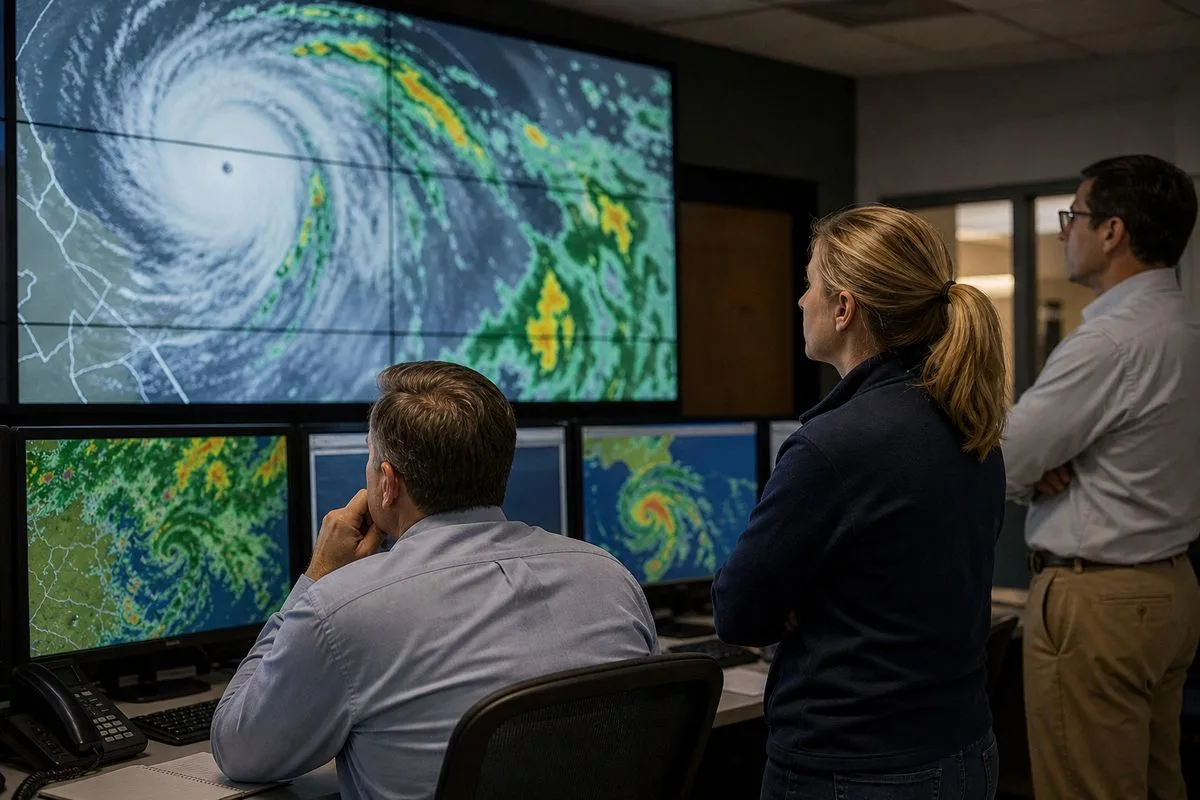
What makes The Weather Channel relevant in a 2026 meteo conversation is not novelty, it is distribution. It is one of the default destinations people reach for, and it tends to be heavily optimised for quick answers. The trade off, as with many mainstream platforms, is that the source material does not provide clear pricing or data usage terms here, and consumer experiences can vary depending on region and platform.
- Local and national forecasts, designed for broad audiences.
- Weather radar as a core feature for situational awareness.
- Hurricane coverage, signalling depth during high impact events.
- High familiarity, which reduces learning curve for most users.
Pricing or availability: The source material does not specify pricing, subscription tiers, or ad model details.
Verdict: A safe, mainstream meteo choice for everyday checking and radar driven moments, even if the business model details are not spelled out in the provided material.
3. Meteo.gr (Greece focused forecasts and station network)
Meteo.gr is a good reminder that “meteo” is often local before it is global. The source material describes it as providing weather forecasts for all of Greece, plus observations from the largest network of meteorological stations, and meteorological sea maps. That combination is not just about telling someone whether it will rain in Athens. It is about grounding forecasts in observations, and serving coastal and marine needs, which are huge in a country with extensive coastline and island travel.
There is also a subtle but important point here: station networks are expensive and operationally demanding. When a service highlights its observation network, it is signalling investment in measurement, not only modelling. The source material does not provide station counts, update frequency, or methodology, so this guide cannot quantify the network. But the positioning is clear: it aims to be authoritative for Greece.
- Nationwide Greece forecasts, tailored to local geography.
- Observations from a large meteorological station network (exact size not stated in the source material).
- Sea and marine maps, useful for boating and coastal planning.
- Local relevance, which often beats generic global apps for microclimates.
Pricing or availability: The source material does not specify pricing or subscription details.
Verdict: For anyone whose meteo needs are Greece centric, this looks like the most locally grounded option in the list, especially for observations and marine context.
4. Seychelles Meteorological Authority (Meteo SEZ app)
Official meteorological authorities have a different job to consumer apps. They are not just chasing engagement, they are responsible for public information, warnings, and a baseline of trust. The source material notes that Meteo SEZ is the official mobile app of the Seychelles Meteorological Authority, providing weather forecasts and daily measurements.
That phrase “daily measurements” is doing a lot of heavy lifting. Measurements imply observation, not just prediction. And in an island nation where weather can turn quickly, official channels can matter more than slick UI. The limitation, based on the material provided, is that there are no specifics on alerting, radar, marine forecasts, or update cadence. Still, as a meteo choice, official status is a differentiator in itself.
- Official authority app, which typically signals higher trust for public information.
- Forecasts and daily measurements, combining prediction and observation.
- Local focus on Seychelles conditions, which global apps sometimes flatten.
- Clear ownership, reducing confusion about who is behind the data.
Pricing or availability: The source material does not specify pricing.
Verdict: The sensible meteo pick for Seychelles residents and travellers who want the official line and daily measured conditions, not just a generic forecast.
5. Meteomatics (Weather intelligence for professional users)
Meteomatics appears in the source material with a bold claim: “The Global Leader in Weather Intelligence.” Whether one accepts that marketing line or not, it signals the segment: enterprise and operational meteorology, not casual checking before a commute. This is the meteo world of risk management, logistics, energy, aviation, and any business where weather is not small talk, it is cost.
The challenge, from a strict sourcing perspective, is that the provided material does not include concrete product specs, pricing, or customer examples. So this guide cannot responsibly list features like forecast resolution, nowcasting, or data assimilation methods. But it can still place Meteomatics in context: it represents the professionalisation of meteo, where “forecast” becomes “decision support”, and where buyers care about reliability, service level agreements, and integration.
- Weather intelligence positioning, aimed at organisations rather than individuals.
- Global framing, implying broad geographic coverage.
- Likely integration focus, because enterprise users typically need data feeds and tooling (specifics not provided in the source material).
- Brand signalling that it competes in the high end meteo market.
Pricing or availability: The source material does not provide pricing, free tiers, or contract structure.
Verdict: A meteo option for serious operational users who need “weather intelligence” rather than a pretty forecast, but buyers will need to do due diligence because specifics are not included here.
6. Meteo as language, culture, and even gaming (why the keyword is messy)
Here is the bit most buying guides ignore, but it matters for SEO and for real users: “meteo” is not only a product label. It is a word people use in different ways, and that shapes what they expect when they search. One Reddit discussion in r/French asks why “météo”, a noun, can be used as an adjective. The thread frames it as a truncated form of a fuller word, which helps explain why “meteo” gets slapped onto everything from TV segments to app names. It is shorthand, and shorthand spreads.
And then there is the curveball: “Meteo” also appears as a proper noun in gaming culture, specifically in Star Fox discussions about a “Meteo boss” and the idea of Meteo as a planet. That is obviously not weather. But it does show up in search behaviour, and it can confuse people who just want a forecast. In practical terms, this is why meteo brands often try to pair the word with a region or function, like “Meteo SEZ” or “Meteo.gr”. They are trying to disambiguate.
- Keyword ambiguity, meteo can mean weather generally, a specific service, or something unrelated.
- Language nuance, “météo” usage in French influences naming conventions.
- Search noise from non weather uses, including gaming references.
- Branding pressure, services often add geography or authority to stand out.
Pricing or availability: Not applicable, this is context rather than a purchasable service.
Verdict: Anyone choosing a meteo app or API should be aware that the keyword is crowded and sometimes misleading, so clarity of purpose matters as much as features.
Final Verdict and quick summary: choosing the right meteo option
Picking the “best” meteo service in 2026 depends less on who has the flashiest interface and more on what kind of user someone is. A developer building a small product or internal dashboard will care about frictionless access, clear limits, and licensing. That is why Open Meteo stands out so sharply in this list, it states the rules plainly: no key, no sign up, free for non commercial use up to 10,000 daily API calls, attribution required. That is not exactly glamorous, but it is practical, and practical wins.
For everyday consumers, the gravitational pull of mainstream platforms is real. The Weather Channel remains a default because it bundles forecasts, radar, and hurricane coverage in a familiar package. But local specialists like Meteo.gr can be the smarter choice when geography is complex and local observations matter. And for travellers or residents in places like Seychelles, the official authority app is often the most defensible option, not because it is perfect, but because it is accountable.
Finally, professional weather intelligence providers like Meteomatics sit in a different category entirely. They are not competing for casual clicks, they are competing for contracts where weather affects safety and money. The source material does not provide the details needed to rank it on features, but the positioning is clear. If weather is a business input rather than a curiosity, that is the lane to explore. And if someone is just trying to Google “meteo” and get tomorrow’s forecast, fair enough, they should probably start with a region specific service to avoid the keyword chaos.