Aberdeen business news converges on one message: confidence is back, but it is being priced in
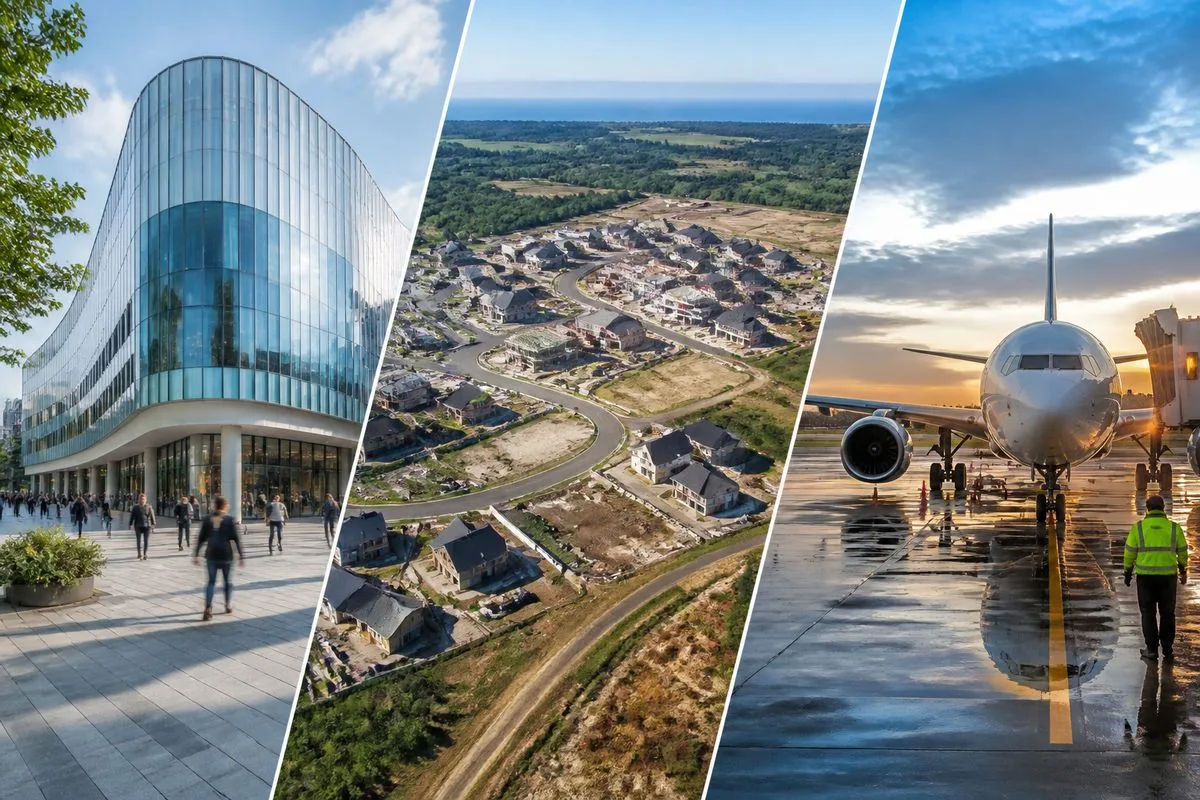
Aberdeen business news rarely lands in such a neat cluster. In the space of days, the city sees its biggest retail destination, Union Square, put on the market for £175m; a major housing land deal between Bancon Homes and the University of Aberdeen that unlocks the next phases of Rowett South; and a fresh tranche of investment at Aberdeen International Airport as part of its £2.5m ABZ Reimagined programme. Add in a new campaign pitching the North-east as Europe’s capital of energy excellence, and it starts to look less like coincidence and more like a region trying to turn a page.
But there is a twist. The most eye catching move is not a new build or a ribbon cutting. It is a sale. Union Square is being marketed just two-and-a-half years after it was bought by US private equity firm Lone Star for £111m in March 2024. The seller will not say why. That silence matters, because it forces the market to read the tea leaves: is this a vote of confidence in Aberdeen’s recovery, or simply a well timed exit while sentiment is improving?


Union Square sale in Aberdeen: £175m price tag resets the conversation
The BBC reports that Aberdeen’s Union Square shopping centre has been put up for sale for £175m. The complex is not just a mall. It is a mixed use asset with a hotel, cinema and restaurants, and it sits beside Aberdeen’s main rail and bus stations, a location advantage that is hard to replicate. Opened in 2009, it has long been treated as a bellwether for the city centre’s ability to compete with out of town retail and, more recently, with online shopping.
What makes the listing politically and economically interesting is the timing. Lone Star bought Union Square for £111m in March 2024. Now it is being marketed at £175m, and the reason for the sale is described as unclear, with the firm declining to comment. That does not automatically mean something is wrong. Private equity often works to a plan, and a quick sale can be a feature, not a bug. Still, in a sector where many UK shopping centres have struggled with vacancies and falling valuations, a big jump in headline price inevitably raises eyebrows.
Knight Frank, the agent handling the sale, frames Union Square as a “huge success story” and a “thriving retail asset”. Its pitch leans on several concrete factors: recent lettings, substantial tenant investment, a positive rental trajectory, and a “strong trading platform” with “strong sustainability credentials”. It also points to a “superb economic backstory” for Aberdeen, and explicitly links future optimism to recent support for opening up the Jackdaw and Rosebank oil and gas fields. That is a telling detail. It suggests the sales narrative is not only about retail footfall, it is about the wider energy economy underpinning wages, travel and consumer confidence.

Bancon Homes and the University of Aberdeen land deal: Rowett South moves into its next phases
Alongside the retail headline sits a quieter, but arguably more foundational, development: Bancon Homes, based in Aberdeenshire, completes a “major land deal” with the University of Aberdeen that paves the way for the next phases of the Rowett South development, according to Aberdeen Business News. The source material does not provide the value of the deal, the number of homes, or the precise timetable. That absence is worth noting, because it means the significance must be read through what the agreement enables, not through a neat set of headline metrics.
Even without those figures, the structure of the deal is meaningful. A university is not a typical land seller. When an institution like the University of Aberdeen agrees terms that unlock a multi phase housing development, it signals a long view on place making, local demand and the relationship between campus, research assets and surrounding communities. And for a housebuilder like Bancon, securing land in a market where planning, infrastructure and community expectations can be complex is often the hardest part of the job. Once land is controlled, the rest of the pipeline, design, procurement, sales, becomes more predictable.
Rowett South also lands at a moment when the North-east is trying to balance competing pressures: the need for new homes, the desire to keep skilled workers in the region, and the push to modernise energy infrastructure and transport. Housing is not a side story to that. It is central. If Aberdeen wants to attract and retain talent, whether in energy, life sciences, digital or offshore services, it needs the basics to work: homes people can afford, neighbourhoods people actually want to live in, and a planning system that does not grind everything to dust.
Aberdeen International Airport investment: ABZ Reimagined enters its next phase
Aberdeen Business News also reports that Aberdeen International Airport unveils the next phase of its £2.5m ABZ Reimagined programme, with “significant enhancements” to its retail and other passenger facing areas. The source material provided does not list the specific units being added or refurbished, nor does it break down the £2.5m by category. But the direction of travel is clear: the airport is spending money to improve the experience and, crucially, to improve non aeronautical revenues such as retail and food and drink.

This matters because Aberdeen’s airport is not just a gateway for tourists. It is a working airport for a working region. For years, it has been tied closely to offshore activity and business travel linked to the energy sector. When an airport invests in its commercial offer, it is often doing two things at once: making the terminal more attractive to passengers, and making the asset more resilient by diversifying income beyond airline fees. In a world where route networks can change quickly, that resilience is a big deal.
There is also a psychological element. Airports are shop windows. If the first and last impression of Aberdeen is a tired terminal with limited choice, it subtly reinforces a narrative of stagnation. If, instead, the airport feels modern and well run, it supports the opposite story: a region investing in itself. And that ties directly into the other headlines, from Union Square’s valuation story to the energy excellence campaign. These are all, in different ways, attempts to shape perception as much as they shape infrastructure.
Aberdeen business news and the energy narrative: retail, housing and airports all lean on the same engine
One of the more revealing lines in the Union Square sales pitch is the explicit reference to support for opening up the Jackdaw and Rosebank fields. Knight Frank is effectively telling investors: Aberdeen’s consumer economy is linked to energy confidence, and energy confidence is improving. That is not exactly groundbreaking, but it is unusually direct for a retail marketing narrative. It also shows how tightly the city’s property story remains tied to the energy story, even as the region talks more about transition and diversification.
At the same time, Aberdeen Business News highlights a “major new campaign” to position Aberdeen and the North-east as Europe’s capital of energy excellence. The source material does not name the organisations behind the campaign or spell out its budget and targets. Still, the framing is important. It suggests the region is trying to own a broader definition of energy, one that can include oil and gas expertise, offshore engineering, supply chain capability, and whatever mix of low carbon technologies the next decade brings. In other words, it is not just defending the past, it is trying to sell continuity of competence.
Put the pieces together and a pattern emerges. Union Square’s sale is a bet on consumer spending and city centre footfall. Rowett South is a bet on household formation and long term demand for living in and around Aberdeen. ABZ Reimagined is a bet on passenger volumes and the value of a better airport experience. And the energy excellence campaign is a bet on the region’s ability to keep attracting investment and skilled jobs. Different sectors, same underlying question: does Aberdeen have a durable growth story in 2026?
There is also a historical echo here. Union Square opened in 2009, in the shadow of the global financial crisis, yet it became a defining piece of Aberdeen’s modern city centre. That was a period when big, confident projects still got built, even as the wider economy wobbled. Today’s moment feels similar in mood but different in mechanics. Instead of a single flagship opening, the story is about asset recycling, phased development, and targeted upgrades. Less glamour, more pragmatism. Fair enough, that is how most cities actually evolve.
What’s Next
The immediate next step on the biggest headline is simple: the market tests whether £175m is achievable for Union Square in 2026. If a buyer emerges at or near that level, it will be read as a strong signal that institutional capital believes Aberdeen’s fundamentals are improving, not just stabilising. If the process drags, or if the eventual price lands materially lower, the story changes. It becomes a lesson in how hard it is to price retail assets in a world where consumer habits keep shifting. Either way, the sale process itself will generate a steady stream of indicators, from investor interest to the language used about tenant demand and rental growth.
On housing, the Rowett South land deal suggests a pipeline that will now move into more visible stages: planning detail, enabling works, and the start of the next phases on site. The key risk is not demand in the abstract, it is delivery in practice. Construction costs, labour availability, and the pace of sales can all change quickly. But if Bancon can bring forward homes at a steady clip, it strengthens the region’s broader pitch: that Aberdeen is not just a place to work, it is a place to settle. That matters for employers, universities, and inward investors who look at housing as part of the talent equation.
And for Aberdeen International Airport, the next phase of ABZ Reimagined is likely to be judged on two things: passenger satisfaction and commercial performance. Retail improvements are not just cosmetic. They are designed to lift spend per passenger and make the terminal feel competitive. If the airport can pair that with route development, it reinforces Aberdeen’s connectivity story, which in turn supports business travel, tourism, and the attractiveness of the city for conferences and corporate activity. The region’s leaders will quietly hope these strands start to reinforce each other, because that is how you get momentum rather than isolated wins.
Closing thoughts: a region in motion, with valuations doing the talking
There is a temptation to treat these headlines as separate local updates. A shopping centre for sale, a housing land deal, an airport refresh. But the more interesting read is that they are all expressions of the same underlying shift: Aberdeen is being re valued. Sometimes literally, as with Union Square’s £175m asking price. Sometimes through long term commitments, as with Rowett South. Sometimes through investment in the everyday experience of arriving and leaving, as with ABZ Reimagined.
None of this guarantees a smooth ride. Retail remains a tough sector, housing delivery is rarely straightforward, and airports live and die by route networks and airline decisions. But the direction is hard to miss. In 2026, Aberdeen is not standing still. It is making moves, and so are the investors and institutions around it. The next few months, particularly the outcome of the Union Square sale process, will show whether the market believes the city’s brighter narrative is real, or merely well marketed.