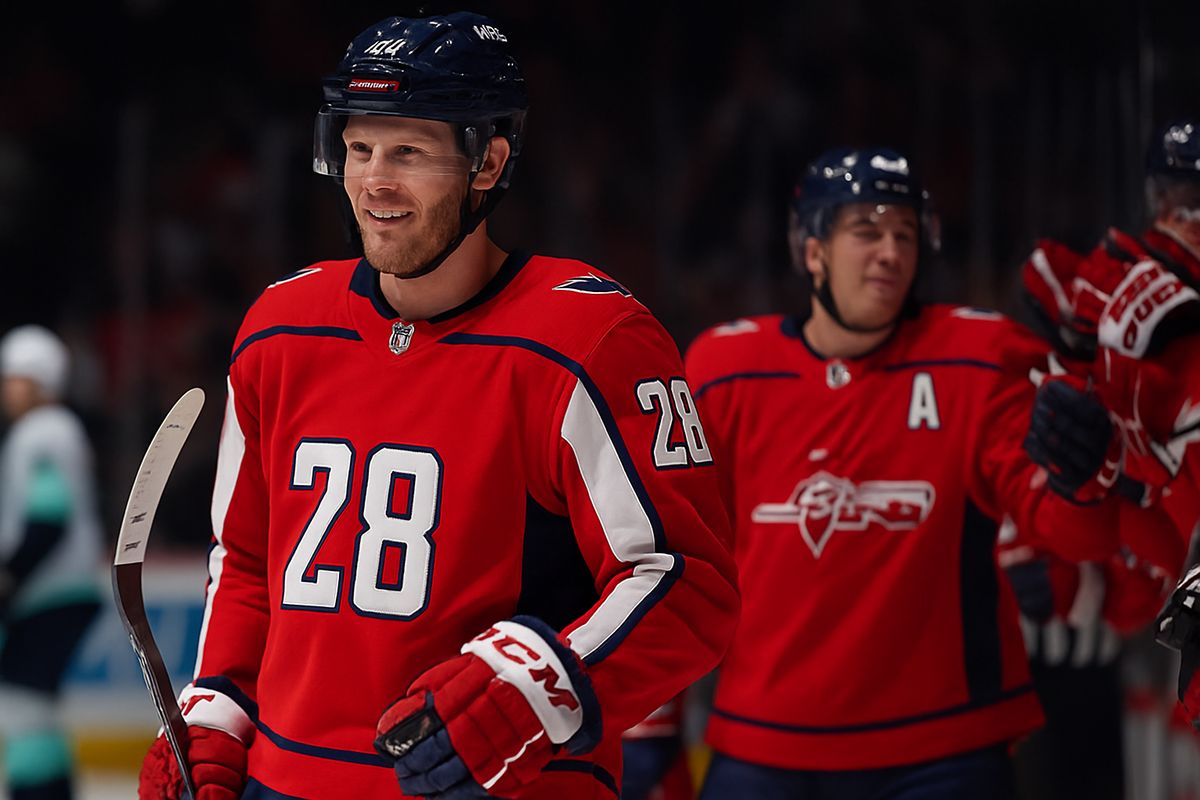
The End of an Era: Washington Trades Nic Dowd to Vegas
On March 6, 2026, the Washington Capitals executed a trade that resonated far beyond the typical transactional nature of the NHL deadline. The team dealt veteran center Nic Dowd to the Vegas Golden Knights, marking the conclusion of his eight-season tenure in the nation's capital. In return, Washington received AHL goaltender Jesper Vikman, Vegas's second-round pick in the 2029 NHL Draft, and a third-round pick in the 2027 draft originally belonging to the San Jose Sharks. The move, coming just before the looming Friday deadline, signaled a pragmatic, if painful, shift for a Capitals franchise caught in the murky middle of the playoff race, four points out of the final Eastern Conference berth with only 19 games remaining.
The trade carried significant emotional weight within the organization. As reported by WashingtonCaps.com, players were "stunned" to learn the news before an optional practice. Dowd was not merely a role player; he was a foundational piece of the team's identity for nearly a decade, having recently surpassed 500 games played in a Capitals sweater. His departure leaves only captain Alex Ovechkin and alternate captains John Carlson and Tom Wilson as players with longer continuous service on the Washington roster. The deal represents the first time since Brooks Laich was traded in 2016 that a non-drafted Capital with eight or more seasons of service was moved, underscoring the rarity and significance of the transaction.

Nic Dowd: From League Minimum to Franchise Fixture
Nic Dowd's journey in Washington is a testament to perseverance and self-made success. Originally a seventh-round pick (198th overall) by the Los Angeles Kings in 2009, Dowd arrived in D.C. under modest circumstances. He was signed as an unrestricted free agent in the summer of 2018, weeks after the Capitals won the Stanley Cup in Vegas, on a one-year, league-minimum contract worth $650,000. It was a classic "show me" deal for a player looking to establish himself. Over the next eight seasons, the Huntsville, Alabama native did far more than that.
Dowd meticulously carved out an indispensable role, transforming himself into one of the NHL's premier shutdown, bottom-six centers. His offensive production and average ice time increased almost annually as his responsibilities grew. He became a critical penalty killer and a trusted defensive zone presence, earning the respect of coaches and teammates alike. His value was reflected in three separate multi-year contract extensions with the Capitals, as he and his wife, Paige, built a home and family in the community. Dowd's story is one of organic growth from a depth signing to a core component of the team's fabric, a rarity in the transient world of professional sports.
The Trade Mechanics and Immediate Fallout
The specifics of the trade reveal the strategic thinking of both franchises. For the Capitals, the return focuses on future assets: a promising goaltending prospect and two draft picks, one of which is a valuable second-rounder three years out. Jesper Vikman, a 24-year-old Swedish netminder, becomes a key piece of Washington's goaltending pipeline. For the Vegas Golden Knights, the acquisition is a classic "win-now" move. Dowd provides exactly what contending teams covet at the deadline: a right-handed, defensively responsible center who excels on the penalty kill and can match up against opposing top lines in a grueling playoff series.
Within the Capitals' locker room, the trade prompted immediate introspection and regret. The team's precarious playoff position—close enough to dream, but with the shortest runway of any contender—made the move a stark reality check. Forward Hendrix Lapierre articulated the collective sentiment, telling WashingtonCaps.com, "One of my first thoughts coming in this morning when I heard the news was what if we won against Utah? Would it have been different?" He and others revisited pivotal moments in losses to teams like Vancouver and games where third-period leads slipped away, wondering if different outcomes could have altered the front office's calculus. This emotional response highlights how business decisions are processed through the personal lens of friendship and shared struggle.
Historical Context: The Capitals' Transitional Phase
To understand the weight of the Dowd trade, one must view it within the broader arc of the Washington Capitals franchise. The team is navigating the complex twilight of the Alex Ovechkin era, balancing respect for a legendary core with the inevitable need to replenish talent for the future. Trading a beloved, homegrown veteran like Dowd is a clear step toward acknowledging that future. The comparison to the Brooks Laich trade a decade prior is apt; that 2016 deal occurred as the Capitals were perennial regular-season powerhouses but needed tweaks for a deeper playoff run. The 2026 Dowd trade carries a different tone, suggesting a team assessing its competitive timeline.
The move also reflects the harsh economics of the NHL's flat salary cap era and the value of cost-controlled assets. While Dowd provided tremendous value on his contracts over the years, trading him for futures allows Washington to reallocate resources and gather draft capital, which is essential for sustainable success. It follows a pattern seen across the league where contenders pay a premium for proven, playoff-ready role players, while teams on the fringe capitalize on that demand to accelerate their retooling or rebuilding processes. The Capitals, by acquiring a prospect and picks, are betting on their scouting and development to turn this emotional loss into long-term gain.
Who is Jesper Vikman?
A key piece coming to Washington is goaltender Jesper Vikman. The 24-year-old Swede was a fifth-round pick of the Golden Knights in the 2020 NHL Draft. Standing at 6'3", Vikman has spent the majority of the 2025-26 season with the AHL's Henderson Silver Knights, where he has been working to refine his game at the professional North American level. His acquisition addresses an organizational need for the Capitals, providing a young goaltender to develop behind their current NHL tandem. While not the headline name in the trade, Vikman represents the kind of asset that can pay dividends if he reaches his potential, embodying the future-focused return Washington sought.
Why It Matters
Most coverage of the Nic Dowd trade will frame it as a simple hockey transaction: a seller moving a valuable piece to a contender for future assets. However, the deeper implication lies in what it signals about modern franchise management and the evolving definition of "core." Dowd was undeniably part of the Capitals' core identity—a culture carrier, a detail-oriented player, and a bridge between the championship era and the present. Trading him is an admission that emotional capital and institutional knowledge, while invaluable, have a finite shelf life in a hard-cap league obsessed with youth and cost-efficiency. It underscores a brutal truth: in today's NHL, even the most ingrained players are assets to be optimized, not untouchable fixtures.
This move also connects to a broader, often-missed trend: the skyrocketing value of the "hard minutes" specialist. As playoff hockey becomes increasingly focused on matchups, defensive structure, and penalty killing, players like Dowd—who can suppress scoring chances and start play in the right direction—command greater returns than ever before. The Golden Knights didn't acquire a scorer; they acquired a tool to win specific, critical playoff moments. For fans and analysts, this should shift how we evaluate team-building. It's not just about star power; it's about acquiring the specific skillsets needed to win in the postseason crucible, and Dowd is a premium example of that archetype.
Readers should view this trade not as the Capitals giving up, but as them engaging in a sophisticated form of competitive maintenance. By getting a second-round pick in 2029, they are playing the long game in a way few fans appreciate. That asset will be used by a scouting and development staff that will look entirely different by the time it's made, betting on the organization's processes years into the future. The emotional hit today is the price of avoiding a more painful, full-scale rebuild tomorrow. It's a lesson in how championship windows truly close: not with a bang, but with a series of difficult, forward-looking decisions that prioritize the franchise's health over the current roster's sentiment.
What to Watch For Next
The immediate aftermath will focus on integration. For Vegas, the key question is how quickly Nic Dowd can assimilate into Peter DeBoer's system and provide the defensive stability they paid for. His performance in the final stretch and the playoffs will be the ultimate measure of the trade's success for the Golden Knights. In Washington, all eyes will turn to who assumes Dowd's critical minutes on the penalty kill and in defensive zone face-offs. His absence creates an opportunity for a younger player like Hendrix Lapierre or Connor McMichael to expand their defensive roles, accelerating their development in a high-stakes environment.
Long-term, the success of this trade for the Capitals hinges on the development of Jesper Vikman and the utilization of the acquired draft capital. Vikman's progression through the AHL will be closely monitored. More importantly, the 2027 third-round pick and the 2029 second-round pick become chips in General Manager Brian MacLellan's pocket. They can be used to select prospects, or packaged in future deals to acquire established talent when the team is closer to contention. The Dowd trade is the first major move in a pivotal offseason for Washington. The franchise's direction—whether it continues a targeted retool around Ovechkin's final pursuits or embraces a more extensive youth movement—will become clearer in the coming months.
The trade of Nic Dowd closes a significant chapter for the Washington Capitals. It is a move born of both cold calculation and warm appreciation for a player who maximized every ounce of his potential. For eight seasons, Dowd embodied the work ethic and detail required to survive and thrive in the NHL. His departure is a poignant reminder that in professional sports, eras end not with ceremonies, but with phone calls and flight itineraries. His legacy in D.C. is secure as a self-made player who became part of the franchise's foundation, and his move to Vegas gives him a coveted chance to compete for the Stanley Cup once again. The business of hockey moves forward, but the mark of players like Dowd endures.