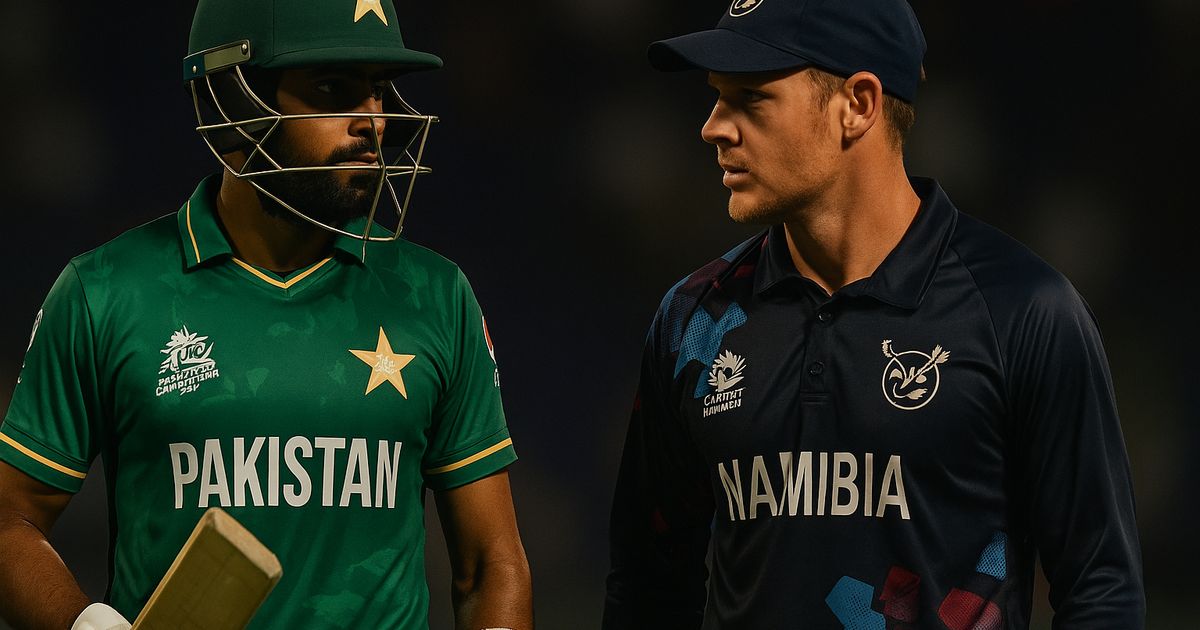
A Crucial Match with Super Eight Implications
The cricketing world turns its eyes towards the T20 World Cup 2026, where Pakistan is set to face Namibia in a high-stakes match that could determine the final Super Eight spot. This encounter, more than just a game, carries enormous consequences for both teams, especially for Pakistan, whose advance in the tournament is hanging by a thread.
The match is scheduled amidst swirling uncertainties, with weather conditions threatening to play spoil-sport. Fans and players are on edge, aware that every run, every wicket, and perhaps even the weather could tip the scales in this pivotal showdown.

Match Details and Weather Concerns
As the clock ticks towards the much-anticipated fixture, the cricketing community braces for a potential nail-biter. The match is set to take place at a venue renowned for its unpredictable weather patterns, adding another layer of complexity to an already tense situation. Forecasts suggest rain could intervene, and if the match is washed out, it might affect Pakistan more severely, given their precarious position in the points table.
Pakistan's cricket team, led by captain Babar Azam, must secure a victory to maintain their chances of advancing to the Super Eight. Namibia, on the other hand, enters the field with nothing to lose and everything to gain, potentially playing the role of giant killers in this tournament.
Key Players and Team Dynamics
Pakistan's journey in this World Cup has been a rollercoaster of performances. Babar Azam, their charismatic leader, is central to their fortunes. Known for his elegant batting and tactical acumen, Azam's form and leadership are crucial. Alongside him, players like Shaheen Afridi, with his pace and swing, and Mohammad Rizwan, with his consistent batting, form the backbone of the squad.
Namibia, while less heralded, boasts players who can turn the game on its head. Their captain, Gerhard Erasmus, leads by example. The team also relies on the performances of seasoned all-rounders like David Wiese, whose experience in various global T20 leagues provides Namibia with a competitive edge.
Analysis: Implications for Cricket and the Teams
The outcome of this match has ramifications beyond just the two teams involved. For Pakistan, a win could rejuvenate their World Cup campaign, restoring confidence and momentum. A loss, however, could trigger a period of introspection and possible restructuring within the team and its management.
For Namibia, a victory would be historic, further cementing their growing reputation in international cricket. It would exemplify the unpredictable nature of T20 cricket, where underdogs often defy odds, adding to the excitement and global appeal of the sport.
Historical Context and Comparisons
This match brings back memories of Pakistan's storied history in World Cup tournaments. Renowned for their mercurial performances, Pakistan has often swung between brilliance and disaster. Their 1992 World Cup win remains a testament to their resilience and ability to perform under pressure.
Namibia, while newer to the international stage, has shown significant progress, reminiscent of other associate teams that have punched above their weight, like Afghanistan. Their journey reflects the broader narrative of cricket's expansion and the ICC's efforts to globalize the game.
Future Outlook: What to Watch For
As the tournament progresses, several factors will demand attention. For Pakistan, consistency and mental fortitude will be key. Their ability to handle pressure in must-win scenarios could define their World Cup campaign. Strategic decisions by the team management, particularly in game situations, will be under scrutiny.
Namibia's continued development in international cricket will be watched closely. Their performance in this tournament could influence future ICC policies regarding the inclusion and support of associate nations in global events.
Closing Thoughts
The Pakistan vs Namibia fixture is more than just a cricket match; it is a microcosm of the sport's unpredictability and charm. As fans await the outcome, the stakes are clear: for Pakistan, it's a chance to stay in the hunt, while for Namibia, it's an opportunity to make history.
This encounter, set against the backdrop of potential weather disruptions, promises drama, tension, and maybe even a twist or two. As players take the field, they carry the hopes and dreams of their nations, exemplifying the spirit and spectacle that is T20 cricket.