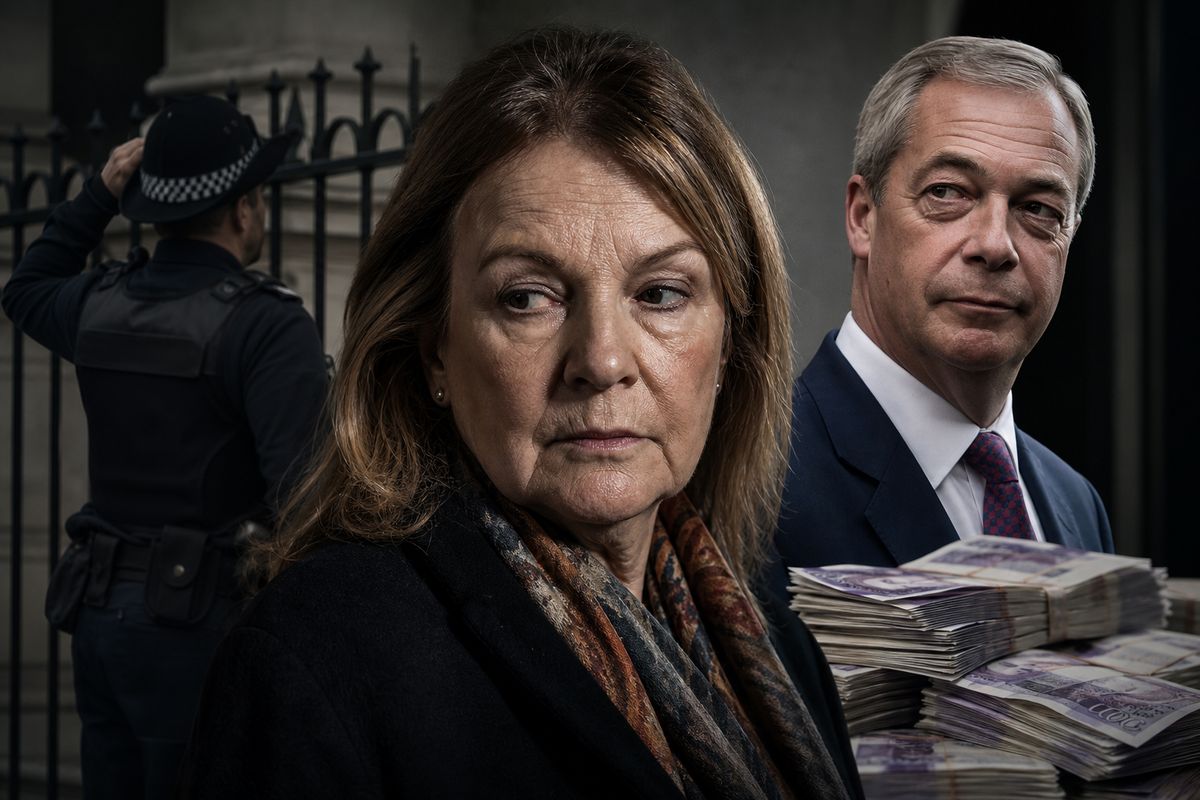
Police Investigate £500,000 Reform Donations Linked to Fraudster's Mother
Police have opened an investigation into £500,000 worth of donations made to Reform UK, reportedly from the mother of a convicted fraudster who previously bankrolled Nigel Farage. The probe, first reported by The Times and confirmed by the BBC, centres on whether the donations complied with electoral law and whether the true source of the money was properly declared.
The donations in question were made over a period of several months leading up to the July 2024 general election, when Reform UK stunned the political establishment by winning five seats. The mother of the fraudster, whose identity has not been officially disclosed by police, is said to have made multiple payments totalling half a million pounds to the party. Her son, a convicted fraudster, had previously provided significant financial backing to Farage's political activities, including his leadership of the Brexit Party and later Reform UK.
The investigation is being handled by the police's specialist economic crime unit, which examines potential breaches of the Political Parties, Elections and Referendums Act 2000. Under that law, donations over £500 must be from a permissible source – typically a registered UK voter or a company based in the UK. Any attempt to disguise the true origin of a donation, known as 'straw donor' arrangements, is a criminal offence.
Reform UK has not commented publicly on the investigation, but sources close to the party have reportedly said they are co-operating fully with the police. Farage himself has dismissed the probe as a politically motivated smear, claiming it is an attempt to distract from Reform's rising popularity.

Background: The Donors and Their Connections to Farage
The mother at the centre of the probe has not been named in police statements, but news reports suggest she was a regular donor to both the Brexit Party and Reform UK. Her son, the fraudster, was convicted several years ago for financial crimes including money laundering and fraud. He was a prominent backer of Farage's earlier campaigns, contributing hundreds of thousands of pounds through various corporate structures.
Farage has long attracted controversy over his funding sources. During the 2016 EU referendum campaign, the official Vote Leave organisation faced separate investigations, but Farage's unofficial 'Be Leave' campaign was also scrutinised for accepting large donations from wealthy individuals. In 2019, the Brexit Party received substantial sums from donors who were later linked to questionable financial backgrounds.
The current investigation raises serious questions about whether Reform UK had adequate due diligence processes in place to vet donations. Political parties are expected to conduct 'know your donor' checks to ensure contributions are from legitimate, permissible sources. If those checks were bypassed or inadequate, the party could face fines or even criminal charges.
The connection between the mother and her son is crucial. If the money originated from the son – via the mother as a conduit – that would likely constitute a straw donor arrangement, which is illegal. Even if the mother used her own funds, the fact that her son had previously bankrolled Farage may be relevant to the police enquiry into whether the donations were designed to circumvent donation caps or disguise the source.
The Jenrick Leadership Donation and Broader Funding Scrutiny
Separately, it has emerged that police are also investigating a £37,500 donation made to Robert Jenrick's Conservative Party leadership campaign. Jenrick, who is running to succeed Rishi Sunak, received the money from a donor whose background is now under scrutiny. The Guardian reported that the donation is part of the same wider police inquiry into political donations, though the two cases are not necessarily linked.
Jenrick's campaign has said the donation was properly declared and that they have provided all requested information to the authorities. However, the fact that a mainstream Conservative leadership contender is caught up in a funding probe shows how pervasive concerns about political donation integrity have become across the spectrum.
The investigations come at a particularly awkward time for both Reform UK and the Conservatives. Reform UK is riding high in opinion polls, with some surveys putting them ahead of the Tories. Farage has been campaigning heavily in the Clacton by-election, where he is standing as the Reform candidate after winning the seat in the general election. The scrutiny of his party's funding could undermine his message of being an anti-establishment outsider.
For the Conservatives, the probe adds to a string of controversies over donations during the Sunak premiership. Several Tory MPs have faced allegations of improper donations, and the party has struggled to clean up its image. Jenrick, who presents himself as a tough-on-corruption candidate, may find the association damaging.
Labour’s Push to Ban Crypto Political Donations
In a related development, a group of Labour MPs have tabled a bill to permanently ban political donations made in cryptocurrency. The move, reported by two news outlets, aims to close a loophole that currently allows parties to accept digital assets such as Bitcoin. Labour MPs argue that crypto donations are hard to trace, making them ideal vehicles for money laundering and straw donor schemes.
The proposed ban would cover all forms of cryptocurrency, including stablecoins and non-fungible tokens (NFTs). If passed, it would bring UK law in line with several other Western democracies, including Canada and France, which have already restricted or prohibited crypto political donations.
The timing of this legislative push is significant. The Reform UK investigation has exposed vulnerabilities in the current donation regime, and Labour sees an opportunity to tighten the rules. The party's leader, Sir Keir Starmer, has made cleaning up politics a central plank of his government's agenda. A ban on crypto donations would likely enjoy cross-party support, though some free-market Conservatives and Liberal Democrats may resist what they see as overregulation.
Critics argue that the real problem is not the medium of donation but the lack of transparency around donor identities. They say banning crypto donations alone will not prevent wealthy individuals from funnelling money through relatives or shell companies. The Labour MPs behind the bill acknowledge this, but insist that closing one loophole is better than leaving it open.
Why It Matters: The Erosion of Trust in Political Finance
The police investigations into Reform UK and Jenrick's campaign are not just about two sets of donations. They are symptomatic of a deeper crisis of confidence in how British politics is funded. The current system relies on self-declaration and a relatively weak enforcement body: the Electoral Commission. It issues fines, but it cannot launch criminal investigations; that requires police involvement. The fact that police have now been called in on multiple occasions suggests the Commission's powers may be insufficient.
This matters because public trust in politicians is already at rock bottom. The expenses scandal of 2009, the party funding scandals of the 2010s, and the opaque financing of the Brexit campaigns have all taken their toll. Voters are increasingly cynical about whether parties represent the interests of ordinary people or wealthy backers. The rise of Reform UK itself is partly a protest against the perceived cosiness of the established parties.
If the investigations reveal systematic failures in Reform UK's donation vetting, it could give Labour and the Conservatives ammunition to attack Farage. But it also puts pressure on all parties to clean up their act. The Clacton by-election, which will be a test of Farage's personal appeal, will now be fought against a backdrop of funding allegations. Voters in Clacton may question why a party that claims to challenge the elite is itself funded by the family of a convicted fraudster.
Beyond the immediate political fallout, there is a bigger policy question. Should the UK introduce tighter limits on individual donations, as recommended by the Committee on Standards in Public Life? Currently, there is no cap on how much an individual can give to a political party, unlike the United States which has per-election limits. Some argue that a cap would reduce the influence of wealthy donors; others say it would violate free speech. Either way, the public deserves a robust debate, not just a series of police press releases.
What Happens Next?
The police investigation is in its early stages, and no arrests have been made. Officers will examine bank records, interview party officials, and assess whether any criminal offences have been committed. The process could take months. If charges are brought, it would be the most significant political funding case since the 'loans for peerages' affair in 2006.
Meanwhile, the Labour bill to ban crypto donations is expected to have its second reading in the autumn. The Clacton by-election is likely to be held in early 2025. Farage will campaign hard, but the donations probe may dog him throughout. For Robert Jenrick, the question is whether he can distance himself from the donor without appearing to throw someone under the bus.
One thing is certain: the era of lax political donation regulations is coming to an end. Whether through police action or new laws, the way British parties raise money is undergoing its most intense scrutiny in decades. Voters will be watching closely to see if the system can be fixed – or if the same old problems simply take on a new form.