A Live Broadcast Interrupted by War
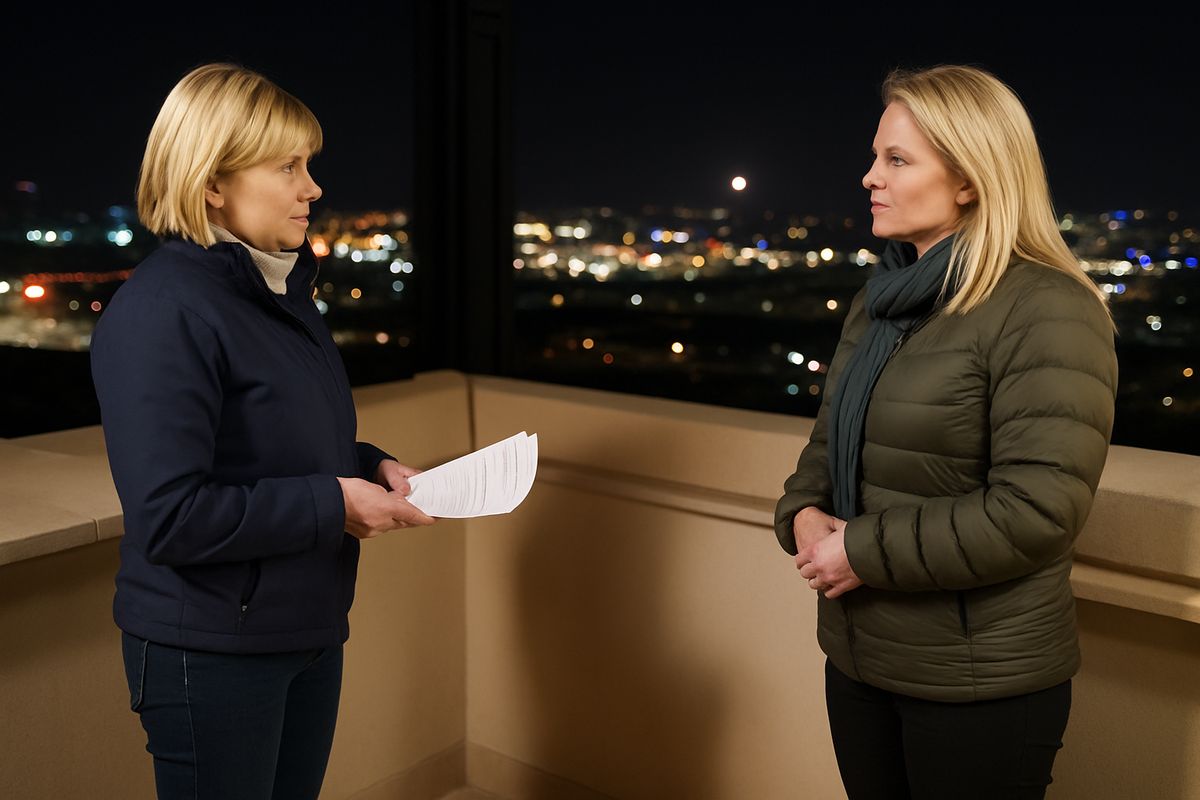
On the night of Tuesday, March 3, 2026, a routine live news broadcast from the Iraq-Iran border transformed into a stark, real-time illustration of modern conflict. ITV News presenter Julie Etchingham and International Editor Emma Murphy were reporting on the unfolding US-Israeli military operation in Iran when the war they were describing literally erupted in the sky behind them. As they spoke, a bright, sudden glow illuminated the night skyline. The moment, captured on live television, showed Etchingham visibly pausing, her gaze drawn away from the camera with palpable anxiety as she stared into the darkness. Her colleague, Emma Murphy, quickly identified the cause, explaining to the audience that they had just heard an interceptor—a defensive missile—going off behind them. The broadcast, after a tense pause, continued, but the image was seared into the public consciousness: journalists reporting on a distant war suddenly finding themselves on the periphery of its immediate danger.
This incident, succinctly headlined as the "moment rocket intercepted behind news presenters," transcends a mere dramatic news clip. It represents a confluence of high-stakes international geopolitics, the evolving nature of broadcast journalism in conflict zones, and the blurred lines between observer and participant in 21st-century warfare. The event was covered by multiple outlets, including The Independent and AOL.com, highlighting its visceral impact. Related headlines, such as "Horror moment ITV News report interrupted by bomb alert as host takes cover," further underscore the precarious reality for journalists operating in these volatile environments. This was not a pre-recorded package from a safe hotel; this was live television from the edge of an active theater of operations.
Deconstructing the On-Air Moment
The precise location was Iraq, on the border with Iran. The timing was critical, coinciding with reported airstrikes as part of a joint US-Israeli operation. While the source material does not specify the exact origin or target of the intercepted projectile, the context suggests it was part of the regional exchange of fire following the strikes. Interceptor systems, like Israel's Iron Dome or similar US-provided defense systems deployed in Iraq, are designed to destroy incoming rockets, missiles, or drones in mid-air. The "bright glow" witnessed by the presenters and the audience was almost certainly the explosive impact of that interception—a controlled detonation in the sky meant to prevent a far more destructive strike on the ground.
The human reaction was as telling as the technological display. Julie Etchingham, an award-winning and highly experienced presenter, is known for her composure. Her visible moment of distraction and anxiety speaks volumes about the unexpected and proximate nature of the threat. Emma Murphy, in her role as International Editor, provided the crucial, steadying context, verbally translating the alarming sight and sound for viewers at home. This split-second dynamic—between the presenter's instinctive reaction and the editor's analytical explanation—perfectly encapsulated the dual role of the war correspondent: both a human witness to danger and a professional interpreter of events. The decision to continue the broadcast was a testament to journalistic resolve, but the pause acknowledged the undeniable reality of their situation.
The Journalists in the Frame: Profiles in Courage
To understand the significance of their reaction, one must understand the caliber of the journalists involved. Julie Etchingham is one of British television's most respected news anchors, primarily known for hosting ITV's flagship news program, "News at Ten." Her career includes anchoring major political debates and election coverage. Emma Murphy, as ITV News International Editor, is a seasoned foreign correspondent with extensive experience reporting from conflict zones and global trouble spots, including the Middle East. These are not novice reporters; they are senior, battle-hardened professionals. The fact that the event gave even them pause underscores its sudden and serious nature.
Their presence on the Iraq-Iran border itself is a strategic journalistic choice. In an era where much reporting can be done via satellite feeds and remote interviews, placing a flagship presenter and an international editor in a potentially hazardous location signals a commitment to frontline, eyewitness journalism. It seeks to provide authenticity and immediacy to the reporting. However, this incident highlights the inherent and escalating risks of that commitment. News organizations continually balance the editorial value of being "on the ground" with the duty of care to their staff. The live interception event thrusts this ethical and logistical calculation into the spotlight, demonstrating that even well-planned deployments in theoretically secure areas can instantly become perilous.
The Evolving Threat to News Teams
The danger to journalists in conflict zones is not new, but its character is constantly evolving. Historically, reporters faced risks from front-line combat, shelling, and being caught in crossfire. In recent decades, the threats have expanded to include targeted kidnappings, ideological violence against the media, and sophisticated digital surveillance. The incident with the ITV team introduces another layer: the proliferation of long-range missiles, drones, and automated defense systems means the "battlefield" is no longer a defined line. A journalist can be dozens of miles from a primary target and still be within the engagement zone of interceptors and the debris field of destroyed projectiles. This creates a vastly more complex and unpredictable risk environment for international newsgathering.
Historical Context: Journalism Under Fire
Live broadcasts from conflict zones have delivered some of the most iconic moments in television news history, from Walter Cronkite's coverage of Vietnam to CNN's live reports from Baghdad during the First Gulf War in 1991. The latter, with reporters like Bernard Shaw and Peter Arnett broadcasting as bombs fell, revolutionized the public's expectation for real-time war coverage. The ITV incident is a direct descendant of this legacy but reflects a technological and tactical shift. Where the Gulf War coverage showcased journalists in a city under aerial bombardment, the 2026 clip shows journalists threatened by the defensive systems responding to that bombardment.
Comparisons can also be drawn to more recent events. Reports from Gaza, Ukraine, and Syria have frequently featured correspondents donning flak jackets as explosions rumble in the distance or drones buzz overhead. The distinctive *whoosh* of outgoing rockets or the *crump* of impacts have become ambient sound in many live shots. What makes the ITV moment distinct is the visual and auditory clarity of the interception event happening directly in the frame of a major network's live broadcast, involving its most senior on-air talent. It moves the threat from the periphery of the report to its center, if only for a few seconds.
The Geopolitical Backdrop: A Region on a Knife-Edge
The news presenters were specifically discussing "the US-Israeli operation in Iran." This framing points to a significant and escalatory military action. For years, the shadow war between Iran and Israel, characterized by cyber-attacks, covert operations, and strikes on proxy forces, has threatened to erupt into direct confrontation. A confirmed joint US-Israeli kinetic operation inside Iranian territory represents a dramatic intensification, with the potential to draw in regional actors and trigger a wider conflict. The intercepted rocket, likely fired by Iranian-backed militias in Iraq or by Iran itself in retaliation, is a tangible symptom of that escalation.
Iraq's position in this is particularly fraught. Since the 2003 US-led invasion, Iraq has been a battleground for influence between the US and Iran. Numerous Iranian-backed militias operate within its borders, and US forces remain stationed there. An interception over Iraqi territory during a US-Israeli strike on Iran illustrates how Iraq can instantly become a theater for regional retaliation, its sovereignty and stability caught in the crossfire of larger powers. The journalists' location was therefore not just geographically symbolic but situated at a nexus of multiple, overlapping conflict lines.
Why It Matters
Most coverage of this event will rightly focus on its dramatic visuals and the bravery of the journalists. However, the deeper implication lies in what it signals about the normalization of high-tech, long-range warfare and its impact on global perception. This was not a grainy, handheld video from a soldier's phone; it was a crystal-clear, professionally framed shot on a prime-time news broadcast. The interceptor's glow was as visually sterile as a special effect, yet it represented a violent, automated transaction of modern war—one that happens over the heads of civilians and journalists alike. This incident risks sanitizing and distancing the public from the reality of conflict, making warfare appear as a clean, digital spectacle of lights in the sky, rather than the brutal, ground-level tragedy it remains.
Furthermore, this moment exposes a critical vulnerability in our information ecosystem. As major networks feel pressure to provide live, frontline coverage to compete with social media and rolling news channels, the physical risks to essential, credible journalists increase exponentially. If the most well-resourced organizations struggle to guarantee safety even for their star presenters in what are deemed "safe" positions, it could lead to two dangerous outcomes: either a retreat from on-the-ground reporting, creating news deserts in conflict zones ripe for misinformation, or the outsourcing of coverage to local stringers and freelancers who bear disproportionate risk with fewer protections. The ITV team's composure is admirable, but it should not obscure the systemic pressure that put them there.
For the public, this is a wake-up call to consciously decouple the medium from the message. The allure of live, dramatic footage must be weighed against a critical understanding of how it is obtained and what it omits. Readers and viewers should demand that news organizations transparently discuss their security protocols and the ethical considerations of deploying staff to active conflicts. Supporting journalism that invests in context and analysis, rather than just spectacle, becomes ever more vital when the spectacle itself can be so dangerously captivating.
What to Watch For Going Forward
In the immediate aftermath, scrutiny will fall on the military and political developments of the US-Israeli operation that prompted the retaliation. The specific nature of the targets, the scale of the strikes, and the official Iranian response will determine whether this incident was a fleeting moment or the precursor to a broader war. The diplomatic fallout, particularly at the UN Security Council and among European powers, will be a key indicator of the potential for escalation or de-escalation.
For the media industry, this event will likely trigger internal reviews at major broadcasters about the safety protocols for high-profile live broadcasts from conflict zones. Discussions about the use of augmented reality (AR) backdrops, safer remote locations that can mimic a frontline view, and enhanced early-warning systems for news teams will intensify. The balance between editorial impact and duty of care will be re-evaluated. Additionally, watch for how this clip is used and misused in the information space. It will undoubtedly be stripped of context and repurposed by various actors to support narratives about the effectiveness of missile defense, the recklessness of Western media, or the immediacy of the Iranian threat.
Conclusion
The moment a rocket was intercepted behind Julie Etchingham and Emma Murphy is more than a viral news clip; it is a potent symbol of our current age. It captures the seamless integration of live global media with automated, long-range warfare. It highlights the enduring courage and vulnerability of journalists who serve as our eyes and ears in dangerous places. And it underscores how geopolitical fault lines in the Middle East can manifest without warning, turning a news broadcast into a live-risk assessment. As the glow faded from the sky and the broadcast continued, it left behind urgent questions about the cost of witnessing war, the changing nature of the battlefield, and our own responsibility as an audience consuming conflict in real time from the safety of our screens.