Rui Hachimura's Controlling Demand After Lakers' Statement Wins
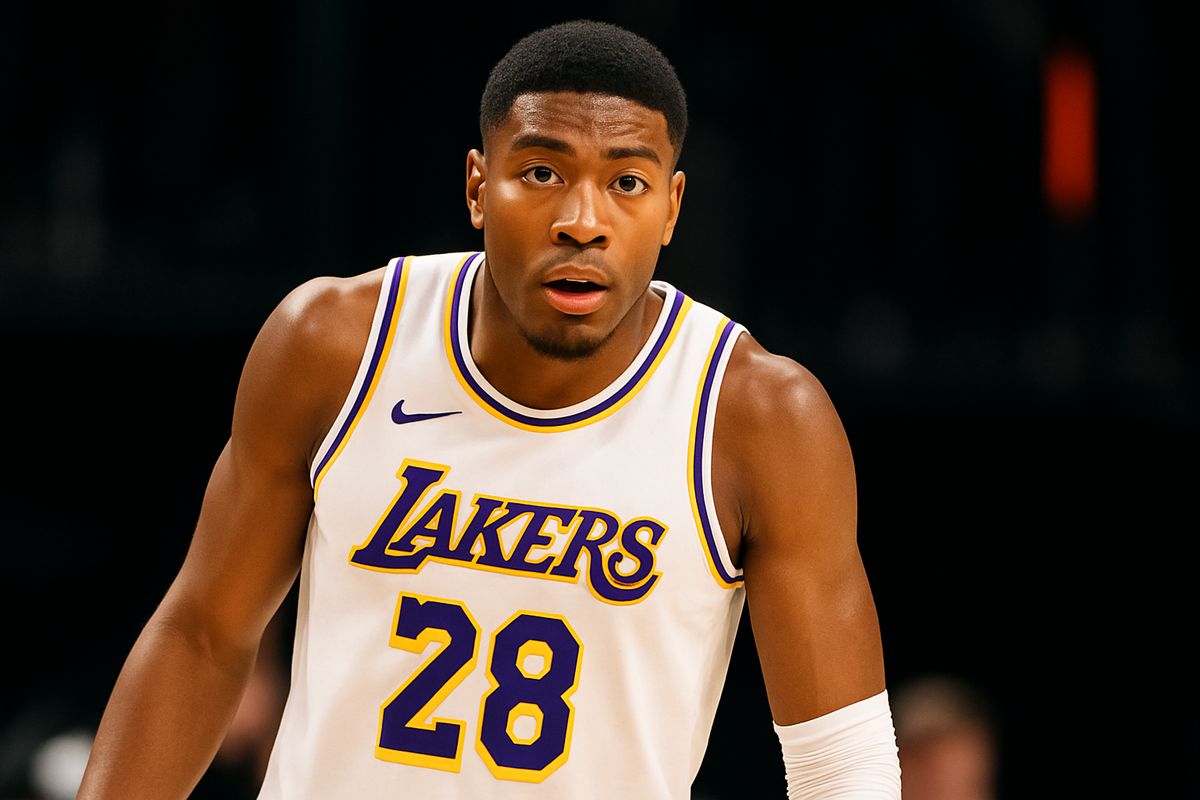
In the wake of two of their most convincing victories of the 2025-26 season, a dominant back-to-back sweep of the Golden State Warriors and Sacramento Kings, Los Angeles Lakers forward Rui Hachimura issued a clear and controlling demand to his team. Following the win over the Kings, Hachimura pointed to a specific, non-statistical factor as the key to their success: physicality and toughness. "I think when we did that today in the game [against the Kings], the game [against the Warriors], I think we set the tone. That's why we were able to control the whole game," Hachimura stated. He emphasized the need for consistency, adding, "So I think that kind of stuff, we have to keep doing it. I think sometimes we kind of do it and then we stop doing it. So we just have to keep doing it."
This demand for sustained physical play comes at a critical juncture for both the Lakers' season and Hachimura's personal trajectory with the franchise. The Lakers, led by the defensive ignition of Marcus Smart—who head coach JJ Redick singled out for his five steals and floor-diving effort—overpowered their California rivals by "setting the rules," a phrase Smart himself introduced earlier in the season. For Hachimura, who returned from a brief illness to contribute 8 points in 22 minutes off the bench against Sacramento, the call for toughness is more than a post-game soundbite. It underscores the very identity he must embody to secure his long-term place on a team facing monumental offseason decisions, with his own $18.3 million contract set to expire.

The Statistical Rut and the $20 Million Question
Beneath the surface of the recent team success lies a more complex individual narrative for Rui Hachimura. Since returning from a calf injury in mid-January, his role has shifted from starter to key reserve. In 18 of his last 22 appearances, he has come off the bench. During this 22-game stretch, his production has dipped to averages of 9.9 points, 2.8 rebounds, and 1.7 made three-pointers in 25.0 minutes per game. More concerning is his scoring consistency; he has failed to reach double figures in 10 of those 22 outings, including five of his last seven games played.
These numbers sit in stark contrast to his season-long efficiency. For the 2025-26 campaign, Hachimura has appeared in 48 games (31 starts) and is averaging 11.7 points and 3.4 rebounds on elite shooting splits of 50.1% from the field and 44.1% from three-point range. However, the recent downturn in volume and output directly fuels the central financial question looming over his future: Is Rui Hachimura worth re-signing at or near his current average annual salary of $18,259,259? As one analysis notes, conversations about NBA salaries are inherently about cap management and value relative to winning impact. With the Lakers projected to have significant cap space, committing nearly $20 million per season to a player in a bench role who is struggling to score consistently presents a legitimate roster-building dilemma.
Background: Hachimura's Journey and the Evolving Lakers Roster
Rui Hachimura arrived in Los Angeles via a trade from the Washington Wizards in January 2023, quickly becoming a fan favorite and a valued playoff performer during the team's 2023 Western Conference Finals run. Known for his efficient mid-range game, improved three-point shooting, and solid defensive versatility, he signed a three-year, $51 million contract in the 2023 offseason. His game has been predicated on being a high-efficiency, low-mistake forward who can defend multiple positions and provide spacing.
The Lakers' roster construction, however, has evolved around him. The 2025 offseason acquisition of veteran guard Marcus Smart has fundamentally altered the team's defensive identity. Smart's mantra—"the toughest team sets the rules"—has become a guiding principle, and his on-ball defensive prowess has made him a fixture in the starting lineup under coach JJ Redick. This, combined with the offensive firepower of a core featuring LeBron James, Luka Doncic, and Austin Reaves, has created a logjam on the wing and forced Hachimura into a sixth-man role. The defensive limitations of the James/Doncic/Reaves trio have also placed a premium on having a true wing stopper, a role Hachimura has at times been miscast in, rather than being utilized as a switchable defensive asset.
LeBron James: The Ultimate Domino in Hachimura's Future
Any analysis of Rui Hachimura's future with the Lakers is inextricably linked to the decision of LeBron James. James, whose own contract situation will be the headline of the 2026 offseason, holds the key to the team's strategic direction. If James re-signs with the Lakers, he will almost certainly remain a starter, continuing to occupy major minutes at the forward spots. In this scenario, the path for Hachimura to reclaim a starting role is narrow, potentially cementing him as a high-priced reserve. The financial calculus of paying a bench player $18+ million becomes even more scrutinized when aiming to build a contender around an aging superstar.
Conversely, if James departs in free agency, the Lakers' roster blueprint changes dramatically. General Manager Rob Pelinka would likely pivot to targeting a true, elite wing defender in free agency or via trade. In that context, Hachimura's skill set—as an efficient scorer and switchable defender playing alongside a dedicated stopper—could be re-evaluated as a more natural and valuable fit. His Bird rights, which allow the Lakers to exceed the salary cap to re-sign him, would become a more attractive asset if the team needs to fill a starting forward spot with a known commodity. Thus, Hachimura's value to the franchise is not static; it is a variable directly dependent on the future of the league's biggest star.
The Internal Competition and Value Proposition
Complicating Hachimura's position is the presence of cost-controlled talent on the roster that offers overlapping skills. The source material explicitly raises the question of value comparison, asking if there is enough money to justify paying a new wing stopper and re-signing Hachimura when a player like Jake LaRavia "offers similar value at just $6 million per season." This is the crux of modern NBA roster management. LaRavia, while perhaps not possessing Hachimura's peak scoring efficiency, represents the type of affordable, versatile forward that contenders use to fill out their rotation, allowing financial resources to be concentrated on elite talent.
Hachimura's argument for his salary, therefore, cannot rest on being a solid role player. He must demonstrate he is a difference-making role player, particularly in the playoffs. His demand for consistent toughness is a step in that direction, aligning him with the identity Marcus Smart has brought. However, he must pair that with a return to consistent offensive production. The Lakers' second unit, which he has been tasked with leading, desperately needs reliable scoring. If he cannot provide efficient volume in that role, the front office may logically decide that allocating his $18+ million towards multiple players—or one higher-impact starter—is a more prudent path to championship contention.
Why It Matters
The Rui Hachimura situation is a microcosm of the existential challenge facing the post-LeBron James Lakers, whenever that era arrives. It's a case study in the tension between player development, financial pragmatism, and strategic pivoting. Most coverage focuses on the binary question of "stay or go," but the deeper implication is about roster construction philosophy. The Lakers are subtly being forced to decide if they are a team that pays a premium for known, high-character veterans (like Hachimura) to maintain a floor, or if they will aggressively churn the roster in search of higher-ceiling, cost-controlled talent to build a new core. Hachimura's fate will signal their chosen direction.
Furthermore, this story connects to a broader NBA trend: the escalating value of the "3-and-D" wing and the difficult valuation of players who are good at several things but elite at none. Hachimura is an excellent shooter and a capable defender, but is not a lockdown stopper nor a primary scoring option. The market for such players is volatile. His next contract, whether with the Lakers or elsewhere, will help set the financial benchmark for the high-end role player in the next TV deal era. Readers should watch this not just as a Lakers personnel issue, but as a bellwether for how teams value versatile forwards in a league that increasingly prioritizes positional size and shooting.
Finally, there's a contrarian angle to consider: the possibility that Hachimura's recent statistical "rut" is a product of role adjustment and minor injury, not decline. His shooting efficiency remains stellar. If the Lakers, focused on the playoff picture and tiebreaker scenarios in a crowded Western Conference, can reintegrate him effectively and he rediscovers his early-season form, his playoff performance could instantly reset his valuation. In the postseason, where specific matchups and reliable skills are magnified, a player of Hachimura's profile can become indispensable. Dismissing his future based on a 22-game bench sample might be shortsighted if he delivers in May and June.
What to Watch For Next
The final stretch of the 2025-26 regular season and the playoffs will serve as the ultimate audition for Rui Hachimura. The Lakers, battling for positioning in a tight Western Conference where every tiebreaker matters, need him to translate his demand for toughness into tangible, nightly impact. Key indicators will be his scoring consistency off the bench, his defensive rating when playing alongside the starters in closing lineups, and his ability to be a physical presence on the glass. His performance in high-leverage moments will be scrutinized more than his season-long shooting percentage.
Off the court, all eyes will remain on LeBron James. Any hint regarding his intentions for the 2026-27 season will immediately recalibrate the Lakers' plans and, by extension, Hachimura's market with the team. The early moments of free agency will be decisive. Additionally, the Lakers' performance in the playoffs will set the tone. A deep run where Hachimura plays a pivotal role makes his retention far more likely. An early exit could trigger a broader teardown where he becomes expendable. For now, Hachimura's immediate task is clear: ensure the Lakers "keep doing it"—playing with the controlling physicality he demanded—and prove within that framework that he is a player worth building around, at any price.