The Throw-In Who Became the Centerpiece
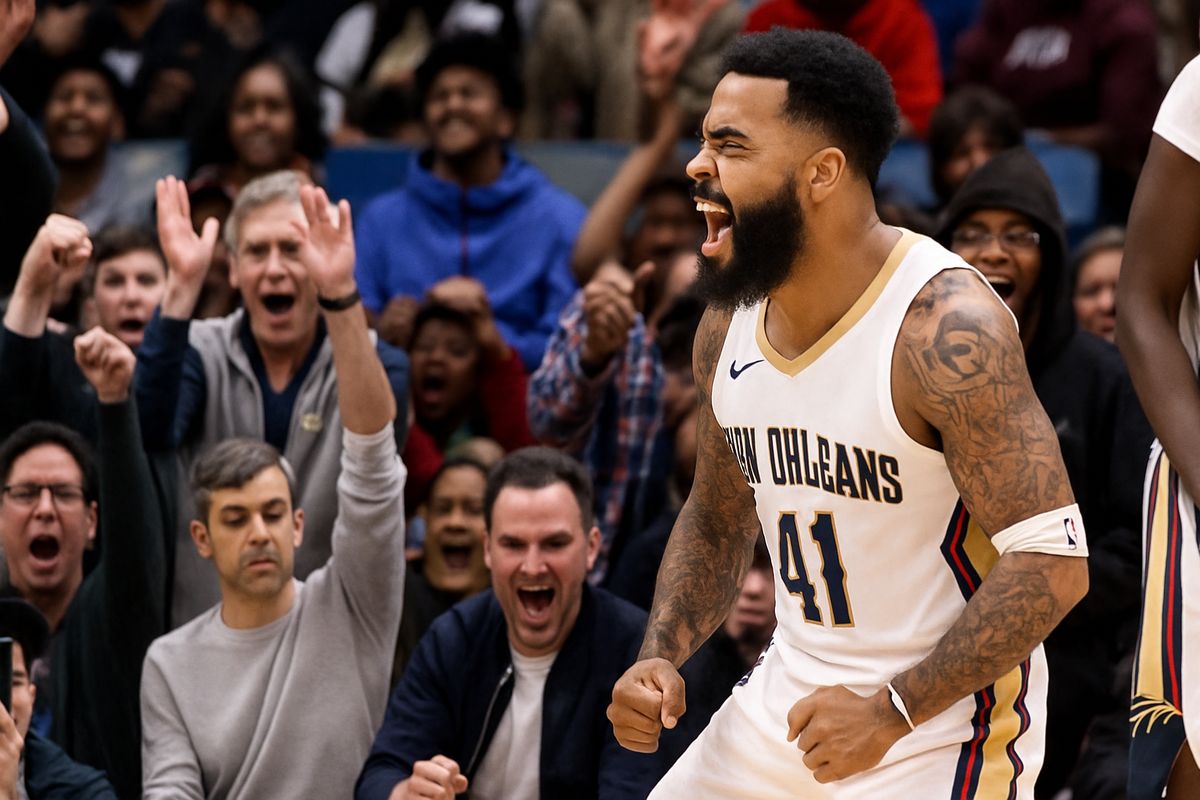
In the summer of 2025, the New Orleans Pelicans executed a trade that was met with widespread skepticism and immediate criticism. The deal sent veteran guard CJ McCollum, on an expiring contract, to the Atlanta Hawks in exchange for Jordan Poole and Saddiq Bey. The narrative was straightforward: the Pelicans had taken on Poole's burdensome contract—roughly $34 million for the 2026-27 season—for a player whose performance had been inconsistent. Saddiq Bey, included in the transaction, was widely viewed as a mere salary filler, a throw-in to balance the books. Fast forward to the present, and that narrative has been completely inverted. Bey, not Poole, has emerged as the transformative asset, flipping the script on what was once considered one of the franchise's most maligned moves.
The criticism was not unfounded at the time. Jordan Poole's struggles have continued in New Orleans, with the guard shooting a dismal 37.4 percent from the field at one point and even being removed from the team's rotation. Meanwhile, Saddiq Bey is in the midst of a career-defining season, averaging 17.4 points, 5.8 rebounds, and 2.6 assists per game on 45.5 percent shooting from the field and 35.5 percent from three-point range. His production has not only salvaged the trade but has positioned him as a foundational piece for the Pelicans' future. This dramatic shift in value perception underscores the unpredictable nature of NBA transactions and the potential for overlooked talent to redefine a team's trajectory.

Anatomy of a Breakout: Bey's On-Court Evolution
Saddiq Bey's ascent is not merely a product of increased opportunity; it is the result of tangible, significant improvement in his game, particularly in the latter half of the 2025-26 season. Since the All-Star break, Bey has shifted into a different gear, propelling the Pelicans to a 4-1 record in that stretch. Over those five games, he has averaged a staggering 25.2 points, 5.2 rebounds, and 3.8 assists per game. The pinnacle of this surge was a masterful 42-point performance against the Utah Jazz on January 31, 2026, where he single-handedly closed the game by scoring 23 points in the fourth quarter alone on 9-of-11 shooting.
The key to Bey's elevated play lies in a refined offensive arsenal. Historically known as a respected floor spacer and mid-range scorer, Bey has dramatically improved his rim finishing. He is now converting 62.5 percent of his attempts at the rim, a figure that forces defenses to respect his driving ability alongside his shooting. This development has unlocked a new dimension in his game, making him a genuine three-level scoring threat. He consistently punishes weaker defenders, using his strength and improved footwork to create angles, get underneath the rim, and finish over taller opponents. This inside-out scoring capability, combined with his solid rebounding for a wing, makes him the archetype of the modern, versatile forward that every NBA team covets.
Leadership and Professionalism Beyond the Stats
Beyond the box score, Bey's impact is felt in the culture of a Pelicans team navigating a developmental season. At 26 years old, he has established himself as a model professional. Sources highlight his daily work ethic, his unwavering readiness to compete regardless of previous results, and a leadership style that complements veteran presence Dejounte Murray. For a roster featuring young talents like rookie Derik Queen and Jeremiah Fears, Bey's example of consistent, head-down professionalism is invaluable. He embodies the mindset that every game is winnable, helping to establish a competitive standard for a team that has "frankly not been good this season," as noted in the source material. This intangible contribution amplifies his on-court value, marking him as a core cultural pillar.
Re-evaluating the CJ McCollum Trade Framework
To fully appreciate Bey's impact, one must revisit the context of the original trade. The Pelicans moved on from CJ McCollum, a respected veteran and scorer, as part of a broader roster recalibration. The return was framed as Jordan Poole, a former champion with scoring pedigree but significant contractual and consistency questions, and Saddiq Bey, the ancillary piece. The immediate analysis focused almost exclusively on the Poole-for-McCollum swap, grading New Orleans harshly for acquiring an expensive, underperforming asset for an expiring contract. This analysis failed to account for Bey's potential as a hidden variable.
Now, the calculus has changed entirely. Bey's performance on a team-friendly contract worth $6.3 million annually represents exceptional value, arguably the best value contract on the Pelicans' roster. His emergence has made the financial burden of Poole's deal far more palatable, effectively reframing the transaction. What was initially seen as a lopsided loss for New Orleans is now being reassessed as a potential win, precisely because the "throw-in" has outperformed expectations to such a degree that he has become the primary asset acquired. This serves as a case study in how the true winner of an NBA trade is often determined not by the headline names, but by the development of the supporting pieces.
The Pelicans' Deadline Gambit and Future Core
The Pelicans' commitment to Bey was further evidenced by their approach to the 2026 trade deadline. Despite being well under .500 and possessing zero draft capital in the upcoming 2026 NBA Draft—a consequence of the separate, heavily criticized trade that sent their likely top-three pick to Atlanta for Derik Queen—the front office chose to stand pat. Bey, having a career year on a highly tradeable contract, was a logical candidate to be moved for future assets. Instead, New Orleans held firm, signaling their belief in him as a long-term piece.
This decision looks increasingly prescient. By retaining Bey, the Pelicans are betting on his fit alongside their young core. The team's notes, including developments around Jeremiah Fears, Trey Murphy III, Zion Williamson, and Jose Alvarado, suggest a roster in flux but with identifiable young talent. Bey, at 26, fits the timeline as a player entering his prime who can grow with Queen and Fears while providing immediate, high-level production. His skill set as a three-and-D wing who can now create his own shot and finish at the rim is precisely the complement needed for a roster construction that likely revolves around Williamson's interior dominance and the playmaking of Murray. Holding onto him at the deadline was a clear declaration that the organization views his breakout as sustainable and integral to their blueprint.
Why It Matters
The significance of Saddiq Bey's story extends far beyond a pleasant surprise for Pelicans fans. It highlights a critical, often overlooked principle in team building: the paramount importance of player development and context. Bey was a known commodity—a solid rotation wing—but placed in a new environment with a defined role and the trust of the coaching staff, he has unlocked a higher tier of performance. This underscores that a player's final form is not always evident in their first NBA stop. For front offices, it's a lesson in diligence; the true value in a trade is not always the most expensive piece, but the one with the greatest potential for growth in your system. For fans and analysts, it's a reminder to avoid rush judgments on transactions, as the most impactful element may be quietly developing in the background.
Furthermore, Bey's emergence directly challenges the prevailing "tank or contend" binary that often dominates discourse around struggling teams. The Pelicans, devoid of their own high draft pick, could have easily liquidated Bey for minor assets. Instead, they identified and invested in a foundational player already on the roster. This represents a third path: targeted development and cultural building, even in a losing season. Bey's professionalism and work ethic are now standards for the team's prized rookies, an intangible ROI that far exceeds a second-round pick. In an era obsessed with draft lottery odds and superstar trade demands, New Orleans' cultivation of Bey is a testament to the enduring value of identifying, retaining, and empowering the right complementary talents who embody the culture you wish to build.
What to Watch For Next
The immediate future for Saddiq Bey and the Pelicans revolves around consolidation and commitment. The most pressing business decision will come this summer when Bey becomes eligible for a contract extension. His current market value has skyrocketed from his $6.3 million salary, and the Pelicans will need to decide how much they are willing to invest to lock down a player they clearly believe in. Negotiating an extension that fairly compensates Bey while preserving future financial flexibility will be a key test for the front office and a strong signal of their long-term vision.
On the court, the focus will be on sustainability and fit. Can Bey maintain his post-All-Star break efficiency over a full season? How does his evolving game synergize with a fully healthy Zion Williamson and the backcourt of Dejounte Murray and Jordan Poole (or his eventual replacement)? His role as a secondary creator and primary scoring option when needed will be crucial. Additionally, his leadership role will expand as he becomes more entrenched. The development of Derik Queen and Jeremiah Fears will be partially measured by how they absorb the professional habits Bey exemplifies daily. For a franchise that has faced its share of criticism for roster moves, the unexpected rise of Saddiq Bey offers a clear, exciting thread to follow—a potential cornerstone who arrived not with fanfare, but with a workmanlike attitude that has flipped the narrative and could very well flip the franchise's fortunes.