A Celestial Spectacle Arrives from the Desert
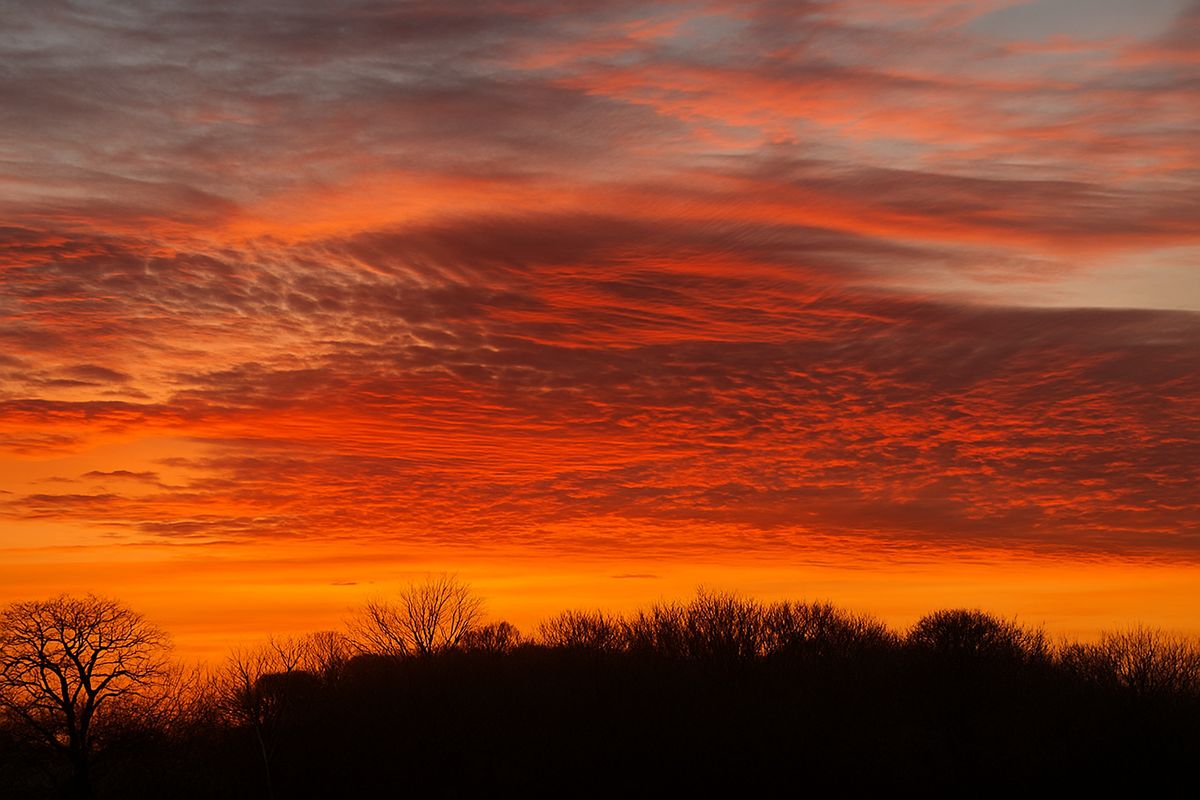
In early March 2026, a remarkable atmospheric event is set to unfold over the United Kingdom. A vast plume of fine sand and mineral particles, lifted from the deserts of North Africa, is travelling thousands of miles on warm southerly air currents towards British shores. This Saharan dust is forecast to transform ordinary sunrises and sunsets into dramatic displays of deep gold, amber, and burnt orange, particularly on Thursday and Friday of that week. However, this celestial spectacle comes with a terrestrial side effect: when the dust mixes with rainfall, it can leave a distinctive reddish-brown residue on cars, windows, and other surfaces—a phenomenon infamously known as 'blood rain'. This event, while visually stunning, is a powerful reminder of the interconnectedness of Earth's weather systems, where a storm in Iberia can directly influence the colour of the sky in England.
The event was first highlighted by the BBC's Lead Weather Presenter, Stav Danaos, on 4 March 2026. Satellite imagery from NASA Worldview on the preceding Tuesday clearly showed a brown haze of lifted Saharan dust over Spain, tracing the path of the incoming plume. The dust is being carried towards the UK around an area of high pressure that is delivering fine, mild, and sunny conditions, following what has been an exceptionally wet start to the year. The most vivid effects are expected across England and Wales as clearer, cooler conditions arrive from the west by the week's end, creating the perfect canvas for the suspended particles to work their optical magic.

The Atmospheric Mechanics of a Dust Migration
The journey of Saharan dust to northern Europe is a complex choreography of wind and weather. The immediate catalyst for this particular event was Storm Regina, which battered Iberia in the days prior. As this potent storm tracked eastward into the western Mediterranean, it acted like a giant atmospheric pump, drawing up powerful warm southerly winds from North Africa. These winds scoured the desert surface, lifting millions of tonnes of fine dust high into the troposphere, where it can travel for weeks and cover continents.
Once aloft, the dust becomes a passenger on global wind patterns. In this instance, the plume hitched a ride on the southern flank of a sprawling high-pressure system situated over or near the UK. This system, responsible for the recent spell of spring-like warmth, is guiding the dust northwards. The particles themselves are incredibly fine, often less than 10 micrometres in diameter (smaller than a human red blood cell), which allows them to remain suspended for extended periods. They do not simply blow in like a cloud; they create a diffuse, high-altitude haze that can subtly alter the quality of daylight and, most notably, dramatically enhance the colours at dawn and dusk.
The Science of Scarlet Skies and 'Blood Rain'
The transformation of the sky is a direct result of the physics of light scattering. In a clean atmosphere, sunrises and sunsets appear red or orange because sunlight must pass through a thicker slice of the atmosphere, scattering away the shorter blue wavelengths. Saharan dust supercharges this effect. The high concentration of suspended mineral particles provides countless additional surfaces for sunlight to interact with. These particles are exceptionally efficient at scattering the shorter blue and violet light out of the line of sight, while allowing the longer wavelengths of red, orange, and yellow to pass through more directly. The result is a horizon that glows with an intense, almost surreal palette of gold, amber, and burnt orange.
From Spectacle to Sediment: Understanding 'Blood Rain'
The other side of this beautiful phenomenon is the deposition event known as 'blood rain'. This occurs when the suspended dust particles meet precipitation. As raindrops form and fall through the atmosphere, they act as miniature scavengers, collecting the dust particles on their descent. When these raindrops land, they evaporate, leaving behind the gritty, reddish-brown mineral residue. The effect is most pronounced after a period of dry deposition followed by rain, where a visible film can coat cars, windows, garden furniture, and outdoor surfaces. As the BBC notes, the phenomenon is entirely harmless from a health perspective for most people—the disruption is purely cosmetic, serving as a tangible, if somewhat messy, souvenir from the Sahara.
Historical records and recent events, like the notable coating of cars and streets in Burgos, Spain, in 2022, show that 'blood rain' can be a striking visual event in itself. In the UK, the areas expected to see the most pronounced effects of both the vivid sunsets and potential dust deposition are England and Wales, where dust concentrations are forecast to be highest due to the prevailing wind patterns and the position of the controlling high-pressure system.
A Recurring Visitor, Not a Rare Anomaly
While the visual drama of the event captures headlines, it is crucial to understand that the migration of Saharan dust to the UK is a natural and fairly frequent phenomenon. These events typically occur several times a year, with a marked peak in late winter and early spring. This seasonal pattern coincides with the most favourable atmospheric conditions for southerly winds to draw warm air—and its dust cargo—north from the Sahara. The event in March 2026 is therefore not an anomaly but part of a regular climatic cycle.
This context is important when considering media coverage. Headlines like "Saharan dust plume to transform UK sunrises and sunsets this week" and "UK weather: Cloud of Saharan dust to bring vibrant sunsets and hazy skies" understandably focus on the immediate, spectacular impact. However, they describe a process that is a routine player in the regional environment. Each event varies in intensity and reach; some bring a faint haze barely perceptible to the naked eye, while others, like the one forecast for March 2026, promise a far more vivid display. The frequency of these events also means they play a continuous, if subtle, role in ecosystem processes, such as fertilising the Atlantic Ocean and Amazon rainforest with mineral nutrients like iron and phosphorus.
Why It Matters
Beyond the Instagram-worthy sunsets and the nuisance of car washing, the recurring passage of Saharan dust holds deeper significance that often escapes the standard weather report. Firstly, these events are a stark, real-time demonstration of Earth's atmosphere as a single, interconnected system. They make the abstract concept of 'global circulation' tangible. The dust on a car in Cardiff originated from a specific desert storm potentially weeks prior, connecting local weather to continental-scale processes. This serves as a powerful primer for understanding how pollutants, volcanic ash, or even spores and microbes can travel vast distances, with implications for public health, agriculture, and climate science.
Secondly, there is a compelling climatic angle that is frequently overlooked. The intensity and frequency of Saharan dust events are influenced by broader climate patterns, such as the North Atlantic Oscillation (NAO) and conditions in the Sahel region. Periods of drought in the Sahel can lead to more available dust for transport. As climate change alters precipitation patterns and desertification edges forward, monitoring these dust migrations becomes a indirect indicator of wider environmental shifts. Furthermore, the dust itself has a complex role in the climate system: while in the air, it can reflect sunlight back into space, having a slight cooling effect, but when it settles on ice sheets, it can accelerate melting by reducing albedo (reflectivity).
For the public, this matters because it reframes a weather curiosity into a lesson in Earth system science. It encourages observers to look past the immediate beauty or inconvenience and ask broader questions: What does the increased vibrancy of the sunset tell us about the composition of the air miles above? How might this dust affect air quality readings or even garden soil chemistry? Recognizing these events as regular, informative phenomena, rather than mere oddities, fosters a more nuanced appreciation of our dynamic planet.
What to Watch in the Future
Looking ahead, several key trends and questions emerge from the regular interplay between the Sahara and UK skies. Scientists and weather enthusiasts will be monitoring whether the frequency or intensity of these dust events changes over the coming decades. Climate models suggest that changes in desert precipitation, wind patterns, and land use could potentially alter dust emission and transport patterns. An increase in powerful, dust-laden events could have implications for air quality standards and public health advisories, particularly for those with respiratory conditions, even if the Saharan dust itself is generally considered benign compared to urban particulate pollution.
For the average person, the main takeaway is to be prepared for the cycle to continue. When forecasts predict southerly flows in late winter and spring, it is worth glancing at satellite imagery and dust forecast models, which are increasingly accessible online. These tools can provide advance notice of not just vibrant sunsets, but also the potential for 'blood rain'. A simple proactive step, like postponing a car wash if rain is forecast after a dust haze, can save time and effort. More importantly, these events present a perfect opportunity for citizen science and education—documenting the colour of the sky, noting deposits, and understanding the global journey behind a local phenomenon.
In conclusion, the Saharan dust event of March 2026 is more than a fleeting weather story. It is a vivid performance of atmospheric physics, a reminder of our planet's connectedness, and a recurring natural experiment with wider environmental implications. As the skies over England and Wales ignite with borrowed desert hues, it offers a moment not just for awe, but for reflection on the intricate and far-reaching systems that shape our everyday environment.