Scream 7 Shatters Franchise Records with a $60M+ Opening Weekend
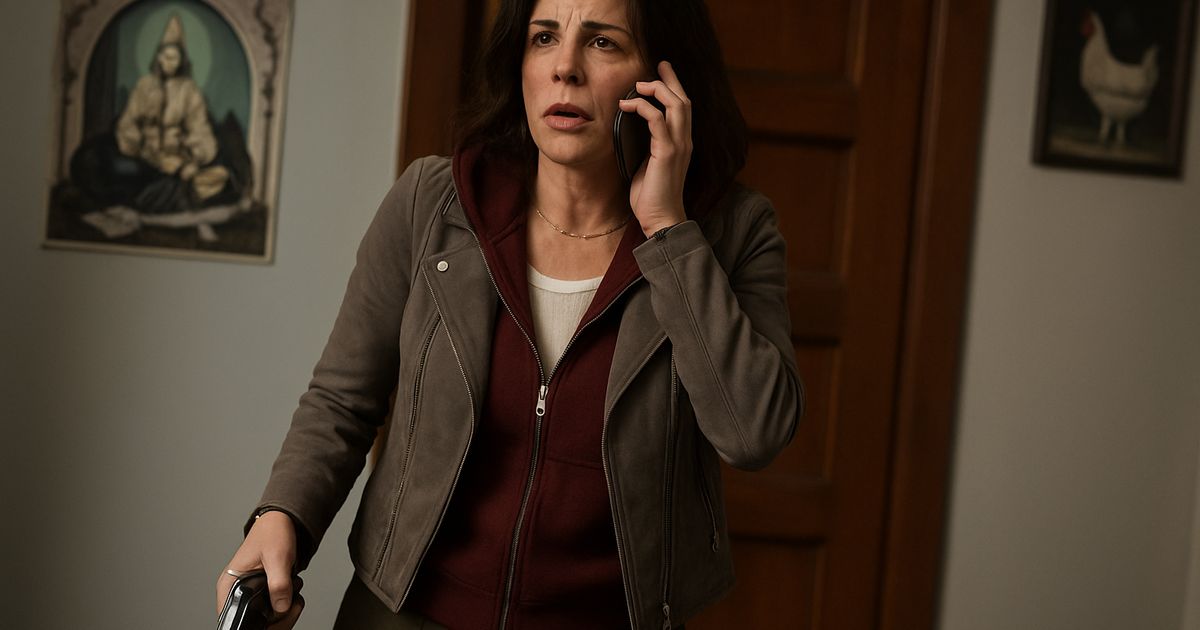
In a stunning display of franchise resilience, Paramount and Spyglass Media's Scream 7 is screaming its way to a historic box office debut. Early weekend estimates project a North American opening of $60 million or more, which would easily set a new record for the 30-year-old horror series. The film earned a massive $28.8 million on Friday (including previews), already the best opening day in the franchise's history. This performance is propelling the overall weekend box office to an estimated $110.3 million, a staggering 103% increase over the same weekend last year. The debut decisively outperforms the previous record-holder, 2023's Scream VI, and signals a powerful resurgence for the iconic slasher series.
The success comes despite a significant casting shake-up. Scream 7 proceeds without the star power of Jenna Ortega and Melissa Barrera, who were central to the previous two installments and their appeal to a Gen Z audience. Instead, the film has doubled down on its original legacy characters, bringing back Neve Campbell's Sidney Prescott for the first time since 2011's Scream 4 and reuniting her with Courteney Cox's Gale Weathers. The film also marks the directorial return of Kevin Williamson, the franchise's original screenwriter and creative architect, who last directed 1999's Teaching Mrs. Tingle. This strategic return to roots appears to be a masterstroke, tapping directly into the nostalgia of the franchise's core fanbase.

The Anatomy of a Record-Breaking Debut
The box office metrics for Scream 7 reveal a fascinating audience composition and marketing success. According to Screen Engine/Comscore PostTrak exit polls, a dominant 56% of the audience attended because it's "part of a franchise they love," while 30% came specifically for the cast. This underscores the powerful IP draw. Premium Large Format (PLF) and IMAX screens are driving a significant 40% of the weekend's gross, indicating audiences are opting for the highest-quality, most expensive viewing experiences. The top-grossing single location is the Regal Times Square in New York City, which had pulled in over $70,000 by Friday night.
Demographically, the audience has aged up slightly compared to Scream VI. Where the 18-24 demographic was the largest at 41% for the sixth film, the 25-34 group leads for Scream 7 at 32%. This shift aligns with the return of the original stars, appealing more to those who grew up with the first films. The ethnic breakdown shows a strong and diverse turnout: Hispanic and Latino audiences made up 30% (down from VI's 38% but still robust), Caucasian audiences were 39%, and Black moviegoers showed a much stronger turnout at 20%, compared to just 12% for the previous film. The film's marketing campaign was notably lean and targeted, with iSpot reporting only $6 million spent on TV spots, focused on high-profile sports programming like the NFL, NBA, and a coveted Super Bowl pre-game spot, supplemented by a heavy social media push.
Behind the Scenes: The Return of the OGs and a Franchise in Flux
The path to Scream 7 was anything but smooth, making its box office triumph all the more remarkable. The film was initially developed as a continuation of the story reboot that began with 2022's Scream (often called Scream 5), focusing on the new "Core Four" led by Barrera's Sam Carpenter and Ortega's Tara Carpenter. However, a series of high-profile departures threw the project into chaos. Director Christopher Landon exited, and stars Melissa Barrera and Jenna Ortega did not return—Barrera was fired following social media comments, and Ortega departed due to scheduling conflicts with Netflix's Wednesday.
This crisis led to a dramatic creative pivot. The producers, including franchise steward Kevin Williamson, orchestrated a full-scale return to the series' origins. They secured the return of Neve Campbell, who had sat out Scream VI due to a salary dispute, and brought in Kevin Williamson to direct his first Scream film. This "back to basics" approach, dubbed a "Neve-aissance" by one rival studio executive cited in the Deadline report, effectively reframed the film as an event for longtime fans. The move capitalized on Campbell's concurrent popularity from her role in Netflix's The Lincoln Lawyer, creating a perfect storm of renewed interest in the veteran actress.
Audience Reception: A Mixed Scream
While the box office numbers are record-breaking, audience and critical reception presents a more nuanced picture. The film has earned a B- CinemaScore from opening night audiences. This is lower than Scream VI's B+ and matches the grade of 2011's Scream 4, which was considered a commercial disappointment. The original 1996 Scream and Scream 2 both earned a B+, the highest in the series. PostTrak's definite recommend score stands at 61%, which is considered very good for any film but is notably lower than the 74% scored by Scream VI.
Early reviews, as hinted in the related headlines, suggest a film that is "brutal but familiar." The return to legacy characters and Williamson's meta-horror sensibilities seems to have delivered a product that satisfies the core fanbase's craving for nostalgia, even if it doesn't radically innovate. The film's success, therefore, appears to be driven more by emotional connection and franchise loyalty than by groundbreaking critical acclaim, a testament to the enduring power of these characters and the world built over three decades.
Historical Context: The Scream Franchise's 30-Year Box Office Journey
To fully appreciate Scream 7's $60 million+ debut, one must look at the franchise's historical performance. The original Scream (1996) was a genuine phenomenon, opening to $6.3 million but legging out to $103 million domestically on a $14 million budget, single-handedly reviving the slasher genre. Scream 2 (1997) opened to $32.9 million and finished with $101.3 million domestic. Scream 3 (2000) opened to $34.7 million, finishing with $89.1 million. After an 11-year hiatus, Scream 4 (2011) stumbled, opening to just $18.6 million and finishing with $38.1 million domestic, a low point that put the series back on ice.
The 2022 soft reboot, simply titled Scream, successfully revived the franchise with a $30 million opening and a $81.6 million domestic total, introducing a new generation of characters. Scream VI (2023) then raised the bar, opening to $44.4 million and finishing as the franchise's highest-grossing film worldwide with $168.9 million. Scream 7's projected $60 million+ opening isn't just an incremental step up; it's a 35% increase over the previous record, representing the single largest leap in opening weekend performance the series has ever seen. It demonstrates that the franchise has not only recovered from its 2011 misstep but has expanded its audience reach and commercial ceiling significantly.
Why It Matters: Beyond the Box Office Numbers
The success of Scream 7 is about far more than a single weekend's gross. It serves as a potent case study in modern franchise management, illustrating a critical and often overlooked principle: audience trust is the ultimate currency. In an era where studios frequently recast, reboot, or reimagine legacy properties with mixed results, Scream 7 shows that a course correction rooted in authenticity can resonate powerfully. The film's producers listened to a clear fan desire—the return of Sidney Prescott—and delivered it with the original creative voice at the helm. This wasn't a cynical nostalgia grab; it was a responsive and respectful engagement with the franchise's core identity. In a landscape cluttered with IP extensions that feel manufactured, this authenticity cut through the noise.
Furthermore, the film challenges prevailing Hollywood wisdom about demographic targeting. The industry's recent focus has been intensely on capturing Gen Z, often at the perceived expense of older millennials and Gen X. Scream 7's strategy—and its result—proves there is immense, undervalued economic power in the 25-34 and 35+ demographics. These audiences have disposable income, deep emotional connections to properties from their youth, and are motivated by event cinema that honors legacy. The film's marketing, heavy on sports and social media rather than broad linear TV, also shows how to efficiently target this specific cohort. The lesson for studios is clear: do not abandon the audiences that built your franchises in the first place. A balanced approach that serves multiple generations can yield the greatest reward.
Finally, this performance reinforces the unique position of the horror genre in the theatrical ecosystem. While other genres have struggled post-pandemic or migrated to streaming, horror remains a must-see, communal big-screen event. It is relatively budget-conscious (though Scream 7's budget is not disclosed, the series is known for moderate costs), driven by passionate fandom, and less reliant on the international box office, which can be fickle. Scream 7 is a beacon for mid-budget filmmaking and proves that well-managed horror franchises are among the most stable and valuable assets a studio can own.
What's Next for Ghostface and the Box Office?
The immediate future for Scream 7 will be defined by its hold in subsequent weekends. The B- CinemaScore and lower PostTrak recommend score suggest word-of-mouth may not be as strong as for Scream VI, which could lead to steeper declines. However, the lack of major horror competition in the coming weeks provides a clear runway. The film's performance will be closely watched to see if it can surpass Scream VI's $168.9 million global total to become the undisputed highest-grossing film in the franchise. Early international numbers are promising, with a current global cume of $177.3 million from 79 markets, led by the UK with $26.3M.
For the franchise's long-term future, this success all but guarantees an Scream 8. The central question will be its creative direction. Does the series continue with Sidney and Gale's story, potentially as a final chapter? Does it attempt to reintroduce a new generation of characters, perhaps with a legacy star like Neve Campbell in a mentor role? Or does it pursue an anthology model? The triumph of the "Neve-aissance" will heavily influence these decisions. Furthermore, the film's success validates Kevin Williamson's vision and could see him take a more permanent creative leadership role moving forward. For audiences, the key takeaway is that the Scream franchise, against significant odds, is more vital than ever, proving that in Hollywood, sometimes the best way forward is to honor what came before.