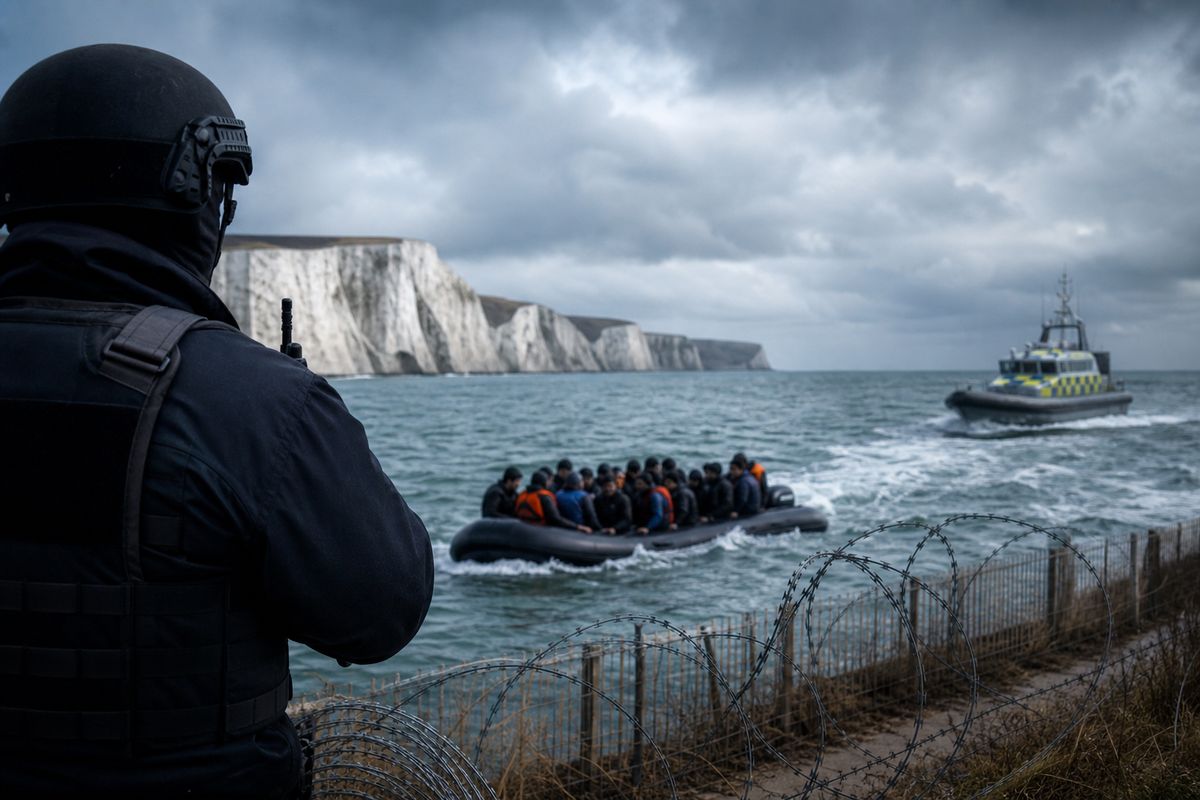
Border Enforcement Pays Off: Sharp Declines on Two Continents
Early 2025 has delivered a surprising pair of headlines for border security watchers. On one side of the world, the number of people crossing the English Channel in small boats has fallen sharply, coinciding with a major expansion of UK enforcement operations. On the other, the European Union has reported a 20% drop in irregular border detections during the first months of the year. And in a less heralded but equally striking development, the Bastar region of central India has recorded a record number of Maoist surrenders alongside a dramatic reduction in violence as the security footprint there expands.
These three stories, while separated by geography and context, share a common thread: aggressive state action at borders and in conflict zones is producing measurable results. For policymakers and the public alike, the question is whether these declines are sustainable or simply a temporary lull before the next surge.
The data comes from multiple sources. The UK Home Office has not released specific figures for Channel crossings in early 2025, but press reports indicate a marked drop compared to the same period last year. Meanwhile, the European Border and Coast Guard Agency (Frontex) reported a 20% year-on-year decline in detections at EU external borders in the first quarter of 2025. And in India's Chhattisgarh state, police data shows that over 300 Maoist insurgents surrendered in the first four months of 2025, the highest number ever recorded in that period.
Let's break down each development in detail.

UK Channel Crossings: Enforcement Expansion Bites
The English Channel remains one of the most trafficked illegal migration routes in Europe. But the dynamic appears to be shifting. The UK government has been steadily increasing its border enforcement apparatus, including new detention facilities, enhanced maritime patrols, and a controversial agreement with France to increase joint patrols on French beaches.
The sharp fall in crossings is noteworthy because it comes despite push factors that usually drive migration up: conflicts in the Middle East, economic instability in parts of Africa, and a backlog of asylum claims in Europe. If enforcement alone can depress numbers, it suggests that deterrence strategies can work, at least in the short term.
Critics argue that the fall may be temporary. Smugglers adapt quickly, shifting to other routes or methods. And the humanitarian cost remains high: even with fewer crossings, deaths in the Channel have not disappeared. But for now, the UK government is claiming a victory for its border policies.
The Mechanics of Deterrence
The UK has deployed a mix of measures: increased surveillance drones, new Rapid Deployment Teams, and a tougher stance on returns. The UK Border Force has also been working more closely with the French authorities, leading to more interceptions before boats even launch. The result is a squeeze on the supply side of the smuggling business.
But deterrence alone is rarely enough. Long-term solutions require addressing the root causes of migration and establishing legal pathways. The UK has been slow on both fronts, and the spike in crossings in previous years shows that enforcement without alternatives can backfire.
EU Border Crossings Drop 20%: What’s Behind the Figures?
The 20% drop in EU border detections reported by Frontex is a big deal. It marks the first significant decline since the post-pandemic recovery in global migration. The data covers all external EU borders, including the Mediterranean, Western Balkans, and Eastern land borders.
Several factors are at play. First, the gradual implementation of the European Travel Information and Authorisation System (ETIAS) has added a layer of pre-travel screening for visa-exempt nationals. While ETIAS is not yet fully operational, its anticipation has led some would-be irregular migrants to reconsider. Second, EU countries have been reinforcing their national borders with fences, technology, and personnel. Third, cooperation with source and transit countries has improved, particularly with Turkey, Libya, and Tunisia.
But the fall is not uniform across all routes. The Western Balkans route, for example, saw a steeper decline than the Central Mediterranean. And the numbers remain high in absolute terms: hundreds of thousands of detections still occur each quarter. The decline is welcome, but it is not a solution.
The Role of EU External Action
The EU has also stepped up its external border management through Frontex, which now has over 10,000 standing corps officers. Joint operations at sea and on land have reduced the ability of smugglers to operate with impunity. Additionally, the EU has funded border management projects in North Africa and the Sahel, aiming to stop migration before it reaches Europe.
These efforts are controversial. Human rights groups argue that some EU-funded border controls in third countries lead to pushbacks and abuses. But from a purely statistical standpoint, the drop in detections suggests that the strategy is having an effect.
Bastar: Record Maoist Surrenders as Security Footprint Expands
Thousands of kilometres away from the English Channel and the EU's Mediterranean shores, a similar pattern is emerging in the forests of central India. The Bastar region of Chhattisgarh, long a stronghold of the Maoist insurgency (also known as Naxalites), has seen a remarkable shift in 2025.
According to local police reports, a record number of Maoist cadres have surrendered in the first months of 2025, and violent incidents have fallen sharply. The trigger? A sustained expansion of the security footprint: new police camps, better roads, and more aggressive counter-insurgency operations. The state government's surrender and rehabilitation policy also offers financial incentives, job training, and land to those who lay down arms.
A Strategy of Encroachment
For decades, the Maoist insurgency thrived in areas where the state had little presence. By establishing permanent security camps in previously inaccessible areas, the government has gradually cut off supply lines and safe havens for insurgents. The result is that many fighters are choosing to surrender rather than face capture or death.
The Bastar model is not new, but it is working now in a way it hasn't before. The steady decline in violence has allowed development projects to proceed, which in turn reduces grievances that fuel recruitment. It's a virtuous cycle, but one that requires constant vigilance.
Comparisons with Global Counter-Insurgency
The approach in Bastar echoes strategies used in other insurgencies, such as the Colombian government's campaign against FARC or the Philippine military's fight against communist rebels. The key ingredients are security presence, development, and rehabilitation. The Indian government has learned from earlier failures where force alone was used without the softer elements.
What This Means For You
So what do these three border and security stories mean for the average reader? Plenty. If you travel frequently between the UK and Europe, the drop in Channel crossings may reduce delays caused by migrant interceptions on ferries and in the Eurotunnel. But don't expect your passport checks to become any faster. The tightening of borders is likely to continue, and the introduction of ETIAS and the UK's Electronic Travel Authorisation (ETA) will add new hurdles for travellers.
For those concerned about humanitarian issues, the news is mixed. Fewer irregular crossings means fewer people risking their lives, but it also means that those in need of protection may find it even harder to seek asylum. If you are a policymaker or activist, the data from Europe and India suggests that enforcement can work but must be paired with legal pathways and humane treatment to be sustainable.
And finally, if you live in a region affected by insurgency or organised crime, the Bastar example shows that a patient, long-term strategy of security consolidation and development can yield results. It is not quick, it is not cheap, but it is possible.
The Bigger Picture: Enforcement Works, But At a Cost
All three stories demonstrate that when states invest heavily in border enforcement or counter-insurgency operations, they can achieve short-term declines in unwanted activity. But the underlying drivers are not always addressed. Migration flows shift to other routes. Insurgencies evolve into new forms. Smugglers and militants adapt.
The EU's 20% drop may simply mean that migrants are using different crossing points, perhaps more dangerous ones. Similarly, Channel crossings could rise again if smugglers find a new vulnerability. And in Bastar, the Maoists may melt away into the forest only to re-emerge elsewhere.
What is clear is that the era of lax border enforcement is over. From Dover to Delhi, governments are taking control of their borders with technology, personnel, and deterrence policies. Whether that control will be effective in the long run, or whether it will create new problems, remains to be seen. For now, the numbers are down, and that is a notable achievement worthy of attention.