The Media Firestorm Over a Blockbuster NBA Trade
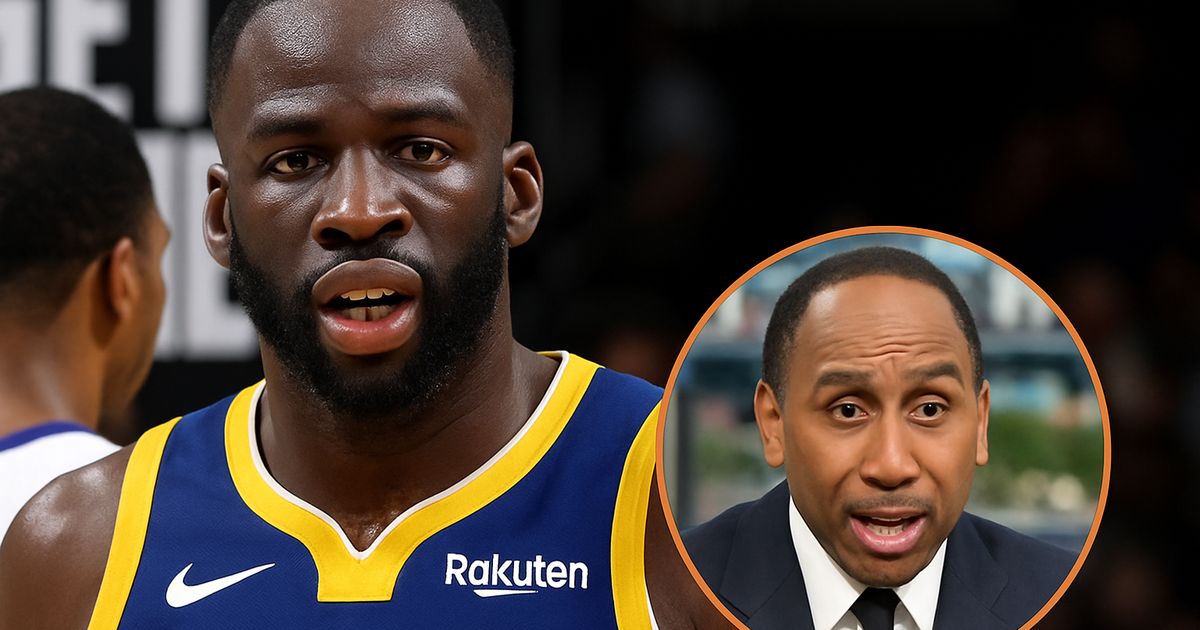
The world of NBA media and analysis is rarely short on heated debate, but a recent clash between two of its most prominent and polarizing voices has ignited a conversation that cuts to the heart of how basketball decisions are evaluated. On March 2, 2026, ESPN's Stephen A. Smith used his platform on "First Take" to deliver a pointed rebuttal to Golden State Warriors forward Draymond Green, accusing him of being "incredibly unfair" in his defense of former Dallas Mavericks general manager Nico Harrison. The flashpoint was Green's commentary on the controversial trade that sent global superstar Luka Doncic to the Los Angeles Lakers. Smith, joined by analysts Brian Windhorst and Vince Goodwill, argued that Green's framing of the criticism as a personal attack on Harrison missed the substantive, process-driven critique of one of the most consequential player moves in recent league history.
This is not a minor squabble over basketball semantics. It represents a fundamental tension in modern sports discourse: the intersection of player-led media, traditional punditry, and the evaluation of front-office performance. Green, a four-time NBA champion and vocal proponent of what he calls the "new media," used his podcast, "The Draymond Green Show," to suggest that narratives surrounding Harrison and the Doncic deal were hypocritical and overly harsh. Stephen A. Smith, representing a more established media perspective, fired back, insisting that the criticism was never about Harrison the person, but squarely about the perceived failure in asset management and trade execution. The debate has forced fans and analysts alike to re-examine the 2025 trade that reshaped the league's power structure.

Deconstructing the Controversial Luka Doncic Trade
To understand the current debate, one must revisit the transaction at its core. In 2025, the Dallas Mavericks, under the leadership of then-GM Nico Harrison, traded 25-year-old phenom Luka Doncic to the Los Angeles Lakers. The return centered on superstar big man Anthony Davis. While Davis is a former champion and defensive stalwart, the trade was immediately scrutinized on several fronts. First, and most glaringly, was the age and injury differential. Doncic, at 25, was entering his prime as one of the most prolific offensive engines the game has ever seen, a perennial MVP candidate with global marketing appeal. Anthony Davis, while immensely talented, was older and had a well-documented history of missing significant time due to various injuries.
However, as Stephen A. Smith meticulously argued, the primary "crime" of the trade was not merely the player-for-player swap. It was the perceived failure of process. Smith emphasized that the Mavericks did not put Doncic on the open market to solicit the best possible return. "That was the crime, that you didn't put him on the market and literally see what you could get for him," Smith stated. He pointed to other recent blockbuster trades for superstars that yielded massive hauls of future first-round draft picks, young players, and swap rights. In comparison, the return for a player of Doncic's caliber—a singular, top-five global asset—was viewed by many as underwhelming and lacking in future-oriented assets. Smith posed the rhetorical question that encapsulates the critique: "If Luka Doncic had been put on the open market by Nico Harrison, can we even sit here and imagine the assets that would have been offered for him?" This question of opportunity cost and maximization of value is the bedrock of the professional criticism.
Profiles in Conflict: Draymond Green vs. Stephen A. Smith
The debate is amplified by the distinct profiles and platforms of its two main protagonists. Draymond Green is not just an active player; he is a media entity. His successful podcast allows him to control his narrative and offer insider perspectives that traditional journalists might not access. He positions himself as a voice for players, often challenging what he perceives as unfair or hypocritical media narratives. In defending Nico Harrison, Green was likely speaking to the immense pressure and complex variables that front-office executives face, variables that outsiders may not fully appreciate. His defense aligns with his broader "new media" ethos, which often seeks to reframe or debunk mainstream talking points.
Stephen A. Smith represents the apex of traditional, personality-driven sports debate television. His authority is built on decades of access, relationships, and a specific style of forceful, opinionated commentary. In his rebuttal, Smith was careful to establish Green's bona fides, praising him as a "four-time champion, a former Defensive Player of the Year, who will be a Hall of Famer" who "has the credentials to say what he says." This preamble made his subsequent critique more potent. Smith's core argument was about fairness in analysis, not personal animus. He insisted that being fair meant acknowledging that the critique of the Doncic trade was a business evaluation, not a character assassination. "Who has a negative thing to say about Nico Harrison, the person? Nobody," Smith noted, even crediting Harrison's role in building a Finals team in Dallas previously. For Smith, this separation is non-negotiable for credible analysis.
The Role of Serendipity vs. Process
An intriguing subplot in this saga, acknowledged by Smith, is the role of luck. Following the Doncic trade, the Dallas Mavericks' fortunes bottomed out, leading to a high lottery pick. That pick translated into the No. 1 overall selection in the 2026 NBA Draft, which they used to select generational prospect Cooper Flagg. This outcome has allowed some to retrospectively justify the Doncic trade, framing it as a painful but necessary reset that yielded a new cornerstone. Smith, however, was unequivocal in dismissing this as a vindication of the original process. He argued that benefiting from lottery luck does not erase the perception of the trade itself. The decision-making at the time of the transaction must be evaluated on its own merits, independent of subsequent random events. This highlights a classic front-office dilemma: should a decision be judged by the process or the outcome? Analysts like Smith tend to emphasize process, as it is the only element within an executive's direct control.
The Broader Implications for NBA Front-Office Accountability
This clash is a microcosm of a larger, ongoing evolution in how NBA front offices are scrutinized. The era of the omnipotent, untouchable executive is over. With the proliferation of salary cap analysts, draft experts, and data-driven websites, every move is dissected in real-time by a sophisticated public. The trade of a superstar like Luka Doncic is the ultimate test of an executive's acumen. The criticism Harrison faced is not unique; executives like Rob Pelinka (before the Lakers' 2024 title), Tim Connelly after the Rudy Gobert trade, and others have faced similar torrents of analysis. What makes this instance different is the intervention of a high-profile player like Green attempting to shield an executive from that analysis, framing it as a personal attack rather than professional evaluation.
Furthermore, the debate touches on the valuation of superstar assets in the modern NBA. The established market rate for a top-5 player under team control has been set by trades like Kevin Durant to Phoenix (Mikal Bridges, Cam Johnson, four first-round picks, a pick swap) and Donovan Mitchell to Cleveland (Lauri Markkanen, Ochai Agbaji, three first-round picks, two pick swaps). Against this backdrop, a one-for-one swap, even for a player of Anthony Davis's caliber, appears anachronistic. It suggests a failure to leverage the asset's full value across the league, potentially leaving future draft capital and young talent on the table. This is the analytical heart of the criticism that Smith insists Green is unfairly glossing over.
Why It Matters
This dispute matters far beyond the egos of two media personalities or the legacy of one general manager. It signifies a critical shift in the power dynamics of sports narrative creation. Draymond Green's "new media" stance represents a growing trend of athletes bypassing traditional filters to shape discourse directly. This can provide valuable, nuanced insider perspective, but it also risks conflating professional critique with personal disrespect, potentially insulating decision-makers from legitimate accountability. When a player of Green's stature defends an executive, it can sway public opinion by framing the debate in terms of locker-room loyalty and insider understanding versus outsider ignorance.
Conversely, Stephen A. Smith's forceful response defends the role of external, process-based analysis. His argument insists that the multi-billion dollar business of the NBA demands that monumental decisions be held to a transparent, comparative standard, regardless of how well-liked an executive may be. This tension is the new normal. For fans and consumers of NBA content, the key takeaway is to recognize these competing frames. It is essential to separate the argument about *how* to critique from the substance of the critique itself. The question is not whether Nico Harrison is a good person or a smart basketball mind in general—by all accounts, he is both. The question is whether the process and return in trading Luka Doncic represented optimal franchise management. One can respect Harrison personally and Green's perspective as a player while still agreeing with Smith's assessment of the trade. This episode teaches us to be discerning consumers of sports debate, to demand that criticism be substantive and process-driven, and to be wary of narratives that attempt to shut down valid discussion by mischaracterizing its intent.
What to Watch For Going Forward
The reverberations from this debate will be felt in several areas. First, watch the relationship between active players and the media ecosystem. Will more players follow Green's lead in using their platforms to defend front-office figures, creating a new layer of advocacy? Second, observe how Nico Harrison's career trajectory is discussed. As Smith starkly put it, he believes the Doncic deal "will forever stain" Harrison's executive career. Whether future success elsewhere can overcome that stain will be a lingering topic. Third, monitor the Dallas Mavericks' rebuild. The acquisition of Cooper Flagg creates a compelling "what if" scenario. If Flagg becomes a superstar and leads Dallas to contention, the narrative around the Doncic trade will inevitably soften, rightly or wrongly, proving Smith's point about the fickle nature of outcome-based analysis.
Finally, this clash sets a precedent for how blockbuster trades are evaluated. The standard of "Did you maximize the asset's value across the entire league?" is now firmly entrenched in the analytical toolkit. Future trades involving superstars will be immediately measured against the Doncic deal and the subsequent debate it spawned. The core lesson for fans, executives, and commentators alike is that in today's NBA, major decisions exist in a permanent, transparent arena of comparison and critique. Personal respect is important, but it cannot be used as a shield from professional evaluation of billion-dollar decisions that define franchises for a decade. The Smith-Green debate has, if nothing else, made that distinction abundantly clear.