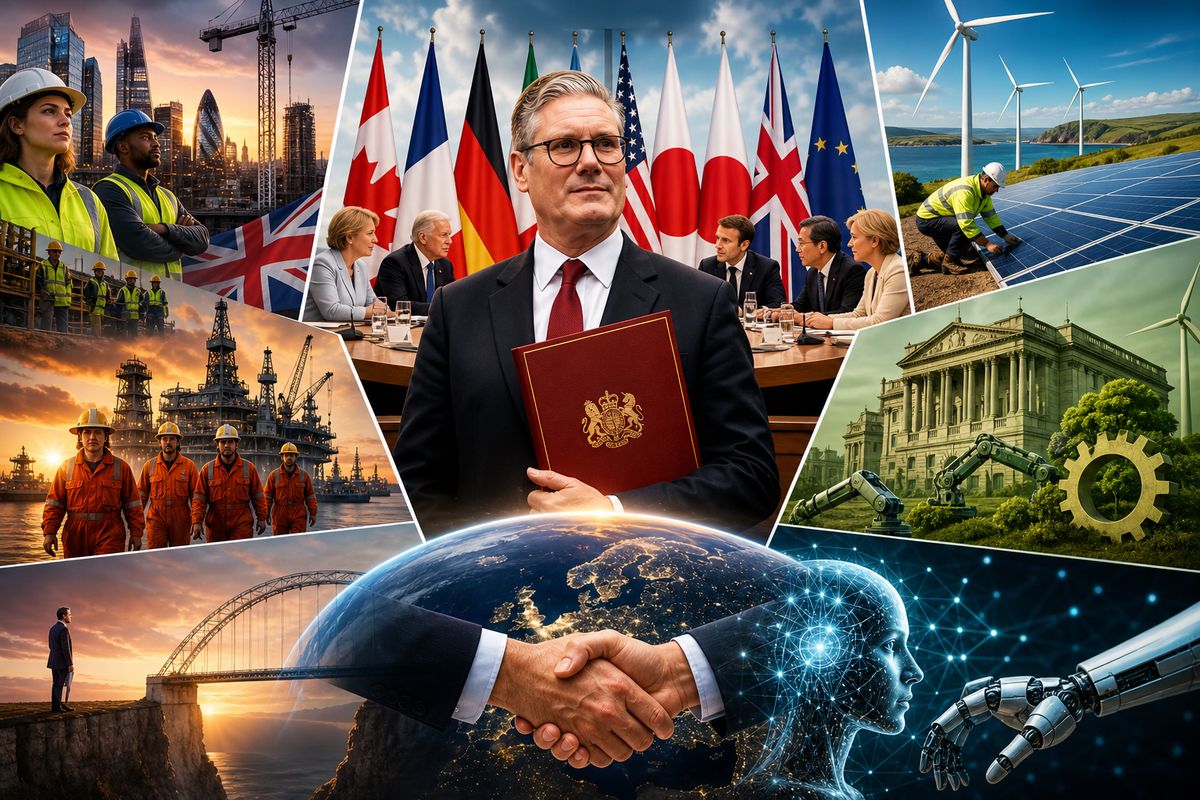
G7 investment boost for UK jobs and clean energy: what the Prime Minister secured
The Prime Minister has returned from the G7 summit with what his team is calling a landmark investment package aimed at delivering jobs, energy security, and a shot in the arm for the UK's artificial intelligence sector. Announced on 20 July 2026, the deal promises to funnel billions of pounds into clean energy projects, support for oil and gas workers transitioning to new roles, and a major push on AI infrastructure. It's a big moment for a government that has staked its reputation on economic growth and net-zero leadership. But the devil, as ever, is in the details.
According to official statements from GOV.UK, the Prime Minister "secured major jobs and energy investment at G7 to deliver growth and security at home." The language is characteristically bullish, but this is more than just spin. The package includes commitments from international investors and allied governments to fund everything from offshore wind farms in the North Sea to carbon capture clusters in the North East. And it ties directly into the government's broader strategy to make Britain a clean energy superpower by 2030, a target that Ed Miliband, the Energy Secretary, has championed relentlessly.

The details: what the investment package actually contains
Exact figures remain under wraps for some elements, but the headlines are telling. The related story from multiple sources highlights that "more oil and gas workers [are] to be supported into jobs" as part of a just transition fund. That's a clear signal that the government is trying to manage the political fallout of phasing out fossil fuels while keeping the unions onside. Alongside that, Miliband has announced that "clean economy brings jobs and growth" and that £100 billion has been invested in green energy across the UK so far this year. That's not pocket change. It covers everything from new solar farms in the South West to grid upgrades in Scotland.
The AI component is interesting, too. The G7 communiqué included a specific pledge to boost AI research and data centre construction, with the UK positioning itself as a hub for what Downing Street calls "responsible AI growth." The Public Sector Executive headline captured this neatly: "UK secures major G7 investment boost to drive jobs, clean energy, and AI growth." The three are being bundled together as a single narrative of modernisation, and the Prime Minister is betting that voters will buy it.
Support for oil and gas workers: a critical piece of the puzzle
The package specifically earmarks funding for retraining and reskilling programmes aimed at the estimated 200,000 workers currently employed in the UK's oil and gas sector. This is not just about altruism. It's about political survival. The government knows that if the transition to clean energy leaves entire communities behind, the backlash could be fierce. The related headlines about "more oil and gas workers to be supported into jobs" appear to be a direct response to criticism from trade unions and some Labour backbenchers that the green agenda is moving too fast.
Background: the Labour government's green industrial strategy
Keir Starmer's government came to power in 2024 with a manifesto promise to make Britain a clean energy leader. Since then, it has created Great British Energy, a publicly owned energy company, and set a target of decarbonising the electricity grid by 2030. But the path has been bumpy. Inflation, planning delays, and global supply chain issues have slowed some projects. The G7 deal is partly about resetting the narrative and showing that the government can still attract foreign capital.
Ed Miliband, the Energy Secretary, has been the driving force behind this push. His recent announcement that "clean economy brings jobs and growth, says Miliband as £100bn invested in green energy" was met with cautious optimism from industry groups but scepticism from those who point to the gap between investment announcements and actual installations. The G7 package, with its multi-government backing, gives Miliband more ammunition to argue that the transition is real and irreversible.
Analysis: bridging the gap between promises and reality
The G7 jobs and energy investment is undoubtedly a win for the Prime Minister in diplomatic and rhetorical terms. But the real test is whether it translates into tangible outcomes for the people who need it most. Take England's east coast, for example. Related headlines paint a stark picture: "Surrounded by windfarms but out of work: the reality of the green jobs boom on England's east coast." That's a sobering counterpoint to the optimistic press releases.
Communities in Norfolk, Suffolk, and Lincolnshire are indeed surrounded by offshore wind turbines, yet many residents still struggle to find good jobs. The new investment promises training centres and local supply chain contracts, but similar pledges have been made before. The difference this time, officials argue, is that the funding is tied to binding agreements with developers and local authorities. We'll see.
The AI angle: a double-edged sword
The inclusion of AI in the G7 deal is shrewd. AI is the buzzword of the moment, and attracting data centres and research labs could create thousands of high-skilled jobs. But it also demands enormous amounts of electricity, which could strain the very grid that the clean energy push is trying to decarbonise. Balancing these competing needs will be a challenge for the National Grid and for local planners.
The bigger picture: global competition and domestic challenges
This G7 investment package does not exist in a vacuum. It is part of a global race to dominate the clean energy and technology industries of the future. The United States has its Inflation Reduction Act, offering massive subsidies for green manufacturing. The European Union has its Green Deal Industrial Plan. The UK, outside the EU and with a smaller fiscal capacity, has to work harder to attract capital. The G7 deal is, in many ways, a multilateral attempt to level the playing field and signal that Britain is open for business.
But there is a deeper tension here. The G7 itself is a club of wealthy nations that have historically been the biggest emitters. Now they are asking developing countries to leapfrog fossil fuels without offering the same financial support. The UK's domestic focus on oil and gas worker retraining is a microcosm of that larger challenge: how do you manage a transition that is both just and rapid? The answer is not yet clear, but the £100 billion figure and the new G7 commitments are at least a starting point.
Another layer is domestic politics. The Conservative opposition has accused the government of being too ideological about net zero, warning that the transition will cost jobs and raise bills. The G7 deal gives Starmer cover to argue that international investors back his plan. Meanwhile, the Green Party and some Labour MPs want faster action on phasing out oil and gas entirely. The package's support for fossil fuel workers is a compromise designed to keep the coalition together. Whether it holds depends on how quickly the new jobs materialise.
Conclusion: momentum but no guarantees
The Prime Minister's G7 haul is a genuine achievement. It delivers billions in pledged investment, creates a framework for supporting oil and gas workers, and ties together clean energy, AI, and job creation in a single narrative. But the gap between a summit communiqué and a crane on a construction site is vast. The government will need to show progress in the coming months, especially in the coastal communities that feel left behind. For now, the headlines are good. The hard work starts now.