M25 motorway disruption returns, and it is not letting up
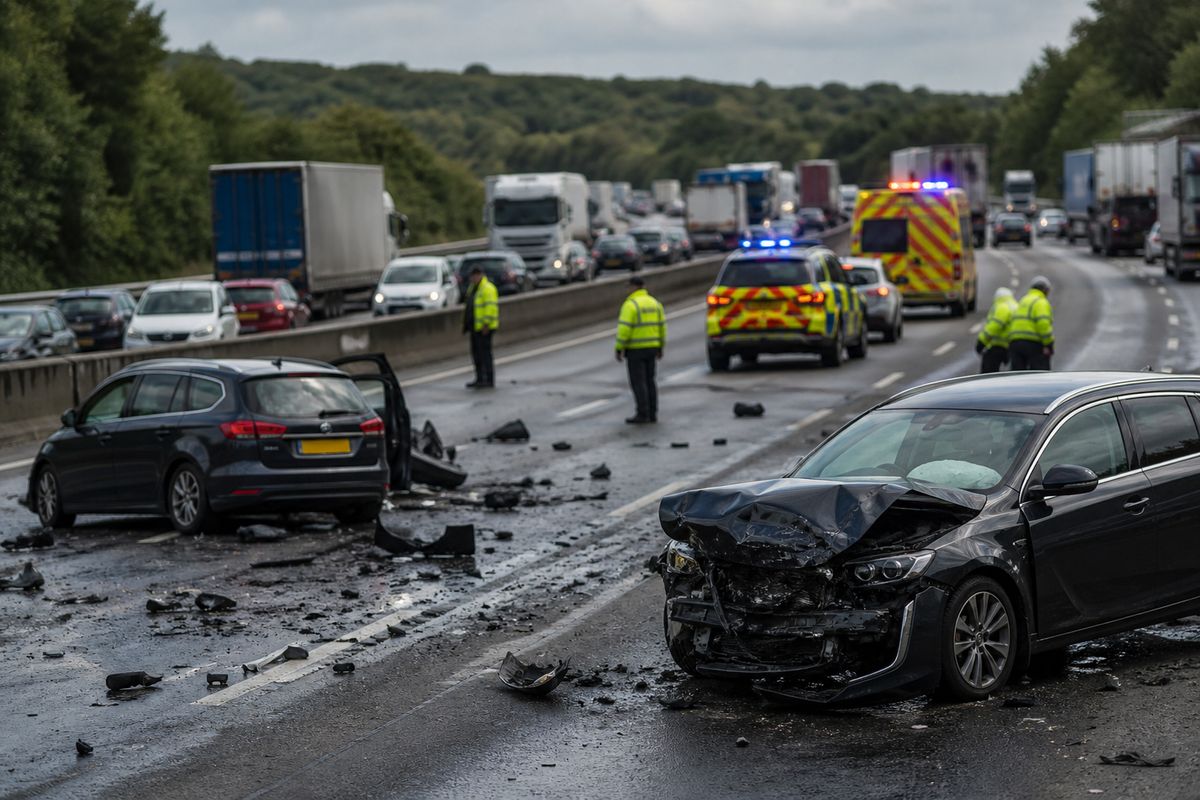
The M25 motorway is back in the headlines in early September 2026, after a run of serious collisions and lane closures that again underline how quickly Britain’s busiest orbital road can seize up. In the space of four days, there is a fatal collision involving a pedestrian, a multi vehicle crash that leaves a motorcyclist injured, and another collision that shuts two lanes and triggers long tailbacks.
None of this is especially surprising to regular users. But the clustering of incidents at the start of the month is a reminder of something drivers often feel in their bones, even if they do not put it in these terms: the M25 is not just busy, it is brittle. When it works, it moves an enormous volume of people and freight around London and the South East. When it breaks, it breaks loudly, and the knock on effects travel far beyond the hard shoulder.
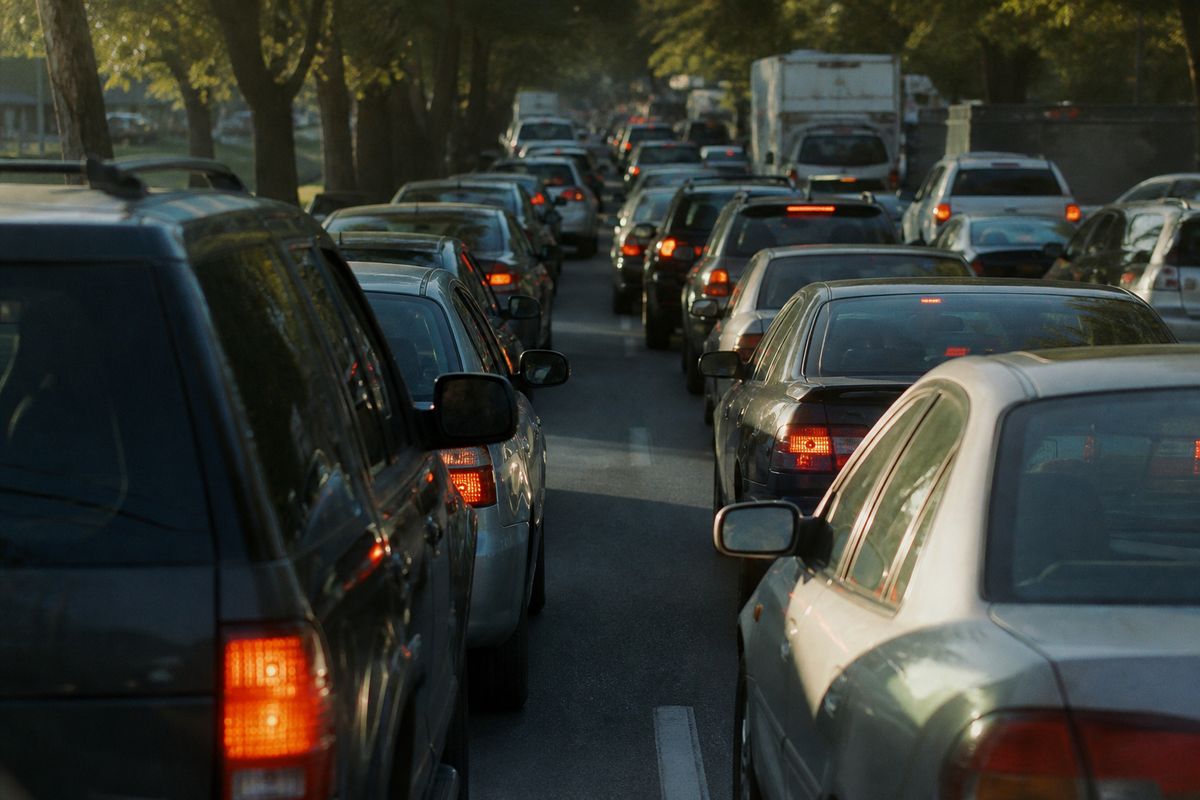
National Highways reports congestion stretching to four miles after the latest collision on 4 September 2026, with two lanes shut. That is the kind of disruption that turns a routine commute into a missed appointment, a delayed delivery, or a long, expensive detour. And because the M25 has few easy substitutes, the delay does not neatly disperse, it tends to spread.

M25 motorway incidents, what happens in the first week of September 2026
The most serious development comes on 1 September 2026, when police launch an appeal for witnesses after a pedestrian dies in a collision involving multiple vehicles on the M25. The source material does not provide the exact junction, time, or further personal details, and it would be wrong to speculate. But the fact that the incident involves a pedestrian on a live motorway immediately raises difficult questions about how and why someone ends up in that environment in the first place.
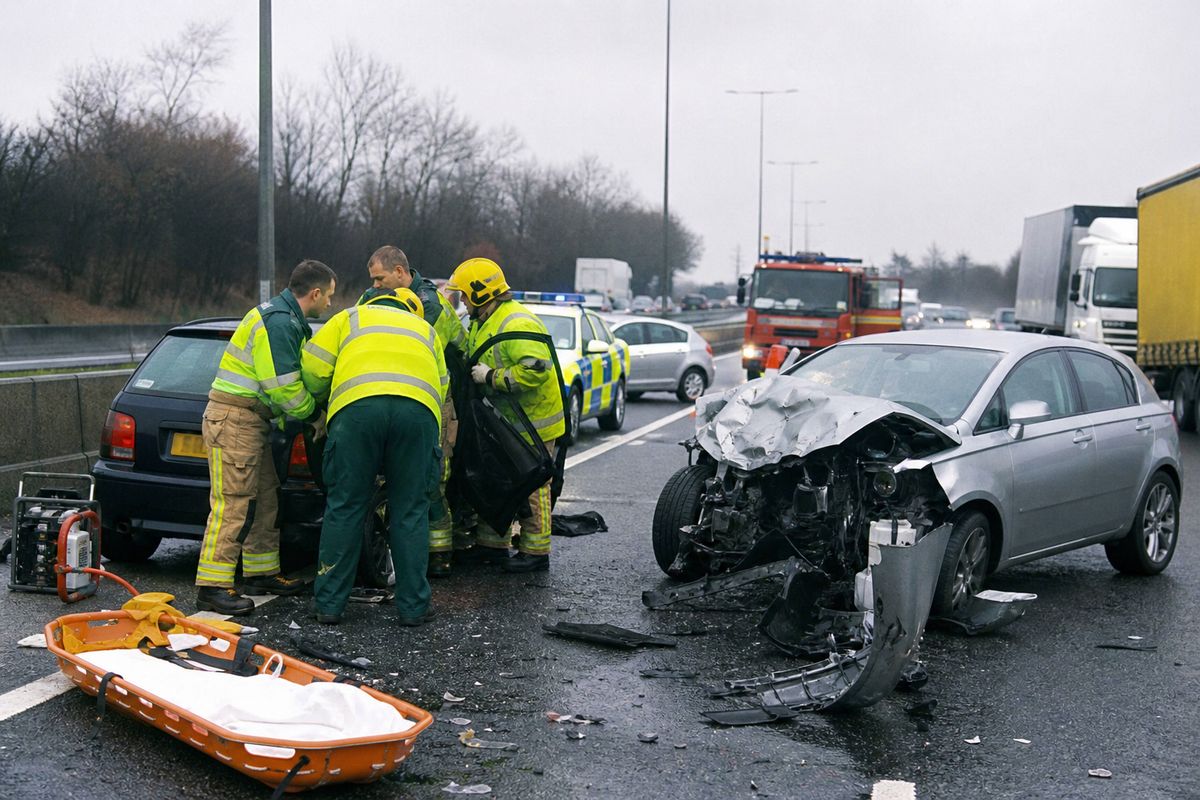
A day later, on 2 September 2026, three lanes on a section of the M25 reopen after a crash involving a lorry, a car and a motorbike. A biker is injured. Again, the basic facts are clear, but the deeper causes are not set out in the available material. What is clear is the operational impact: multiple lanes are closed, then gradually reopened, which is typical when emergency services need space to work, vehicles need to be recovered, and the carriageway needs to be made safe.
Then on 4 September 2026, two lanes are shut after another vehicle collision. National Highways warns of long delays, with congestion of four miles. That detail matters because it gives a sense of scale. Four miles of stationary or slow moving traffic on the M25 is not a minor inconvenience, it is a system level problem, particularly when it hits at peak times or on already stressed stretches.
It is also worth noting what is not happening on 12 September 2026 itself. A live traffic update service drawing on National Highways transport data feeds reports no hold ups on the M25 at 14:57 on Saturday 12 September 2026. That contrast is telling. The road can look calm, even benign, and then one incident flips the picture in minutes.
The bigger 2026 pattern, fires, spills, policing incidents and the everyday grind
Early September’s collisions sit on top of a broader 2026 story: the M25 is repeatedly disrupted by a mix of crashes, vehicle fires, fuel spills, and police incidents. In August 2026, a lorry fire triggers gridlock after the motorway is shut at 17:14 BST on 10 August. By 11 August, National Highways confirms all lanes are open again just after 05:00 BST, but that timeline hints at the reality for drivers, disruption can run through the evening, overnight, and into the next day.
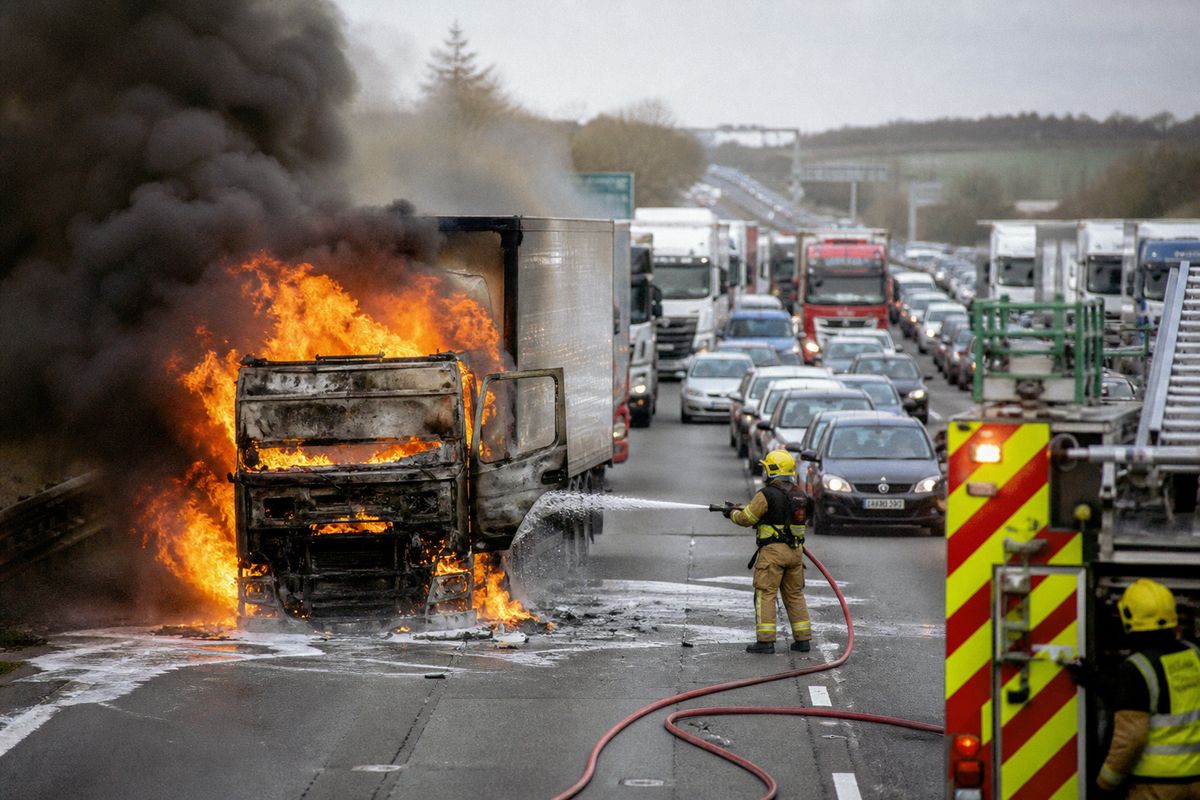
Also in August, a blaze at a Malibu Sun premises creates a risk of explosion and leads to the M25 being closed for about an hour while firefighters tackle flames. A few days later, the Hertfordshire based sun care firm says a major fire disrupts operations, with everyone accounted for. The M25’s vulnerability here is not about driving behaviour at all, it is about geography. Industrial sites, logistics parks, and dense development sit close to the orbital. When something goes wrong nearby, the motorway becomes part of the emergency response footprint.
Earlier in the year, the disruption is just as varied. On 8 June 2026, a fuel spillage causes long delays after several lanes are closed for resurfacing work. On 18 May 2026, the Queen Elizabeth II bridge reopens after a police incident involving two police forces, and the resulting congestion is severe. In March 2026, the M25 in Essex shuts after a three lorry crash, with resurfacing required between the junctions for the A12 and the M11. Those are not edge cases, they are the kinds of events that recur on a road carrying huge volumes of mixed traffic.
And then there are the smaller, more human stories that still speak to safety culture. In March 2026, prosecutors show footage of a driver using a phone on his lap on the M25 after he denies using a smartphone navigation app. In May 2026, a court hears that television baker Paul Hollywood is tailgating and speeding at 96mph on the M25, with the explanation linked to a sick cat. These incidents are not equivalent to fatal collisions, but they do illustrate the same underlying theme: risk taking on a high speed, high density road has consequences.
Who is involved, and how the M25 motorway is managed when things go wrong
Several organisations sit at the centre of these incidents, even if they are not always visible to drivers stuck in traffic. National Highways is the body that issues official updates about lane closures, congestion length, and reopening times. Those updates are not just informational, they shape driver behaviour in real time, influencing whether people stay put, divert, or delay travel. They also feed into third party services that aggregate incident data.
Police forces lead on investigations where there are injuries or fatalities, and they are the ones making witness appeals, as in the 1 September 2026 pedestrian death. Fire and rescue services become key players during vehicle fires and industrial blazes near the motorway, such as the Malibu Sun premises incident in August. In those moments, the M25 is effectively an extension of the incident scene, and closures can be driven by safety perimeters, smoke, debris, or the risk profile of the materials involved.
Then there is the freight and logistics ecosystem that depends on the M25. The source material provides a useful snapshot of traffic composition and intensity. The busiest stretch sees 212,636 vehicles a day. Around one in six vehicles is a van, equating to 35,831 light goods vehicles a day, plus lorries. And at 11am beside junction 14, there are 1,433 lorries in one hour, with freight peaking in the middle of the morning rather than the rush hour many people picture. That matters because it challenges the common assumption that the M25 is only a commuter problem. It is a commercial artery all day long.
Those numbers also explain why seemingly modest incidents can have outsized effects. Closing one lane is not removing a small slice of capacity on a quiet road. It is taking away a share of a flow that has nowhere to go, with limited slack in the system to recover later. On a ring road that links major radial routes, ports, airports and distribution hubs, the ripple effects can be immediate.
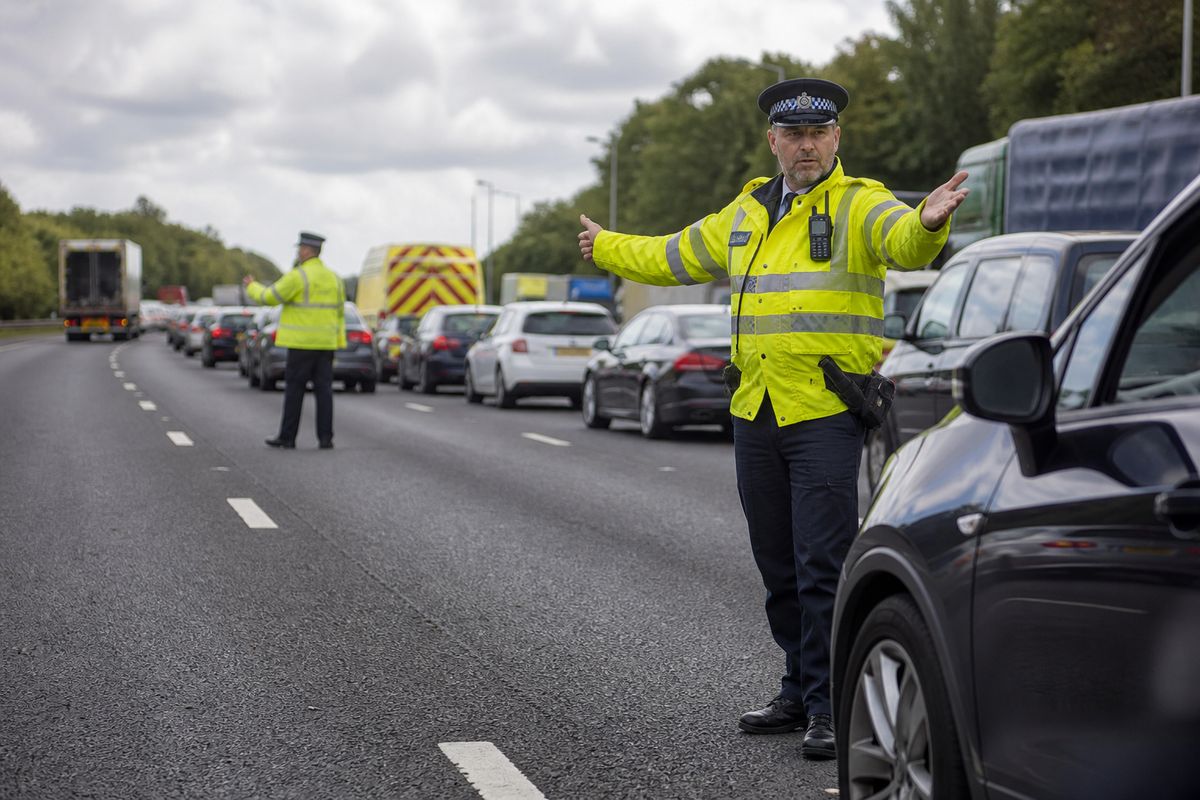
What the September 2026 crashes say about safety and resilience on the M25 motorway
The first point is uncomfortable but unavoidable. A pedestrian death on a motorway is a stark indicator of exposure to extreme danger. Motorways are designed to separate fast moving traffic from vulnerable road users, so when a pedestrian is involved, something has already gone badly wrong. It could be a breakdown, a prior collision, a mental health crisis, or a navigation error. The source material does not specify, so the only responsible conclusion is that the risk is catastrophic once a person is on foot in live lanes, especially in low visibility or heavy traffic conditions.
The second point is about mixed traffic. The 2 September 2026 crash involves a lorry, a car and a motorbike, a combination that is sadly familiar. Motorcycles are less visible, more vulnerable to turbulence and road surface hazards, and more exposed when traffic suddenly slows. Lorries bring mass and momentum, and they can obscure sight lines for everyone else. When these vehicle types interact on a congested, high speed road, the margin for error shrinks. And when a crash does occur, the recovery is more complex, which is why multiple lanes can remain closed for longer.
The third point is that resilience is not just about preventing crashes, it is about how quickly the network can absorb and recover from them. The M25’s status as one of the busiest roads in Europe, as described in the source material, means incidents are not rare. The question becomes: how much disruption does each incident cause, and how effectively can it be contained? Four miles of congestion after a two lane closure on 4 September 2026 suggests that, at least on that day and that stretch, the answer is: not very effectively.
There is also a behavioural layer. The phone on lap case and the speeding case are reminders that enforcement, driver education and social norms still matter. Technology can help, but it cannot fully compensate for distraction, impatience, or the belief that rules are optional when someone is in a hurry. On a road carrying more than 200,000 vehicles a day on its busiest stretch, even a small percentage of risky behaviour translates into a steady stream of near misses.
Why It Matters
The M25 is often treated as a symbol, a punchline about British congestion, or a political talking point. But the early September 2026 incidents show something more practical and more worrying: the motorway is a single point of failure for a huge chunk of the UK’s most economically productive region. When two lanes close and queues run for four miles, it is not just drivers losing time. It is supply chains missing delivery windows, service engineers arriving late, carers and NHS staff stuck between shifts, and small businesses paying for hours that cannot be billed. The costs are real, even if they are rarely itemised in public.
There is also a subtle shift in how disruption is experienced. With live incident feeds and constant updates, drivers now know very quickly that something is wrong. That sounds helpful, and it is, but it can also amplify diversion pressure onto local roads. When thousands of drivers simultaneously try to route around a closure, the surrounding network can clog, turning a motorway incident into a multi borough traffic problem. In other words, the M25 does not fail in isolation. It drags everything nearby with it.
And then there is the safety signal. A pedestrian fatality, a motorcyclist injured, repeated lane closures, and a year dotted with fires, spills and multi lorry crashes, all point to a network operating close to its limits. The source material’s freight figures are especially revealing. If lorry volumes peak mid morning, the traditional focus on commuter rush hours misses a big part of the risk picture. Enforcement, incident response planning, and even driver messaging need to reflect when the road is actually under the most complex load, not when people assume it is busiest.
Looking back, and what comes next for the M25 motorway
Historically, the M25 has always been a paradox. It is built to keep traffic moving around London, yet it has long been associated with congestion and disruption. What feels different in 2026, based on the pattern in the source material, is the variety of incident types and the speed at which disruption escalates. It is not only collisions. It is industrial fires near the carriageway, vehicle fires that lock up the road for hours, fuel spills interacting with planned resurfacing, and policing incidents that can snarl key crossings such as the Queen Elizabeth II bridge.
There are also signs of ongoing development pressure around the motorway. In August 2026, services are approved despite green belt concerns, with one councillor saying he reluctantly supports the application. That kind of decision matters because more services can mean more stopping and starting traffic, more merging and weaving, and more local trips interacting with long distance freight. Fair enough, drivers need facilities. But every new access point and every new adjacent development adds complexity to an already overloaded corridor.
For drivers, the immediate takeaway is basic but not trivial: the M25 can be clear one day and chaotic the next, and the difference is often one incident. For policymakers and operators, the takeaway is harder. The motorway’s busiest stretches carry extraordinary volumes, and the mix includes a high proportion of vans and significant lorry flows at times many people do not expect. That combination makes the case for relentless focus on incident prevention, rapid clearance, and realistic contingency planning. Not glamorous work, but it is the work that stops a four mile queue becoming an all day problem.
Early September 2026 is not a single story, it is a snapshot of a system under strain. The M25 keeps London moving, until it does not. And when it does not, everyone notices.