More Than 30 Face Charges for UW Engineering Building Occupation
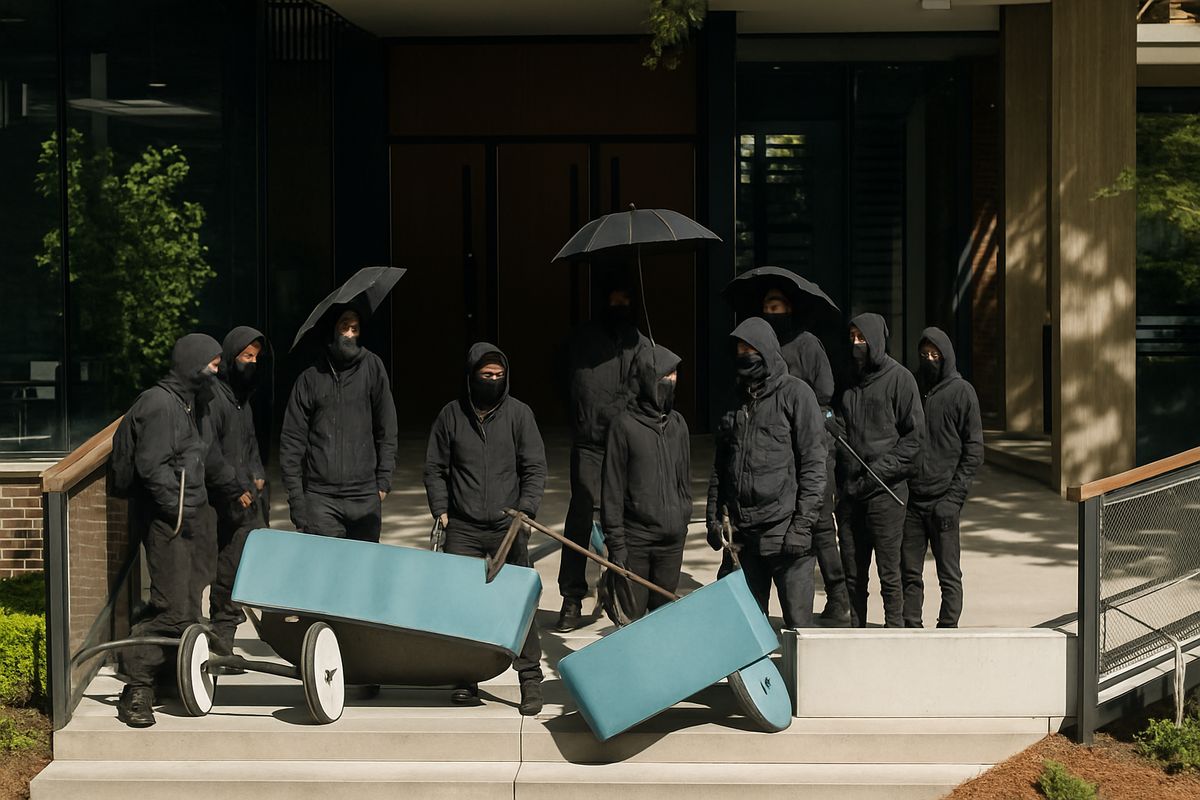
In a significant legal development stemming from last year's campus protests, King County prosecutors have filed criminal trespassing charges against 33 individuals connected to the occupation and takeover of the University of Washington's Interdisciplinary Engineering Building. The charges, announced in early March 2026, relate to an incident on May 7, 2025, when masked pro-Palestinian activists barricaded themselves inside the new $105 million facility. This legal action marks a pivotal moment, coming nearly ten months after the protest and following a complex investigation into an event that authorities say caused approximately $1 million in damage to university property.
The King County Prosecuting Attorney's Office, led by spokesperson Casey McNerthney, made the decision to pursue misdemeanor charges after determining that available evidence could not definitively link specific individuals to the property destruction that would warrant felony prosecution. "Trespassing in a building is not enough to also make you guilty of a felony. You've got to show additional elements that we can't show with the admissible evidence right now," McNerthney told KIRO Newsradio. "If we could show exactly who caused the damage, then we would be looking at a felony case." The arraignments for all 33 defendants are scheduled for March 25, 2026, setting the stage for what could be a protracted legal process with potential penalties of up to one year in jail and significant fines for each conviction.

The Protest and the Group Behind the Takeover
The occupation was not a spontaneous event but a coordinated action by the group SUPER UW (Students United for Palestinian Equity and Return at UW). According to their public statements, the group's primary demand was for the university to sever all financial and institutional ties with aerospace and defense giant Boeing. In a manifesto released during the takeover, SUPER UW demanded the university "return any existing donations, financial investments, and eliminate all other material ties to Boeing" and "prohibit Boeing executives and employees from teaching classes or having any influence over curriculum." The choice of the Interdisciplinary Engineering Building as a target was symbolic, as the facility represents the deep, century-long partnership between UW's engineering programs and Boeing.
The protest unfolded during a wave of similar campus actions across the United States in the spring of 2025, inspired by the ongoing Israel-Hamas conflict. At UW, the occupation escalated quickly. Protesters, many wearing masks, entered the building, barricaded doors, and reportedly caused extensive interior damage. University police and Seattle Police Department officers eventually cleared the building, arresting around 30 individuals at the scene. The university had previously taken disciplinary action, banning 21 students from campus in the immediate aftermath, a move that sparked its own controversy regarding student rights and institutional authority.
The Boeing-UW Nexus: A Century-Old Partnership Under Scrutiny
To understand the protesters' specific targeting, one must examine the profound and historic relationship between the University of Washington and The Boeing Company. This partnership, which the university itself notes dates back "more than a century," is multifaceted. Boeing is a top employer of UW graduates, a major donor to the university's capital campaigns and research initiatives, and its executives frequently serve on advisory boards and even as guest lecturers. The College of Engineering, in particular, is intertwined with Boeing's talent pipeline and research needs.
Boeing's dual identity as a leading commercial airplane manufacturer and one of the largest defense contractors in the United States makes it a focal point for activists. Protesters link Boeing's defense contracts—which include supplying weapons systems to the Israeli military—to the civilian casualties in Gaza. For SUPER UW, the university's acceptance of Boeing funding constitutes complicity. This argument forms the core of a growing movement on campuses nationwide that seeks to apply the tactics and moral framework of the South African anti-apartheid divestment campaigns of the 1980s to the Israeli-Palestinian conflict and the companies that profit from it.
Legal and Institutional Reckoning: Misdemeanors vs. Felonies
The decision to charge the 33 individuals with misdemeanor criminal trespass, rather than more serious felonies for burglary or malicious mischief, reveals the challenges of prosecuting large, chaotic protest actions. Prosecutors must prove each element of a crime "beyond a reasonable doubt" for each defendant. In a situation where many participants were masked and the group action caused collective damage, attributing specific destructive acts to specific individuals becomes exceptionally difficult. The $1 million damage estimate, while substantial, did not automatically translate to felony charges without direct, admissible evidence tying individuals to that damage.
This legal strategy has significant implications. For the defendants, misdemeanor charges, while still serious, carry lesser potential penalties and different long-term consequences than felonies. For the university and law enforcement, it represents a pragmatic, if perhaps unsatisfying, outcome. It allows the state to hold individuals accountable for the unlawful entry and occupation but acknowledges the evidential limits in a case that sparked intense public debate. The outcome of these arraignments and any subsequent trials will be closely watched by administrators at other universities grappling with how to balance protest rights with property protection and campus safety.
Historical Context: Campus Activism from the 1960s to Today
The UW building takeover exists within a long lineage of disruptive campus protest in the United States. The 1960s saw building occupations at Columbia University and elsewhere in opposition to the Vietnam War and institutional racism. The 1980s witnessed the "Shantytown" protests demanding divestment from South Africa. More recently, the "Black Lives Matter" movement and climate activism groups like Extinction Rebellion have employed sit-ins and building blockades. Each wave has forced universities into the difficult position of being both bastions of free speech and debate and managers of property, safety, and institutional reputation.
What distinguishes the current moment, exemplified by the UW protest, is the highly specific corporate targeting (Boeing) and the rapid national replication of tactics via social media. Furthermore, the legal and disciplinary responses have evolved. The pre-emptive bans of 21 students prior to any criminal charges, as reported in related headlines, show an administrative willingness to use campus conduct codes aggressively. This creates a two-front battle for activists: one in the courts and another within the university's own governance system. The interplay between these two systems—criminal justice and academic discipline—will define the risks and consequences for student protesters in this era.
Why It Matters
Beyond the immediate legal drama, this case signals a critical shift in how society and institutions manage profound political dissent. The misdemeanor charges represent a middle path that neither ignores the violation nor escalates it into a life-altering felony battle, potentially setting a precedent for prosecuting future mass protests where direct evidence of property destruction is diffuse. This calibrated response acknowledges the political nature of the act without granting it immunity, forcing a conversation about the cost of civil disobedience in the 21st century.
More importantly, the protest and charges highlight the growing pressure on "stakeholder capitalism." Universities, as massive endowments, research funders, and talent hubs, are being forced to audit their relationships not just for financial soundness but for political and ethical alignment by their communities. The demand to cut ties with Boeing isn't merely symbolic; it's a direct challenge to the neoliberal university model built on corporate partnership. The outcome of this pressure—whether UW alters its relationship with Boeing, whether other donors step back, or whether the institution holds firm—will provide a blueprint for how elite universities navigate their role in an increasingly polarized world where their every affiliation is scrutinized.
For the general public, this story is a lens into the future of conflict on key issues. It demonstrates how global geopolitics (the Israel-Hamas war) now manifest locally (a Seattle university building), mediated through the supply chains of domestic corporations (Boeing). Readers should watch not just the court verdicts, but the less visible outcomes: Will UW quietly alter its Boeing contracts or advisory roles? Will student applications or faculty recruitment be impacted? The real consequences will likely unfold in boardrooms and donor meetings, not just courtrooms, defining what is truly negotiable when institutional reputation and moral pressure collide.
What to Watch For Next
The immediate horizon is dominated by the legal process. The arraignments on March 25 will reveal defense strategies—will defendants pursue individual deals or present a united front? Will any evidence emerge that allows prosecutors to upgrade charges? Simultaneously, the university's internal disciplinary proceedings against students, separate from the criminal case, may reach conclusions, resulting in suspensions or expulsions.
Longer-term, observers should monitor three key areas. First, the impact on UW's relationship with Boeing: will any formal agreements be amended or non-renewed? Second, the legislative response: will state lawmakers, in response to this and similar events, propose new laws enhancing penalties for campus protests or protecting corporate-university partnerships? Finally, the activist response: will the filing of charges deter future building takeovers, or will it galvanize a broader movement, potentially leading to more disruptive tactics? The answers will determine whether May 2025 was an isolated incident or the opening chapter in a new, more confrontational phase of campus activism.