A Nail-Biter in Pool B: The WBC's Dramatic Finale
The 2026 World Baseball Classic has delivered one of its most dramatic pool play conclusions to date. As of March 11, 2026, the fate of the defending champion Team USA rests not on its own performance, but on the final game of Pool B between Italy and Mexico. The United States, having completed its schedule with a 3-1 record, finds itself in a precarious position, forced to watch from the sidelines as a complex tiebreaker formula determines its tournament future. This scenario, where a team's advancement hinges on the run differential of a game it is not playing in, underscores the unique pressure and global parity that defines the modern WBC.
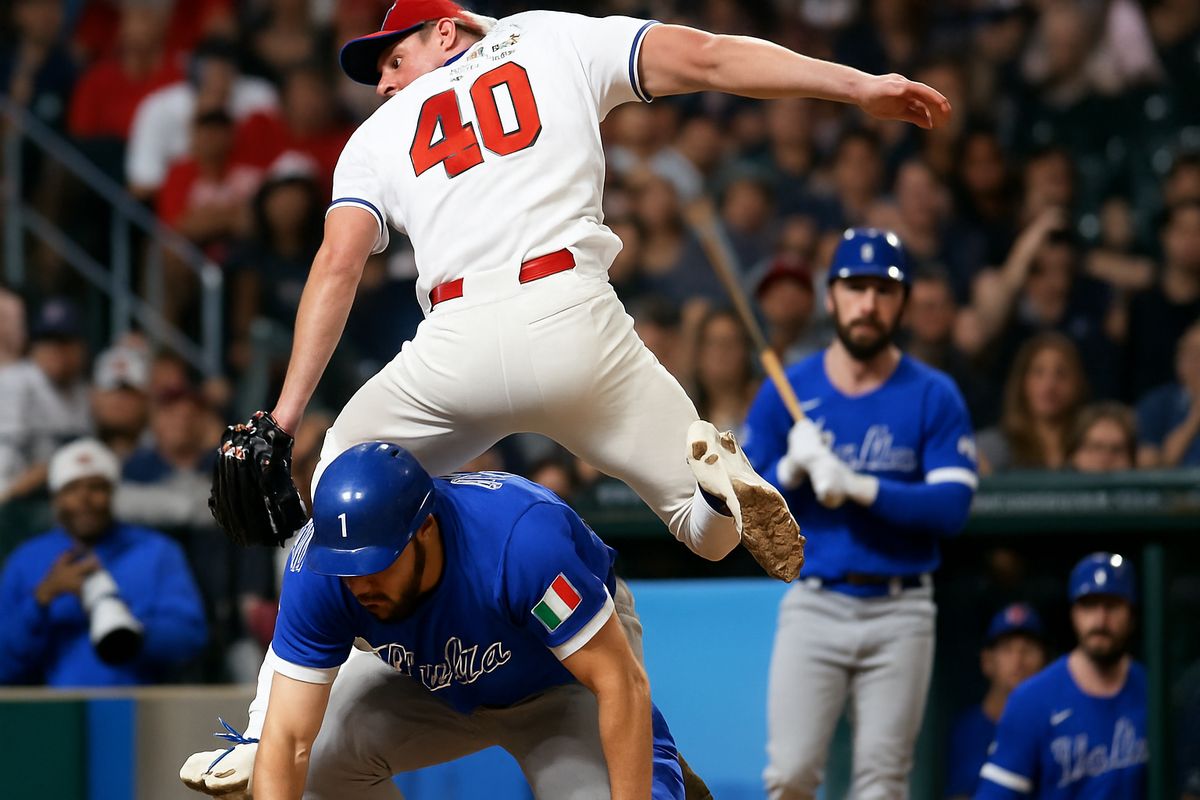
According to the source material from USA Today, the situation is starkly defined. Italy, undefeated at 3-0, and Mexico, at 2-1, face off in the pool's final game. An Italian victory sends both Italy and the USA to the quarterfinals. However, a Mexican victory creates a three-way tie at the top of the group between Italy, Mexico, and the USA, each with a 1-1 record against the other two. This deadlock triggers the WBC's primary tiebreaker, a formula that moves beyond simple head-to-head results and into the granular details of run prevention. For Team USA, the math is both simple and agonizing: if Mexico wins and scores four or fewer runs, the Americans are eliminated. If Mexico wins but scores five or more runs, Team USA advances.

Decoding the WBC's Complex Tiebreaker Formula
The core of this high-stakes drama is the WBC's specific tiebreaking procedure, which differs from the more common run differential used in many international tournaments. The first tiebreaker for teams with identical records is not overall run differential, but rather "fewest runs allowed divided by the number of defensive outs recorded in the games in that round between the teams tied." This mouthful of a rule is designed to create a fair comparison based solely on the games involving the tied teams, eliminating results against weaker opponents from the equation.
In practical terms for Pool B, this calculation only considers the runs each team allowed in their games against each other. For Team USA, this includes their loss to Mexico and their win over Italy. The "defensive outs recorded" component means every out a team's defense secures in those games factors into the final ratio. This creates a scenario where the final game's score doesn't just determine who wins; it directly recalibrates the defensive efficiency ratios for Italy and Mexico, which are then compared to the USA's already-set ratio. It's a system that rewards pitching and defense in the most crucial games, turning every run allowed in the Italy-Mexico matchup into a potential dagger for the watching Americans.
Key Players and Teams in the Crucible
The pressure of this scenario falls on several key entities. For Team USA, the defending champion and tournament favorite, the situation is one of helpless anticipation. Their roster, typically laden with MLB All-Stars, has done its job by winning three games, but a loss to Mexico earlier in pool play has put them in this vulnerable position. As highlighted in a related headline, "A nation turns its lonely eyes to Aaron Nola," the focus shifts to players who could have influenced this scenario. While the source material doesn't specify Nola's role, such a headline suggests a key pitcher's performance—perhaps in that loss to Mexico—is now under the microscope, emphasizing how single moments in a short tournament carry immense weight.
On the field for the decisive game, Italy represents one of the WBC's great success stories. The team, largely composed of American-born players of Italian descent, has played flawlessly to reach 3-0. A win secures them the pool title and avoids the tiebreaker chaos entirely. Their opponent, Mexico, is in the driver's seat. A victory by any score sends them through, but the margin matters profoundly. Mexican players must balance the instinct to win with the strategic awareness that every run they score beyond four directly aids their rival, the United States. This creates a bizarre incentive where Mexico, while trying to win, might also be indirectly playing to eliminate the USA by keeping the score low, a fascinating subplot of conflicting interests.
What This Means for the World Baseball Classic and International Baseball
This dramatic conclusion is not a flaw in the WBC format but a feature. It validates the tournament's core mission: to create meaningful, high-stakes baseball where every inning matters on a global stage. The fact that a powerhouse like the United States can be eliminated based on the result of a game between Italy and Mexico speaks to the incredible growth and competitive balance the WBC has fostered since its inception in 2006. Nations have invested in their baseball infrastructure, and the tournament has become a point of immense national pride, leading to the elevated level of play that produces such tense finales.
For fans and organizers, this scenario is a dream. It guarantees a massive, engaged audience for the Italy-Mexico game, with American fans now invested in the outcome. It sparks intense debate about the tiebreaker rules themselves. While some may argue for a simpler system, the current formula's focus on head-to-head defensive performance emphasizes run prevention in key games, a philosophically interesting choice. Furthermore, it protects the integrity of the competition by ensuring a team cannot run up the score on a weak opponent to pad its overall differential, as only games between the tied teams count.
The Bigger Picture: The WBC as a Catalyst for Global Baseball's New Era
Beyond the immediate drama of Pool B, this tiebreaker scenario is a microcosm of a larger, transformative trend in international baseball. The WBC has successfully dismantled the old hierarchy where the United States, Japan, and a few Caribbean nations were considered untouchable. The rise of programs like Italy, which leverages its diaspora, and the consistent competitiveness of Mexico, South Korea, and the Netherlands, has created a truly global top tier. This parity is the single greatest achievement of the WBC, making every tournament unpredictable and compelling. The 2026 scenario, where the USA's fate is decided by others, is the ultimate proof of concept that the baseball world has flattened.
This shift has profound implications for Major League Baseball and the sport's global development. As more nations prove they can compete, the pool of elite international talent will continue to expand, further enriching MLB rosters. The WBC has become the premier showcase for this talent, a fact not lost on players who now prioritize the tournament. The intense pressure of games like Italy vs. Mexico, played under a unique set of stakes, also serves as unparalleled high-leverage experience for players, arguably rivaling the postseason. Finally, this drama fuels fan engagement in non-traditional markets. A child in Italy or Mexico watching their team control the destiny of baseball's birthplace is a powerful narrative that builds new generations of fans and participants, securing the sport's future far beyond its traditional borders.
Historical Context and the Evolution of WBC Drama
While the 2026 tiebreaker is particularly stark, the WBC has a history of delivering last-minute drama. Previous tournaments have seen underdog nations like Israel and the Netherlands make stunning runs, and pool play often comes down to the final day. However, the specific mechanism of a team awaiting its fate based on another game's precise scoreline is a rare and heightened version of this tension. It recalls scenarios in other sports like soccer's World Cup group stage, where goal differential often decides fates, but the WBC's more complex formula adds a unique layer of strategic intrigue.
Comparisons to MLB's own playoff races are also apt, though the timeframe is compressed. An MLB team might have a week to overcome a deficit; a WBC team has just one game, often one they are not even playing in. This incredible compression is what makes the WBC uniquely thrilling and, at times, cruel. It tests not just skill but resilience and focus from the very first pitch of the tournament. For Team USA in 2026, the lesson is clear: in a short tournament featuring the world's best, there is no margin for error. A single loss can transform a team from a dominant favorite into a nervous spectator, their championship dreams resting on a mathematical formula and the performance of two other proud baseball nations.