What makes something a drug, and why this debate flares up again in 2026
The question of what makes something a drug sounds like semantics. It is not. In 2026, the definition sits right at the crossroads of medicine, law enforcement, public health, and everyday language. And it keeps resurfacing because people are living through a weird contradiction: society normalises some psychoactive substances, demonises others, and then acts surprised when the boundaries feel arbitrary.
The latest spark comes from a familiar place, community discussion. In biochemistry and language learning circles, people keep asking why English uses the word “drug” for both medicines and illegal substances, and whether “drug” automatically implies something bad. The answers are blunt, and revealing. One recurring theme is that a drug can be “any substance that changes the way the mind and body works”, with examples thrown in that range from sugar and salt to meth and alcohol. Another is that “drug” historically refers to medication, and that “drugs” meaning “illegal drugs” is a more recent cultural shift.

That tension matters because definitions do real work. They shape how regulators classify substances, how clinicians talk to patients, how police prioritise enforcement, and how the public understands risk. The same word can mean a prescription pill in a hospital ward, a recreational substance at a festival, or a controlled substance in a courtroom. And yes, it is a big deal.

The 2026 development: a renewed focus on the definition of “drug” across medicine, culture, and enforcement
The immediate development in 2026 is not a single government announcement or a blockbuster clinical trial. It is a renewed, highly visible push to clarify what “drug” means, driven by public-facing databases, educational explainers, and persistent community debate. On the medical side, large consumer resources organise “drugs, vitamins and supplements” into one searchable universe, reflecting how people actually shop for health products and self-treat symptoms. On the scientific intelligence side, biopharma knowledge bases treat “drugs” as a category that includes compounds, targets, diseases, and trials, framing the word as a technical object rather than a moral label.
At the same time, the law enforcement definition remains anchored to controlled substances and illicit trafficking. In the United States, the Drug Enforcement Administration is described as a federal law enforcement agency under the Department of Justice, tasked with combating illicit drug trafficking and distribution, and acting as the lead agency for domestic enforcement of the Controlled Substances Act. That institutional framing is powerful. It reinforces the idea that “drug” equals “illegal drug”, even though the same society uses “drug” every day to mean prescribed medication.
Then there is the cultural layer. General explainers define recreational drug use as the use of one or more psychoactive drugs to induce an altered state of consciousness, either for pleasure or casual purposes, and note that psychoactive drugs induce an intoxicating effect when they enter the body. That definition is broad by design. It does not care whether the substance is legal, prescribed, traditional, or stigmatised. It cares about effect.

Put those strands together and the 2026 “news” is a convergence: the public is increasingly exposed to multiple, conflicting definitions at once. People notice. They ask questions. And the answers they get depend on whether they are talking to a clinician, a biochemist, a linguist, or a law enforcement officer.
What is a drug, technically speaking, and why the word refuses to behave
In everyday English, “drug” is slippery because it carries at least two major meanings. First, it is a neutral term for medication: a substance used to diagnose, treat, or prevent disease. Second, it is a loaded term for illegal substances, often implying harm, addiction, and criminality. Community discussions capture this neatly: learners ask whether “drug” means only a bad thing, and native speakers respond that it does not, it refers to non-food substances that affect the body, and “illegal drugs” is a narrower, more recent usage.
From a biochemical perspective, the broadest workable definition is functional: a drug is a substance that produces a physiological effect in the body. That is why people in scientific discussions reach for examples like sugar and salt. Those examples are provocative, but they make a point. If the criterion is “changes the way the mind and body works”, then the boundary between “drug” and “not a drug” is not a bright line. It is a gradient, and context does a lot of the sorting.
And context is exactly where the fights start. Food substances can have drug-like effects at certain doses. Supplements can be marketed like medicines without being regulated like medicines. Prescriptions can be misused recreationally. Recreational substances can be used in structured, therapeutic settings in some jurisdictions. The word “drug” ends up doing too many jobs at once, which is why people keep tripping over it.
Language also matters because it shapes behaviour. If “drug” is heard as “bad”, people may avoid seeking help for misuse of prescribed medication, or they may dismiss risks from legal substances because they do not label them as drugs. If “drug” is heard as “just medicine”, people may underestimate the potential harms of certain compounds when used casually. Neither misunderstanding is harmless.
Background: the key organisations and information systems shaping the drug conversation
Three broad forces shape how the public understands drugs in 2026: consumer health information, scientific and commercial drug intelligence, and enforcement institutions. Consumer health databases group “drugs, vitamins and supplements” together because that is how people behave in real life. Someone searching for a sleep aid might move from a prescription option to a herbal product to a vitamin, all in one sitting. The information architecture quietly tells the user: these are all substances you put in your body for an effect.
On the industry side, drug intelligence platforms position themselves as comprehensive biomedical knowledge bases, offering data on drugs, targets, diseases, and trials. That framing is not about morality or legality. It is about mechanism, evidence, and development pipelines. In that world, “drug” is a candidate molecule, a therapeutic hypothesis, a set of interactions, and a regulatory journey. It is clinical, commercial, and relentlessly technical.
Then there is the enforcement lens. The DEA is explicitly tasked with combating illicit drug trafficking and distribution in the United States, and it is the lead agency for domestic enforcement of the Controlled Substances Act. That mandate matters because it influences public messaging, media narratives, and political priorities. When the most visible “drug” institution in a country is a law enforcement agency, the word itself tends to tilt toward crime in the public imagination.
Even the thesaurus view is instructive. Synonyms for “drug” include medication, medicine, remedy, cure, prescription, pill, pharmaceutical, and medicament. That list reflects an older, medicalised meaning. It is a reminder that the “drug equals illegal substance” reading is not the whole story, even if it is often the loudest.
Recreational drug use, medication, and supplements: one spectrum, three regulatory worlds
Recreational drug use is commonly described as using one or more psychoactive drugs to induce an altered state of consciousness for pleasure or casual purposes, with psychoactive substances producing intoxicating effects once in the body. That definition is intentionally effect-based. It does not ask whether the substance comes from a pharmacy, a plant, or a clandestine lab. It asks what it does to consciousness.
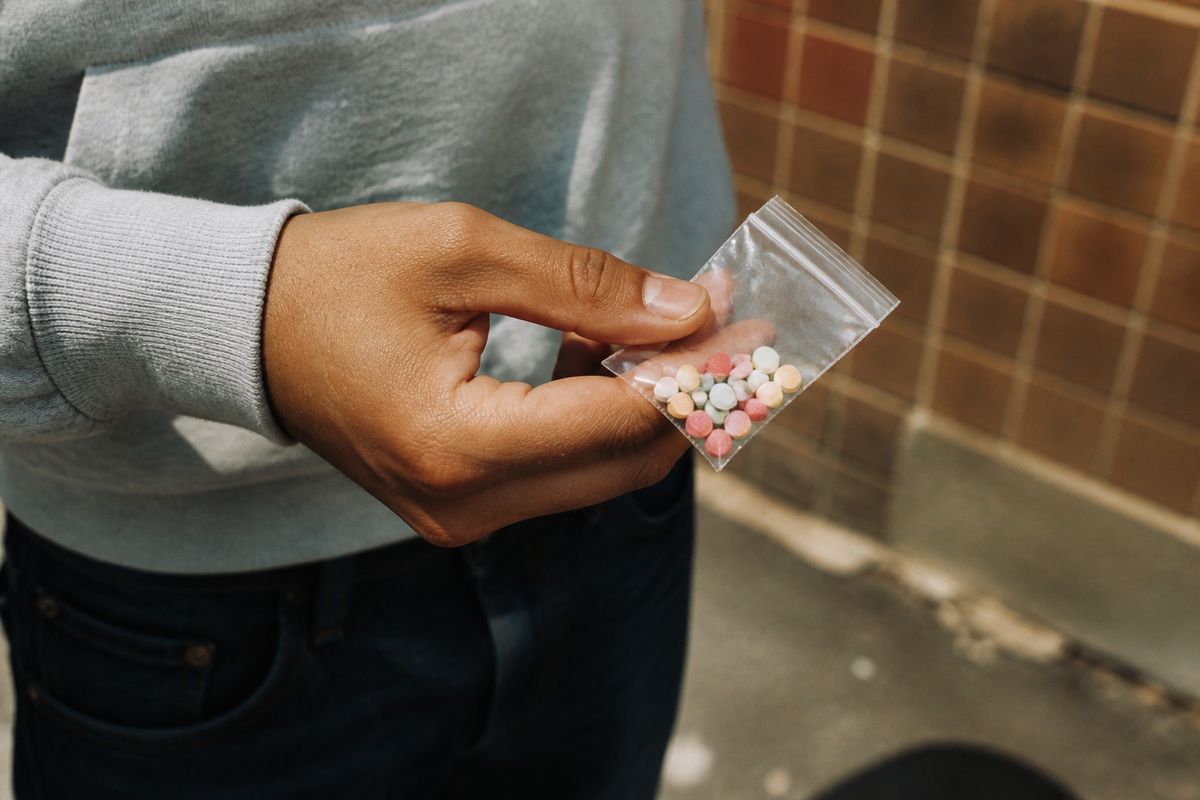
But regulation rarely follows that clean logic. Medicines are typically regulated around safety, efficacy, and quality, with prescribing controls and post-market surveillance. Supplements and vitamins often sit in a different category, marketed for wellbeing and sometimes carrying softer claims, even when consumers use them in a drug-like way. Recreational substances can be legal (like alcohol in many places) or illegal, and the legal status can change over time and across borders. The same psychoactive effect can be treated as a health issue, a consumer choice, or a criminal act depending on the substance and the jurisdiction.
This is where the definition debate becomes practical. If the public thinks “drug” only means illegal substances, then misuse of prescription medication can be minimised or hidden. If the public thinks “drug” only means medicine, then recreational use can be sanitised and risks can be downplayed. And if the public thinks supplements are “not drugs”, then interactions and side effects can be ignored, even though the consumer is still chasing a physiological effect.
In 2026, the market reality is that people self-direct. They search databases, compare options, and blend categories. The language needs to catch up. Not by flattening everything into one scary word, but by being honest about what is being taken, why, and with what evidence and risk.
Why the definition of “drug” matters for industry, healthcare, and policy
For healthcare, the stakes are immediate. Clinicians rely on accurate medication histories, but patients do not always report what they take, especially if they think it “doesn’t count” as a drug. That can include supplements, recreational substances, or borrowed prescriptions. A broad, non-judgemental definition can improve disclosure. A moralised definition can shut it down. The word choice in a consultation can change what a patient admits, and that can change outcomes.
For the biopharma industry, definitions shape pipelines and public trust. Drug intelligence systems treat “drug” as a research and development object, tied to targets, diseases, and trials. That technical framing supports innovation, but it also collides with public suspicion when “drug company” is heard as “dealer” rather than “developer”. The industry has to communicate clearly: what is being developed, what evidence exists, what uncertainties remain. When the public uses one word for both life-saving therapies and illicit substances, messaging becomes harder, not easier.
For policy and enforcement, the definition influences priorities. The DEA’s role as the lead agency enforcing the Controlled Substances Act anchors “drug” to a controlled list and a criminal justice approach. That can be effective for trafficking and distribution, but it can also narrow the public conversation, pushing complex health and social issues into a crime frame. Meanwhile, recreational drug use definitions emphasise psychoactive effects and altered consciousness, which aligns more naturally with public health approaches like harm reduction. The clash is not just academic. It shapes budgets, campaigns, and the lived experience of communities.
And there is a historical echo here. The community observation that “drugs” meaning “illegal drugs” is a more recent invention points to how language follows politics and media. Words drift. Connotations harden. Once a word becomes a moral signal, it is difficult to use it neutrally again, even when neutrality would be more useful.
Historical context: how “drug” became both medicine and menace
Historically, “drug” sits comfortably alongside “medicine”, “remedy”, and “prescription”. That is reflected in synonym lists that lean heavily toward healthcare. In that older sense, a drug is simply a substance used to produce a therapeutic effect. It is practical, not scandalous. People talk about drug doses, drug interactions, and drug formularies without implying criminality.
Over time, public discourse in many English-speaking contexts increasingly uses “drugs” as shorthand for illegal substances. Community language learners notice this and ask why. The answer offered in discussion is telling: the illegal meaning is newer, and it grows out of the way societies talk about prohibition, enforcement, and social harm. Once that meaning takes hold, it bleeds into everything. “Drug” becomes a label that can stigmatise, even when the subject is a legitimate medication.
Meanwhile, the scientific and medical worlds keep using “drug” in the older, neutral sense because they need a broad term. They cannot do their work if the vocabulary is moralised. A compound is a compound. It binds to a receptor or it does not. It has a therapeutic window or it does not. The lab does not care whether the public approves of the word.

The result is a split-brain situation in public life. One word, two dominant meanings, and a lot of confusion in the middle. That confusion is not new, but in 2026 it is amplified by the sheer volume of health information, the growth of self-directed supplement use, and the continuing prominence of enforcement institutions in the public imagination.
What's Next
The most likely next step is not a grand redefinition that everyone agrees on. It is a gradual shift toward more precise language in public-facing health communication. Expect more emphasis on categories like “prescription medicines”, “over-the-counter medicines”, “supplements”, and “psychoactive substances”, rather than relying on “drug” as a catch-all. That is already implied by how consumer databases organise information, placing drugs, vitamins, and supplements side by side while still distinguishing them as categories.
In parallel, the enforcement framing is unlikely to disappear. As long as agencies like the DEA remain the most recognisable “drug” institutions, the word will keep its criminal connotation in many contexts. The more interesting change may be in how public health voices respond: by adopting effect-based language that mirrors the recreational drug use definition, focusing on intoxication, altered consciousness, and risk, rather than moral labels. That approach tends to travel better across legal boundaries, because it describes what happens in the body, not what a statute says.
And there is a bigger, slightly uncomfortable implication for industry and regulators. If the public increasingly accepts a functional definition, “a substance that changes the way the mind and body works”, then the spotlight widens. It does not just land on illicit substances. It lands on everything people ingest for an effect, including high-caffeine products, sleep aids, weight-loss supplements, and more. That could drive demand for clearer evidence standards, better labelling, and more honest conversations about interactions. Fair enough, really. If people are going to self-medicate, they deserve language that helps them understand what they are doing.
Closing thoughts: one word, many realities
In 2026, the debate about what makes something a drug is a proxy for a deeper argument about how society assigns legitimacy. Medicine, recreation, and crime are not properties of molecules. They are categories humans build around molecules. The same substance can move between categories depending on dose, intent, setting, and law. That is why the word “drug” keeps causing friction. It tries to compress all that complexity into one syllable.
The most useful way forward is not to pretend the word has one clean meaning. It does not. The better approach is to be explicit about context: is the subject a medication, a supplement, or a psychoactive substance used recreationally? Is the concern efficacy, safety, dependence, trafficking, or all of the above? When people ask whether “drug” means only a bad thing, the honest answer is no. But the more important answer is that the label alone is not enough. The effect, the evidence, and the risk profile matter more than the stigma.
And if that sounds like splitting hairs, it is worth remembering that definitions guide decisions. They influence whether someone seeks help, whether a clinician asks the right follow-up question, whether a policymaker funds treatment or enforcement, and whether an industry communicates responsibly. Words are not just words. In the drug conversation, they are part of the machinery.