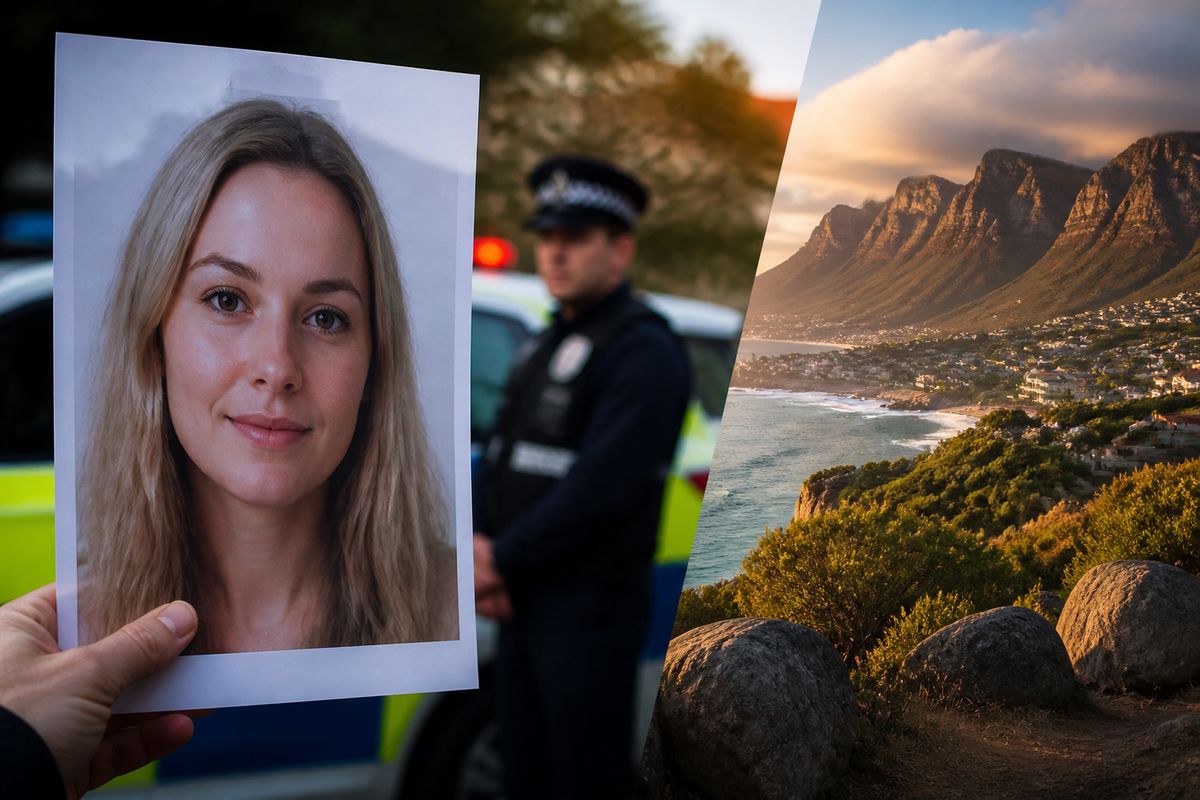
Woman Reported Missing in UK: What We Know So Far
A British woman reported missing in the UK is now at the centre of a cross-continental investigation after authorities said they believe she may be in South Africa. The case took a darker turn this week when The Times reported that the woman, described as a British tourist, was allegedly killed for her body parts to be used in witchcraft. The two headlines, one from Algoa FM and one from The Times, point to a single, unfolding story that has gripped readers on both sides of the Atlantic.
At the time of writing, police have not officially named the woman, and many details remain unconfirmed. What is clear is that a missing person report was filed in the UK, prompting a search that eventually led investigators to South Africa. The Times report uses the word "killed" and alleges that the motive involved the harvesting of body parts for ritualistic purposes, a practice often referred to in the region as muti murder. The woman's family is said to be devastated, though no direct quotes have been released to the press.
This is not a straightforward missing person case. It involves international police cooperation, deeply rooted cultural beliefs, and a brutal crime that has horrified the public. The story has all the hallmarks of a true-crime documentary, but behind the drama lies a very real tragedy, and a series of questions that have yet to be answered.

The Witchcraft Allegation: What The Times Reported
The Times headline, "British tourist 'killed for her body parts to be used in witchcraft'," is blunt and disturbing. According to the article, South African authorities are treating the death as a homicide linked to traditional medicine practices. The phrase "witchcraft" in this context refers to the belief that body parts, particularly from vulnerable individuals, can be used to create potions, charms, or protective amulets, often to bring wealth, power, or healing.
This practice, known locally as muti murder, is not new to South Africa. It has been documented for decades, with cases ranging from isolated rural incidents to high-profile urban crimes. The victim is often someone who is easy to target, such as a child, a homeless person, or in this case, a foreign tourist who may have been unaware of local dangers. The police have not yet confirmed whether an arrest has been made, but reports suggest that a suspect may have been taken into custody in connection with the woman's death.
It is important to note that the allegations are just that, allegations. No one has been formally charged or convicted in this specific case, and the investigation is still ongoing. However, the very fact that The Times, a major UK publication, chose to lead with the witchcraft angle indicates that this is a key working theory for investigators. The story has also been picked up by Algoa FM, a South African radio station, suggesting that the case is being followed closely on both sides of the investigation.
Background: Muti Killings and the Dark History of Witchcraft Accusations in South Africa
To understand the gravity of this case, it helps to understand the context of muti killings in South Africa. The word "muti" comes from the Zulu language and simply means medicine. However, the term has become associated with a sinister side of traditional healing, where the line between herbal remedy and violent crime is crossed. In these cases, traditional healers, or sangomas, are sometimes accused of prescribing body parts as ingredients for powerful potions, though many legitimate healers strongly condemn the practice.
South Africa has seen a number of high-profile muti murder cases over the years. One of the most notorious occurred in the late 1990s, when a teenage boy was killed and his body parts were sold to a traditional healer in Soweto. More recently, there have been cases of children going missing from rural villages, only to be found murdered with organs removed. The South African Police Service has a dedicated unit, the National Prosecuting Authority's Sexual Offences and Community Affairs Unit, which sometimes handles these crimes, but convictions remain difficult to secure due to fear of reprisals and a lack of forensic evidence.
In this particular case, the fact that the victim is a British tourist raises additional concerns. Foreign visitors may not be aware of the risks in certain areas, and they may not have local contacts to rely on in an emergency. The woman reportedly went missing in the UK first, which is unusual. Typically, a tourist would go missing while already abroad. The fact that she was reported missing in the UK and then believed to be in South Africa suggests that she may have travelled to the country voluntarily, or that she was trafficked, an angle that has not been ruled out by investigators.
Statistics on muti murders are notoriously unreliable, as many go unreported or are classified as ordinary homicides. However, human rights organisations have estimated that dozens of such killings occur each year in South Africa, though exact figures are contested. It is a serious enough problem that the South African government has periodically launched public awareness campaigns to discourage the practice and encourage communities to report suspected cases.
The Investigation: How a Missing Person Case Crossed Continents
The international dimension of this case is what sets it apart. When a British citizen goes missing abroad, the Foreign, Commonwealth and Development Office (FCDO) becomes involved, offering consular support to the family and liaising with local authorities. In this case, the FCDO would have been alerted as soon as the woman was reported missing in the UK, and the search would have been coordinated with South African police via channels such as Interpol.
South Africa remains a popular destination for British tourists, with thousands visiting every year for safaris, beach holidays, and cultural experiences. The country has a well-developed tourism infrastructure, but it also has high levels of violent crime, particularly in certain urban areas. The British High Commission in Pretoria and the consulate in Cape Town typically issue travel advice for UK citizens, warning them to be vigilant and to avoid travelling alone in high-risk areas. It is not yet known whether the woman was travelling alone or with companions.

A key challenge in any investigation involving two countries is the sharing of information. Legal systems differ, and the process of extradition or even simple evidence exchange can be slow. In the meantime, the woman's family remains in a state of limbo, waiting for answers. The Times report suggests that the family has been informed of the allegations, which must have been a devastating moment. It is one thing to hear that a loved one has died; it is quite another to hear that they were allegedly killed for such a horrific purpose.
Police in both countries are likely to focus on a few key questions. Where was the woman last seen in South Africa? What was her itinerary? And crucially, who had contact with her in the days before her death? If the witchcraft allegation is accurate, the police will also need to trace the alleged recipient of the body parts, which could lead to a wider network of suspects. Cases like this often involve multiple individuals, from the actual killers to the healers who allegedly commissioned the crime.
Why It Matters: The Intersection of Superstition, Violence, and Global Travel
This story matters far beyond the tragic loss of one life. It highlights a troubling intersection of superstition, violence, and modern travel that is often overlooked in mainstream reporting. For many people in the UK, the idea of a British tourist being killed for witchcraft seems almost unbelievable, a relic of a distant past. Yet it is happening now, in 2026, in a country that is a major travel destination. This disconnect between perception and reality is dangerous, because it gives travellers a false sense of security.
There is also a broader societal issue at play. Muti murder is, at its core, a crime born of desperation and belief. The people who commission these killings are often seeking solutions to very real problems, such as unemployment, illness, or romantic misfortune. They turn to traditional healers because the formal economy and social safety nets have failed them. Ending this practice requires more than just policing; it requires addressing the poverty and inequality that fuel the demand for magical solutions. That is a long-term project, not a quick fix.
For the UK media, the case is a reminder that the dangers of international travel are not always what they seem. We tend to worry about pickpockets, credit card fraud, and perhaps the occasional terrorist attack, but we rarely imagine that a holiday could end in a ritualistic murder. This case will likely lead to renewed calls for better travel advice, more robust support for families of missing persons, and closer cooperation between UK and South African law enforcement. It also raises an uncomfortable question: how many other cases of missing British tourists are not fully reported, and how many are connected to crimes we prefer not to think about?
What Happens Next: Questions That Remain Unanswered
As the investigation continues, several questions remain unanswered. Chief among them is the identity of the woman, which police have not yet released to the public. Without an official confirmation, it is difficult for the public to fully engage with the story, and for the family to grieve in a public way. The UK press will undoubtedly push for more details, but forensic identification can take time, especially when a body has been found in one country and a missing person report was filed in another.
There is also the question of whether an arrest will be made and whether a suspect will face trial in South Africa or the UK. If the woman was a British citizen, UK prosecutors may seek jurisdiction, but the crime, if it occurred in South Africa, would likely be tried there. Extradition procedures can be lengthy, and in cases involving serious crimes like murder, the British government often expects the country where the crime took place to prosecute. South Africa has a functioning legal system, and muti murder cases have been prosecuted successfully before, but the process is rarely swift.
Finally, there is the broader question of what can be done to prevent such tragedies. The South African government has a responsibility to protect all people within its borders, including tourists. The UK government has a responsibility to inform its citizens of the risks. But ultimately, the only way to truly prevent another case like this is to change the underlying beliefs that make muti murder seem plausible to some people. That is a cultural challenge as much as a legal one, and it will not be solved overnight.
For now, the thoughts of many will be with the woman's family, who have been thrust into a nightmare that most people cannot even imagine. The headlines will fade, and the news cycle will move on, but the pain of this loss will remain. What we owe the victim, and what we owe ourselves, is a commitment to fully understand what happened and why. Only then can we hope to stop it from happening again.