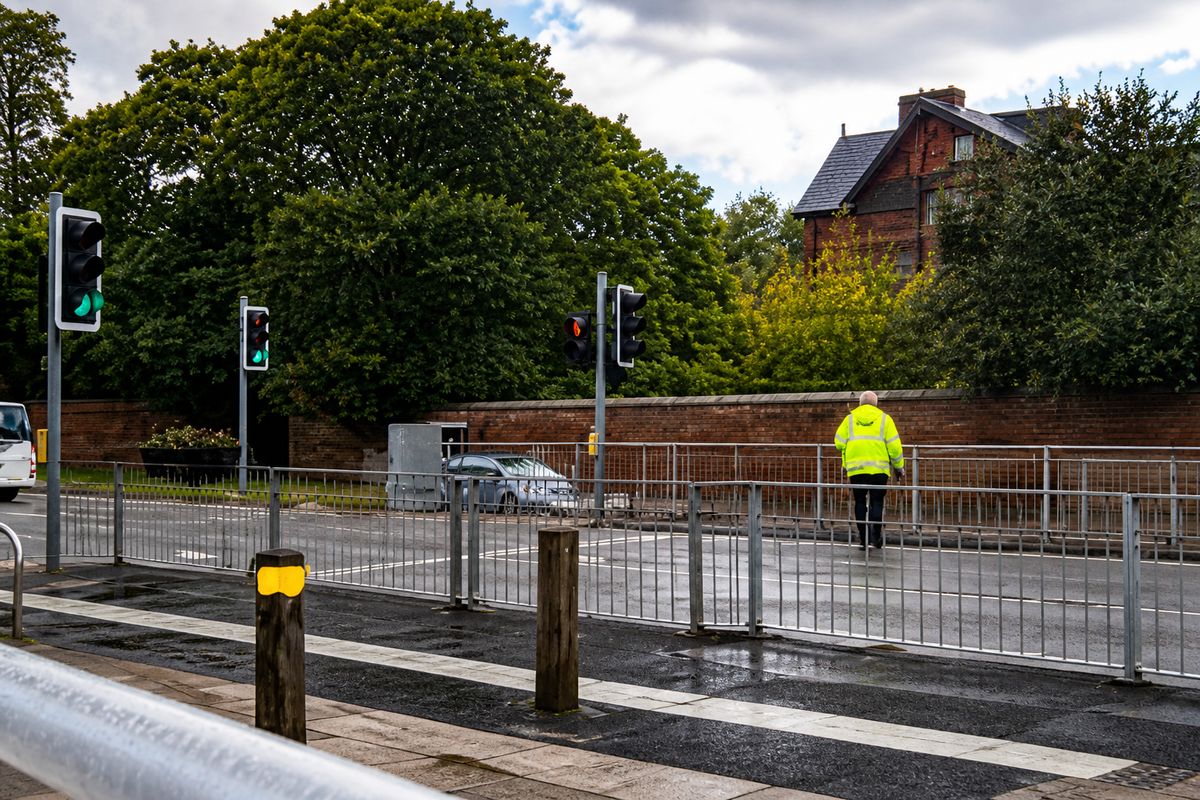
Aigburth Road closure in Liverpool after fatal collision
Aigburth Road is closed in Liverpool on 03 September 2026 after a woman is hit by a vehicle and later dies, triggering a major emergency response and a fast moving police investigation. The incident happens on one of the city’s busiest south Liverpool routes, and the closure quickly ripples out into surrounding streets as drivers are told to avoid the area and take alternative routes.
What makes this one hit hard is the combination of location and timing. Aigburth Road is not some quiet back lane, it is a main artery that carries commuters, buses, deliveries, and plenty of footfall between neighbourhoods. And the collision occurs in the early evening, when traffic volumes and pedestrian movements tend to spike. That matters, because it shapes both the immediate disruption and the longer questions about road safety on a corridor that locals use every day.
Two local headlines capture the unfolding situation: one reports that Aigburth Road remains closed after a woman is hit by a car, and another follows the closure with live updates. Supplementary reporting adds the most serious detail: the woman dies after being hit by a private hire taxi. Merseyside Police confirm they are examining CCTV and appealing for witnesses.

What is known so far about the Aigburth Road collision
Merseyside Police are called to Aigburth Road in Aigburth at about 5.40pm on 03 September 2026 after a female pedestrian is struck. The vehicle is described as a white Toyota Voxy private hire taxi, and the collision takes place on the city bound carriageway between Fulwood Road and Larkfield Road. The pedestrian is taken to hospital, where she is sadly pronounced dead. Police identify her as a 26 year old woman.
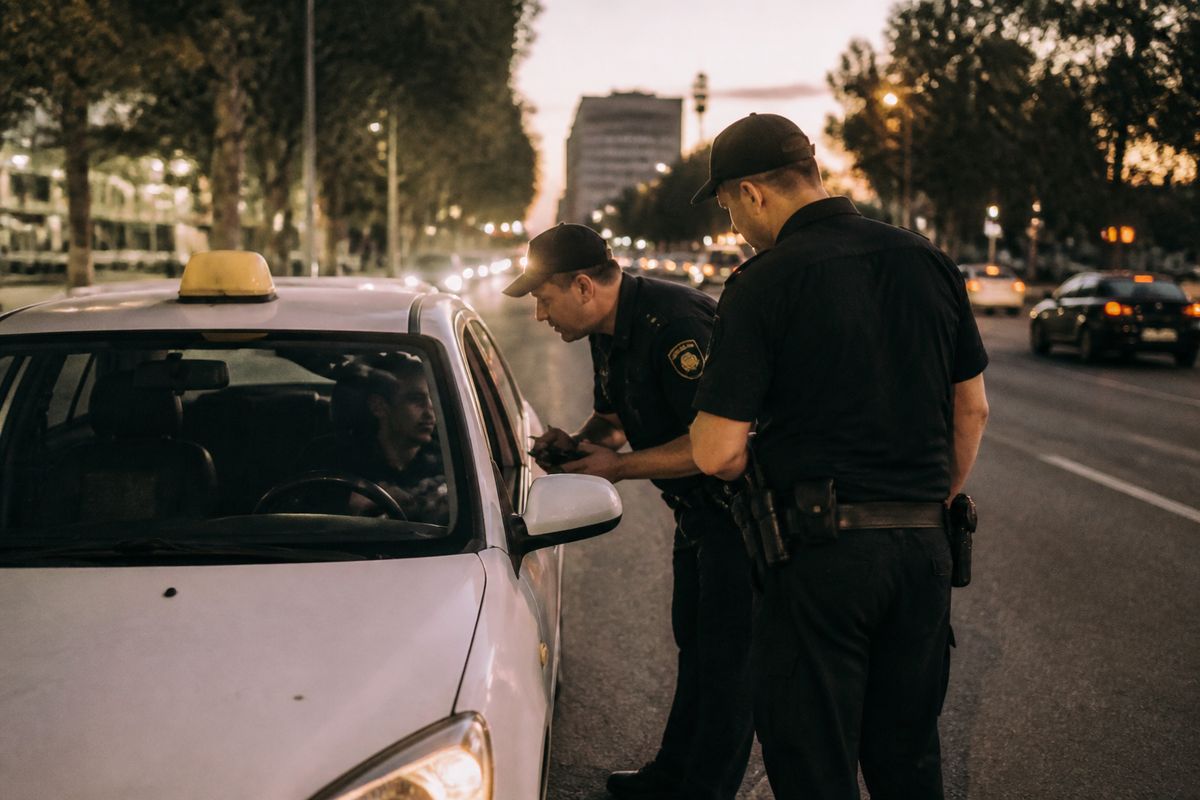
As the investigation begins, the road is closed to traffic. Traffic monitoring information indicates Aigburth Road is closed between Ashfield Road and Fulwood Drive, while police statements focus on the collision location between Fulwood Road and Larkfield Road. In practical terms, that suggests a wider cordon and traffic management footprint than the precise collision point, which is common when officers need space for forensic work, scene safety, and to prevent contamination of evidence.
Live reporting from the scene describes vehicles within the cordon, including a dark grey Mercedes stopped on the other side of the road with hazard lights still on. It is not possible, from the available material, to say what role that vehicle plays, if any. What can be said is that police cordons often capture multiple vehicles that are present at the time, sometimes as witnesses, sometimes simply because they cannot be moved until the scene is cleared.
One further development is reported by the BBC: a taxi driver is arrested after the woman is struck and killed. Police also state they are examining CCTV from the area and appeal for witnesses, noting that Aigburth Road is a very busy road. No further details about the arrest, such as the suspected offence or the driver’s identity, are provided in the source material.
How the Aigburth Road closure affects the city in real time
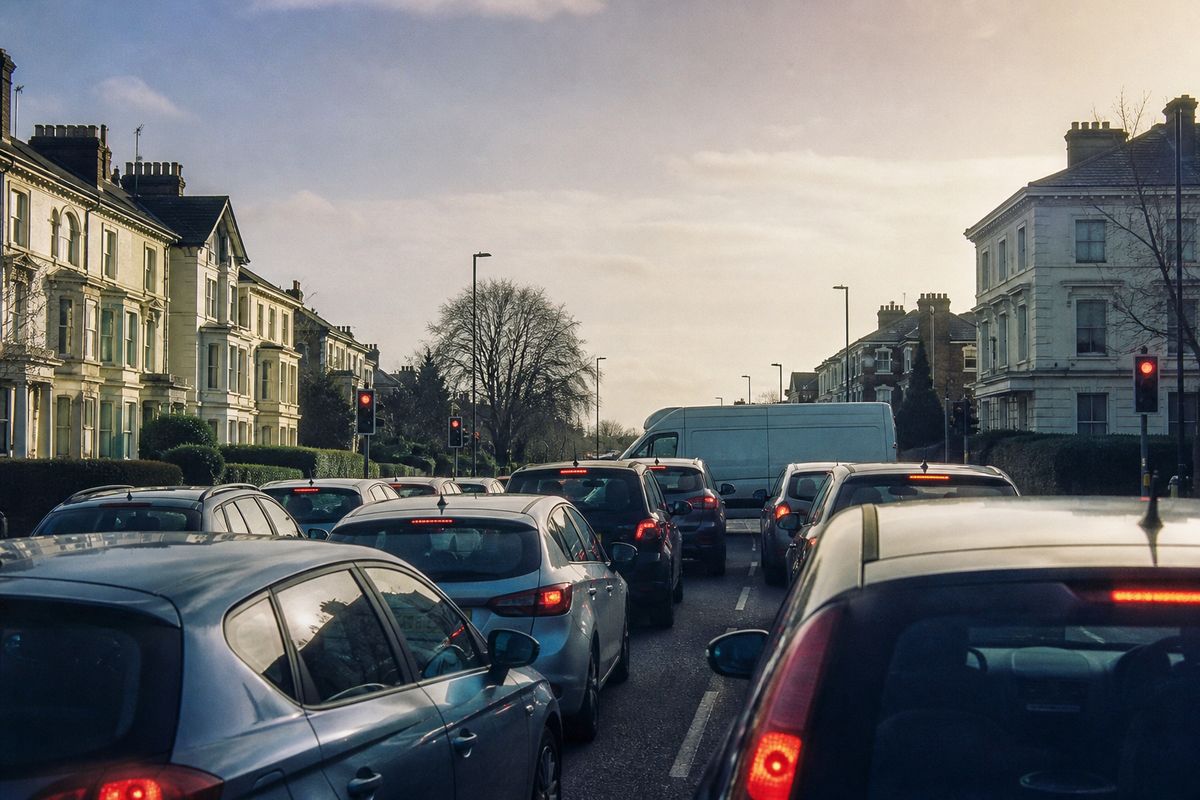
Aigburth Road is not just a local street, it is a connector. When it closes, traffic does not disappear, it simply squeezes into the surrounding network. Drivers divert into residential roads, buses are forced to reroute, and journey times become unpredictable. Even people who never set foot on Aigburth Road feel it, because congestion spreads outward like a stain.
That is why traffic operators and local updates emphasise avoiding the area and using alternative routes. The closure described between Ashfield Road and Fulwood Drive effectively blocks a substantial stretch, and that tends to create pinch points at the edges of the cordon. It also complicates access for residents, deliveries, and anyone trying to reach nearby shops or services. And for emergency services, a wide closure can be essential, giving investigators room to work safely and thoroughly.
There is also a human side to the disruption that gets lost in the sat nav chatter. A fatal collision scene is not a quick clean up. It involves first response, medical care, family liaison, witness management, and then detailed collision investigation. That takes time, and it should. People may grumble about traffic, fair enough, but the priority is establishing what happened and doing it properly.
In the short term, the closure is a visible sign that this is being treated as a serious incident. In the longer term, it becomes part of the public record of how Liverpool manages road risk on major corridors. When a busy road closes for hours after a fatal collision, it forces a city to confront a blunt question: is the network designed for safe movement, or just for moving as many vehicles as possible?
Merseyside Police investigation, CCTV work, and the witness appeal
Merseyside Police confirm they are examining CCTV from the area and appealing for witnesses. That is standard, but it is also crucial. On a road as busy as Aigburth Road, there is a good chance of multiple camera angles, from commercial premises, residential doorbells, vehicle dashcams, and public transport. The challenge is not always finding footage, it is securing it quickly, preserving it correctly, and stitching it into a coherent timeline.
The witness appeal matters for another reason: collisions are rarely understood from a single viewpoint. A driver might see the moments before impact, a pedestrian might notice the crossing behaviour, another road user might observe speed or lane position, and someone further back might have a clear view of traffic signals or braking. Investigators typically build a picture from many small fragments. It is painstaking work, and it is often the difference between speculation and evidence.
The reported arrest of the taxi driver signals that police are taking immediate investigative steps. But an arrest does not, on its own, tell the public what happened or why. In road traffic investigations, arrests can occur to allow prompt interview under caution, to secure evidence, or because officers believe an offence may have been committed. The source material does not specify the grounds, and it would be wrong to guess.
What is clear is that the investigation will likely focus on the basics first: vehicle movements, speed, visibility, lighting conditions, road layout, and the pedestrian’s position. Then come the more complex layers: driver attention, potential distractions, vehicle condition, and whether any road design features contribute to risk. The fact that police highlight how busy the road is suggests they are conscious of the environment, not just the individuals involved.
Private hire taxis on busy corridors, what this case brings into focus
The vehicle described is a private hire taxi, a detail that inevitably draws attention because private hire and taxi services are now woven into everyday transport. They are not a niche option anymore. They are part of the urban mobility mix, alongside buses, bikes, walking, and private cars. And on a corridor like Aigburth Road, those modes are constantly interacting, sometimes smoothly, sometimes not.
It is important to be careful here. A collision involving a taxi does not automatically say something about the entire trade. But it does raise questions about the pressures drivers face, especially in the private hire sector where work can be long, demand can surge, and earnings often depend on volume. None of that excuses unsafe driving, if unsafe driving is found. But it does matter when policymakers and operators think about training, fatigue, and incentives.
The model of vehicle mentioned, a Toyota Voxy, is a people carrier style vehicle often used for passenger transport. Larger vehicles can have different sightlines and different stopping characteristics compared with smaller cars, particularly in stop start urban traffic. Again, that is not a claim about this case, it is context. Investigators will consider vehicle type as part of the overall picture, including blind spots and driver visibility.
For the private hire industry, incidents like this tend to sharpen scrutiny around standards and oversight, even when details are not yet known. Operators may review internal policies, and regulators may face renewed calls to tighten compliance checks. The public conversation can get heated quickly, but the practical outcome often comes down to boring, effective measures: training, enforcement, and safer street design.
Aigburth Road as a place, not just a route
To understand why this incident resonates, it helps to see Aigburth Road as more than tarmac. It is a spine through south Liverpool, linking residential areas and local centres. People cross it to reach shops, bus stops, schools, and services. They do not experience it as a “carriageway”, they experience it as a barrier they have to negotiate several times a day.
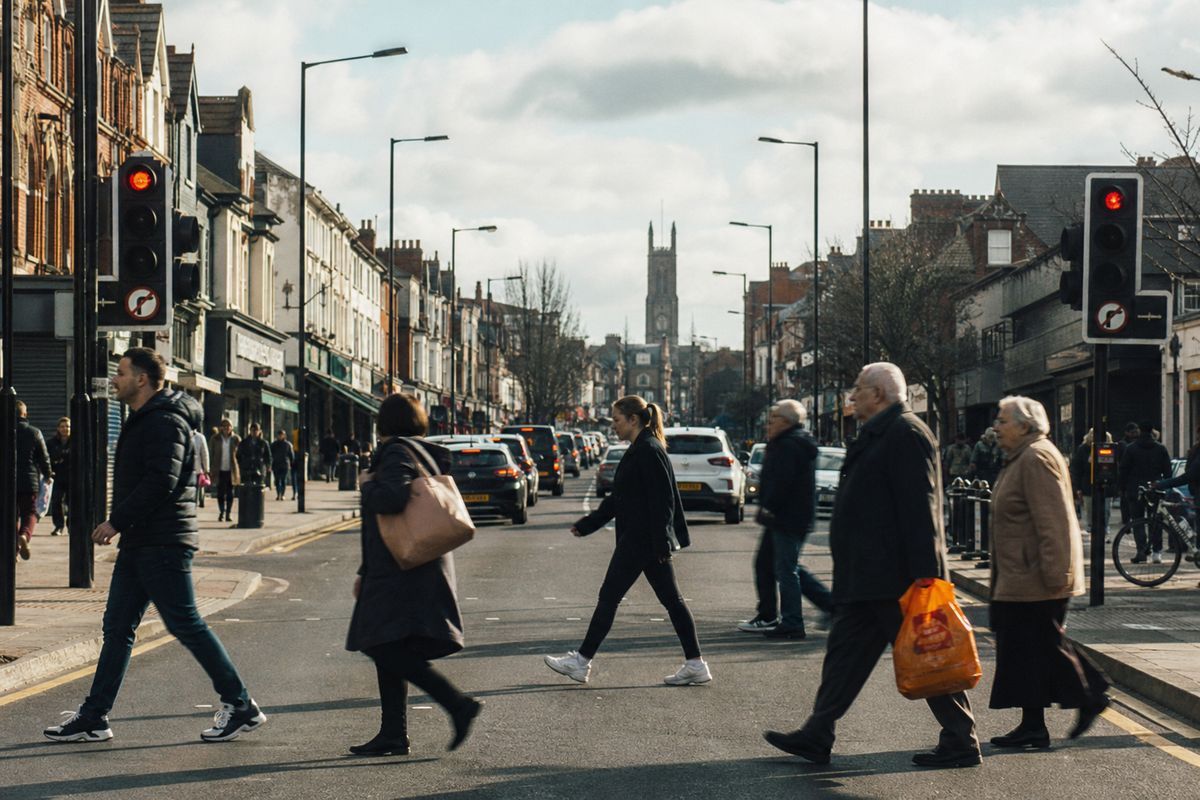
That is where risk often hides in plain sight. Busy roads can feel normal, until something goes wrong. The combination of frequent crossings, turning movements, parked vehicles, and variable speeds creates a complex environment. And when a road is described by police as “very busy”, that is not just a throwaway line. It is a hint that the context is challenging even before any individual decisions are examined.
Local chatter about Aigburth, including community discussions that compare nearby postcodes and talk about walkability, underlines the area’s mixed character. People want to walk to places. They want neighbourhood convenience. But they are also living alongside heavy traffic. That tension is not unique to Liverpool, it is a familiar story in UK cities where historic streets have become modern traffic conduits.
In that sense, the Aigburth Road closure is a moment when the city is forced to slow down and look at itself. Not in an abstract way, but in a very literal one. A road that usually prioritises flow is suddenly still, cordoned off, and treated as a scene that must be understood. It is sobering.
What this could mean for road safety policy in Liverpool
Fatal collisions often become turning points, not always because they lead to immediate change, but because they add weight to ongoing debates. Liverpool, like many UK cities, has to balance competing demands: keeping traffic moving, supporting public transport reliability, and making streets safe for people on foot. When a 26 year old pedestrian dies on a major road, it becomes harder to treat safety as a secondary consideration.
There is no claim in the source material about speed limits, crossings, or prior incidents at this exact location, so it would be wrong to pin this on a specific design flaw. But the broader pattern is well understood by road safety professionals: high traffic volumes plus frequent pedestrian activity equals higher exposure to risk. And exposure matters. Even if individual risk per crossing is low, the sheer number of crossings can produce tragedy over time.
In practical terms, this kind of incident tends to prompt questions such as: are crossing points placed where people actually want to cross, or where engineers prefer them to be? Are sightlines clear, especially near junctions and bus stops? Is lighting adequate? Are turning movements controlled? And is enforcement visible enough to deter risky behaviour? None of these questions accuse anyone, they are simply the checklist cities return to after serious harm occurs.
It also brings private hire operations into the policy conversation. If a significant share of traffic on key corridors is made up of taxis and private hire vehicles, then safety interventions have to consider that reality. That might include targeted driver education, collaboration with operators, and clearer guidance around stopping and picking up passengers on busy roads. Not glamorous, but potentially effective.
Historical context, why busy urban roads keep producing the same headlines
There is a grim familiarity to the wording of these headlines. “Road closed after woman hit by car” could be from almost any city, any year. That is not because journalists are lazy, it is because the underlying pattern repeats. Urban roads built or adapted for throughput often end up carrying more traffic than they were ever meant to, while still functioning as local high streets and pedestrian spaces.
Over the past decade, UK transport policy has increasingly talked about reducing harm, encouraging active travel, and designing streets for people. But implementation is uneven, and progress can be slow. Meanwhile, traffic volumes and the mix of vehicles on the road keep evolving. Private hire growth, delivery traffic, and changing commuting patterns all add complexity. The result is that many corridors operate right on the edge of what feels manageable, until a single moment pushes it into catastrophe.
Another recurring feature is the role of video evidence. CCTV and dashcam footage now shape investigations and public understanding in a way that was not possible years ago. That can be positive, because it can clarify disputed facts. But it also creates a temptation for the public to jump to conclusions based on partial clips or rumours. Police appeals for witnesses and confirmation of CCTV review are, in part, an attempt to ground the process in verifiable evidence.
And then there is the emotional reality. When the victim is young, as in this case, it tends to intensify public reaction. A 26 year old has barely started adult life. That does not make any death more or less important, but it does shape how communities process loss and how urgently they demand answers.
What happens next on Aigburth Road, and what the public should watch for
In the immediate term, the focus remains on the investigation and on supporting the victim’s family. Police typically continue to gather statements, secure footage, and reconstruct the collision. The arrest reported in connection with the taxi driver indicates active lines of enquiry, but it does not indicate an outcome. Any further action, such as charges, would depend on evidence and legal thresholds, and none are stated in the available material.
For residents and commuters, the practical next step is the reopening of Aigburth Road once police work is complete. That can take hours, sometimes longer, depending on the complexity of the scene. The reopening does not mean the case is over, it simply means investigators have gathered what they need from the location at that stage.
In the weeks after a fatal collision, there is often a second wave of attention, quieter but potentially more consequential. Local authorities may review the site, campaigners may call for changes, and transport planners may revisit existing proposals. Whether that leads to tangible interventions depends on politics, budgets, and the specifics of the road layout. But the incident adds urgency, and it adds a human story that is hard to ignore.
For now, the central facts are stark and sufficient. A young woman dies after being hit by a private hire taxi on Aigburth Road at about 5.40pm, police arrest the driver, and investigators appeal for witnesses while reviewing CCTV. The rest, the why and the how, is what the investigation is there to establish. And the city will be watching, because it is a big deal when a road everyone uses becomes the scene of a death.