Arbroath and Broughty Ferry by-election: a choice between local mandate and national mood
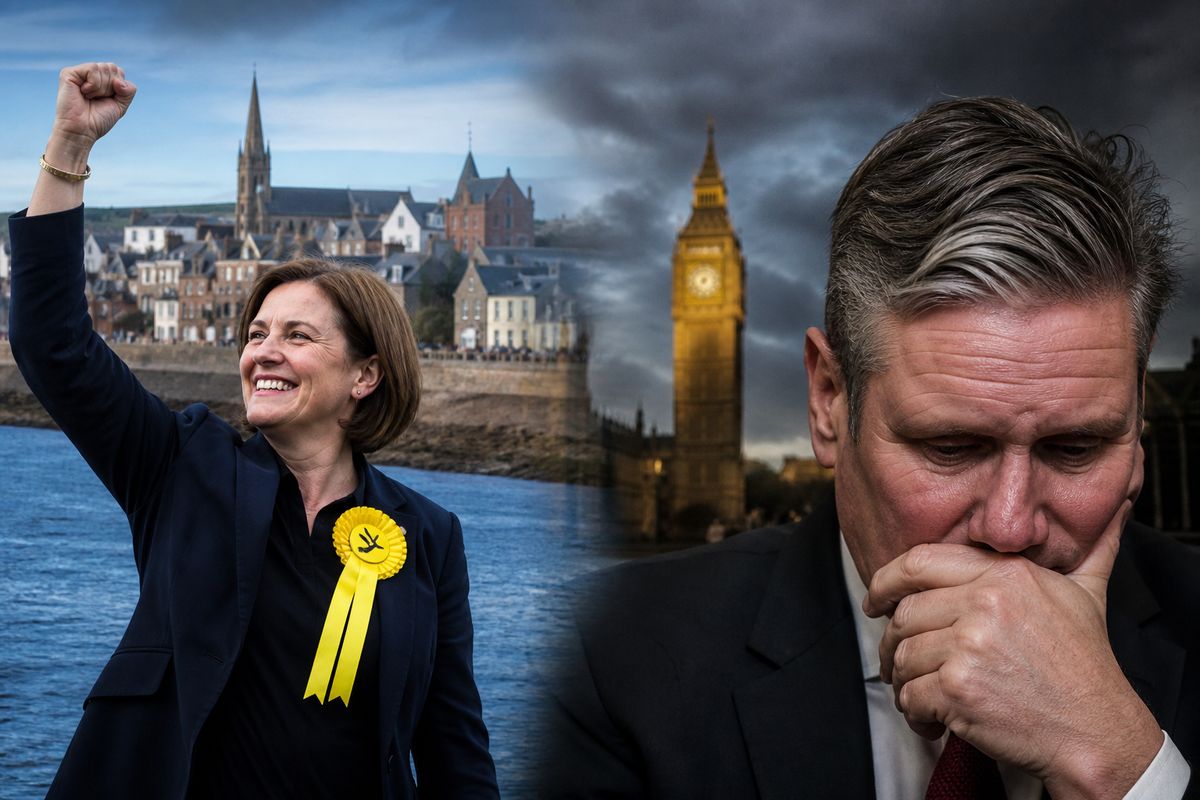
The Arbroath and Broughty Ferry by-election lands at an awkward moment for UK politics. On one side sits a clear, localised result: the SNP candidate Lara Bird wins overnight and frames it as voters rejecting “the politics of division and hate”. On the other sits a wider Westminster story that refuses to stay in its lane: the resignation of former defence secretary John Healey earlier in the week, and the knock-on “repercussions for the prime minister”, as discussed on Sky News programming.
For readers trying to make sense of what matters more, this is the real comparison: is the by-election primarily a verdict on local representation and Scottish political identity, or is it a proxy for a broader UK leadership and stability question? Fair enough, it can be both. But the emphasis changes what analysts, parties, and voters take from the result, and what they do next.

And that is why this is not just another constituency story. By-elections are small in geography but big in symbolism. They are also brutally easy to misread. A party can “win” while losing momentum, or “lose” while building a coalition. The headlines tell the public who took the seat. The deeper question is what kind of politics the result rewards, and what kind it punishes.

What happened: SNP’s Lara Bird wins the Arbroath and Broughty Ferry by-election
The immediate development is straightforward. On 19 June 2026, Sky News Politics reports that SNP candidate Lara Bird speaks after winning the Arbroath and Broughty Ferry by-election overnight. In her victory remarks, she says: “The people of Arborth and Broughty Ferry have rejected the politics of division and hate.” (Her quote uses “Arborth”, but the constituency name in the same report is “Arbroath and Broughty Ferry”.)
There are no vote totals, turnout figures, or swing numbers in the provided material, so any attempt to quantify the scale of the win would be guesswork and should be avoided. Still, the framing of the acceptance speech matters. Bird does not pitch the result as a technocratic endorsement of policy detail. She pitches it as a moral and cultural rejection of a particular style of campaigning. That is a deliberate choice, and it signals how the SNP wants the story told.
But by-election narratives are never written by the winner alone. Opponents will argue it is a local contest shaped by local organisation, candidate recognition, and the usual mid-term grumbles. Supporters will argue it is a bellwether. The truth is usually messier. And the mess is the point: parties learn from by-elections because they expose what cuts through when voters are paying attention, even briefly.
The competing lens: Arbroath and Broughty Ferry by-election vs Westminster leadership shock
To understand why this by-election is being read through a national prism, it helps to place it alongside the other political headline in the source material. On 14 June 2026, Sky News Politics notes that Wilfred Frost opens Sunday Morning with Trevor Phillips reflecting on John Healey’s resignation earlier that week and the “repercussions for the prime minister”. The material does not specify the reasons for Healey’s resignation, the precise timing beyond “earlier this week”, or the nature of the repercussions. So the analysis has to focus on what is actually evidenced: a senior resignation, and an expectation of political fallout at the top.
That matters because by-elections are often interpreted as a referendum on whoever is in charge. When Westminster looks unstable, voters sometimes use the nearest ballot box to send a message. Sometimes they do not. Sometimes they punish the governing party. Sometimes they punish “politics” in general and retreat into local identity. The point is that a high-profile resignation changes the background noise. It raises the political temperature. It makes every result feel like a test.

And there is a second, subtler effect. A resignation story tends to dominate national coverage, which can crowd out the local detail that usually explains by-election outcomes. That vacuum then gets filled with narrative. Bird’s line about rejecting “division and hate” is, in that sense, a pre-emptive attempt to define the meaning of the result before others do. It is a classic move, and not exactly groundbreaking, but it is effective when the media cycle is hungry for a clean takeaway.
Two narratives, side by side: identity politics vs competence politics
At heart, the Arbroath and Broughty Ferry by-election can be read as a contest between two broad political styles. The first is identity and values politics, where the campaign is framed around belonging, respect, and the rejection of “hate”. The second is competence and stability politics, where voters are asked to prioritise calm administration, credible leadership, and the ability to deliver.
Bird’s victory speech clearly leans into the first style. It suggests the SNP wants to position itself as the antidote to a harsher, more polarising tone. Whether that tone is associated with a specific opponent is not stated in the source material, and it would be wrong to speculate. But the rhetorical target is clear: a kind of politics that thrives on division. In practical terms, this is an attempt to build a broad coalition, including voters who may not agree with the SNP on every policy but dislike aggressive culture-war campaigning.
The Westminster resignation story, by contrast, pulls attention towards the second style. When a former defence secretary resigns and commentators talk about repercussions for the prime minister, the public conversation shifts to competence, judgement, and internal discipline. Even if the by-election is not directly connected, the mood can bleed across. Voters may ask: who looks like they have their house in order? Who looks like they are picking fights rather than fixing problems?
Neither narrative is inherently “truer” than the other. But they lead to different strategic lessons. If the SNP believes it won because voters rejected divisive politics, it will double down on values messaging. If opponents believe the SNP won because Westminster looked chaotic, they will focus on restoring credibility nationally. And if both are partly right, the next few contests become a battle over which interpretation sticks.
Comparison table: what the by-election result signals locally vs nationally
One way to keep the analysis honest is to separate what can reasonably be inferred at constituency level from what is being projected onto the result at UK level. The table below sets out the two readings as a practical “vs” guide, rather than pretending there is only one correct story.
| Dimension | Local mandate reading | National mood reading |
|---|---|---|
| Core meaning of the result | Voters choose a representative and local campaign they trust | Voters send a message about the direction and tone of UK politics |
| Key evidence in source material | Lara Bird wins the by-election overnight | Healey resignation discussed as having repercussions for the prime minister |
| Dominant campaign frame | Community identity, local priorities, candidate credibility | Stability, leadership competence, party discipline |
| What parties learn | Ground game, messaging tone, candidate selection matters | National leadership events can shape every contest’s interpretation |
| Risk of over-interpretation | Assuming a local win equals national momentum | Assuming a by-election is a direct referendum on the prime minister |
| Most likely immediate consequence | SNP claims endorsement and moral mandate against divisive politics | Opponents and commentators fold the result into a wider leadership story |
Notice what is missing. There are no numbers here, because the source material does not provide them. That absence itself is instructive. Without vote share and turnout, the temptation is to treat rhetoric as data. It is not. It is messaging. Useful, revealing, but not the same thing.

Still, the table clarifies the real “vs” at play. This is not SNP vs another named party in the provided material. It is a contest between interpretive frames: local mandate versus national mood. And that is how the story is likely to be fought over in the days after the count.
Pros and cons: reading the by-election as a values verdict vs a competence verdict
To make the comparison practical, it helps to spell out what each interpretation gets right, and where it can mislead. Think of it as a checklist for political watchers and party strategists who do not want to get carried away.
Option A: “Values verdict” interpretation (rejection of division and hate)
- Pros: Takes the winner’s stated message seriously, and recognises that tone and trust can be decisive in low-turnout, high-attention contests.
- Pros: Explains why a campaign might succeed by broadening appeal beyond policy detail, especially when voters are tired of constant conflict.
- Pros: Offers a clear strategic lesson, avoid polarising rhetoric, focus on community respect, and present a unifying candidate.
- Cons: Risks turning one victory speech line into a universal explanation, even though voters have multiple motivations.
- Cons: Can be used to dodge harder questions about delivery, competence, or local grievances that also shape outcomes.
Option B: “Competence verdict” interpretation (Westminster instability and leadership repercussions)
- Pros: Acknowledges that high-profile resignations and leadership drama can colour voter perceptions across the UK, even in contests with local roots.
- Pros: Encourages parties to treat internal discipline and credibility as electoral assets, not just Westminster theatre.
- Pros: Helps explain why a by-election can become symbolic, particularly when commentators explicitly link events to repercussions for the prime minister.
- Cons: Without polling or detailed results, it can become an all-purpose explanation that fits any outcome.
- Cons: Risks ignoring the constituency-specific factors that often decide by-elections, candidate quality, local organisation, and tactical voting.
Neither list “wins” outright. The more realistic view is that voters respond to both tone and competence, and parties are judged on both, sometimes in the same breath. But the balance matters. If parties misdiagnose the result, they will fix the wrong problem.
And there is a wider media lesson here too. Political coverage loves a clean moral. Yet the most useful analysis often sounds less dramatic: by-elections are noisy data points, and the signal is clearer when you resist the urge to force a single storyline.
Historical context: why by-elections become proxies, and why that can backfire
By-elections have long been treated as political weather vanes. They are one of the few moments when voters can register an opinion between major national contests, and parties treat them as mini-referendums. That habit is not new. What changes over time is the intensity of the media cycle and the speed at which narratives harden.
In the current environment, a resignation at the top of government, or a senior figure stepping down, can dominate the agenda for days. That makes it more likely that any subsequent electoral event gets interpreted through that lens, whether or not the connection is real. The source material explicitly signals that Healey’s resignation is being discussed in terms of repercussions for the prime minister. That is exactly the kind of storyline that encourages proxy readings of unrelated contests.
But proxy readings can backfire. They can inflate expectations, turning a routine win into a supposed “surge”, or a narrow loss into a supposed “collapse”. Without the hard numbers, commentators may over-weight the rhetoric. Bird’s “division and hate” line is powerful, but it is also a political tool. It frames opponents as morally suspect without naming them, and it positions the SNP as the grown-up choice. That is effective politics. It is not, on its own, a complete explanation of why people vote the way they do.
And there is another historical pattern worth noting. When politics becomes more polarised, parties increasingly campaign on identity and values because it mobilises supporters. Yet voters also punish chaos and reward competence when they feel institutions are wobbling. The tension between those impulses is not going away. If anything, the Arbroath and Broughty Ferry by-election is a neat little case study in how both dynamics can coexist in the same week.
The Verdict: what the Arbroath and Broughty Ferry by-election means, depending on what you are trying to decide
If the reader is trying to decide whether the Arbroath and Broughty Ferry by-election is mainly a story about Scotland’s local political direction, the safest conclusion is that the SNP has secured a tangible win and will claim a mandate to campaign against divisive rhetoric. Lara Bird’s victory message is not subtle. She wants the result read as a rejection of “division and hate”, and that framing is likely to shape how the SNP talks to undecided voters next. It is a big deal for party morale, and it gives them a clean line to repeat.
If the reader is trying to decide whether this by-election is a warning sign for Westminster leadership, the answer is more cautious. The same week features a prominent resignation, John Healey stepping down, with commentators explicitly discussing repercussions for the prime minister. That kind of turbulence changes the atmosphere in which any election takes place. But without vote totals, turnout, or evidence that voters were motivated by Westminster drama, it would be irresponsible to declare the by-election a definitive national verdict.
The most credible takeaway sits in the middle. The SNP win shows that values-led messaging, especially a promise to reject uglier politics, can still cut through. At the same time, the Westminster resignation story reminds parties that competence and stability are always on the ballot, even when the ballot paper is local. The smart operators will not pick one interpretation and ignore the other. They will assume voters are judging both character and competence, and they will organise accordingly.
Closing thoughts: what to watch next after the SNP by-election win
The next phase is not about the count, it is about the aftershocks. Watch how quickly other parties respond to Bird’s framing. Do they contest the idea that the campaign involved “division and hate”? Do they try to pivot the conversation back to delivery and local services? Or do they attempt to outflank the SNP on values, presenting themselves as the real unifiers? The first few days of messaging often reveal which interpretation parties fear most.
Also watch Westminster. When a resignation is described as having repercussions for the prime minister, the political system rarely settles immediately. Further briefings, reshuffles, and internal positioning can keep the story alive, and that can keep colouring how by-election results are discussed. The irony is that the more Westminster churns, the easier it becomes for local winners to say, in effect, “we are focused on people, not politics”. Voters often like that line, even if it is still politics (just dressed differently).
For now, the clean fact is the SNP wins Arbroath and Broughty Ferry, and Lara Bird claims a moral mandate. Everything else is interpretation. Useful, yes. But still interpretation. And in 2026, with politics moving at the speed it does, that distinction is worth hanging on to.