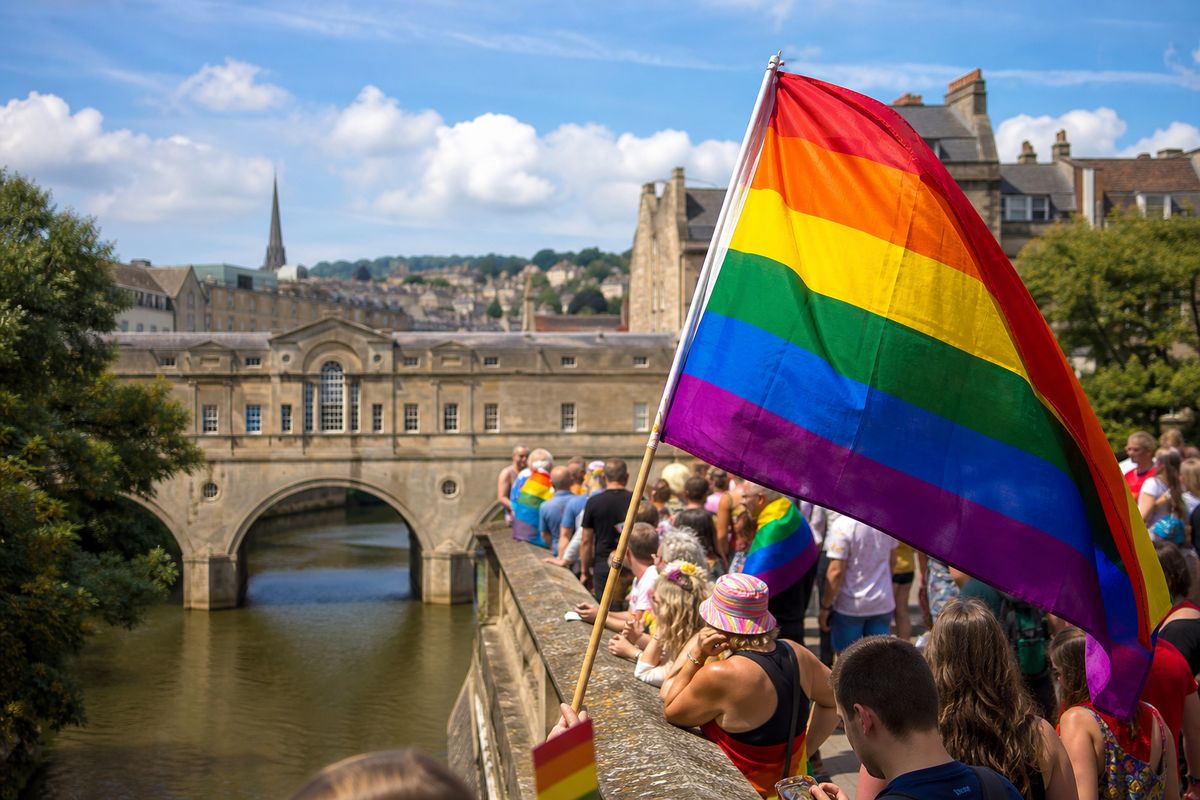
Bath Pride road closures put the city centre on a different timetable
Bath Pride road closures are the practical headline, but the bigger story is what happens when a historic, tightly packed city hosts a modern march that needs space to breathe. On Saturday 22 August 2026, a dozen roads in Bath are closed or partly closed between 11.30am and 1pm to allow the city’s annual Pride parade to move safely through the centre. And yes, that includes Pulteney Bridge, one of the city’s most recognisable pinch points.
For residents and visitors, this is not just a minor traffic note. Bath’s street layout is beautiful, but it is also unforgiving. When you close a bridge, a parade route, and a handful of connecting streets at the same time, the knock on effects ripple quickly into bus reliability, taxi access, deliveries, and even how people with limited mobility get around. Pride is a celebration, but it is also an event with real operational demands, especially in a city where the centre is effectively a small peninsula of streets hemmed in by the River Avon.
The available source material does not provide crowd figures, policing numbers, or a full official route map. What it does make clear is the timing window, the scale of closures, and the specific inclusion of key central locations such as Grand Parade, Orange Grove, and Pulteney Bridge. That is enough to understand the shape of the day, and why the city’s transport network has to flex around it.

What is happening on 22 August 2026, and when do the closures bite?
The immediate development is straightforward: Bath hosts its annual Pride parade on Saturday 22 August 2026, and roads are closed or partially closed to make that possible. The closure window given in the source material is between 11.30am and 1pm, covering the core period when the march moves through the city centre. That is a relatively tight window on paper. But anyone who has lived through event days in Bath knows the reality is messier, because set up and dispersal create pressure before and after the formal closure times.
The sources describe “a dozen roads” affected. They also identify several specific locations that matter disproportionately because they are not just any streets, they are connectors. Pulteney Bridge is the obvious one: it is a crossing that funnels movement between the central shopping and visitor areas and the eastern side of the river. Grand Parade and Orange Grove sit right in the heart of the city’s visitor circuit, close to major pedestrian flows and key bus corridors. When those spaces are managed for a parade, the city centre becomes more pedestrian oriented by necessity, even if only for a couple of hours.
Some of the road list detail available includes named entries such as Grove Street at the junction with Argyle Street, plus Pulteney Bridge, Grand Parade, and Orange Grove listed as “full length” closures. The source material does not provide every road name in a single, fully reproduced list here, so this article cannot responsibly claim a complete inventory beyond what is explicitly stated. But the pattern is clear: the closures concentrate around the central spine of Bath where a march can be seen, heard, and safely stewarded.
Bath Pride road closures, why Pulteney Bridge matters more than most
Pulteney Bridge is not just a pretty postcard. It is a working piece of infrastructure in a city where alternative crossings are limited and often already busy. Closing it, even temporarily, changes the logic of moving around Bath. Drivers who might normally cut across the river have to reroute, and in Bath rerouting is rarely a simple “take the next left”. It can mean circling out to other crossings, meeting congestion at already constrained junctions, and adding time that is hard to predict.
There is also a behavioural element. When a landmark like Pulteney Bridge is closed, people do not always read that as “the bridge is closed for a parade”. They read it as “the city centre is blocked”. That perception can reduce footfall for some businesses while boosting it for others, depending on where the crowds gather and how easy it is to reach them. It can also change visitor decisions in real time, especially for day trippers arriving by car who suddenly find their preferred route into the centre is not available.
Grand Parade and Orange Grove play a similar role in the city’s internal circulation. They are not simply roads, they are spaces where pedestrians, buses, and general traffic often compete. On Pride day, the balance tilts decisively towards pedestrians and parade participants. That is the point. But it also means the city has to manage safety at the edges, where people cross, where crowds thicken, and where vehicles need controlled access for essential movements.
And then there is the simple truth: Bath is compact. That makes Pride feel vibrant, close, and communal. But it also means that even a dozen closures can feel like half the city if they sit in the right places. The sources do not specify whether diversions are signed, how bus routes are altered, or what stewarding arrangements are in place. Those details typically sit with local authorities and event organisers. What can be said, based on the closure list and timing, is that the centre is effectively in event mode from late morning into early afternoon.
How Bath Pride fits into the wider Pride calendar, and why cities keep doing this
Bath’s annual Pride parade sits within a broader UK pattern: summer weekends where towns and cities host marches, performances, and community events that combine celebration with visibility. Pride is not a niche event anymore. It is mainstream, family friendly in many places, and increasingly woven into local cultural calendars. That shift matters because it changes expectations. People now plan around Pride, businesses prepare for it, and councils treat it like any other major event that needs traffic management and public safety planning.
But Pride is also different from, say, a road race. A parade is slower, more social, and more likely to draw spectators who move unpredictably, stopping to watch, crossing streets, and clustering at photogenic points. In Bath, those photogenic points are everywhere. That is great for atmosphere. It is trickier for crowd flow. A closure window of 11.30am to 1pm suggests organisers are aiming for a contained march period, which is sensible in a city centre that cannot be shut down all day without significant disruption.
There is also a historical context worth naming. Pride events in the UK have evolved from protest marches into a mix of commemoration, activism, and festival. That evolution brings its own tensions, about sponsorship, policing, and what Pride should prioritise. The source material here is focused on logistics rather than politics, so it does not provide detail on Bath Pride’s programming, sponsors, or messaging in 2026. Still, the very fact that the city is closing central roads, including a landmark bridge, signals institutional support at the level that matters day to day: making space in the public realm.
Comparisons help. In larger cities, Pride often means extensive closures and public transport reconfiguration. Bath is not London or Manchester, fair enough, but it has a similar challenge in miniature: a dense centre, a high visitor baseline, and limited redundancy in the road network. That is why even “only” a dozen roads becomes a significant operational story, and why local coverage focuses on the list. People need to know whether they can get across town, and how long it will take.
Operational impact, transport knock ons, and the hidden costs of a two hour closure
Two hours sounds manageable. In practice, the disruption can stretch because transport systems do not reset instantly. Buses that are delayed before 11.30am may arrive late into the closure period and then have to wait or divert. Taxis may avoid the centre entirely, which pushes pick ups to the edges and increases walking distances. Deliveries scheduled for late morning may be brought forward or pushed back, which affects staffing and stock handling for city centre businesses.
There is also the question of access for people who rely on vehicles. Blue Badge holders, carers, and those with mobility impairments often need closer drop off points. When central streets are closed, the “last 200 metres” becomes the hard part. The source material does not specify designated drop off zones or accessibility arrangements, so readers should assume that access is more constrained than usual and plan accordingly. On event days, the difference between a smooth trip and a stressful one is often whether someone has checked where they can be dropped, and how far they will need to travel on foot.
For emergency services, closures are normal and planned for, but they still require careful management. Stewards and marshals typically hold and release crossings, and routes are designed to maintain emergency access. Again, the source material does not provide the operational plan, so this article cannot describe specific emergency lanes or protocols. What can be said is that closing Pulteney Bridge and central streets concentrates vehicle movement onto fewer corridors, which can increase congestion and make response times more sensitive to minor incidents elsewhere.
And then there is the economic angle. Pride can be a boost for hospitality, especially for venues near the parade route. But the benefits are uneven. Businesses that depend on quick turnover parking, or on deliveries at specific times, can feel the pinch. The best managed event days are the ones where communication is clear and early, so businesses can adjust staffing, stock, and opening hours. The headlines here are essentially that communication function: telling people what is closed, and when.
Bath Pride road closures, what this signals about the city’s direction
It is tempting to treat road closures as a boring admin story. But they are also a signal of what a city values, and how it uses its most precious asset: public space. Bath is a UNESCO recognised historic city with a centre that is, by design, human scale. When it chooses to close Grand Parade, Orange Grove, and Pulteney Bridge for Pride, it is making a statement that the centre is not only for commerce and tourism, it is also for civic life.
There is a wider industry context too, particularly around event management in heritage locations. Across the UK, councils are balancing competing pressures: keeping traffic moving, supporting local businesses, meeting climate and air quality goals, and enabling cultural events that bring communities together. Pride sits right in the middle of that. It is a high visibility event that benefits from centrality, but centrality is exactly what makes it disruptive. The solution is not to push it to the outskirts, because that undermines the point. The solution is to get better at temporary reallocation of space, clear signage, and predictable closure windows.
Bath’s choice of a late morning to early afternoon closure window is interesting in that light. It suggests a desire to minimise the impact on the evening economy and on later day tourist flows, while still giving the parade a prime slot. Historically, many parades run earlier in the day for precisely this reason: you get the visibility, then you reopen the city and let the rest of the day operate more normally. It is not exactly groundbreaking, but it is pragmatic.
And there is one more point. The inclusion of Pulteney Bridge in the closure list is a reminder that Pride is not being tucked away. It is moving through the city’s symbolic spaces. That matters for representation. It also matters for the ongoing conversation about who feels welcome in the centre of Bath, and when.
What This Means For You
For anyone travelling into Bath on Saturday 22 August 2026, the key practical takeaway is timing. The closures are reported as running between 11.30am and 1pm, so arriving before late morning or after early afternoon reduces the risk of being caught in the worst of the disruption. If travel during that window is unavoidable, the sensible move is to build in extra time and assume that crossing the river in the centre, particularly via Pulteney Bridge, is not an option.
For residents, especially those who need vehicle access for caring responsibilities, work shifts, or mobility reasons, the day is about planning the edges. Identify where drop offs and pick ups can happen outside the closure zone, and be ready for a longer walk. And if a delivery or appointment is scheduled around midday, it is worth moving it earlier or later where possible. Two hours can be the difference between a straightforward run and a frustrating loop around the city.
For businesses and organisations in the centre, the closures are also an opportunity. Pride brings footfall, but only if people can find their way and feel comfortable lingering. Clear signage at entrances, staff who can direct customers, and a bit of flexibility on booking times can make a real difference. The sources do not provide official guidance for traders, so the best approach is common sense: treat the centre as pedestrian heavy, expect slower vehicle movement, and plan staffing for peaks around the parade period and immediately after reopening.
Closing thoughts, a short disruption for a visible moment
Bath’s Pride day road closures are, on one level, a simple list: a dozen roads, a two hour window, and a few standout names like Pulteney Bridge, Grand Parade, and Orange Grove. But the reason it becomes news is that Bath is a city where small changes in the centre have outsized effects. Close one bridge and you change the whole rhythm of movement.
Still, the logic is clear. Pride needs space, and cities that want Pride to be safe and visible have to provide it. Bath is doing that on Saturday 22 August 2026, even if it means a bit of inconvenience. The best outcome is the obvious one: a joyful march, a busy city centre, and roads reopening on time with minimal knock on disruption. Not glamorous, perhaps. But in a city like Bath, good event logistics are half the battle.
One final caveat: the source material available here does not include the complete closure list in full, nor does it include official diversion routes or public transport changes. Anyone travelling should check local signage and official travel updates on the day. But as a headline guide, the message is simple, plan around 11.30am to 1pm, and do not expect to cross central Bath via Pulteney Bridge during the parade.