Midterm elections 2026 enter the final 48 hours
The midterm elections 2026 are almost here, with Election Day set for 3 November 2026, just two days away. That timing matters because the closing stretch is when campaigns stop trying to persuade everyone and start focusing on turning out the people who already agree with them. It is also when late breaking narratives, a gaffe, a court ruling, a surprise endorsement, a polling wobble, can feel bigger than they really are (and sometimes, to be fair, they are).
At the centre of the story is the usual midterm dynamic: these elections are widely treated as a referendum on the sitting president and the president’s party. One major US network frames it exactly that way, noting that midterms are almost always a test of the White House. That is not a hot take, it is the basic structure of American politics. Voters use midterms to reward, punish, or at least send a message. And because control of Congress is on the ballot, that message can translate into real power: investigations, budgets, confirmations, and the ability to pass or block legislation.
What makes 2026 feel particularly charged is the mix of hard numbers and soft signals coming in at once. A Marist Poll released in October 2026 reports Democrats with an 8 point advantage heading into the midterms, and it also puts Donald Trump’s approval rating at 40% among likely voters. Those are two separate data points, but together they sketch the kind of environment that can shape turnout and candidate strategy. And yes, polls are not results. But they do influence where money goes, where candidates travel, and which messages get repeated until they become the soundtrack of the final weekend.

What is being decided on 3 November 2026
On Election Day, voters choose the full 435 member House of Representatives. That is the big one because it is the chamber that can flip quickly, district by district, and it is often the first place midterm anger shows up. Alongside that, a significant slice of the Senate is up. Ballotpedia’s national overview says 33 of the 100 Senate seats are up for election, plus another two seats also on the ballot. In other words, the Senate map is not a footnote, it is a central battleground.
There is also a major state level component. A widely circulated preview notes that voters will decide 36 gubernatorial races in 2026. Governors matter in obvious ways, like education and public health, but also in less obvious ones, like how elections are run and how district lines are drawn after the next census cycle. That is why national parties pour resources into governor’s mansions even when the headlines are focused on Congress.
And then there is the practical reality: Americans are not just voting on one thing. They are voting on a bundle of power. A House majority can decide what gets investigated and what gets ignored. A Senate majority can decide which nominees get confirmed. Governors can shape policy at home and build national profiles for later. The midterm elections 2026 are, in that sense, not one election but a stack of them, all happening on the same day.
Polling, predictions, and the late cycle mood
The most concrete polling detail in the source material comes from the Marist Poll in October 2026: Democrats lead by 8 points heading into the midterms. The same release reports Trump approval at 40% among likely voters. Without additional crosstabs in the supplied material, it is not possible to say which groups are driving those numbers, or how they vary by region. But even at headline level, they tell campaigns what they need to know: the national environment appears to lean towards Democrats, and Trump’s standing with likely voters is not strong.
But national mood is not the same thing as seat maths. The House is decided district by district, and the Senate is decided state by state. A party can win the national popular vote for House candidates and still struggle to convert that into a comfortable majority, depending on where votes are concentrated. That is why the final weekend is full of targeted visits and hyper local messaging. Candidates talk about crime in one place, jobs in another, abortion rights in another, and they are not necessarily being inconsistent. They are being tactical.
Online political communities are also doing what they always do at this stage: obsessing over early vote totals, donor lists, and final predictions. A discussion thread tracking early voting claims 52,169,960 mail in and early in person votes cast nationally, alongside a separate figure of 60,545,151 mail in ballots. Those numbers are presented in the community context and are not independently verified in the material provided, so they should be treated as indicative of what people are watching rather than as official totals. Still, the underlying point is real: early voting is now a major part of the US electoral system, and it changes how campaigns allocate resources in the final days.
Another community shared infographic claims the 50 biggest donors and organisations have contributed $2.77 billion to the 2026 midterm election cycle. Again, the figure appears in a community post rather than an official filing summary in the supplied sources, so it cannot be treated as definitive here. But it does underline something that is hard to deny: money is not just present in US politics, it is structural. And when donors and organisations can move billions, they can shape the agenda, the advertising landscape, and the issues that get oxygen.
The mechanics behind the midterm elections 2026: early voting, donors, and media
Early voting is no longer a side show. It is a parallel election that starts weeks before Election Day and forces campaigns to operate on two clocks at once. One clock is persuasion, the other is mobilisation. When millions of ballots are cast early, a campaign cannot wait until the final weekend to define its opponent. It has to do it earlier, and that tends to make the whole cycle feel longer, more expensive, and frankly more exhausting.
That is where the donor ecosystem comes in. The community sourced claim of $2.77 billion from the 50 biggest donors and organisations, whether or not it is the final word, fits the broader reality that modern US midterms are fuelled by huge sums. The practical effect is saturation. Voters in competitive districts can see the same attack ad ten times in a single evening. Meanwhile, voters in safe seats see almost nothing and wonder what all the fuss is about. It is the same country, but two completely different experiences of democracy.
Media coverage, including the kind of rolling live pages and “what to watch” explainers flagged in the source material, tends to reinforce the referendum framing. That is not necessarily wrong. Midterms often do function as a judgement on the president. But it can also flatten the story. Local candidates, state issues, and specific legislative fights can get reduced to a single national storyline, even when voters are motivated by something more personal, like school funding, healthcare access, or the cost of living.
And then there is the prediction industry. YouTube previews, pundit panels, and social media threads about “final predictions” are part entertainment, part analysis, part coping mechanism. People want certainty in an uncertain system. They want a map that tells them what happens next. But the closer the election gets, the more those predictions are really about psychology: who feels confident, who feels anxious, and who is trying to will a result into existence.
Key players and institutions shaping the 2026 battlefield
Start with the institutions. The US Congress is bicameral, meaning power is split between the House and the Senate. That split matters because the two chambers have different rules, different political incentives, and different electoral rhythms. The House is built for rapid swings, every seat is up every two years. The Senate is built for stability, with staggered terms. In 2026, with 33 Senate seats plus two more on the ballot, the Senate map is large enough to be volatile, but still constrained by which states happen to be up this cycle.
Then there are the parties. The Marist Poll snapshot suggests Democrats enter the final stretch with a national edge. If that holds, Democratic strategists will talk about expanding the map, forcing Republicans to defend seats they would rather not spend money on. Republicans, meanwhile, will focus on turning the election into a choice rather than a referendum, trying to make Democratic candidates unpopular in their own right. That is classic midterm playbook stuff. It is not glamorous, but it is how elections are won.
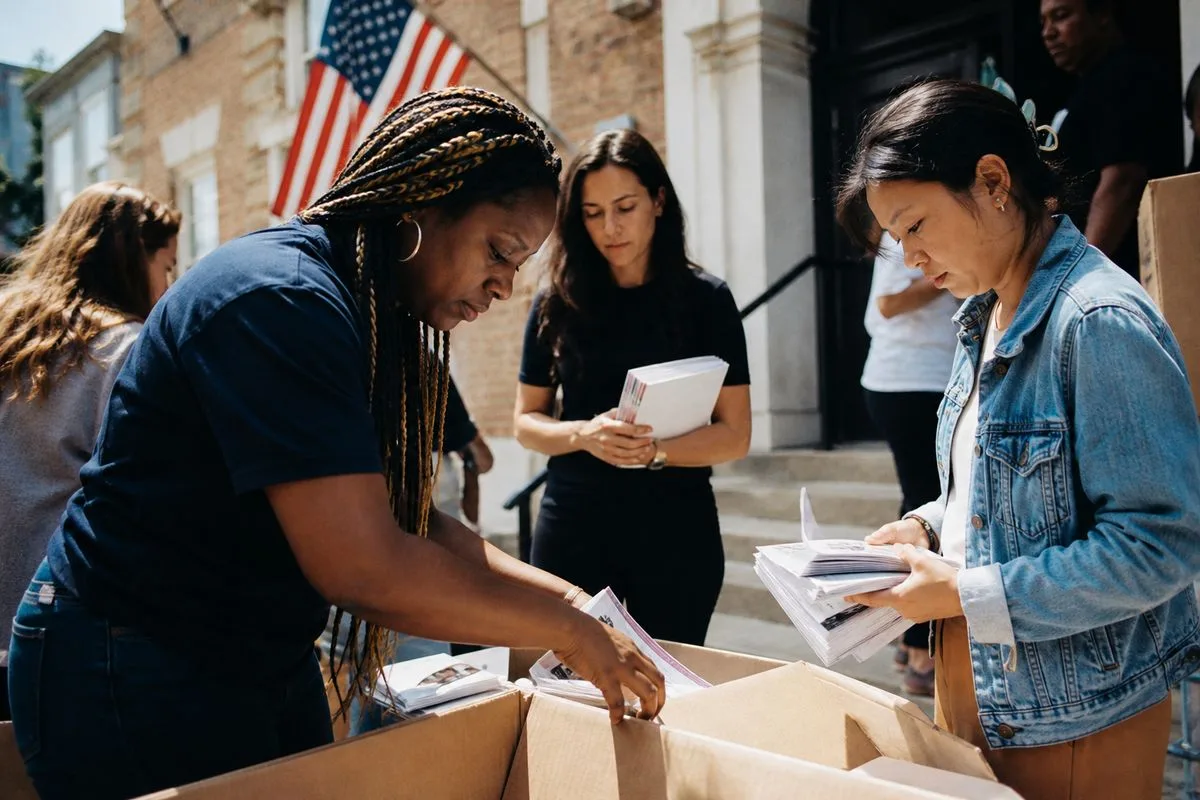
Donald Trump’s role is also baked into the 2026 environment, at least as far as the supplied material indicates. The poll figure of 40% approval among likely voters is a clear signal that he remains a polarising force. Even when Trump is not on the ballot, he can shape Republican primaries, fundraising, and messaging. He can also shape Democratic turnout, because opposition to Trump has been a powerful motivator in recent cycles. That dynamic can cut both ways, energising both sides, and making the electorate more rigid.
Finally, governors and state parties matter more than they sometimes get credit for. With 36 governor’s races happening alongside congressional contests, the midterms are also a competition over state level power. Governors can become national figures quickly, especially if they are seen as competent crisis managers or as culture war champions. And because state parties often share staff, data, and donor networks with federal campaigns, the lines between “local” and “national” politics are blurrier than ever.
Why It Matters
The midterm elections 2026 are not just about who gets the gavel in the House or which party controls Senate committees. They are also a stress test of how American democracy functions in an era of permanent campaigning. Early voting means the electorate is effectively making decisions over a longer window, while the media and political class still treat Election Day as the single climactic moment. That mismatch creates space for misinformation, confusion, and last minute narratives that do not reflect what is actually happening on the ground. When millions have already voted, a late scandal might dominate headlines but barely touch the result. That is a new kind of political disconnect, and it is only getting bigger.
There is also a deeper question about representation. If the donor ecosystem is even close to the community claimed $2.77 billion from the top 50 donors and organisations, the obvious worry is not just influence, it is distortion. Campaigns talk about what their funders care about, because they have to. That can pull attention away from issues that matter to voters but do not generate big cheques. It can also make politics feel like a closed shop, something done by professionals and financiers, with ordinary people invited to participate only at the end. That perception, whether fair or not, is corrosive.
And then there is the referendum framing. Yes, midterms are often a judgement on the president. But reducing everything to that story can hide the real stakes. Governors elected in 2026 will shape policy for years. Senators elected in 2026 will vote on judges and national security decisions. House members elected in 2026 will decide budgets that affect everything from disaster relief to healthcare programmes. The point is simple: even if a voter is furious or delighted with the White House, the ballot is still full of choices that will outlast the news cycle. That is the part that gets lost in the noise, and it is arguably the part that matters most.
Historical context: why midterms so often punish the party in power
Midterms have a reputation for swinging against the president’s party, and that reputation exists for a reason. The party in power owns the problems of the moment, even when those problems are global or inherited. Voters who are unhappy are more motivated to show up, while voters who are satisfied are more likely to stay home. That turnout imbalance is one of the quiet engines of midterm politics. It is not dramatic, but it is powerful.
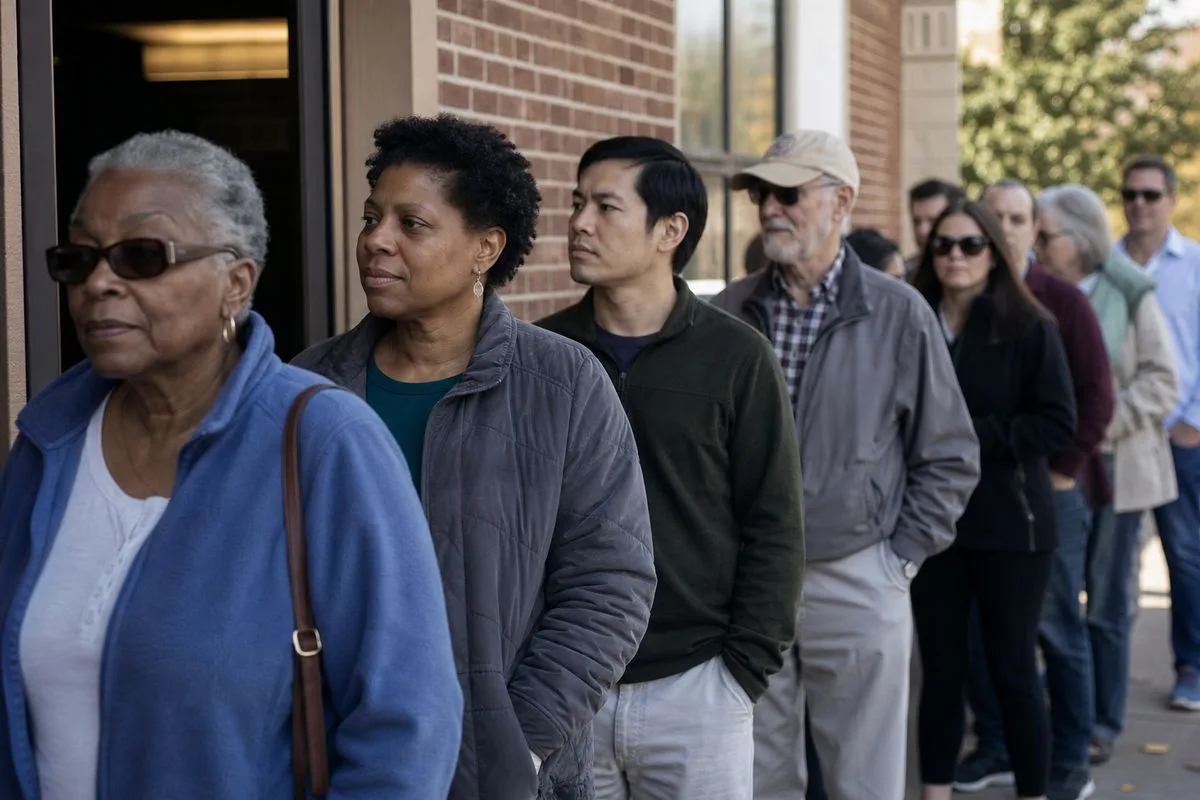
In 2026, the referendum framing is explicit in the way major outlets describe the race. That is not just pundit chatter, it is a signal that campaigns themselves are leaning into it. When an election becomes a referendum, the opposition party benefits from simplicity. It can say, “Are you better off?” and let voters fill in the blanks. The party in power has to defend a record, explain trade offs, and persuade people to be patient. That is a harder sell, especially if the public mood is sour.
But history also shows that midterms are not destiny. Candidate quality matters. Local issues matter. Scandals matter. And the Senate map matters a lot because it is not evenly distributed. Some cycles simply offer one party more opportunities than the other. That is why broad national polling, like the Marist Poll’s 8 point Democratic advantage, should be read as climate rather than forecast. Climate shapes outcomes, but it does not dictate them.
One more historical note that is easy to forget: midterms can create political careers. A wave election can bring in a cohort of lawmakers who become committee chairs, party leaders, even presidential contenders. The 36 governor’s races are part of that pipeline too. In other words, the midterm elections 2026 are not only about the next two years. They are about who gets positioned for the next decade.
What to watch on election night and beyond
The first thing to watch is not a single race, it is the pattern. Are competitive House districts breaking heavily in one direction, suggesting a national wave, or are they splitting, suggesting a more mixed electorate? Because all 435 House seats are up, the House provides the clearest read on national mood. If one party is consistently outperforming expectations across multiple regions, that is when the story crystallises.
The second thing is the Senate. With 33 seats plus two more on the ballot, control could hinge on a small number of states. Senate results can also lag behind the House because statewide counts can take longer, and because close races often trigger recounts and legal challenges. That is not a prediction, it is just the reality of tight elections. The public should expect that some outcomes may not be known immediately, especially if margins are razor thin.
Third, watch the governors. With 36 gubernatorial races, the state level story could be huge even if the congressional story is muddled. A party could have a disappointing night federally but still make gains in statehouses, or vice versa. Those results will shape policy quickly, and they will shape the political bench for 2028 and beyond. It is not exactly glamorous compared to a Senate flip, but it is a big deal.
Finally, watch the post election narrative. The morning after, everyone will claim a mandate. That is politics. The more interesting question is what the results allow each party to do. If Congress is split, expect gridlock and messaging bills. If one party controls both chambers, expect aggressive oversight and a push to set the agenda. Either way, the midterm elections 2026 will define the governing environment in Washington and the policy direction in dozens of states, long after the last campaign ad stops running.
Closing thoughts: a high stakes midterm with long shadows
Two days out, the midterm elections 2026 are defined by scale and uncertainty. The scale is obvious: the entire House, a major chunk of the Senate, and 36 governor’s races. The uncertainty is structural: early voting changes the rhythm, money changes the messaging, and national mood does not always translate neatly into seat counts. Add in a polarising political environment, reflected in polling like Trump’s 40% approval among likely voters, and the result is an election that feels both familiar and unusually tense.
What is clear is that 3 November 2026 will not be an endpoint. It will be a reset. The winners will claim momentum, the losers will argue about strategy, and the country will move straight into the next phase of political conflict and negotiation. Fair enough, that is how American politics works now. But for voters, the choice is still real and immediate: who gets power, who gets to set the agenda, and who gets to say no.
And that is the simplest way to understand the midterm elections 2026. They are not just a temperature check. They are a transfer of authority. The only question left is where that authority lands when the votes are counted.