Miley Cyrus drops last name, and the internet does what it always does
Miley Cyrus drops last name, at least in the way most people experience celebrity identity in 2026, through social media handles, profile names, and the shorthand of pop culture. The immediate spark for this news cycle is simple: she removes “Cyrus” from her name on her social media accounts earlier this week, and it sets off a familiar chain reaction. Fans speculate. Commentators psychoanalyse. And then, crucially, her father Billy Ray Cyrus responds publicly, adding fuel to a story that is, on the surface, about branding, but underneath is about family, legacy, and control.
The headline angle is the father’s reaction, reported by CBC News: Billy Ray Cyrus reacts to Miley changing her stage name. That response matters because the Cyrus surname is not just a family name, it is a recognisable entertainment asset. It carries a particular kind of Americana, a particular era of pop country crossover, and a particular tabloid history. When a global pop star chooses to step away from it, even partially, it reads like a statement, whether she intends it or not.
There is also a second layer here that makes the story stickier than a standard “celebrity changes profile name” item. Online discussion points out that “Miley” is not her birth name, and that her name at birth is Destiny, with “Smiley” and then “Miley” emerging as family nicknames. That context does not diminish the move, it sharpens it. It suggests that names, for her, have always been tools as much as labels, shaped by family, audience, and the demands of a career that starts before adulthood.


What actually happens this week, and why Billy Ray’s response lands
The specific development is narrow but loud: Miley removes “Cyrus” from her social media name, prompting immediate coverage and a wave of community debate. The reporting notes that Billy Ray Cyrus reacts to the change, and that reaction becomes part of the story rather than a footnote. In celebrity culture, family members often stay quiet, or at least try to. A public response signals either genuine emotion, a desire to shape the narrative, or both.
It is worth being clear about what the available source material does and does not say. It confirms the timing, “earlier this week”, and it confirms that Billy Ray reacts publicly. It does not provide a full transcript of his remarks, nor does it provide a detailed explanation from Miley about her intent. So any claim about a feud, a reconciliation, or a strategic rollout would be speculation. And fair enough, because the internet will do that anyway. But responsible coverage has to separate what is known from what is merely plausible.
Still, the reaction matters because it highlights the tension between personal identity and inherited brand equity. The Cyrus name is a shortcut for a whole narrative: a famous father, a child star turned pop provocateur turned adult artist, and a family that has been, at various times, both a support system and a storyline. When Billy Ray comments, he is not just a dad reacting to a daughter’s choice. He is also a stakeholder in a shared public mythology.
And then there is the timing. In 2026, artists increasingly treat social profiles as living billboards. A name change can be a soft launch for a new era, a signal of a creative pivot, or a boundary-setting move. It can also be nothing more than a preference. The point is that audiences have been trained to read these changes as meaningful, because so often they are.
Miley Cyrus, the brand, and the long arc from child star to “evolving artistry”
To understand why “Miley Cyrus drops last name” becomes a headline rather than a footnote, it helps to remember the scale of her public evolution. The source material describes her as an influential figure in popular music, known for evolving artistry and image reinventions, and notes that she is an established child actress before developing her music career. That trajectory is not just biography, it is the foundation of her brand: reinvention as a core competency.
Names sit at the centre of that. “Miley Cyrus” is not merely a legal identifier, it is a stage identity that has travelled through multiple phases of pop culture. When an artist has spent years being discussed as a symbol, a lightning rod, and a performer, the name becomes a container for all of it. Dropping “Cyrus” can be read as an attempt to narrow that container, to reduce the inherited associations, or to create a cleaner slate for whatever comes next.
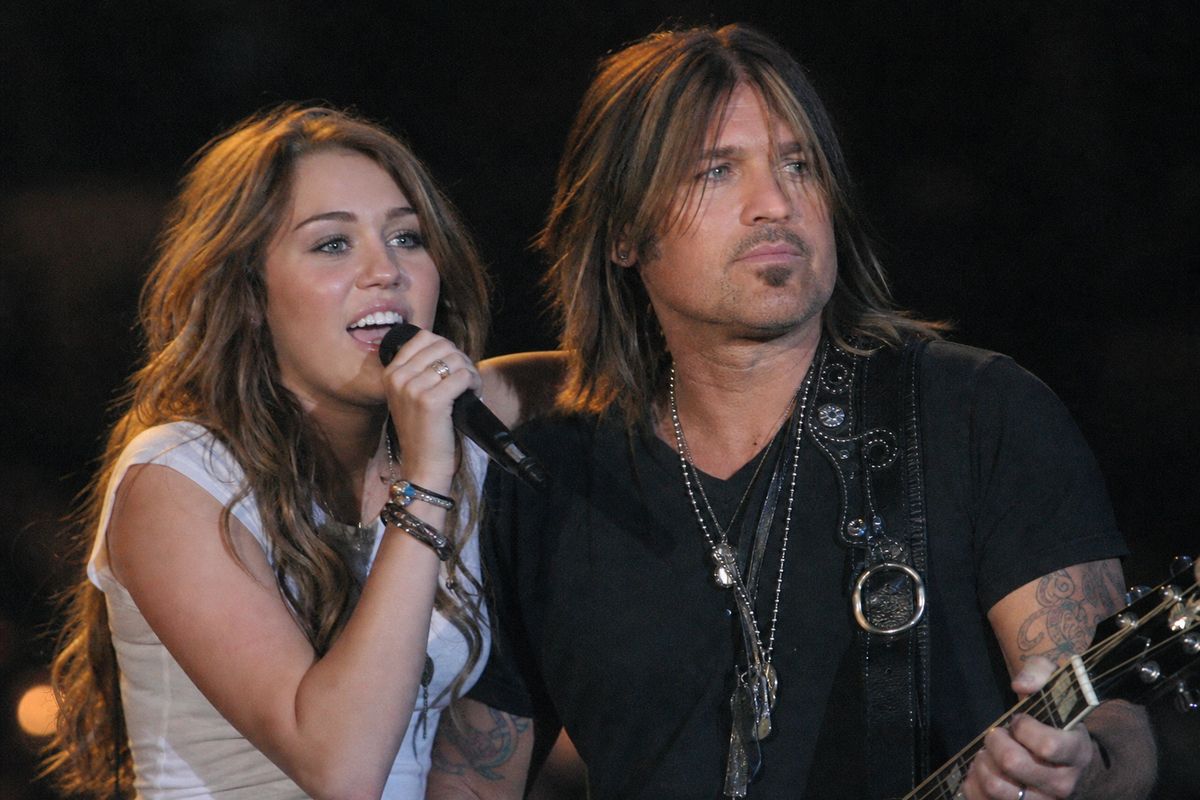
It is also important to note the family dimension that has always been present in her public story. Billy Ray Cyrus is not an obscure parent. He is famous in his own right, and the family connection is part of the way the public first frames her. Even when she is clearly the bigger global star, the surname keeps the association alive. Removing it, even informally, is a way of changing the default framing from “daughter of” to simply “artist”.
And yet, the move is not a rejection of her past by default. Artists routinely adjust how they present their names without disowning their history. Sometimes it is about simplicity. Sometimes it is about aesthetics. Sometimes it is about emotional distance. Without a direct statement from Miley in the source material, the most accurate reading is that the change is significant because it invites interpretation, not because its meaning is confirmed.
The Cyrus surname as cultural baggage, and why pop stars try to travel lighter
In the entertainment industry, surnames can be rocket fuel, but they can also be ballast. A famous family name opens doors, but it also invites constant comparison and a kind of permanent backstory that never quite goes away. For Miley, the “Cyrus” surname is inseparable from a particular American celebrity narrative: country music lineage, Disney-era fame, tabloid scrutiny, and a long-running fascination with how a child star becomes an adult artist.
Dropping a surname is one of the few levers a performer can pull that is both symbolic and practical. Symbolic, because it signals autonomy. Practical, because it changes search behaviour, media headlines, and even how casual listeners talk about the artist. In a world where attention is measured in seconds, a shorter name can be easier to remember, easier to type, and easier to package. That is not exactly groundbreaking, but it is real.
There is also the question of ownership. A stage name is a brand asset, and brand assets are managed. Even if the public sees a name as personal, the industry sees it as commercial. When an artist tweaks that asset, it can affect everything from how streaming platforms display catalogue to how press outlets write headlines. The source material does not provide details on any formal legal change, trademark filings, or label strategy. But the fact that the change is visible on social media is enough to trigger the media machine, because social is where the brand is most immediately experienced.
And then there is the family angle again. Billy Ray’s public reaction becomes a proxy for a much bigger question: who gets to define the meaning of the Cyrus name in 2026? The father who built a career with it, or the daughter whose global fame has arguably reshaped what the surname signifies to younger audiences? When both are public figures, even a private family dynamic becomes a public negotiation.
Fan communities, identity debates, and the way “real names” get weaponised
One of the more telling parts of this story is not the mainstream coverage, it is the community conversation. Online discussion points out that “Miley” is not her real first name, and that her name at birth is Destiny, with “Smiley” and then “Miley” emerging as a nickname. That detail matters because it shows how quickly fans and commentators reach for “authenticity” as a yardstick, as if a birth certificate is the only legitimate proof of self.

But stage names are not lies. They are tools. They are often chosen early, sometimes by families, managers, or studios, and then lived into over time. In Miley’s case, the nickname origin story suggests something more organic than a boardroom invention. So when people argue about whether she is “really” Miley, what they are often doing is arguing about who gets to control her narrative: her, her family, or the audience that has watched her grow up in public.
There is also a subtle gendered dynamic that tends to show up in these debates. Female artists, especially those who start young, are frequently expected to justify their choices in ways male artists are not. A name change becomes a referendum on maturity, stability, or family loyalty. Meanwhile, for many performers, it is simply a creative decision. The source material does not provide evidence of Miley’s reasoning, so the most defensible analysis is about the pattern: audiences project meaning onto the move because celebrity culture trains them to.
And yes, the timing of community chatter matters too. The Reddit discussions referenced in the source material show active fan engagement in late August 2026, including a post about Miley paying tribute to her godmother Dolly Parton. That kind of emotional context can intensify how fans interpret identity shifts. When an artist is publicly processing loss, tribute, or legacy, even small branding changes can feel loaded.
What this means for the music industry, and why this is bigger than a profile name
From an industry perspective, the key takeaway is that identity management is now continuous. In earlier eras, an artist “rebranded” through album cycles, label campaigns, and magazine covers. In 2026, the front door is a social profile, and changes there are instantly amplified by screenshots, reposts, and commentary. That makes branding more agile, but also more volatile. A minor tweak can become a major narrative before a publicist has even drafted a statement.
There is also a strategic lesson here about legacy names. The entertainment industry has always had dynasties, but the modern attention economy makes those dynasties more visible and more contested. When a second-generation star becomes bigger than the first, the family name stops being a simple inheritance and becomes a shared asset with competing interpretations. Billy Ray’s public reaction, whatever its tone, underscores that the family brand is still emotionally charged and commercially relevant.

For labels, managers, and platforms, this kind of moment raises practical questions. How do you catalogue an artist whose public-facing name shifts? How do you maintain search continuity so casual listeners still find the right discography? The source material does not provide platform-specific details, but the broader industry reality is clear: metadata, discoverability, and brand consistency are not glamorous, yet they determine whether a rebrand helps or hurts.
And for other artists watching, it is a reminder that you can renegotiate your identity in public, but you cannot control how people interpret it. That is the trade-off. The upside is autonomy and clarity. The downside is noise, and sometimes family commentary that becomes part of the story whether you want it or not.
What This Means For You
For listeners and fans, the practical implication is simple: treat name changes as signals, not verdicts. A social media name tweak can indicate a new musical era, a personal boundary, or a preference for simplicity. It can also be a temporary experiment. Until the artist explains it, or until it shows up consistently across official releases, it is smarter to stay curious rather than jumping straight to “this confirms a feud” or “this proves she is reinventing herself again”.
For anyone building a public-facing career, even outside music, there is a useful lesson in how quickly identity choices become public narratives. Names, handles, and profile bios are not neutral. They are read as statements. If a person changes them, audiences will infer motives. So if clarity matters, it helps to pair a change with a short explanation, even a single line, to reduce misinterpretation. If privacy matters more, then accept that ambiguity will invite speculation, and plan emotionally for that reality.
And for parents, families, and colleagues of public figures, Billy Ray’s role in this story is a cautionary tale. Public reactions to someone else’s identity choice can unintentionally shift attention away from the person making the change. Sometimes silence is supportive. Sometimes a carefully chosen private conversation is better than a public comment. Of course, famous families do not get to be fully private. But they can still choose how much they add to the noise.
Closing thoughts, and why the Cyrus name will not disappear overnight
Even if Miley continues to present herself without “Cyrus” on social media, the surname is not going to vanish from the public record. It is embedded in years of catalogue, coverage, and cultural memory. And that is not necessarily a problem. Artists can evolve without erasing who they were. The question is whether the public allows them to do it without demanding a dramatic storyline every time.
Billy Ray Cyrus reacting publicly is what turns this into a broader conversation about family and legacy. It reminds audiences that behind the branding choices are real relationships, with all the messiness that implies. But it also highlights something else: the Cyrus story is still compelling because it sits at the intersection of pop, country, fame, and reinvention. That intersection is where modern celebrity lives.
For now, the most accurate conclusion is also the least sensational. Miley Cyrus drops last name on social media, the move triggers debate, and her father responds. The rest, the meaning, the permanence, the impact on future releases, remains to be seen. In 2026, that is often how these stories begin: with a small change, a big reaction, and a public trying to read the tea leaves in real time.