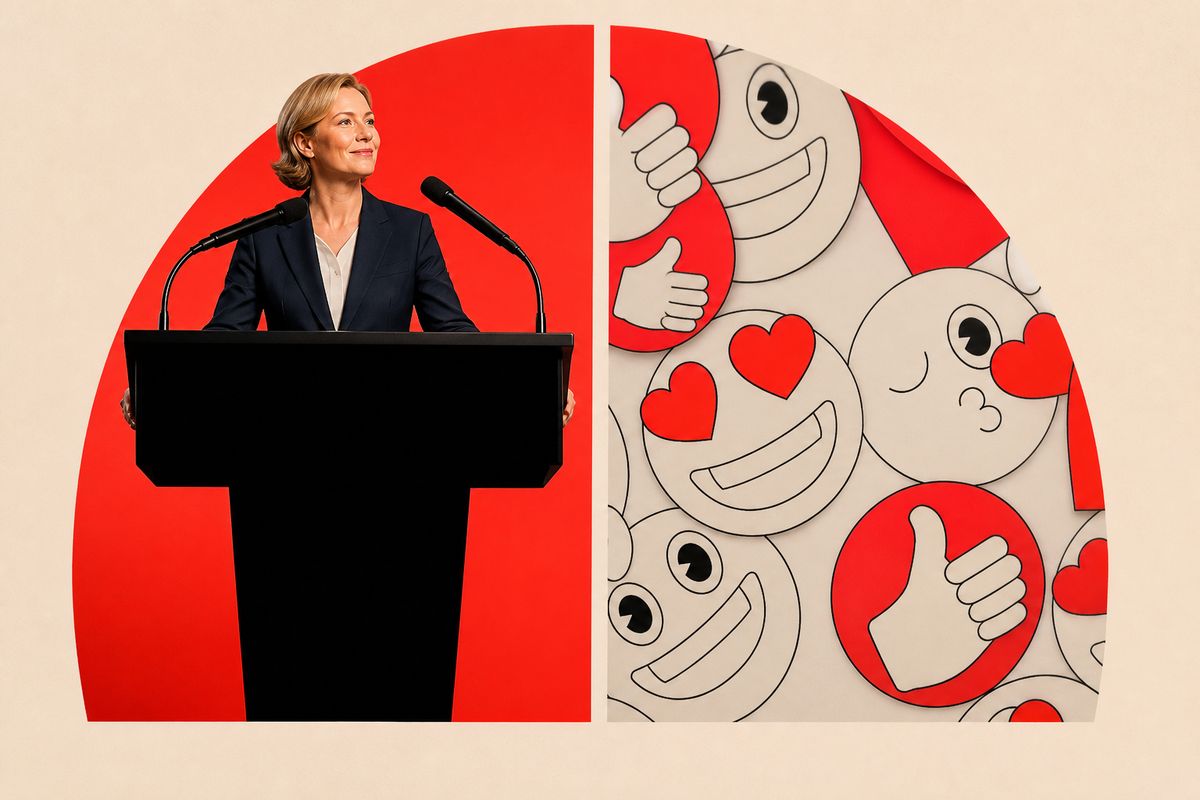
Politicians being too online is now a governing question, not just a campaign tactic
Politicians being too online used to be a punchline, a slightly embarrassing side quest involving awkward selfies and the occasional doomed hashtag. In 2026, it looks more like a core part of how power is exercised and defended. The UK government under Prime Minister Andy Burnham is openly investing in social-first communications, while opposition leaders chase virality with clips designed to travel faster than any press release ever could.
And it is not happening in a vacuum. The same platforms that reward punchy political content are under intensifying legal and public scrutiny over claims they are deliberately addictive, especially for children. In the US, Google’s YouTube has just settled a lawsuit brought by a teenage plaintiff, with the settlement terms kept confidential, ahead of a wider California trial scheduled for 27 July 2026. That collision, politics racing into social media at the exact moment social media’s harms are being litigated, is the story beneath the story.
The practical question for parties is simple enough: how online is “enough”? But the real question is messier. What happens when political legitimacy, media strategy and platform design all start pulling on the same thread, attention, outrage, identity, belonging, and none of it is particularly healthy?

The 2026 development: Burnham’s high-volume social strategy meets an opposition built for virality
In his first month as prime minister, Andy Burnham posts more than 50 times on Instagram, according to the BBC’s reporting. The content mix is telling. There are the standard images of meetings with world leaders and campaigners, but also lighter, meme-based material, including a video ranking pub snacks with Chancellor John Healey alongside an announcement on business rates. It is politics presented as both statecraft and social banter, and it is being treated inside government as a serious communications channel rather than a side dish.
Behind the scenes, the operation is being staffed like a modern media shop. The government spends recent weeks recruiting producers, videographers and strategists, working out of Whitehall and No 10 North in Manchester. The detail matters because it signals intent. This is not a minister posting the odd clip between meetings. It is an institutional bet that Instagram and TikTok, in particular, can play to Burnham’s strengths, including humour and a more informal tone.
But Labour is not alone. Conservative leader Kemi Badenoch has clips that go viral, including videos of her “tearing into the budget” and mocking former prime minister Sir Keir Starmer. Reform UK’s Nigel Farage remains the heavyweight in raw reach, with 7.6 million followers across Facebook, Instagram, X, TikTok and YouTube. In Wales, Plaid Cymru, newly installed in government, is still experimenting, using First Minister Rhun Ap Iorweth in “fun” memes as well as more serious interview excerpts. And the Greens’ Zack Polanski has leaned into running his own accounts, which the BBC notes comes with risks.
Even smaller or newer movements are being shaped by platform dynamics. Restore Britain, founded by former Reform MP Rupert Lowe, reportedly enjoys its highest level of support among users of X. That is not a neutral detail either, given X is owned by Elon Musk, who has publicly endorsed the party, expanding its reach. In Scotland, the SNP’s long-running online mobilisation around independence is another reminder that digital organisation is not just about vibes, it is about building a durable base.
From Milifandom to No 12: how politicians being too online became a professional discipline
The BBC’s piece traces a neat arc from the chaotic early days of political fandom to the polished, salaried content operations of 2026. Back in early 2015, “flower crowns” and hearts were photoshopped onto then Labour leader Ed Miliband by the so-called Milifandom, a movement of young, mostly female voters sharing romanticised images on Twitter. It was, in part, a protest against what supporters saw as a distorted media portrayal. The hashtag #Milifandom trended. Then Labour lost the 2015 election. The emotional whiplash was real.
That moment also produced one of the most quoted lines about online politics. After the Conservatives increased their number of seats, then prime minister David Cameron boasted: “Britain and Twitter are not the same thing.” It was a warning and a victory lap rolled into one. The internet can feel like the whole country when you live inside it. But it is not. Fair enough.
Yet the people who learned those lessons did not disappear. The Milifandom’s creator, Abby Tomlinson, was a 17-year-old sixth-form student at the time. More than a decade later, she is back in the story, now sitting in the press office in No 12 Downing Street as head of content for Burnham. She later reflected that winning over voters online “doesn’t happen in a day, a week or even months”, it takes years. That is a pretty good summary of where politics has landed: social media is not a magic wand, but it is a long game.
The contrast with earlier Downing Street instincts is stark. Theresa May, on taking office, reportedly rebuffed suggestions she start tweeting, joking that people do not ask for a “hashtag newspaper” or a “hashtag coffee”. Announcements were to be made formally, with press statements under the UK government coat of arms. In 2026, the choreography flips. During Burnham’s first reshuffle, a BBC presenter notes they could predict another new minister because the two-person social media team would move into position to capture arrivals on camera. That is a small detail, but it captures a big shift: the camera is now part of the constitutional theatre.
The risks of politicians being too online: authenticity, cringe, and the algorithm’s appetite
The promise of social media for politicians is directness. No gatekeepers, no waiting for tomorrow’s front page, no hostile interview format. But the price is that politicians must perform in a space optimised for speed, emotion and repetition. And that is where the “too online” danger kicks in. A single comment, collaboration or badly judged joke can detonate reputations. The BBC frames the balancing act clearly: be accessible, authentic and approachable, without being cringe. That sounds trivial until one remembers that “cringe” is often just the public’s shorthand for “this person is trying too hard”, which is poison in politics.
There is also a strategic trap. Social platforms reward content that is frequent and sticky. Peter Hyman, a former adviser to both Tony Blair and Keir Starmer when in Downing Street, argues Burnham’s early digital success is about “quantity as well as quality”. He says: “You have to narrate the story of what you are doing three or four or five times a day so that you are out there regularly.” He adds that Starmer “wasn’t out there enough and therefore it wasn’t landing.”
But that advice comes with a catch. Narrating government “three or four or five times a day” can easily slide into governing for the feed. Ministers start thinking in clips. Policies get packaged as moments. Complexity gets shaved down because complexity does not travel. And when every day is a content calendar, the temptation is to chase what performs rather than what matters. Not exactly groundbreaking as a critique, but it is still the central risk.
Then there is the causality problem, which the BBC flags. Is Burnham more popular because he posts a lot, or does he post a lot because he is popular and has more to show? Social media makes correlation look like causation. A viral video can feel like a political breakthrough, but it may only be a well-edited version of what supporters already believe. Cameron’s old line about Britain and Twitter being different still haunts every digital strategist, even as they try to prove it wrong.
Platforms under pressure: YouTube’s teen settlement and the growing legal challenge to “addictive by design” feeds
While UK politicians pour resources into social-first communications, the platforms themselves are facing a wave of legal action over youth harm and alleged addiction. In the US, Google’s YouTube settles a lawsuit brought by a minor identified by initials R.K.C., a 16-year-old boy from Florida. His lawyers say he started using social media at about eight, became addicted, lost sleep and suffered depression and anxiety, according to court filings. The settlement terms are confidential, and YouTube says the case has been amicably resolved, with a focus on “age-appropriate products and parental controls”.
The wider case does not end there. The original lawsuit names four defendants: YouTube, Meta’s Instagram, Snap’s Snapchat and ByteDance’s TikTok. The remaining three companies are still set to face trial in July 2026, with the trial scheduled to begin on 27 July 2026. This is described as the second California state court trial testing claims by individuals that they were harmed by platforms deliberately designed to be addictive.
The scale is huge, and the numbers are specific. There are more than 3,300 lawsuits involving addiction claims pending in California state court. Another 2,600 cases brought by individuals, school districts, municipalities and states are pending in California federal court. Earlier this year, the first trial ended in March, involving a woman who said she became addicted to YouTube and Instagram at a young age. A jury found the companies negligent and ordered Meta to pay $4.2 million and Google to pay $1.8 million. A judge later rejected the companies’ bid to set aside that verdict.
And it is not just individuals. A Kentucky school district lawsuit that was set for a June federal trial settled before trial, with the companies paying a combined $27 million. States are suing too. A jury in New Mexico ordered Meta to pay $375 million after finding the company misrepresented the safety of Facebook, Instagram and WhatsApp, with a judge considering whether to order platform changes in a separate phase. Meta faces a Tennessee trial next month, and a federal trial over combined claims of multiple states is set to go forward in August. The companies deny the allegations and say they take extensive steps to keep teens safe.
Put bluntly, this is the environment in which political communications now operates: the same engagement mechanics that make a pub-snack ranking clip perform are being challenged in court as harmful when applied to children. That does not make every political post unethical. But it does make the “attention economy” a live policy issue, not just a media strategy.
Historical parallels: every new medium reshapes politics, but social media reshapes the politician too
Political leaders have always adapted to new technology, and the BBC’s reporting nods to the familiar milestones. Winston Churchill harnesses radio but considers television a vulgar diversion. In the 1960s, Harold Wilson models TV campaigning on John F Kennedy. In the 1990s and 2000s, leaders like Tony Blair appear on chat shows as readily as on heavyweight political programmes. The medium changes, the incentives shift, and politicians follow.
But social media is not just another broadcast channel. It is interactive, personalised and relentlessly quantified. A radio address is delivered once. A TV interview is watched, then discussed. A TikTok clip is tested, iterated, re-posted, stitched, memed, and used as raw material by supporters and opponents alike. And because platforms reward what keeps people watching, the content that rises is often the content that provokes. That is not a moral judgement, it is simply how the machinery works.
Podcasts, too, are part of this new ecosystem, offering long-form, less combative opportunities to connect with voters. But podcasts and social clips often work together. A long conversation is recorded, then chopped into short segments designed to travel. The politician becomes a content library. The party becomes a production studio. Government becomes a stream of moments. The risk is that politics starts to feel like a permanent audition.
And yet, it would be naive to pretend the old system was pure. Press offices have always shaped narratives. Photo ops have always existed. The difference now is speed and scale, plus the illusion of intimacy. When a prime minister posts frequently, the public can feel they “know” them. That can build trust. Or it can backfire spectacularly when the performance slips.
The Bigger Picture
The deeper issue is not whether Burnham posts 50 times a month or whether Badenoch’s clips rack up views. It is that politics is increasingly being forced to speak in the language of platforms whose business model is attention. That model does not care whether attention is earned through civic education, outrage, humour or fear. Attention is attention. And when political legitimacy is mediated through that system, the incentives of democratic communication start to bend in subtle ways.
There is also a quiet asymmetry that most day-to-day coverage misses. Governments can hire producers and strategists, build content teams, and coordinate messaging across departments. Individuals, including teenagers like R.K.C. in the US lawsuits, cannot “opt out” so easily when the platforms are embedded in social life, school life and friendship groups. So the state is both a power user of the system and, potentially, a regulator of it. That is an awkward dual role. It raises uncomfortable questions about whether governments will ever seriously challenge platform design when they benefit from its reach.
Finally, the “too online” debate is not just about politicians embarrassing themselves. It is about what kind of public sphere is being built. If Ofcom’s general finding holds that TV and online news sites remain the most used sources of news but more people also get news from social media, then the battleground is widening. Politics is no longer competing only for votes at election time. It is competing for attention every day, in the same feed as celebrity gossip, war footage, football clips and teenagers’ jokes. That context changes how messages land. It changes what people remember. And it changes what politicians think they must do to be heard.
Closing thoughts: the sweet spot between silence and saturation
There is no going back to a world where Downing Street can ignore social media and rely on formal statements alone. The Burnham operation, with staff in Whitehall and No 10 North, is a sign that the UK state now treats digital storytelling as part of governing infrastructure. Opposition leaders, from Badenoch to Farage, are not waiting around either. The arms race is already on.
But the smartest political operators in 2026 will remember two things at once. First, Cameron’s warning still matters: Britain and a platform trend are not the same thing. Second, Hyman’s point about repetition is real: if a government does not narrate what it is doing, someone else will. The trick is to narrate without becoming captive to the feed, to be present without being performative, and to use the tools without being used by them. Easy to say, harder to do. That is politics now.
And as the legal pressure on platforms intensifies, especially around children and alleged addiction by design, the political class may find that being “too online” is not just a cultural critique. It could become a policy liability. Voters might still enjoy the pub-snack rankings. But they also want to know who is minding the shop.